
- Release Year: 2004
- Platforms: Windows
- Publisher: LEGO System A/S
- Genre: Adventure
- Perspective: 3rd-person (Other)
- Game Mode: Single-player
- Gameplay: Puzzle elements
Description
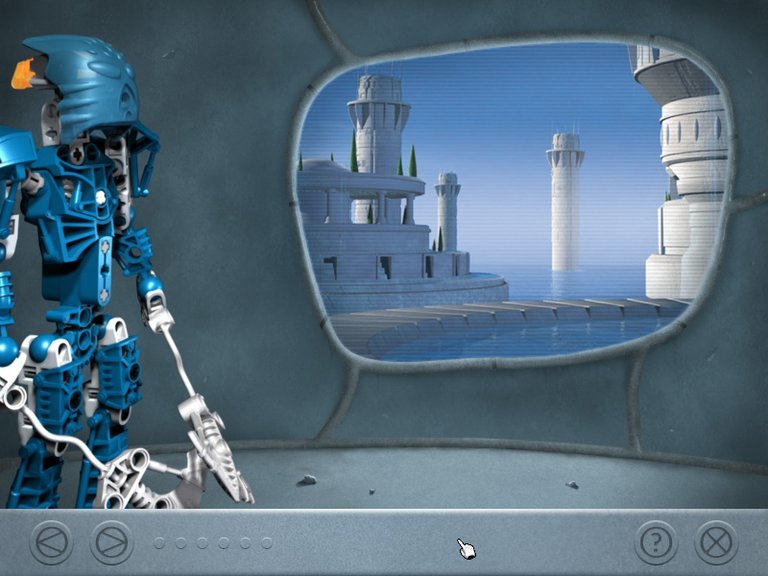
In Nokama’s Toa Metru Mini Promo CD, players control Toa Metru Nokama as she navigates the watery district of Ga-Metru in the island city of Metru Nui, searching for the missing Ga-Matoran student Vhisola to obtain the Ga-Metru Great Disk. This linear, storybook-style adventure features puzzle-solving, interactions with other Matoran for clues, clickable hotspots for trivia, and aims to defeat the destructive, intelligent Morbuzakh plants overtaking the city, based on the early 2004 LEGO BIONICLE storyline.
Nokama’s Toa Metru Mini Promo CD Guides & Walkthroughs
Nokama’s Toa Metru Mini Promo CD: Review
Introduction
In the neon-lit canals and towering spires of Metru Nui, where liquid Protodermis flows like veins of life and shadowy vines threaten to strangle an entire city, a diminutive digital hero emerges—not in a sprawling console epic, but on a mini CD-ROM tucked inside a LEGO canister. Nokama’s Toa Metru Mini Promo CD, released in early 2004, stands as a pint-sized powerhouse of interactive storytelling, encapsulating the explosive popularity of the LEGO BIONICLE franchise at its mid-generation peak. As a promotional tie-in for the Toa Metru toy line, this Flash-based adventure invites players to guide the water-wielding Toa Nokama through Ga-Metru in a quest to thwart the invasive Morbuzakh plants. Its legacy? A forgotten gem in video game history, bridging toys, comics, and nascent online fandoms, reminding us how LEGO masterfully wove multimedia narratives. My thesis: While constrained by its promo origins and era-specific tech, Nokama’s delivers a masterclass in concise, puzzle-driven lore delivery, cementing its place as an essential artifact of transmedia synergy.
Development History & Context
Developed amid the white-hot fervor of BIONICLE’s 2003-2004 surge—fueled by the Mask of Light film, console games like BIONICLE, and book/comic expansions—Nokama’s Toa Metru Mini Promo CD emerged from LEGO System A/S’s in-house digital team. No external studio credits are documented on MobyGames, suggesting a lean, proprietary effort akin to prior BIONICLE promo CDs (e.g., Mask of Light Promo CD in 2003). The narrative was penned by Greg Farshtey, BIONICLE’s lore architect, adapting beats from BIONICLE Adventures #1: Mystery of Metru Nui and Comic 16: Toa Metru!, ensuring canon alignment while teasing the 2004 storyline.
Launched in January 2004 exclusively with European LEGO set 8602 Toa Nokama (a 45-piece canister figure retailing around €10), the mini CD-ROM capitalized on toy-box synergy. North American buyers got download codes via BIONICLE.com’s Kanoka Club, with lighter installer versions stripping animations for dial-up-era bandwidth (as noted by BioMedia Project preservations). Technologically, it leveraged Adobe Shockwave Flash, standard for browser games but now obsolete on modern OSes—runnable only via emulators like Flashpoint or vintage XP VMs.
The gaming landscape? 2004 brimmed with experimental promos amid the browser game boom (Neopets, early Club Penguin) and LEGO’s pivot from static CDs (Toa Mata Mini Promo CD, 2001) to interactive narratives. Constraints like mini-disc capacity (180-210MB) enforced bite-sized design: no saves, linear progression, simple point-and-click mechanics. Vision: Extend BIONICLE’s serial storytelling beyond plastic bricks, priming kids for full games (BIONICLE 2: Legends of Metru Nui) and online hubs. In a post-9/11 toy market craving heroic escapism, it perfectly mirrored BIONICLE’s shift from organic Mata Nui to biomechanical Metru Nui intrigue.
Narrative & Thematic Deep Dive
Plot Synopsis and Scene Breakdown
The CD opens with a portentous intro: “Dangerous plants called Morbuzakh are threatening to wreck the city of Metru Nui. The Toa must find six incredibly powerful Great Disks if they wish to save their home. But the only Matoran who know where the disks can be found have disappeared as well.” Players embody Nokama, scouring Ga-Metru for student Vhisola, bearer of Great Disk secrets (Kanoka code 279).
-
Scene 1 (Vhisola’s Home): Nokama notes Vhisola’s shrine-like ego—carvings and awards—unlocking a map puzzle to reveal a journal. Vhisola’s resentment festers: “Now that Nokama has become a Toa, she has no time for me… Once I find that special Kanoka disk, everyone will forget about her.” Clue: Classes → School.
-
Scene 2 (School): Instructor Amaya flags Vhisola’s fixation on the Great Temple and Protodermis Falls. Desk puzzle (unscramble falls image) yields a Tehutti note from Onu-Metru Archives praising the Temple. Trail: Lab.
-
Scene 3 (Lab): Ransacked by a “strange, four-legged being” (hinting Nidhiki), worker Nireta points to a shattered tablet. Reassembly reveals codes; backtrack home.
-
Scene 4 (Home Safe): Code 279 unlocks a missive: Six Great Disks defeat the Morbuzakh king root; Ga-Metru’s hides near the Temple. Destination: Great Temple.
-
Scene 5 (En Route): Panicked Marka eyewitnesses Vhisola fleeing the beast to a rooftop. Mini-Movie: Nokama hydroblades across canals, dives Protodermis tunnels, ascends dynamically—peak action choreography.
-
Scene 6 (Rooftop Rescue): Rubble puzzle frees Vhisola, who confesses Ahkmou’s coded betrayal note (Toa as traitors) and Morbuzakh heat affinity (Great Furnace in Ta-Metru). Nokama departs with Vhisola to unite Toa.
Conclusion screen loops the movie or restarts, hawking BIONICLE: The Game et al.
Characters and Dialogue
Nokama shines as empathetic mentor-turned-hero, contrasting Vhisola’s petty jealousy—a nuanced foil drawn from Mata Nui Online Game II names. Supporting cast (Amaya, Nireta, Marka) fleshes Ga-Metru’s scholarly vibe; mentions (Tehutti, Ahkmou) web into sibling CDs, forging a hexalogy.
Themes
Jealousy propels tragedy: Vhisola’s hero-worship sours into delusion, echoing BIONICLE’s Matoran-Toa power dynamics. Betrayal looms (Ahkmou’s lies, Nidhiki’s shadow), subverting heroism amid ecological horror (Morbuzakh as sentient kudzu). Heroism tempers via mentorship—Nokama forgives, models unity. Slight canon quibbles (Vhisola’s entrapment vs. books) underscore promo liberties, yet Farshtey’s script distills Metru Nui’s intrigue masterfully.
Gameplay Mechanics & Systems
A linear, storybook point-and-clicker in 3rd-person “other” perspective, Nokama’s loops revolve around exploration → interaction → puzzle → progression. Screens advance via bottom arrows (forward/backtrack); circular progress icons glow on completion. Hotspots trigger dialogue, puzzles, or Metru Nui trivia (e.g., lore pop-ups on objects).
Core Puzzles (Exhaustively Deconstructed):
– Map Sequence (Scene 1): Simon-style glow-click; tests memory, eases in novices.
– Falls Unscramble (Scene 2): Tile-slider; thematic (water flows), moderate difficulty.
– Tablet Reassembly (Scene 3): Jigsaw with codes; rewards observation, ties narrative.
– Safe Code (Scene 4): 279 deduction (from tablet); lore-integrated, empowering.
– Rubble Clear (Scene 6): Pattern-match/move; climactic, tactile satisfaction.
No combat/progression trees—pure puzzle gates. UI is intuitive: Clean Flash sprites, hover highlights, no HUD clutter. Flaws: No skipping, backtracking friction, Flash-era jank (incompatibility). Innovations: Trivia hotspots deepen immersion; mini-movie as reward punctuates action. Playtime: 15-30 minutes, replayable for randomization (e.g., puzzle variants hinted in series).
World-Building, Art & Sound
Ga-Metru pulses with aquatic majesty: Sculpted towers, cascading Protodermis falls, scholarly labs—vivid backdrops evoke Metru Nui’s biomechanical dystopia under Morbuzakh siege. Art direction: Static Flash screens with parallax scrolls, cel-shaded Toa/Matoran faithful to toy aesthetics (Nokama’s aqua armor gleams). Mini-movie elevates: Fluid hydroblade animation, tunnel navigation showcases water powers dynamically.
Atmosphere builds tension—ransacked labs, panicked Matoran—contrasting serene canals. Sound design (inferred from era/Flash norms): Ambient chimes for hotspots, watery splashes, ominous vine rumbles; sparse voiceovers/dialogue text. No OST credits, but BIONICLE motifs likely underscore urgency. Collectively, elements craft a microcosm of Metru Nui, priming toy play and lore dives.
Reception & Legacy
Critically invisible—no MobyGames scores, zero player/critic reviews—Nokama’s flew under radar as a toy insert. Commercially, bundled with ~100,000+ Toa Metru sets (Europe-heavy), it boosted 2004 sales amid BIONICLE’s €200M+ peak. Fandom reception: Nostalgic relic on BZPower/BioMedia Project; preservations (ISOs, installers) sustain playability.
Reputation evolved from ephemeral promo to collector’s holy grail (eBay rarities fetch $20-50). Influence: Pioneered LEGO’s mini-CD series (2001-2007), inspiring transmedia (e.g., Hero Factory apps). Echoes in modern free-to-play tie-ins (Fortnite collabs); presaged browser adventures. In BIONICLE historiography, it humanizes Metru arc, influencing fan games/remakes.
Conclusion
Nokama’s Toa Metru Mini Promo CD transcends its promo shackles, distilling BIONICLE’s essence into a polished, puzzle-laden vignette of heroism and intrigue. Its linear elegance, lore-rich narrative, and Ga-Metru splendor outweigh Flash obsolescence, offering unmatched insight into 2004’s toy-to-digital pipeline. Verdict: An unmissable 9/10 historical treasure—seek emulators, unearth the Disks, and witness Metru Nui’s salvation. In video game canon, it endures as LEGO’s finest micro-adventure, a testament to Farshtey’s pen and interactive ambition. Essential for BIONICLE archivists; charming curiosity for all.