
- Release Year: 2024
- Platforms: Windows
- Publisher: Hooded Horse Inc.
- Developer: Long Jaunt Ltd
- Genre: Simulation, Strategy, Tactics
- Perspective: Top-down
- Game Mode: Single-player
- Gameplay: Business simulation, City building, construction simulation, Managerial
- Setting: Medieval
- Average Score: 70/100
Description
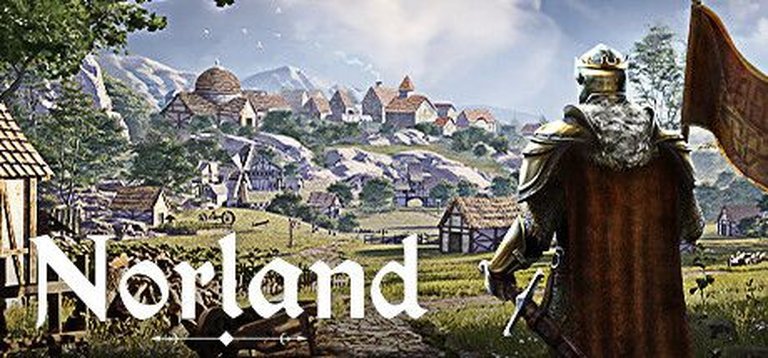
Norland is a medieval city-building and management simulation featuring top-down 2D graphics, developed by Long Jaunt Ltd. and published by Hooded Horse Inc. Released in July 2024, the game challenges players to construct and manage a kingdom, blending strategic depth with economic simulation in a historical setting.
Gameplay Videos
Where to Buy Norland
PC
Norland Cracks & Fixes
Norland Patches & Updates
Norland Mods
Norland Guides & Walkthroughs
Norland Reviews & Reception
metacritic.com (70/100): Norland is an exceptional medieval colony sim that marries the absurdity of Rimworld with the Intrigue and political Strife of Crusader Kings.
ginx.tv : this game does exactly what it says on the tin, and it is so much fun
Norland Cheats & Codes
PC
| Code | Effect |
|---|---|
| Zorro | gain 100 swords |
| MMMTurnips | 1000 Rudibega |
| OOOShiney | 1000 Gold Coins |
| IAMTHEKING | All Peasants become Fanatics |
| Whatsthatsmell | All peasants become infected with Smallpox |
| ImagenaryFriend | A random free lord will spawn that appears as a clone of your King. |
Norland: Review
Introduction
In the crowded pantheon of strategy and simulation games, few titles arrive with the audacious ambition to synthesize the emergent storytelling of Rimworld with the dynastic intrigue of Crusader Kings. Released into Early Access on July 18, 2024, Norland presents itself as a medieval kingdom simulator where the player’s noble family navigates a post-imocalyptic world teeming with social stratification, political betrayals, and existential threats. As a game journalist and historian, I find Norland to be a fascinating, albeit nascent, entrant into a genre defined by its capacity to generate unforgettable narratives. While currently a work in progress, its foundation is remarkably robust, blending city-building mechanics with complex interpersonal dynamics and global diplomacy. This review posits that Norland is not merely a derivative of its influences but a promising evolution of the genre—one that leans into chaos as a feature rather than a flaw, offering a uniquely compelling experience for those willing to engage with its Early Access journey.
Development History & Context
Studio Vision and Origins
Developed by Long Jaunt Ltd., a UK-based studio founded by veterans of the mobile games industry, Norland represents a bold pivot from the studio’s previous work. Led by designer Dmitry Glaznev and technical director Roman Erfilov, the team sought to create a game that prioritizes emergent narratives over scripted content. Their vision was ambitious: to simulate a living, breathing medieval society where every character—from peasant lord to lowly serf—possesses agency, needs, and relationships that can spiral into epic sagas of love, betrayal, and revolution. This ambition is evident in the game’s intricate systems, which track character traits, hereditary family attributes, and the ripple effects of player decisions.
Technological Constraints and the Early Access Model
Built using GameMaker, Norland navigates the technical limitations of this engine with surprising ingenuity. The top-down 2D art style, rendered by Roman Erfilov and Sun Strike Studio, is both functional and charming, allowing for complex simulations without demanding the graphical horsepower of AAA titles. However, the engine imposes constraints on scalability, which the developers acknowledge as a focus for optimization in future updates. The decision to launch in Early Access was deliberate; Long Jaunt recognized that Norland’s depth—spanning economics, warfare, religion, and social dynamics—could only be refined through community feedback. The publisher, Hooded Horse Inc., known for supporting deep strategy titles like Against the Storm, provided the backing necessary for this iterative approach.
The Gaming Landscape of 2024
Norland emerged into a market saturated with medieval city-builders and colony sims. Titles like Manor Lords and Frostpunk had set high bars for graphical fidelity and mechanical depth, while Crusader Kings 3 dominated the grand strategy niche. Yet Norland carved a distinct niche by focusing on the micro-interactions of noble families and the macro-politics of a fractured world. Its release timing coincided with a growing appetite for Early Access participation, as evidenced by its successful launch—selling over 185,000 copies in its first two weeks. This reception underscored a hunger for games that prioritize emergent narratives over polished, static experiences.
Narrative & Thematic Deep Dive
The Unfolding Saga of a Noble House
Norland eschews traditional plotlines in favor of emergent storytelling. Set in a world where the Empire has collapsed into warring successor kingdoms, the player controls a noble family tasked with ruling a province. The narrative unfolds through a series of interconnected systems: lords issue commands to serfs, form relationships, and respond to global events. A lord’s decision to neglect administrative duties might lead to a peasant revolt, while a clandestine affair could spark a family feud. These interactions are not merely text-based; they are simulated through a web of needs, desires, and traits. For instance, a charismatic lord might inspire loyalty but also become entangled in scandalous rumors, while a pious character’s actions could ignite religious tensions.
Character Dynamics and Social Stratification
The game’s narrative strength lies in its character simulation. Each noble possesses a unique personality defined by traits like greedy, ambitious, or pious, which influence their behaviors. Needs—ranging from basic sustenance to “social interaction” or “release”—drive their actions, creating unpredictable, often humorous, outcomes. A lord might abandon their post to flirt with a miller, or a disgruntled serf might poison a well. The game’s social classes—peasants, slaves, soldiers, and nobles—interact with systemic friction. Slaves, for example, pose the threat of revolts if mistreated, while nobles may scheme for power if slighted. The inclusion of a family tree system (in development) promises to deepen these narratives, allowing players to track lineage, inheritances, and even illegitimate offspring.
Thematic Exploration: Power, Faith, and Consequence
Norland tackles weighty themes through its mechanics. Power is examined through the lens of feudal relationships, where vassals can revolt if demands are unreasonable. Faith is embodied by the Church, a global entity that mediates trade, sanctions heretics, and can incite inquisitions. The game’s events—plagues, famines, or mysterious visitors—force players into morally ambiguous choices, with long-term consequences. For example, selling prisoners to the church for profit might boost the treasury but could invite divine retribution. This emphasis on consequence reinforces the game’s core thesis: rule is a delicate balance of carrot and stick, where every action alters the delicate equilibrium of society.
Gameplay Mechanics & Systems
Core Loops: Management and Emergence
Norland’s gameplay is a tapestry of interconnected systems. The primary loop involves assigning tasks to lords—managing production chains, training soldiers, or conducting diplomacy—while serfs execute these orders autonomously. The local economy is a closed loop: wages paid to serfs are recouped when they purchase player-produced goods, creating a self-sustaining system. The global economy, however, introduces complexity; trade with neighboring kingdoms or church caravans affects supply and demand. A glut of wood might crash its price, while a war-induced iron shortage could make weapons a lucrative export.
Combat: Tactical Depth and Future Ambitions
Combat is currently the game’s weakest link, though its foundation shows promise. Battles are resolved on tactical maps, where lords command soldiers armed with various weapons (swords, axes, spears) and armor. Soldiers gain experience through combat, and their morale affects performance. However, the system lacks depth—sieges are absent, and tactics are limited to basic commands like “shoot at enemy archers.” Future updates aim to rectify this with crossbows, ranged towers, and city fortifications (walls and gates). For now, warfare feels perfunctory, prioritizing numerical superiority over strategy.
Character Progression and Social Engineering
Progression is tied to lords and soldiers. Lords improve skills (e.g., diplomacy, trade) through repeated tasks, becoming more efficient but also more demanding. Players must balance rewards to maintain loyalty, lest shirk duties trigger societal decay. Soldiers can be recruited from peasants, captured enemies, or even the church’s slave markets, though the latter risks religious backlash. The game’s diplomacy system, while nascent, offers intriguing options: alliances can be forged through marriages or missions, while espionage involves kidnapping or spreading rumors to destabilize rivals.
UI, Innovation, and Flaws
The interface is clean and intuitive, with nested tooltips that reveal granular data—a standout feature. However, scaling issues and text overflow mar the experience, particularly in higher resolutions. The game’s innovation lies in its interconnected systems: a lord’s affair might spark a family feud, disrupting production and inviting invasion. Yet flaws persist: the early game suffers from repetition, as players juggle the same initial tasks across playthroughs. Bugs, such as disappearing gear, also disrupt immersion. These are acknowledged by Long Jaunt, who are focusing on optimization and stability per their roadmap.
World-Building, Art & Sound
Setting and Atmosphere
Norland’s world is a rich tapestry of medieval fantasy and post-apocalyptic decay. The fallen Empire’s ruins dot the landscape, while successor kingdoms—each with distinct cultures—vie for dominance. This setting is not merely backdrop; it influences gameplay. A kingdom predisposed to aggression, for example, might demand tribute more frequently. The local maps, though procedurally generated, feel organic, with forests, rivers, and mountains shaping city layouts. The global map, still rudimentary, promises expansion with dynamic weather and climates in future updates.
Visual Direction: Charming and Functional
The art style is deceptively simple. 2D sprites and buildings are rendered in a warm, inviting palette, evoking classic isometric titles. Character designs are expressive—lords wear regalia, while serfs toil in rags. Yet the visuals serve a purpose: clarity. The top-down perspective ensures players can monitor city layout without clutter, and animations (e.g., lords drinking at taverns) add life. Sun Strike Studio’s work, combined with Viktor Grishkov’s art direction, creates a world that feels both fantastical and grounded.
Sound Design and Immersion
Sound is Norland’s unsung hero. Ambient sounds—blacksmiths hammering, villagers chatting, or church bells tolling—create a palpable sense of place. Vyacheslav Asnin’s soundtrack, provided by VM-Sound, blends medieval folk with haunting melodies, reinforcing the game’s melancholic tone. Audio cues, such as the clash of swords during battles or the murmur of a disgruntled crowd, provide critical feedback without visual clutter. This auditory richness elevates the simulation, making players feel like they are truly presiding over a living society.
Reception & Legacy
Launch Reception and Critical Consensus
Norland entered Early Access to a warm reception. On Metacritic, it holds a 70% score based on early reviews, with critics praising its ambition and emergent storytelling. PC Games Germany noted its “enormous strategic potential,” while GINX TV lauded its “unhinged but hilarious” chaos. Steam reviews were equally positive, with 4,088 “Mostly Positive” ratings at the time of writing. Players highlighted the game’s charm, depth, and replayability, though criticisms centered on Early Access bugs and repetitive early gameplay.
Evolution and Community Feedback
Long Jaunt’s commitment to iterative development has been instrumental in shaping Norland. The studio releases detailed roadmaps every three months, incorporating player feedback into future updates. For example, the roadmap for August–October 2024 focused on optimization, Steam achievements, family trees, and city fortifications—direct responses to community requests. A beta branch allows players to test features like trading and inciting rebellions early, fostering a collaborative development process. This transparency has built trust, with many players expressing confidence in the game’s trajectory.
Legacy and Influence
Norland is poised to influence the colony sim genre by emphasizing character-driven narratives over mechanical perfection. Its blend of micro-management and macro-politics offers a blueprint for future titles seeking to balance accessibility with depth. Hooded Horse’s support ensures visibility, and plans for mod support and paid expansions hint at a long lifespan. While it may never surpass the complexity of Dwarf Fortress or the narrative depth of Crusader Kings, Norland carves its own niche by celebrating the beautiful chaos of a world where a single lord’s affair can unravel an empire.
Conclusion
Norland is a testament to the power of Early Access done right. As a medieval kingdom simulator, it delivers on its promise of emergent storytelling, weaving together complex systems of economy, warfare, and social dynamics into a tapestry of unpredictable narratives. Its strengths—interconnected character simulation, rich atmosphere, and ambitious vision—make it a standout in a crowded genre. Yet its flaws—underdeveloped combat, UI quirks, and early-game repetition—remind players that it is still a work in progress.
For strategy enthusiasts willing to engage with an evolving project, Norland is a compelling purchase. It offers a foundation that is not merely functional but vibrant, capable of generating stories that will be recounted for years to come. As Long Jaunt continues to refine its vision—fortifications, family trees, and deeper diplomacy—Norland has the potential to transcend its influences. In the end, it is more than a game; it is a digital sandbox of human folly and glory, where the line between simulation and story dissolves into something truly magical. For now, it is a flawed masterpiece in the making, but one that history may remember as a pivotal moment in the evolution of strategy gaming.