
- Release Year: 2024
- Platforms: Macintosh, Windows
- Publisher: All In Game Co., Limited
- Developer: All In Game Co., Limited
- Genre: Puzzle
- Perspective: Top-down
- Game Mode: Single-player
- Gameplay: Mini-games, Turn-based
- Average Score: 78/100
Description
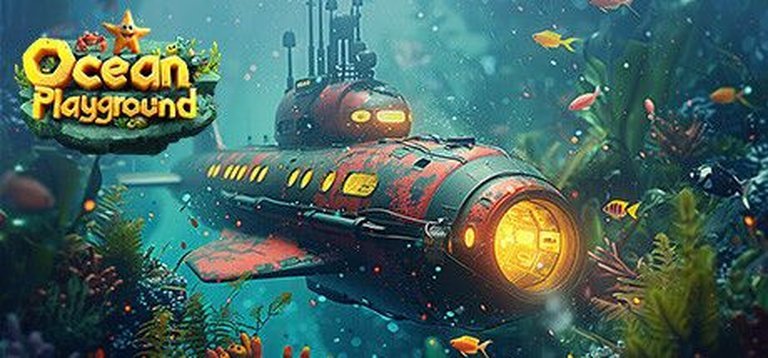
Ocean Playground is a puzzle game collection featuring four distinct ocean-themed mini-games, released in 2024 for Windows and Macintosh. Players engage in ‘Stone Maze,’ a Sokoban-inspired block-pushing challenge with move limits and 50 levels; ‘Ocean Puzzles,’ a jigsaw game revealing only four pieces at a time with timed completion; ‘Electrify,’ a hexagonal power-routing puzzle with rotation mechanics; and ‘Save Crabs,’ a navigation puzzle guiding crustaceans through move sequences. Each mode offers unique mechanics, video walkthroughs or hints, and progressive difficulty across 130 puzzles total.
Ocean Playground Reviews & Reception
steambase.io (78/100): Ocean Playground has achieved a Steambase Player Score of 78 / 100, calculated from 9 total reviews.
Ocean Playground: Review
Introduction
In the ever-churning waters of the indie game market, Ocean Playground surfaced in July 2024 as a modest collection of casual mini-games, only to vanish from storefronts less than a year later. Developed by All In Game Co., Limited, this free-to-play puzzle title promised a whimsical underwater escape but struggled to leave a lasting ripple. This review examines Ocean Playground through the lens of its fleeting existence, analyzing how it reflects both the potential and pitfalls of indie mini-game compilations in an oversaturated industry.
Development History & Context
Studio Vision & Constraints
All In Game Co., Limited, a lesser-known developer, aimed to capitalize on the casual gaming boom with Ocean Playground. Built in Unity, the game’s four mini-games targeted a broad audience with simple mechanics and minimalistic design—a practical choice given limited resources. However, the studio’s lack of pedigree and marketing muscle left the game adrift in a sea of competitors.
The 2024 Puzzle Landscape
Released amid critical darlings like Balatro and Animal Well, Ocean Playground faced stiff competition. The indie scene was dominated by cohesive, boundary-pushing titles, while AAA studios leaned into narrative-driven epics like Final Fantasy VII Rebirth. Against this backdrop, All In Game Co.’s bite-sized puzzles felt slight, even as Steam’s free-to-play model offered accessibility.
Narrative & Thematic Deep Dive
A Lightweight Aquatic Theme
Unlike story-rich contemporaries, Ocean Playground forgoes narrative depth. Its ocean setting is purely aesthetic: Stone Maze’s block-pushing and Save Crabs’ navigation puzzles share no narrative thread beyond aquatic visuals. The lack of lore (a deliberate choice, akin to People Playground) underscores its focus on mechanics over storytelling.
Thematic Flaws
The “ocean” motif feels underutilized. While Ocean Puzzles feature marine jigsaw imagery, Electrify’s abstract hexagons clash tonally, revealing a disjointed thematic vision. Players seeking immersion found little beyond surface-level aesthetics.
Gameplay Mechanics & Systems
The Four Mini-Games
1. Stone Maze: A Sokoban clone with move limits and 50 levels. Functional but unoriginal, its inclusion of video walkthroughs acknowledged frustration points.
2. Ocean Puzzles: A jigsaw variant where only four pieces are visible at once. The time limit added tension, but only six puzzles (with repetitive marine images) limited replayability.
3. Electrify: A hexagonal power-grid puzzle with auto-solve options. Its 50 levels offered depth, but the mechanic’s complexity felt at odds with the game’s casual ethos.
4. Save Crabs: A crab-pathfinding puzzle with 24 levels. The move limit and pre-set commands added strategic layers, though clunky controls hampered precision.
Core Flaws
– Lack of Progression: No unifying progression system or rewards weakened incentive to master all mini-games.
– Uneven Difficulty: Electrify’s steep learning curve contrasted sharply with Ocean Puzzles’ simplicity, creating tonal whiplash.
– UX Shortcomings: The UI was functional but bland, with minimal feedback for successes or failures.
World-Building, Art & Sound
Visuals: Serviceable but Forgettable
The art style leaned on cartoony, low-poly models and bright colors, evoking a mobile-game aesthetic. While visually clear, it lacked the polish of contemporaries like Animal Well’s pixel artistry or Balatro’s stylized chaos.
Sound Design: A Missed Opportunity
Ambient ocean sounds and light melodies attempted relaxation but grew repetitive. The absence of dynamic audio feedback during puzzles (e.g., celebratory jingles) muted emotional payoff.
Reception & Legacy
Initial Reception
At launch, Ocean Playground garnered a middling 78/100 Steambase Player Score, with 7 positive and 2 negative user reviews. Praise centered on its free-to-play accessibility, while critics derided its “shallow” content and lack of innovation.
The Delisting Debacle
In April 2025, All In Game Co. announced the game’s discontinuation, citing “business adjustments.” Sales ceased by May 1, 2025, rendering Ocean Playground a footnote in Steam’s delisted archives. Its servers remain active until January 1, 2026, but the game’s cultural footprint is negligible.
Industry Impact
The game’s brief lifespan highlights the volatility of indie development. While it echoed the mini-game appeal of titles like Puppeteers or Creatures Playground, its inability to iterate or build community (evidenced by barren Steam forums) sealed its fate.
Conclusion
Ocean Playground is a cautionary tale of unrealized potential. Its modest mini-games, while mechanically sound, failed to coalesce into a compelling whole. For casual puzzle enthusiasts, it offered fleeting diversion, but its lack of identity and innovation relegated it to obscurity. In the annals of gaming history, Ocean Playground serves not as a landmark, but as a reminder: even in a vast ocean, only the most distinctive fish survive.
Final Verdict: A forgettable tidepool in the 2024 gaming landscape—worth a brief dip for the curious, but hardly essential.