
- Release Year: 2019
- Platforms: Windows
- Publisher: Escuela Superior de Arte y Tecnología (ESAT)
- Developer: Deer Captain, Escuela Superior de Arte y Tecnología (ESAT)
- Genre: Action
- Perspective: 1st-person
- Game Mode: Single-player
- Gameplay: Shooter
- Setting: 1920s, North America, Steampunk
- Average Score: 74/100
Description
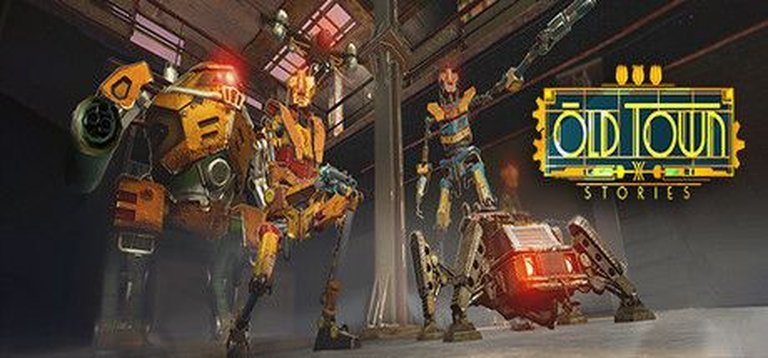
Old Town Stories is a first-person shooter set in a 1920s steampunk-inspired North American city, where advanced Ignithium technology has led to the rise of war robots. Players take on the role of Rose, an upper-class woman who joins the Irish mafia to combat Rusty Jack’s robotic crime syndicate. The game blends action-packed combat with a rich narrative, featuring atmospheric environments, a female protagonist, and a mix of sci-fi and historical elements.
Where to Buy Old Town Stories
PC
Old Town Stories Guides & Walkthroughs
Old Town Stories Reviews & Reception
steambase.io (74/100): A triumphant return to form for the series.
store.steampowered.com (74/100): Mostly Positive reviews with 74% of the 27 user reviews for this game are positive.
Old Town Stories: A Hidden Gem in VR Storytelling
Introduction
In the ever-expanding landscape of virtual reality gaming, Old Town Stories emerges as a fascinating, if overlooked, experiment in blending historical fiction, steampunk aesthetics, and immersive first-person combat. Released in 2019 by the Spanish development team Deer Captain in collaboration with the Escuela Superior de Arte y Tecnología (ESAT), this VR-exclusive title presents a bold vision: a 1920s Prohibition-era America reimagined through the lens of alternate history, where war robots and energy-fueled weaponry collide with the gritty underworld of organized crime. While its reception has been mixed and its development stalled, Old Town Stories stands as a testament to the creative potential of student-led projects and the unique challenges of VR game design. This review will dissect the game’s ambitions, mechanics, and legacy, arguing that despite its flaws, it remains a compelling case study in narrative-driven VR experiences.
Development History & Context
The Birth of a Student Showcase
Old Town Stories originated as a student project at ESAT Valencia, a Spanish institution specializing in art and technology. The game was developed by Deer Captain, a small team of aspiring developers, under the guidance of ESAT’s faculty. This academic backdrop is crucial to understanding the game’s scope and limitations. Unlike AAA titles with multi-million-dollar budgets, Old Town Stories was conceived as a showcase of technical and creative prowess, designed to demonstrate the team’s ability to craft a cohesive VR experience within the constraints of time, resources, and expertise.
Technological Foundations
The game was built using Unreal Engine 4, a powerful toolset that allowed the team to leverage high-fidelity visuals and physics simulations. The use of PhysX for physics and FMOD for audio further underscored the team’s commitment to immersive gameplay. However, the decision to develop exclusively for VR—specifically for Oculus PC with standing-only support—narrowed its potential audience. The game’s reliance on teleportation-based locomotion, a common comfort feature in early VR titles, reflects the era’s cautious approach to motion sickness, even as it limited the game’s fluidity.
The Gaming Landscape of 2019
Old Town Stories entered a VR market that was still finding its footing. By 2019, the initial hype around VR had waned, and developers were grappling with how to create experiences that justified the medium’s unique strengths. Titles like Beat Saber and Half-Life: Alyx (released in 2020) were beginning to define VR’s potential, but the market remained fragmented. Old Town Stories arrived as a free-to-play Early Access title, a strategic move to attract players and gather feedback. However, its niche appeal—combining steampunk, Prohibition-era crime, and VR shooter mechanics—meant it struggled to carve out a distinct identity in an already crowded space.
Early Access and the Promise of Evolution
The game launched in Early Access on December 7, 2019, with the developers outlining ambitious plans for expansion:
– A six-month development window to refine mechanics and add content.
– Promises of additional levels, an extended narrative, and a broader arsenal of weapons.
– A commitment to community feedback, particularly regarding gameplay feel and balance.
Yet, as of 2025, the game has not received a significant update in over six years. This abandonment raises questions about the challenges of sustaining student-led projects post-release, particularly when transitioning from academic environments to the commercial realities of game development.
Narrative & Thematic Deep Dive
A World of Ignithium and Intrigue
Old Town Stories is set in a fictional American city during the 1920s Prohibition era, but with a twist: the discovery of Ignithium, a mysterious energy source, has accelerated technological progress to the point of creating war robots and advanced weaponry. This alternate history framework allows the game to blend steampunk aesthetics with the gritty realism of organized crime, creating a world where flapper dresses and Tommy guns coexist with mechanical enforcers and energy shields.
The protagonist, Rose, is an upper-class woman who defies societal expectations by joining the Irish mafia to combat Rusty Jack’s robotic mafia. Her motivations are lightly sketched in the game’s marketing materials, but the narrative promises a tale of rebellion, ambition, and survival in a city torn apart by technological and social upheaval.
Themes of Power and Corruption
At its core, Old Town Stories explores themes of power, corruption, and the human cost of progress. The introduction of Ignithium has not only revolutionized technology but also intensified the struggle for control over Old Town’s underworld. The game’s setting—replete with smuggling rings, clandestine parties, and street brawls—mirrors the lawlessness of the Prohibition era, while the robotic mafia serves as a metaphor for the dehumanizing effects of unchecked industrialization.
Rose’s journey from privileged bystander to active participant in the criminal underworld raises questions about agency and morality. Does she seek justice, revenge, or simply the thrill of power? The game’s brevity and lack of post-release updates leave these questions unanswered, but the potential for a deeper narrative is evident in its premise.
Dialogue and Voice Acting
The game features a fully voiced original story, a rarity for student projects. While the quality of the voice acting varies, the inclusion of professional voice work adds a layer of immersion that many indie VR titles lack. The dialogue, however, is where the game’s narrative ambitions occasionally falter. Lines can feel stiff or expository, and the lack of branching conversations limits player agency. Still, the attempt to craft a story-rich VR experience is commendable, particularly in a genre often dominated by mechanical gameplay over narrative depth.
Gameplay Mechanics & Systems
Core Gameplay Loop
Old Town Stories is, at its heart, a VR first-person shooter with a focus on frantic, high-energy combat. The player takes on the role of Rose, armed with an arsenal of Ignithium-powered weapons, and battles waves of robotic enemies across various locations inspired by 1920s America. The gameplay loop revolves around:
1. Teleportation-based movement: Players navigate the environment by teleporting to designated spots, a design choice aimed at minimizing motion sickness.
2. Shielding mechanics: A unique feature allows players to deploy a temporary shield to block incoming fire while preparing a counterattack.
3. Weapon variety: The game offers a range of steampunk-inspired firearms, each with distinct properties and visual flair.
Combat and Enemy Design
The combat in Old Town Stories is fast-paced and arcady, emphasizing quick reflexes and strategic use of the shielding mechanic. Enemies range from basic robotic grunts to more formidable bosses, each with distinct attack patterns. The bullet time feature, a staple of action shooters, allows players to slow down time and pick off enemies with precision, adding a layer of tactical depth.
However, the game’s combat systems are not without flaws:
– Repetitive enemy encounters: The lack of enemy variety in the Early Access build leads to monotonous firefights.
– Limited AI: Robotic foes often follow predictable paths, reducing the challenge over time.
– Unbalanced difficulty: Some sections feel unfairly punishing, particularly for players unfamiliar with VR shooters.
Progression and Customization
One of the most glaring omissions in the Early Access version is a meaningful progression system. While the developers promised expanded weaponry and character upgrades in the full release, the current build offers little in the way of permanent progression. Players unlock new weapons as they advance, but the lack of customization options or skill trees diminishes long-term engagement.
UI and Feedback
The game’s user interface is functional but unpolished, reflecting its Early Access status. Health and shield indicators are clear, but visual feedback during combat—such as hit markers or enemy damage indicators—can feel inconsistent. The teleportation system, while effective for comfort, occasionally suffers from imprecise targeting, leading to frustrating moments where players misjudge their landing spot.
World-Building, Art & Sound
A Steampunk Prohibition Era
Old Town Stories excels in its visual world-building, crafting a city that feels both familiar and alien. The 1920s-inspired architecture—complete with speakeasies, brick-lined alleys, and neon-lit streets—is juxtaposed with steampunk machinery and robotic adversaries. The result is a setting that feels like a noir-infused sci-fi dystopia, where the glamour of the Jazz Age collides with the cold efficiency of mechanical enforcers.
The game’s art direction is one of its strongest suits. The developers leveraged Unreal Engine 4 to create highly detailed environments, from the opulent interiors of mafia hideouts to the grimy backstreets of Old Town. The robotic enemies, in particular, are designed with a retro-futuristic aesthetic, blending industrial metalwork with eerie, glowing eyes.
Sound Design and Atmosphere
The sound design in Old Town Stories plays a crucial role in selling its alternate history premise. The FMOD-powered audio engine delivers crisp gunfire, the hum of Ignithium weapons, and the clanking of robotic limbs. The game’s original soundtrack complements the action, with jazz-infused tracks that evoke the Prohibition era while incorporating electronic elements to underscore the steampunk setting.
However, the sound design is not without its issues:
– Repetitive audio cues: Enemy voices and weapon sounds can become grating over time.
– Lack of environmental audio: The world often feels eerily quiet outside of combat, diminishing immersion.
Reception & Legacy
Critical and Commercial Reception
Old Town Stories received a “Mostly Positive” rating on Steam, with 74% of 27 user reviews leaning favorable. Players praised the game’s unique setting, visual style, and innovative shielding mechanics, but criticisms centered on its short length, repetitive gameplay, and lack of post-release support.
The game’s free-to-play model likely contributed to its modest player base, but its niche appeal and Early Access limitations prevented it from gaining widespread attention. By 2025, the game’s Steam Charts show negligible concurrent players, with peak activity dwindling to near-zero.
Influence and Industry Impact
While Old Town Stories did not leave a significant mark on the VR landscape, it serves as an interesting case study in student-led game development and the challenges of sustaining indie projects. Its blend of historical fiction and steampunk predates similar titles like The Last Worker (2022) and Iron Harvest (2020), suggesting that its ideas were ahead of their time.
The game’s female protagonist and narrative-driven approach also align with broader industry trends toward more inclusive and story-rich VR experiences. However, its abandonment highlights the risks of Early Access, particularly for small teams without the resources to follow through on ambitious roadmaps.
Conclusion: A Flawed but Fascinating Experiment
Old Town Stories is a game of contradictions: it is visually striking yet mechanically repetitive, narratively ambitious yet underdeveloped, and technically impressive yet ultimately unfinished. As a student showcase, it demonstrates remarkable creativity and technical skill, particularly in its world-building and art direction. However, as a commercial product, it falls short of its potential, hampered by its Early Access limitations and the lack of post-release support.
Final Verdict: 6.5/10 – A Promising but Unfulfilled Vision
For VR enthusiasts and fans of alternate history settings, Old Town Stories offers a brief but memorable experience. Its blend of Prohibition-era crime and steampunk sci-fi is unique, and its combat mechanics, while flawed, provide moments of exhilaration. Yet, its abandonment in Early Access leaves it feeling like a missed opportunity—a glimpse of what could have been rather than a fully realized masterpiece.
In the annals of VR history, Old Town Stories will likely be remembered as a footnote, but it is a footnote worth examining. It stands as a reminder of the creative risks inherent in game development and the challenges of bringing ambitious visions to life, particularly in the ever-evolving world of virtual reality.