
- Release Year: 1999
- Platforms: Dreamcast, Windows
- Publisher: Acer TWP Corp, Eidos Interactive Limited, Sold Out Sales & Marketing Ltd., Square Enix, Inc.
- Developer: Quantic Dream SA
- Genre: Action, Adventure
- Perspective: Third-person
- Game Mode: Single-player
- Gameplay: Fighting, Puzzle elements, Shooter
- Setting: Cyberpunk, dark sci-fi, Futuristic, Sci-fi
- Average Score: 65/100
- Adult Content: Yes
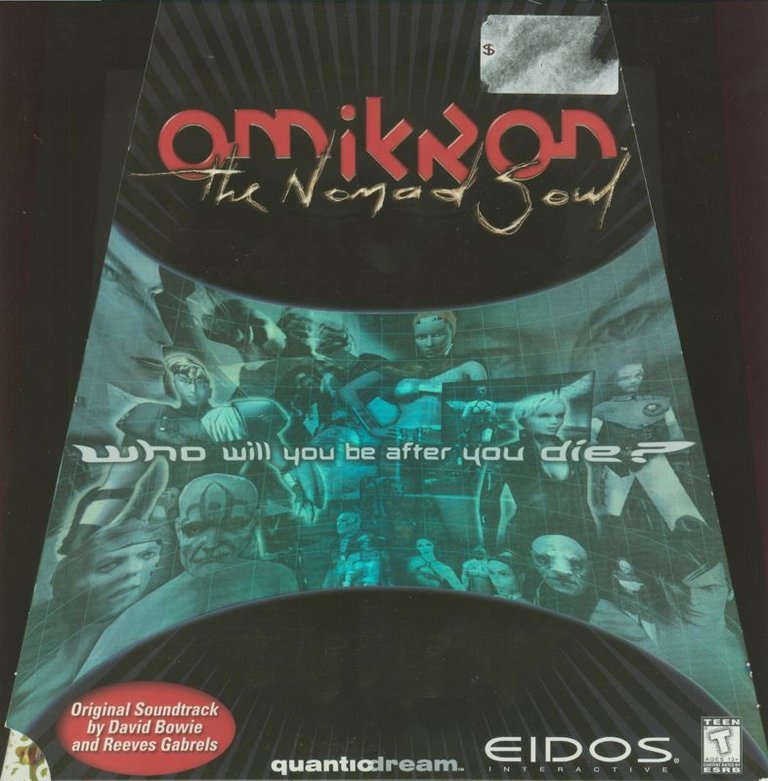
Description
In Omikron: The Nomad Soul, the futuristic cyberpunk city of Omikron sprawls beneath a massive crystal dome on the planet Phaenon, protecting its inhabitants from an ice age after the sun’s extinction. Players possess the body of police officer Kay’l 669 via soul transfer to investigate bizarre murders, exploring vast districts, interacting with residents, solving puzzles, and engaging in FPS and fighting sequences across up to 41 characters to thwart a sinister force threatening the city’s doom.
Gameplay Videos
Where to Buy Omikron: The Nomad Soul
Omikron: The Nomad Soul Free Download
Omikron: The Nomad Soul Cracks & Fixes
Omikron: The Nomad Soul Patches & Updates
Omikron: The Nomad Soul Mods
Omikron: The Nomad Soul Guides & Walkthroughs
Omikron: The Nomad Soul Reviews & Reception
metacritic.com (79/100): Generally Favorable. In 1999 it was WAY ahead of the time. What an atmosphere, what a world design.
gamespot.com : Omikron combines several types of gameplay with limited success.
gamepressure.com (66/100): Mixed reviews with ambitious concept but clunky controls.
gamesreviews2010.com (50/100): A true masterpiece of interactive storytelling.
Omikron: The Nomad Soul Cheats & Codes
Sega Dreamcast (Action Replay / GameShark / Pro Action Replay [US])
These dongle-dependent codes are for the North American (NTSC) version. Enter using an Action Replay, GameShark, or Pro Action Replay device.
| Code | Effect |
|---|---|
| 59A76E000000FFFF | Infinite Cash |
| 6BB86D4AC0705061 599F6E00000000C8 |
Infinite Energy |
| 6BB86D4AC0705061 847B9457000000FF |
Infinite Magic Rings |
| 6BB86D4AC0705061 59A76E000000FFFF |
Max Setek |
| 6BB86D4AC0705061 BE3623DA000000C8 |
Max Attack |
| 6BB86D4AC0705061 FF818FD1000000C8 |
Max Fight Exp / Max Mana |
| 6BB86D4AC0705061 EE9F01C3000000C8 |
Max Body Resistance |
| 6BB86D4AC0705061 90A013A0000000C8 |
Max Speed |
| 6BB86D4AC0705061 CEFBFEAF000000C8 |
Max Dodge |
Sega Dreamcast (CodeBreaker [USA])
These codes require a Codebreaker device or emulator support. For the USA version.
| Code | Effect |
|---|---|
| 0D0012F0 00000100 017D6346 000000C8 |
Unlimited Energy |
| 0D0012F0 00000100 017D6348 0000FFFF |
Max Setek |
| 0D0012F0 00000100 017D634A 000000FF |
Unlimited Magic Rings |
| 0D0012F0 00000100 017D633C 000000C8 |
Max Attack |
| 0D0012F0 00000100 017D6342 000000C8 |
Max Fight Experience / Max Mana |
| 0D0012F0 00000100 017D633E 000000C8 |
Max Body Resistance |
| 0D0012F0 00000100 017D633A 000000C8 |
Max Speed |
| 0D0012F0 00000100 017D6340 000000C8 |
Max Dodge |
Omikron: The Nomad Soul: Review
Introduction
Imagine a portal ripping open on your screen, a desperate police officer from a dying world pleading directly with you—the player—to abandon your reality and possess his body to avert apocalypse. This metafictional hook launches Omikron: The Nomad Soul (1999), Quantic Dream’s audacious debut that fused cyberpunk dystopia, soul-swapping mechanics, and David Bowie’s otherworldly charisma into a sprawling digital metropolis. Released amid the late-’90s explosion of 3D adventures and open-world experiments, Omikron promised—and often delivered—a living, breathing city teeming with life, peril, and existential dread. Its legacy endures as a cult artifact: flawed yet visionary, it foreshadowed director David Cage’s obsession with narrative immersion in later hits like Heavy Rain and Detroit: Become Human. Thesis: Omikron is a triumphant failure—a groundbreaking hybrid that captures the raw ambition of gaming’s adolescence, excelling in atmospheric world-building and thematic depth while faltering under clunky mechanics and genre mash-ups, cementing its status as an essential, if polarizing, milestone in interactive storytelling.
Development History & Context
Quantic Dream’s genesis traces to 1997, when David Cage—exhausted by a decade composing music—self-financed a defiant prototype from a 200-page script he’d penned since 1994. With a skeletal team of five to six friends crammed into an isolation booth turned office, Cage defied industry naysayers who deemed his “technically impossible” vision unviable. Facing a six-month deadline as funds dwindled, he demoed a rudimentary engine in London, securing an Eidos Interactive publishing deal by noon the next day. Full production kicked off a month later, ballooning to 167 credits (128 developers, 39 thanks), blending French artistic flair with Eidos’ commercial muscle.
The era’s tech constraints shaped Omikron‘s boldness: Windows PCs grappled with 3D acceleration (requiring Pentium IIIs and 1.8GB installs for smoothness), while the Dreamcast port (2000) leveraged its power but suffered streaming hitches. Cage aimed for “movie-like immersion,” mixing adventure, FPS, and fighters—echoing contemporaries like Shenmue (1999) but predating it in scope. Eidos pushed FPS elements, despite Cage’s headaches from first-person play. David Bowie’s involvement elevated it: solicited via senior designer Philip Campbell, Bowie co-composed eight tracks with Reeves Gabrels (seven reprised on Hours…), motion-captured as digital prophet Boz, and staged virtual concerts with Gail Ann Dorsey and Iman (modeling inhabitable character Iman 631). Xavier Despas handled ambient scores. Two-and-a-half years later, amid Eidos’ Tomb Raider dominance, Omikron launched November 1999 (Windows), June 2000 (Dreamcast). A PlayStation port reached 70% completion before cancellation—Eidos pivoted to Dreamcast, regretting it as sales tanked. This context—post-Half-Life shooter boom, pre-GTA III open worlds—framed Omikron as a daring outlier, gambling on simulation over reflexes in a landscape favoring twitchy action.
Narrative & Thematic Deep Dive
Omikron‘s plot is a labyrinthine tapestry of cosmic horror, gnostic rebellion, and fourth-wall breakage, unfolding across Phaenon’s ice-shrouded Omikron City—a domed megalopolis sheltering five sectors (Anekbah’s gritty sprawl, Qalisar’s bazaars, Jaunpur’s sleaze, etc.) from eternal night after their sun’s death. Kay’l 669 begs your soul through the screen, thrusting you into his body amid serial murders. Investigation reveals demons infiltrating society: Commandant Gandhar lures interdimensional souls via the game itself, feeding Astaroth—a banished demon lord regenerating in Ix, Omikron’s godlike AI overseer.
Deeper lore evokes ancient epics: Millennia ago, hero Kushulainn sealed wizards’ souls in sword Barkaya’l, wounding Astaroth before vanishing into Mahahaleel’s timeless sanctuary. Flashbacks and terminals unveil Ix’s corruption, “The Awakened” resistance, and Boz (Bowie’s ethereal network entity) prophesying the Nomad Soul—you—as Astaroth’s nemesis. Twists abound: Kay’l’s plea was a trap; deaths reincarnate you into 41+ hosts (from students to warriors), each with bios (name, age, job, address). Linear yet sprawling, the story spans police intrigue, soul reservoirs, catacombs, and finale boss Astaroth (exploitable weak-spot battle).
Themes probe identity, control, and transcendence: Soul transfer literalizes Buddhist reincarnation (“Buddhist with guns,” per Campbell), questioning self amid body-hopping. Omikron’s totalitarian Ix dictates marriage, travel, procreation—mirroring Orwellian surveillance, brainwashing via drugs, and demon-disguised elites. Metaphysical layers blend cyberpunk (Blade Runner vibes) with gnosticism: Humans vs. archons (demons), salvation through forbidden knowledge (tombs, runes). Dialogue shines variably—terse, info-dumps via 220 motion-captured minutes evoke paranoia (“The demons are among us!”); Bowie’s Boz delivers poetic gravitas (“We all go through”). Characters like Kay’l (earnest cop), Den (doomed partner), and hosts add flavor—e.g., possessing a thief yields gems, a fighter steroids—yet linearity limits branches (one “choice”: reject Kay’l, endgame). Puzzles tie narratively: Symbol rearrangements unlock prophecies. Ultimately, it’s a soul-trap allegory—you escape Astaroth’s maw, reclaiming agency in a metafictional coup.
Gameplay Mechanics & Systems
Core loop: Free-roam Omikron’s districts, gather intel via NPCs/items, solve puzzles, trigger plot via soul transfers/FPS/fights. Exploration reigns—hail Sliders (taxis), swim, jump, enter 100+ buildings (bars, shops, apartments). Inventory (18 slots) manages keys, notes, gems; excess lockers Multiplan. SNEAK terminal accesses bios, calls rides, facts. Progression: 41 souls unlock via proximity/death, stats (strength, fighting) trainable at gyms. Currency (Seteks) buys weapons/potions/rings.
Combat hybridizes poorly: Side-scrolling fights (Tekken-esque) offer punches/kicks/combos, character-dependent (e.g., warriors excel); fun but sparse, plot-locked, underusing training. FPS sequences—mandatory, maze-nav/puzzle-gunfights—are clunkiest: No strafing, auto-health kits waste supplies, poor aiming/AI. No seamless transitions—you’re locked until completion.
Innovations: Soul transfer revolutionizes agency—disguise for restricted areas, apartment raids for uniques (e.g., artifacts). Puzzles blend logic/inventory: Crystal alignments, pipe symphonies, rune sequences. Flaws abound: Console-y controls (no mouse-look initially), fiddly interactions (precise positioning), ring-save system (abundant but apartment-tethered, punishing ambushes). UI: Cinematic camera aids immersion but nauseates; first-person toggle helps. Energy/mana deplete via exertion/spells, refueled consumables. Repetitive fetch-quests pad runtime (20-40 hours), linearity belies “freedom” (filler like strip shows, Bowie gigs). Ambitious yet incoherent—adventure purity diluted by tacked-on action.
World-Building, Art & Sound
Omikron City mesmerizes: Vast, sector-distinct (Anekbah’s neon grit, palm-fringed Qalisar), populated by 100s NPCs (sitting, chatting, traffic-dodging). Enterable hubs pulse—read books, play CDs, eat/drink, romance girlfriend, attend Dreamers’ illegal Bowie concerts (motion-captured ecstasy, codpiece-shaking flair). Atmosphere: Fog-shrouded towers, hoverbikes/sliders whir, primal-industrial score (Despas) underscores dread. Visuals astound for 1999—detailed polys, expressive faces (mimics lauded), stylized districts (cyberpunk bars, ancient tombs). Engine renders crowds/life seamlessly (toggles for weak rigs).
Sound elevates: Bowie/Gabrels’ eight tracks (“Thursday’s Child,” “New Angels of Promise”) infuse haunting futurism—concerts integrate organically, later on Hours…. Ambient SFX (footfalls, chatter) build realism; voicework (167 talents, e.g., Karen Strassman) conveys paranoia. Custom font (downloadable) unifies eerie script. Collectively, they forge immersion—reality fades in Omikron’s dome, a “tangible world” blurring game/life.
Reception & Legacy
Launch reception split hairs: MobyGames aggregates 78% critics (100% Game Revolution, Génération 4; 60% GameSpot), 7.6/10 players (92 ratings). Praises: Immersive city (“most believable environment”), Bowie soundtrack (GameSpy award), story/innovation (“revolutionary” Just Adventure). Critiques: Clunky controls/FPS/saving (“awful”, Unicorn Lynx), linearity amid “freedom,” frame drops. Dreamcast port harsher (66% aggregate)—rushed, jittery. Sales: 600k+ (400-500k Europe), modest amid Eidos’ blockbusters; North America flopped sans support.
Reputation evolved to cult reverence: Initial “flawed epic” (PC Zone) became prescient—Shenmue echoes its city sim, Quantic Dream’s DNA (narrative hybrids) in Fahrenheit et al. Sequel teases (Omikron 2: Karma) fizzled for Heavy Rain. 2016 Bowie tribute freebie spiked interest; 2021 Omicron variant virality (Boz uprising clip) fueled conspiracies. Influences: Pioneered possession (Messiah), populated worlds pre-GTA, motion-capture concerts. Ranks #157 Dreamcast, #1564 Windows (Moby); MobyScore holds firm.
Conclusion
Omikron: The Nomad Soul embodies gaming’s wild ’90s frontier: A soul-stealing odyssey through a dome-trapped hellscape, where Bowie croons prophecies amid demon hunts and body-swaps. Its triumphs—vast, alive world; philosophical heft; sonic wizardry—outweigh stumbles (wooden action, finicky saves). Exhaustive yet uneven, it sold modestly but seeded Quantic Dream’s empire, proving ambition trumps polish in cult gestation. Verdict: Essential history lesson (8/10 retrospective)—play for the portal’s thrill, forgive the cracks; Omikron reminds us games can devour souls, for better or worse. A flawed prophet in video game canon, eternally whispering: “Better git it in yo’ soul!”