
- Release Year: 2023
- Platforms: Android, iPad, iPhone, Windows
- Publisher: Storytaco Co., Ltd.
- Developer: Storytaco Co., Ltd.
- Genre: Adventure
- Perspective: 1st-person
- Game Mode: Single-player
- Gameplay: Visual novel
- Setting: Thriller
Description
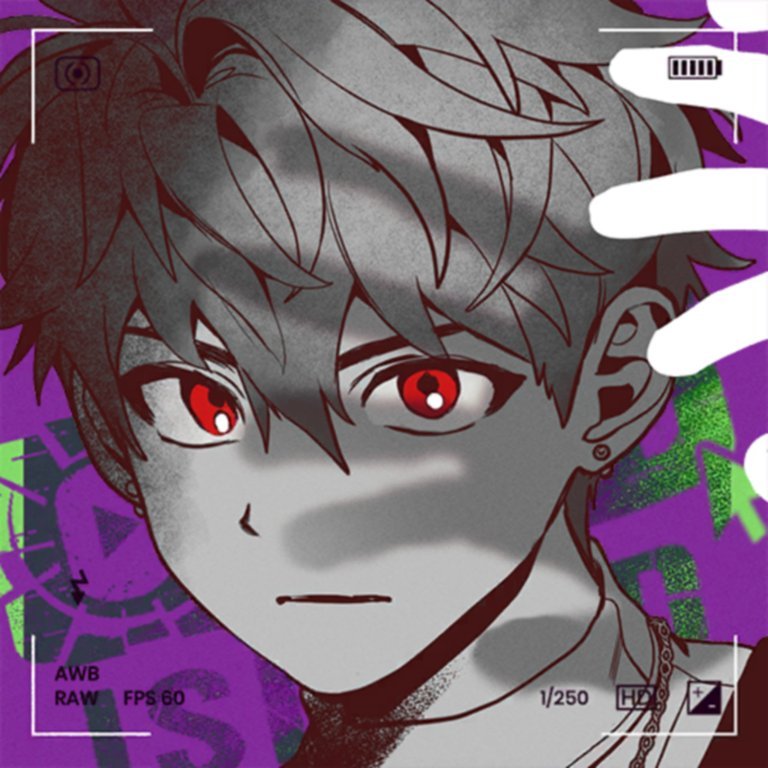
On Air Island is a thriller visual novel set on a mysterious island serving as the stage for a real-time survival program. Players step into the role of an audience member, making critical choices that shape the narrative and influence the survival of cast members amidst unforeseen events. With branching storylines driven by decisions, the game continues even as cast members disappear or perish, emphasizing that ‘the show must go on’—with player ‘donations’ potentially altering outcomes. Featuring multiple playable characters and interactive secrets, the fate of who escapes the island safely lies entirely in the player’s hands.
Gameplay Videos
Where to Buy On Air Island
PC
On Air Island Guides & Walkthroughs
On Air Island Reviews & Reception
hardcoredroid.com : The concept of On Air Island: Survival Chat is interesting, it just needs a tune up.
On Air Island: Review
Introduction
On Air Island crashes onto the digital stage not as a mere game, but as a chilling experiment in interactive horror and media critique. Hailing from South Korean developer Storytaco Co., Ltd., this 2023 release—a fusion of visual novel, survival simulation, and psychological thriller—propels players into the role of a voyeuristic “viewer” of a deadly reality show. Set on a mysterious island where contestants fight for survival under the relentless gaze of hidden cameras, the game promises a “live” narrative where every choice, donation, and decision alters the fate of its cast. Yet this ambitious concept collides headlong with the brutal realities of mobile monetization and technical constraints. This review deconstructs On Air Island’s legacy, dissecting its narrative brilliance, mechanical innovations, and systemic flaws to determine whether it redefines interactive storytelling or succumbs to its own tangled thorns.
Development History & Context
Born from Storytaco’s portfolio of niche mobile visual novels (Five Hearts Under One Roof, Kiss the Dragon), On Air Island emerged as a deliberate pivot toward broader, more experimental narratives. Released first on iOS/Android (September 11, 2023) and later PC (October 31, 2023), the game capitalized on the era’s obsession with live-streaming culture and “viewer participation” trends. Its technological DNA is rooted in mobile simplicity: static anime art, text-driven choices, and lightweight performance optimized for smartphones. This constraint birthed its core mechanic—donation-based decision-making—where players expend resources (“hearts,” “clubs,” “diamonds”) to influence the narrative.
The 2023 gaming landscape was saturated with free-to-play visual novels and gacha titles, making On Air Island’s satire of reality TV uniquely prescient. Storytaco’s vision, per its Steam pitch, was to create an “unforeseen” experience where “the show must go on” regardless of carnage. Yet this ambition was shackled by the demands of mobile economics: aggressive ad integration, in-app purchases, and a reliance on RNG for progression. The PC version later stripped away ads but retained the underlying monetization philosophy, revealing a studio caught between artistic intent and commercial viability.
Narrative & Thematic Deep Dive
On Air Island’s narrative is its towering achievement—a relentless descent into psychological and physical horror. The story unfolds as a broadcast of “Never Stop Watching!”, a survival show hosted by the sinister “Cuckoo PD.” Seven contestants—including aspiring idol Lee Han-se, stoic scientist Jin, and enigmatic Yeon Jeong-woo—are stranded on a sentient island that twists reality and preys on their deepest fears. Each character harbors secret motives, from debt evasion to fame-seeking, yet all are united by primal desperation.
The plot is a masterclass in branching dread, where player choices spawn 16+ unique endings for Lee Han-se alone, ranging from heroic sacrifice to nihilistic madness. Key scenes—the bathhouse assault on Han-se, the helicopter of unknown origin, the “beast of a remote island”—are rendered with brutal clarity, using stark black-and-white manga cutscenes that amplify discomfort. Thematically, the game eviscerates reality TV’s commodification of suffering. Contestants are reduced to content; their deaths boost ratings; and player “donations” become tools of salvation or torment. The dialogue crackles with paranoia (“Did I come back and leave you?”) and dark humor, while the island itself acts as a character—a labyrinth of psychological traps that blurs the line between supernatural and human malice.
Yet the narrative’s impact is uneven. Side stories (e.g., Yeon Jeong-woo’s poll-winning arc) feel underdeveloped, and the sheer volume of endings can dilute emotional payoff. The English translation, meanwhile, often strips nuance, replacing subtlety with stilted phrasing (“Scheduled to sink”). Despite this, On Air Island remains a rare example of interactive storytelling that forces players to confront their own voyeuristic complicity.
Gameplay Mechanics & Systems
On Air Island’s gameplay is a paradox: ingeniously simple yet maddeningly convoluted. At its core, it’s a text adventure where players influence events via “donations.” Each choice—help a character, tease them, or meddle—consumes resources (hearts/tease, clubs/help, diamonds/meddle). These items are acquired through:
– Daily missions (e.g., “Watch 3 videos”).
– Ads (shortening mission timers or granting free items).
– Purchases (premium “Prism” currency for coins/coupons).
– Achievement rewards (e.g., unlocking gallery cutscenes).
The system creates a tense resource-management loop, but its implementation is divisive. Players must constantly grind for donations or endure intrusive ads, breaking immersion. The PC version eliminates ads but retains RNG-based item drops, ensuring frustration persists.
Character progression is tied to narrative routes. Lee Han-se’s arc is fully fleshed out, while others (e.g., Jin) offer limited content, encouraging replays. The archive system is a lifeline, allowing instant jumps to choices and progress tracking. Time-limited options (“not choosing is a choice”) add urgency, mimicking live broadcast pressure. However, the UI is cluttered—especially on mobile—where donation notifications and chat logs obscure text. The “unidentified viewer” easter egg (idle-chat from a phantom user) subtly underscores the game’s themes of surveillance.
Combat is purely text-based: choices resolve conflicts (e.g., “Fight or flee”), with no action sequences. This abstraction serves the narrative but may disappoint seekers of tactile horror. Ultimately, the gameplay’s brilliance lies in its meta-commentary: players are the show’s producers, monetizing tragedy for entertainment.
World-Building, Art & Sound
The island is a character of staggering dread. Its lush, tropical veneer—palm trees, crashing waves, abandoned structures—hides a malevolent intelligence. Environments shift subtly: a beach might become a graveyard, a jungle a maze of psychological traps. This duality amplifies the horror, as beauty curdles into decay.
Art direction balances charm and grotesquerie. Characters sport expressive, anime-inspired designs that make their suffering visceral. Lee Han-se’s youthful looks, for instance, heighten discomfort during violent scenes. Static backgrounds are richly detailed, but the black-and-white cutscenes steal the show—their stark lines and shadows elevating trauma beyond mere gore. The bathhouse scene, for example, uses shadowplay and fragmented imagery to imply assault without explicitness, a masterstroke of subtlety.
Sound design is the game’s unsung hero. The soundtrack blends ambient dread (dripping water, distant howls) with jarring contrasts: a cheerful donation chime cutting through a character’s screams. Voice acting (Korean/English) excels, delivering panic, defiance, or hollow laughter with chilling authenticity. The ever-present broadcast hum—a reminder of unseen cameras—creates suffocating tension. Even silence weaponizes isolation, as characters whisper into the void, convinced they’re being watched. This audio-visual symphony cements the island as a character, one that feeds on fear.
Reception & Legacy
On Air Island’s reception mirrors its duality. On Steam, it holds a “Mixed” 64% rating, with praise for its narrative and criticism for its monetization. Hardcore Droid lauded its “interesting concept” but deemed execution “clunky,” citing ads and translation issues. Mobile players were more polarized: some celebrated its free horror, others lamented its “headache” of interruptions.
Critically, the game’s legacy is twofold. It pioneered the “viewer-as-player” mechanic, influencing titles like Storytaco’s Voice Love on Air (2024) and other interactive horror experiments. Its satire of reality TV feels increasingly prescient in an era of streaming dominance. Yet its flaws—monetization, technical debt—reverberate as cautionary tales. The Halloween and popularity-poll events (e.g., Lee Han-se winning 37,502 votes) hinted at community engagement potential, but PC exclusions highlighted fragmented vision.
Commercially, GameRebellion estimates 351k units sold, proving market interest in niche interactive narratives. Culturally, it sparked debates on ethical game design—how far should monetization intrude on storytelling? For all its flaws, On Air Island endures as a bold, if flawed, artifact—a game that dared to mirror society’s darkest reflections.
Conclusion
On Air Island is a masterpiece of atmosphere undone by its own machinery. Its narrative—a visceral critique of media’s hunger for spectacle—delivers horror that lingers long after the screen goes dark. The island’s twisted beauty, the cast’s desperation, and the meta-commentary on voyeurism coalesce into an unforgettable experience. Yet the gameplay loop, strangled by ads and RNG, transforms tension into tedium. The translation and UI flaws further obscure its brilliance, making it a game of sublime highs and frustrating lows.
Verdict: On Air Island is essential for seekers of innovative horror and narrative experimentation. It redefines interactivity by making players complicit in its darkness, even if it stumbles in execution. For those who endure its thorns, it offers not just a game, but a mirror—a reflection of how easily entertainment can become exploitation. In the annals of interactive storytelling, it stands as a flawed, haunting landmark—one that proves the most terrifying monsters are often the ones we create ourselves.