
- Release Year: 2024
- Platforms: Quest, Windows
- Publisher: Actuator Digital Pty Ltd.
- Developer: Actuator Digital Pty Ltd.
- Genre: Action
- Perspective: 1st-person
- Game Mode: Single-player
- Gameplay: Mini-games, Shooter
- VR Support: Yes
Description
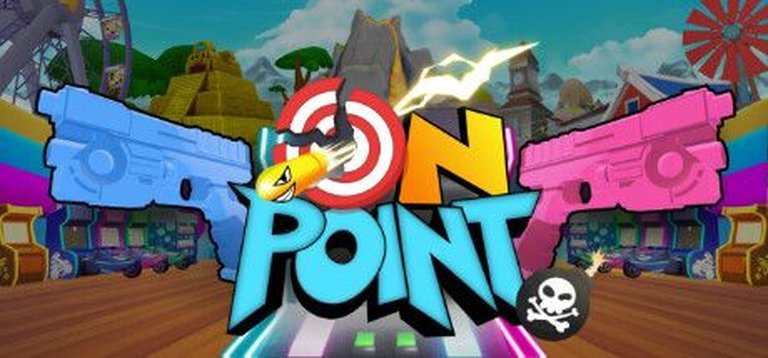
On Point is a VR shooter developed by Actuator Digital Pty Ltd., released in August 2024, that revitalizes classic lightgun arcade gameplay for modern virtual reality. This family-friendly action game features first-person perspective, motion-controlled mini-games, and vibrant bubbly visuals, offering difficulty levels from Training to Expert for players seeking pinpoint accuracy challenges. Currently in Early Access on Steam and available on Quest, it delivers a nostalgic yet contemporary shooting experience with expanding content.
Where to Buy On Point
PC
On Point: A Modern Revival of Arcade Shooting in the VR Age
1. Introduction
In a year defined by blockbuster releases (Final Fantasy VII Rebirth, Elden Ring: Shadow of the Erdtree) and industry upheaval (massive layoffs across major publishers), On Point emerges as a beacon of pure, unadulterated fun. Developed by Australian studio Actuator Digital and released on August 6, 2024, for Windows VR and Meta Quest, this title boldly resurrects the spirit of classic 90s arcade light-gun shooters like Point Blank for the modern era. While lacking the complex narratives or sprawling worlds dominating 2024’s landscape, On Point succeeds by focusing on one core principle: delivering a masterful, accessible, and endlessly replayable shooting gallery experience in virtual reality. It stands not as a contender for Game of the Year, but as a vital, joyful counterpoint to the industry’s prevailing trends, proving that simple, high-concept gameplay executed with polish can create a uniquely compelling VR experience.
2. Development History & Context
The Studio and Vision: Actuator Digital Pty Ltd., a small independent developer, crafted On Point with a clear, focused vision: to distill the addictive essence of arcade shooting galleries into a seamless VR package. Their goal wasn’t to innovate narrative or open worlds, but to perfect the core loop of aiming, shooting, and scoring against increasingly challenging targets. This purity of purpose is especially noteworthy in 2024, an year marked by significant consolidation and studio closures (e.g., Microsoft’s closure of Tango Gameworks, Sony’s layoffs totaling thousands). Actuator Digital’s ability to deliver a polished, content-rich experience (90+ minigames) highlights the potential for smaller, focused teams to thrive amidst industry turmoil.
Technological Constraints & The VR Landscape: Built on the ubiquitous Unity engine, On Point leverages VR’s unique capabilities (motion controls, immersive perspective) while working within the constraints of the hardware. The release window places it amidst a surge in VR adoption, including the launch of the Meta Quest 3S and PlayStation 5 Pro, which bolstered VR’s market presence. However, VR still occupies a niche compared to traditional gaming platforms. On Point addresses this by explicitly catering to both newcomers (“Newcomer mode”) and veterans (“Hardcore mode”), demonstrating an understanding of VR’s accessibility challenges. The choice of motion control as the primary interface is central, aiming to replicate the tactile satisfaction of physical light guns in a virtual space.
The Gaming Landscape in 2024: Released into a market saturated with narrative epics, survival horrors, and live-service titles, On Point occupies a distinct niche. It harkens back to an era when gameplay was king, offering a distraction from the often overwhelming complexity of modern games. Its non-violent, cartoonish aesthetic (“wacky non-violent fun”) contrasts sharply with the grit of titles like Helldivers II or The Last of Us Part II Remastered. This positioning makes it an outlier in 2024, a year dominated by high-budget, emotionally intense experiences. Its success, evidenced by a strong critical average (80% on MobyGames), suggests a persistent appetite for accessible, skill-based arcade experiences, even in the VR space.
3. Narrative & Thematic Deep Dive
While On Point is not a narrative-driven game in the traditional sense, its structure, setting, and implied themes create a unique form of environmental storytelling characteristic of the arcade genre.
-
The Implied Narrative of the Arcade: The core narrative is a simple, universal premise: “Test your skill.” It evokes the classic arcade carnival atmosphere – a player entering a shooting gallery, facing a barrage of targets (balloons, fruits, clay pigeons, whimsical creatures, and increasingly bizarre objects), and striving for the highest score. There’s no complex plot or character development; the protagonist is the player, and the story is written through their performance in each minigame. This lack of explicit narrative is a deliberate choice, focusing entirely on the player’s moment-to-moment engagement and improvement.
-
Thematic Elements – Skill, Mastery, and Joy: The underlying themes revolve around the pursuit of mastery and the simple joy of hitting targets. The escalating difficulty across modes (“Newcomer,” “Amateur,” “Expert”) and the sheer variety of minigames (requiring speed, precision, pattern recognition, and quick judgment) emphasize themes of challenge and growth. The “wacky” nature of the targets and scenarios injects a sense of lighthearted fun and absurdity, contrasting with the serious tones prevalent in 2024’s major releases. It champions the pure, unpretentious fun of arcade gaming, celebrating reflexes and accuracy as the core virtues.
-
Narrative Through Player Action: The primary narrative device is the player’s performance. A perfect combo shot, a record-breaking score, or finally mastering a particularly tricky minigame becomes a personal story of achievement. The leaderboard system (local, global, friends) extends this narrative into a competitive social sphere, framing individual play as part of a larger community pursuing excellence. This emergent narrative, born from player interaction and skill, is a hallmark of well-designed arcade experiences and aligns with the principles of interactive storytelling discussed in game design literature, where player agency creates unique personal stories.
4. Gameplay Mechanics & Systems
On Point revolves entirely around its core shooting gallery mechanics, executed with surprising depth and variety within its accessible framework.
-
Core Gameplay Loop: The fundamental loop is immediate and satisfying: enter a minigame, draw and fire your virtual gun, hit targets to score points, and complete the minigame’s objective (e.g., clear all targets, survive a time limit, hit specific targets). The motion controls are the absolute heart of the experience. Actuator Digital has tuned them for precision across different comfort levels (room-scale, standing, seated) and player expertise. The act of physically aiming and pulling a virtual trigger provides a level of tactile feedback and immersion impossible with traditional controllers, directly addressing the appeal of light-gun games.
-
Minigame Variety and Structure: The “over 90 minigames” are the game’s content backbone. While specific examples aren’t detailed in the sources, the description implies significant variety in objectives, target behaviors, and environmental contexts. This includes:
- Target Types: Static, moving, appearing/disappearing, requiring multiple hits, shielded, or requiring specific sequences.
- Scenarios: Classic galleries, moving targets on rails, target patterns to memorize, boss-like encounters, and the “wacky” scenarios mentioned.
- Gameplay Modes: The three difficulty tiers (Newcomer, Amateur, Expert) crucially alter target speed, size, complexity, and number, providing a smooth progression curve. Expert mode, explicitly highlighted in reviews as where the game “offers its true potential,” demands pinpoint accuracy and rapid judgment.
-
Progression and Systems: Progression is primarily driven by mastering minigames and climbing leaderboards. Completing minigames unlocks access to more content (though specifics aren’t detailed). The robust leaderboard system – local, global, and for friends – injects heavy competitive replayability. Players are constantly motivated to improve their scores, beat friends, and climb global rankings. This directly taps into the arcade spirit of high-score chasing. The USK 12 rating reinforces its family-friendly accessibility, ensuring the mechanics (pure target shooting) are appropriate for a wide audience.
-
UI and Integration: The UI is described as clean and in-world, designed not to break immersion. This suggests menus and information are integrated into the arcade environment or presented via the VR interface in a non-intrusive way, allowing players to focus on the targets. The Unity engine likely facilitates smooth performance, essential for the fast-paced, precise aiming required. The core systems are tightly focused: minigame selection, difficulty selection, shooting mechanics, and score/leaderboard tracking. There’s no unnecessary complexity, a key strength.
5. World-Building, Art & Sound
On Point creates its world through art, sound, and atmosphere, specifically crafted to evoke the classic arcade experience while leveraging VR’s strengths.
-
Visual Direction – Arcade Aesthetic Reimagined: The art style is deliberately “bright, bubbly,” and cartoonish. It avoids photorealism, instead adopting a vibrant, stylized look reminiscent of classic arcade cabinets and early 3D games like Point Blank. This serves multiple purposes:
- Clarity: Bright colors and simple, exaggerated designs ensure targets are easily identifiable against backgrounds, crucial for fast-paced gameplay.
- Tone: The “wacky” aesthetic reinforces the non-violent, fun-focused nature of the game. Targets aren’t menacing foes; they’re challenges to be overcome with a smile.
- VR Optimization: The stylized art likely translates well to VR, potentially reducing motion sickness compared to highly detailed, realistic scenes, and ensuring targets are consistently detectable.
- Atmosphere: The environments – virtual shooting galleries – are built to feel like the idealized arcades of memory – clean, inviting spaces filled with targets and visual feedback (hits, explosions, score pop-ups).
-
Sound Design – Rhythmic Feedback and Immersion: While specific soundtracks aren’t detailed, the sound design is critical for arcade shooters. Expect:
- Satisfying SFX: The distinct pew of the gun, the satisfying pop or splatter of hitting different targets, the chime for combos or high scores. These auditory cues provide immediate, tactile feedback, reinforcing the physicality of the action.
- Atmospheric Ambiance: Background music likely features upbeat, catchy, arcade-style chiptunes or electronic tracks to maintain the energetic pace. Soundscapes might include subtle crowd noises or the ambient hum of an arcade.
- Spatial Audio: VR allows for spatial audio cues, potentially indicating the location of off-screen targets or the direction of incoming threats, adding another layer of immersion and skill beyond pure visual tracking.
-
VR Integration and Atmosphere: The VR experience is “fully in-world.” This means the player’s perspective is anchored within the shooting gallery environment, not as an external observer. The motion controls make aiming feel physical. This combination creates a powerful sense of presence – the feeling of standing in the arcade cabinet, the gun feeling like an extension of the player’s hand. The “tuned for all experience and comfort levels” aspect is vital, allowing players to adjust settings for their physical space and VR tolerance, ensuring the atmospheric immersion is accessible. The overall atmosphere is one of focused fun, challenge, and satisfying action, perfectly capturing the arcade spirit.
6. Reception & Legacy
On Point entered a crowded market but carved out a niche as a premier VR arcade experience, receiving generally positive critical reception.
-
Launch Reception (2024): Critics praised its execution and accessibility. MKAU Gaming awarded it 80%, calling it an “absolute must-have title” and a “worthy shot at the top,” specifically highlighting the “classic joy of old-school lightgun games” brought into VR and its “bright, bubbly” nature. VR Realm scored it 79%, noting the clear Point Blank inspiration and emphasizing that while simpler difficulties are introductory, “Expert is where the game offers its true potential in difficulty and… pinpoint accuracy.” Both reviews stressed its family-friendly appeal and the value of its content (“jam-packed with content”). The MobyGames aggregator reflects this with an 80% average based on these two published reviews. Its commercial success is harder to gauge without sales figures, but its presence on Steam ($13.99) and the Quest platform suggests it found its audience within the VR enthusiast and casual player segments.
-
Legacy and Influence: On Point is unlikely to be remembered as a revolutionary title that changed the industry landscape. Its legacy lies in its successful execution of a specific, beloved genre:
- VR Arcade Standard: It sets a high bar for VR shooting galleries, demonstrating how to translate the light-gun feel effectively using motion controls and create a substantial, varied minigame collection. It stands alongside other VR arcade successes but focuses purely on the shooting gallery sub-genre.
- Accessibility Champion: Its focus on multiple difficulty levels and comfort options makes VR shooting more approachable than many other VR experiences, potentially expanding the genre’s audience.
- Niche Preservation: In a year dominated by big-budget, narrative-heavy titles, On Point serves as a reminder of the enduring appeal of pure skill-based arcade gameplay. It preserves a specific type of fun that many players still crave.
- Point Blank’s Modern Heir: It directly inherits the mantle of Point Blank for the VR generation, carrying forward the core appeal of accessible, high-score-focused shooting challenges.
- Indie Success Story: Actuator Digital’s ability to deliver a polished, content-rich VR title reinforces the viability of focused indie development within the VR market.
-
Influence on Subsequent Games: Its influence will likely be seen in future VR arcade shooters or minigame collections aiming for similar levels of polish, variety, and motion control integration. It demonstrates a viable template for this specific type of VR experience.
7. Conclusion
On Point is not a game that seeks to redefine the medium or tell a profound story. Instead, it achieves something arguably more difficult in 2024: it delivers a supremely well-crafted, pure, and joyous experience that perfectly executes a specific, beloved gameplay concept. Actuator Digital masterfully bridges the gap between the classic arcade light-gun era and modern VR, using motion controls to create an immersive and satisfying physical shooting experience.
Its strengths lie in its brilliant core mechanics (tuned motion controls), vast array of varied and challenging minigames, accessible design catering to all skill levels, and its unwavering focus on the simple, addictive joy of hitting targets and chasing high scores. While the narrative is minimal, it successfully creates an engaging arcade atmosphere through its bright art, satisfying sound design, and the unique presence offered by VR.
Critically lauded for its execution and content, On Point holds a unique place in 2024’s gaming landscape. It stands as a testament to the enduring power of accessible, skill-based arcade fun and serves as an excellent entry point into VR for newcomers, while providing a deeply satisfying challenge for veterans seeking pure gameplay. As a historical artifact of the VR era, it represents a successful revival of a classic genre and a compelling argument for the enduring appeal of simple, high-concept gaming executed with exceptional polish. For anyone seeking a VR experience that captures the unpretentious thrill of the arcade, On Point is, quite simply, on target.