
- Release Year: 2014
- Platforms: Windows
- Publisher: Strategy First, Inc.
- Developer: BSL Team
- Genre: Action
- Perspective: 1st-person
- Game Mode: Single-player
- Gameplay: Shooter
- Setting: Fantasy
- Average Score: 100/100
Description
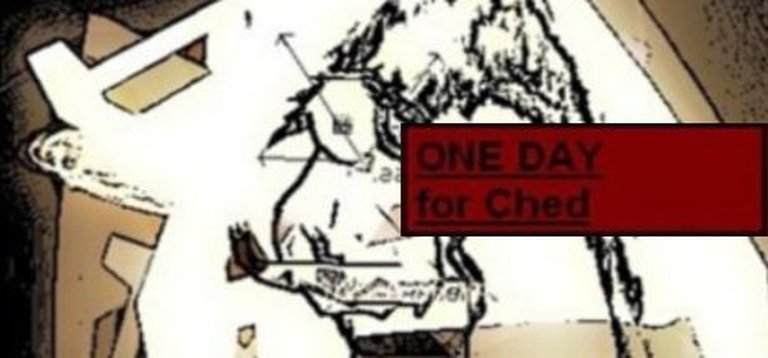
One Day for Ched is a first-person fantasy shooter where players battle monsters and demons within Ched’s mind, combining old-school hardcore gameplay with a unique comic art style. Developed by BSL Team and released in 2014, the game features relentless corridor shooting mechanics, no saves or health recovery, diverse enemies and weapons, and a quest-driven narrative focused on helping Ched survive his internal conflicts.
Gameplay Videos
Where to Buy One Day for Ched
PC
One Day for Ched Cracks & Fixes
One Day for Ched Guides & Walkthroughs
One Day for Ched Reviews & Reception
metacritic.com (100/100): Feels good, but the gameplay is usually for hardcore games fans. I would like to say that this game I received from a sale is a really good one for that price. Bravo!
One Day for Ched: A Deconstruction of a Cult Classic’s Brutal Charm
Introduction
In the crowded landscape of indie first-person shooters, few titles embody the paradox of being both technically flawed and fiercely beloved as One Day for Ched. Emerging from the Ukrainian studio BSL Team in 2014, this corridor shooter promised a return to “hardcore” gameplay reminiscent of 90s classics like Doom and * Duke Nukem 3D. Yet its legacy is defined not just by its punishing difficulty or cel-shaded visuals, but by its polarizing reception that oscillates between genuine admiration and bewildered frustration. This review dissects *One Day for Ched as a product of its time and place—a scrappy, passionate labor of love that inadvertently became a Rorschach test for player expectations. More than just a game, it stands as a cultural artifact of mid-2010s indie development, where ambition often outpaced polish, creating an experience that is as memorable for its chaotic energy as its technical shortcomings. Through meticulous analysis of its development narrative, gameplay systems, artistic direction, and reception, this thesis argues that One Day for Ched endures not despite its flaws, but because they coalesce into a uniquely authentic, if unpolished, expression of developer passion.
Development History & Context
BSL Team, a small Ukrainian studio founded by “Bs1_Bslteam” (presumably Andriy Khmil), developed One Day for Ched using the Unreal Development Kit (UDK), a free version of Epic’s Unreal Engine 3. This choice constrained the game visually but enabled ambitious level design and particle effects. The initial version (v1.0.4) was released for free on Desura and IndieDB in August 2013, positioning it as a passion project rather than a commercial venture. This freemium approach allowed the team to refine gameplay based on player feedback before its Steam launch on September 12, 2014, published by Strategy First and priced at $2.99.
The creators articulated a clear vision: to revive the “glory days of gaming” through unforgiving difficulty, emphasizing player skill over systems like health regeneration or save points. In developer interviews (via ModDB comments), they framed the game as “a battle in Ched’s mind,” blending psychological narrative with visceral action. This ambition was tempered by the team’s limited resources and the technical limitations of UDK, particularly on low-end PCs. The game’s minimum specs—a 1.8 GHz processor, 1GB RAM, and 128MB GPU—reflected a deliberate choice for accessibility, though this often clashed with the demands of its complex enemy AI and effects.
Released during a period when the indie FPS scene was burgeoning with titles like Shadow Warrior (2013) and Rise of the Triad (2013), One Day for Ched stood apart by embracing extreme difficulty as its core identity. It arrived alongside the rise of “boomer shooters,” nostalgic throwbacks to 90s action. While it lacked the polish of contemporaries, it carved a niche through its unapologetic hardcore ethos and quirky humor, becoming a cult curiosity in the era before terms like “souls-like” or “boomer shooter” entered mainstream discourse. The game’s development was iterative, with patches (v1.0.4, v1.0.5) addressing crashes, control issues, and cutscene-skipping bugs—evidence of a team responding to community feedback despite limited manpower.
Narrative & Thematic Deep Dive
One Day for Ched‘s narrative is deceptively simple yet layered with interpretive ambiguity. The protagonist, Ched, is a man trapped in a “mind battle” against his own demons, manifesting as grotesque monsters in a labyrinthine, surreal world. The story unfolds through hand-drawn comic cutscenes and fragmented dialogue, intentionally vague yet resonant with psychological themes of self-confrontation and redemption. Ched’s journey is allegorical: the corridors and arenas represent his psyche, with each level symbolizing a different facet of his trauma. This psychological framing elevates the game beyond a simple shooter, as player progress mirrors a metaphorical battle for mental clarity.
Characters are archetypal yet effective. Ched himself is an Everyman—his name possibly a mistranslation of “Chad” (as noted in Steam reviews)—making his struggles relatable. Antagonists are imaginative, if one-dimensional: gun-toting “demons” and hulking bosses represent manifestations of guilt, fear, or regret. Dialogue is minimal and often nonsensical (“Victory will can be yours”), contributing to a darkly comic tone. This absurdist humor, juxtaposed against brutal combat, creates a dissonance that mirrors the game’s core theme: the absurdity of fighting one’s inner demons.
The narrative’s strength lies in its subversion of FPS tropes. Instead of saving the world, Ched battles his psyche; instead of heroic sacrifice, his victories feel like personal breakthroughs. Yet the execution is uneven. Cutscenes are crude, and the story’s brevity leaves thematic potential underexplored. Still, the game succeeds by making its narrative experiential: the frustration of one-hit kills mirrors Ched’s powerlessness, while eventual triumphs feel cathartic. This integration of theme and gameplay, however unintentional, transforms a straightforward shooter into a poignant—if chaotic—allegory.
Gameplay Mechanics & Systems
At its core, One Day for Ched is a hardcore corridor shooter defined by its punishing “no-margin-for-error” philosophy. The game eschews modern conveniences: no health regeneration, no save points, and no checkpoints. A single bullet or environmental hazard ends the run, forcing players to restart levels. This design creates intense, high-stakes encounters but also significant friction. Combat is fast-paced, with six distinct firearms (each with primary and alt-fire modes) and six weapon types (pistol, shotgun, assault rifle, rocket launcher, grenade launcher, and a “drunk” weapon with unpredictable effects). Weapon variety is superficial, though, as most enemies require similar tactics: circle-strafing and precision shooting due to the one-hit-kill mechanic.
Enemy design is a double-edged sword. Four enemy types per level—including bosses like hulking brutes or agile snipers—offer tactical variety. Bosses, in particular, demand pattern recognition and resource management. However, their high accuracy and unpredictable spawning (often from off-screen) frustrate. AI is serviceable but glitchy, with enemies occasionally stuck in geometry or pathfinding errors. Level design is linear and claustrophobic, emphasizing tight corridors and arena-like combat spaces. This works for the “corridor shooter” premise but feels repetitive after the first few levels.
Progression is minimal and unforgiving. Players navigate short levels sequentially, with no skill trees or gear upgrades. The only progression metric is completion, turning the game into a test of endurance rather than mastery. UI is notably bare-bones: tiny health/ammo meters blend into the environment, and controls are non-customizable in early versions (later patched). This lack of options alienates players seeking accessibility, though defenders argue it maintains the game’s “pure” focus on skill. The absence of sprint or crouch further limits tactical options, reducing combat to frantic strafing and praying for favorable spawns.
Despite these flaws, the gameplay loop has a hypnotic rhythm. Each failed attempt sharpens reflexes; each successful clear elicits a rush of adrenaline. The game’s Steam tag “Souls-like” (though historically inaccurate) hints at this appeal: overcoming seemingly insurmountable odds through persistence. Yet, for many, the difficulty crosses into masochism. As a Steam review laments, “Being killed in one hit […] makes it too hard to be hardcore.” This tension between challenge and frustration defines One Day for Ched‘s gameplay legacy.
World-Building, Art & Sound
BSL Team’s visual style is the game’s most cohesive element. A cel-shaded, comic-book aesthetic gives the game a vibrant, cartoonish appearance that contrasts sharply with its dark themes. Environments blend fantasy and surrealism: neon-lit corridors, blood-soaked arenas, and grotesque architecture evoke a dreamlike, nightmarish landscape. This “comic atmosphere,” as advertised, is achieved through bold outlines, saturated colors, and exaggerated character designs. Enemies are delightfully grotesque—from floating eyeballs to chainsaw-wielding demons—each rendered with a playful, almost caricatured menace.
Art direction prioritizes readability over realism, which aids gameplay. Enemies are distinctly silhouetted against chaotic backgrounds, though this breaks down during intense firefights. The use of hand-drawn comic cutscenes for story sequences unifies the art style, even if the crude line art feels amateurish. Level design is rich in detail, with interactive props (exploding barrels, destructible crates) adding texture. However, technical constraints lead to repetitive textures and occasional pop-in, detracting from immersion.
Sound design amplifies the game’s chaotic energy. Weapon effects are punchy and visceral, though generic. Enemy sounds range to the iconic (roars) to the absurd (gibberish), enhancing the dark humor. The soundtrack—largely absent in the base game—was later expanded via DLC, but its absence leaves combat feeling sterile. Voice acting is intentionally stilted and broken, with Ched’s lines delivered in thick accents, adding to the game’s unintentional charm. Yet, sound mixing is inconsistent; music abruptly cuts, and environmental audio glitches mar tension.
Together, art and sound create a dissonant atmosphere: the cheerful visuals clash with brutal gameplay, while the lack of a cohesive audio landscape underscores the game’s amateurish roots. Yet this dissonance becomes part of its identity—a world that is both inviting and hostile, much like Ched’s psyche.
Reception & Legacy
One Day for Ched‘s reception is a study in extremes. On launch, it garnered “Mixed” reviews on Steam (41% positive at the time of writing), with praise for its difficulty and art style tempered by criticism of its technical flaws. Positive reviews like “I loved every second of it!” (Steam, 2014) celebrate its old-school challenge, while damning ones call it “awful execution” (Metacritic, 2016). The game’s $2.99 price point mitigated buyer’s remorse, but polarizing opinions cemented its cult status, not mainstream success.
Over time, its reputation evolved. Critics and players re-evaluated its rough edges as intentional features, not bugs. The “boomer shooter” community embraced its unapologetic difficulty, while YouTube LPs and memes (“Ched’s Wonderful Voice”) amplified its absurd humor. BSL Team’s responsiveness—issuing patches and DLC (e.g., “EXTREME! DLC” in 2014)—demonstrated indie developer grit, even if the game remained a niche curiosity. Metacritic’s user score (4.8/10) reflects enduring divisiveness, yet the game’s longevity is undeniable: it retains a small, dedicated player base over a decade post-release.
Influence is harder to quantify. One Day for Ched didn’t spawn direct clones, but it exemplified a trend of scrappy, passion-driven indies in the early 2010s. Its legacy lies in its authenticity—a game unafraid to be weird, difficult, and unpolished. It also serves as a cautionary tale about accessibility, influencing later titles like Ziggurat (2014) to balance challenge with player-centric design. For better or worse, One Day for Ched remains a testament to the era’s chaotic indie scene, where ambition could outpace execution but never passion.
Conclusion
One Day for Ched is an enigma—a game that is simultaneously a flawed mess and a fascinating artifact. Its technical shortcomings, punishing difficulty, and amateurish presentation are undeniable barriers to enjoyment, yet they are inseparable from its charm. BSL Team’s vision of a “hardcore” old-school shooter, realized through limited resources, results in an experience that is as chaotic as it is compelling. The narrative’s psychological depth, art style’s vibrancy, and raw challenge create a unique cocktail that resonates with a specific audience: those who value passion over polish and see beauty in imperfection.
Ultimately, One Day for Ched earns its place in video game history not as a masterpiece, but as a cult classic. It represents a moment when indie developers could experiment fearlessly, creating works that were as much about expression as entertainment. Its legacy is a reminder that games, like people, can be deeply flawed yet endearing. For players seeking a nostalgic challenge with a side of absurdist humor, One Day for Ched remains a surreal, unforgettable journey. For everyone else, it stands as a testament to the unpredictable, often maddening, but always human nature of video game creation. In the end, Ched’s battle is our own: a fight to find meaning in chaos, and to endure despite the odds.