
- Release Year: 2000
- Platforms: Windows
- Publisher: Schweiger InterActive
- Developer: Schweiger InterActive
- Genre: Educational, Science, Simulation, Space flight, Vehicle simulator, Vehicular
- Perspective: 1st-person
- Game Mode: Single-player
- Gameplay: Docking, Interplanetary travel, Moddable, Realistic Physics, Space flight
- Setting: Earth’s orbit, Futuristic, Sci-fi
- Average Score: 90/100
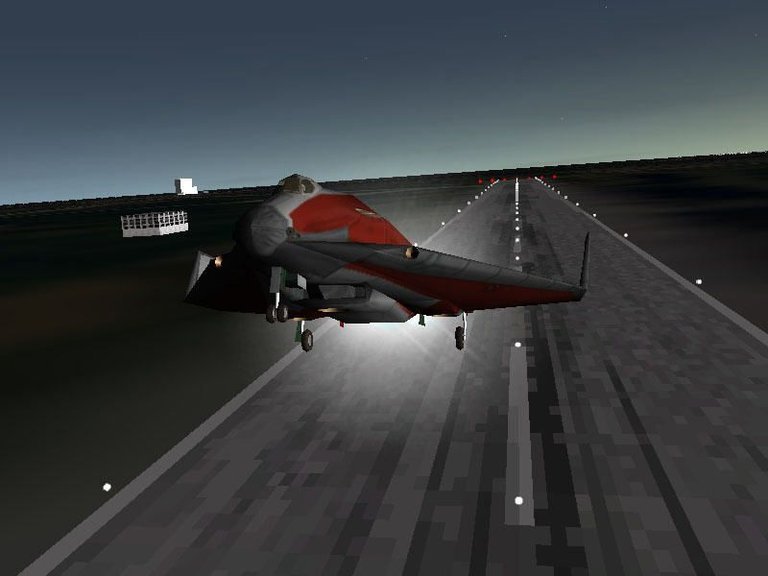
Description
Orbiter is a highly realistic freeware space flight simulator developed by Dr. Martin Schweiger, offering an accurate Newtonian physics model for navigating spacecraft within our solar system. Players can pilot vessels like the Space Shuttle, dock with the International Space Station, or embark on interplanetary missions, aided by customizable multi-function displays and high-resolution planetary textures. The game supports extensive modifications, including new ships, celestial bodies, and entire solar systems, while its scalable graphics engine ensures smooth performance across different hardware configurations.
Gameplay Videos
Orbiter Free Download
Orbiter Mods
Orbiter Guides & Walkthroughs
Orbiter Reviews & Reception
mobygames.com (90/100): Orbiter is a freeware space simulator coded by the British professor Dr. Martin Schweiger, having been in development since 2000.
homeoftheunderdogs.net (90.2/100): Orbiter is a definite must-have for any space sim enthusiast, and a Hall of Belated Fame inductee in my book.
Orbiter: A Comprehensive Review of the Definitive Space Flight Simulator
Introduction
Few video games have achieved the level of technical precision, educational value, and enduring community engagement as Orbiter. Released in 2000 by Dr. Martin Schweiger, a senior research fellow at University College London, Orbiter is not merely a game—it is a meticulously crafted space flight simulator that has redefined the boundaries of realism in virtual space exploration. Unlike conventional space simulators that prioritize accessibility or arcade-style gameplay, Orbiter embraces the complexities of orbital mechanics, Newtonian physics, and aerospace engineering, offering an unparalleled experience for enthusiasts, students, and professionals alike.
This review will delve into the development history, narrative and thematic elements, gameplay mechanics, world-building, reception, and legacy of Orbiter, positioning it as a landmark achievement in simulation software and a cornerstone of the space flight genre.
Development History & Context
The Vision of Dr. Martin Schweiger
Orbiter was born out of Dr. Martin Schweiger’s dissatisfaction with existing space flight simulators, which he found lacking in realistic physics-based flight models. As a computer scientist with a passion for space exploration, Schweiger sought to create a simulator that could serve both as an educational tool and a platform for realistic space flight simulation. His goal was to make the intricacies of orbital mechanics and spacecraft operation accessible and engaging, bridging the gap between theoretical physics and interactive learning.
Technological Constraints and Innovations
Developed in C++ and initially released in 2000, Orbiter was designed to run on Windows systems, leveraging DirectX for its graphics rendering. The simulator’s physics engine is one of its most remarkable achievements, utilizing the VSOP87 solution for planetary motion and the ELP2000 model for the Earth-Moon system. These models ensure that the simulator accurately reflects real-world celestial mechanics, including gravitational effects, orbital decay, and atmospheric flight dynamics.
Despite its technical sophistication, Orbiter was designed to be scalable, allowing users to adjust graphical settings to accommodate less powerful hardware. This flexibility ensured that the simulator remained accessible to a broad audience, from students on modest PCs to professionals with high-end systems.
The Gaming Landscape of 2000
At the time of Orbiter’s release, the space flight simulation genre was dominated by titles like Microsoft Space Simulator (1994), which had set a high bar for realism but was beginning to show its age. Other simulators, such as Freespace 2 and X-Wing vs. TIE Fighter, focused more on combat and narrative-driven gameplay, leaving a gap for a simulator that prioritized scientific accuracy and educational value.
Orbiter filled this niche by offering a purely physics-based experience, devoid of the arcade elements that characterized many of its contemporaries. Its release as freeware further democratized access to high-quality space flight simulation, making it a valuable resource for educators and enthusiasts alike.
Narrative & Thematic Deep Dive
The Absence of a Traditional Narrative
Orbiter is not a game in the traditional sense. It lacks a structured narrative, predefined missions, or a linear progression system. Instead, it presents players with a sandbox environment where they can explore the solar system, pilot various spacecraft, and engage in activities ranging from docking with the International Space Station (ISS) to executing interplanetary transfers.
This absence of a traditional narrative is not a flaw but a deliberate design choice. Orbiter is a simulator first and foremost, and its “story” is one of discovery, experimentation, and mastery. Players are encouraged to set their own goals, whether it be replicating historical space missions, testing hypothetical spacecraft designs, or simply marveling at the beauty of the cosmos.
Themes of Exploration and Scientific Discovery
The overarching themes of Orbiter revolve around exploration, scientific inquiry, and the human quest to understand and conquer the final frontier. The simulator’s emphasis on realism reinforces these themes, as players must grapple with the same challenges faced by real-world astronauts and mission planners.
- Exploration: Orbiter allows players to visit every planet and major moon in the solar system, each rendered with scientific accuracy. The ability to traverse vast distances and witness the diversity of celestial bodies fosters a sense of wonder and curiosity.
- Scientific Discovery: The simulator’s physics engine and orbital mechanics provide a hands-on learning experience. Players can experiment with different trajectories, gravitational assists, and propulsion systems, gaining a deeper understanding of the principles that govern space flight.
- Human Ingenuity: The inclusion of both real and fictional spacecraft highlights the creativity and innovation inherent in space exploration. From the Space Shuttle Atlantis to the futuristic Delta-Glider, Orbiter celebrates the engineering marvels that make space travel possible.
The Role of Add-Ons in Expanding the Experience
While Orbiter’s base package is impressive, its true narrative depth comes from the vast library of community-created add-ons. These modifications introduce new spacecraft, missions, planetary systems, and even entirely new scenarios, effectively transforming Orbiter into a dynamic, ever-evolving platform.
For example, add-ons like Project Apollo – NASSP allow players to relive the Apollo moon landings with meticulous historical accuracy, complete with authentic spacecraft systems and mission profiles. Other add-ons introduce fictional universes inspired by Star Trek, Star Wars, and Babylon 5, blending scientific realism with speculative fiction.
Gameplay Mechanics & Systems
Core Gameplay Loop
Orbiter’s gameplay is centered around the simulation of space flight, from launch to landing and everything in between. The core gameplay loop involves:
- Mission Planning: Players select a spacecraft and plan their mission, whether it be a simple orbital flight, a rendezvous with a space station, or an interplanetary voyage.
- Launch and Ascent: Piloting a spacecraft through Earth’s atmosphere requires careful management of thrust, aerodynamics, and fuel consumption. The simulator’s physics engine ensures that every maneuver has realistic consequences.
- Orbital Operations: Once in orbit, players must navigate using orbital mechanics, performing maneuvers such as Hohmann transfers, gravitational slingshots, and docking procedures.
- Re-Entry and Landing: Returning to Earth or landing on another celestial body demands precision, as players must account for atmospheric drag, heat shielding, and landing trajectories.
Spacecraft and Control Systems
Orbiter includes a variety of spacecraft, each with unique handling characteristics and capabilities:
- Space Shuttle Atlantis: The only real-world spacecraft included in the base package, the Atlantis offers a realistic simulation of NASA’s iconic orbiter, complete with launch, orbital operations, and landing procedures.
- Delta-Glider (DG): A fictional single-stage-to-orbit spaceplane, the Delta-Glider is designed to be more accessible to newcomers while still offering a challenging flight experience. Its scramjet variant, the DG-S, allows for atmospheric flight and interplanetary travel.
- Dragonfly: A complex space tug designed for constructing space stations, the Dragonfly simulates advanced subsystems and is an excellent example of Orbiter’s technical depth.
- Shuttle-A: A small space freighter capable of transporting cargo between Earth, the Moon, and Mars. Its lack of aerodynamic lift makes it a challenging craft to pilot in Earth’s atmosphere.
Each spacecraft is controlled through a combination of keyboard inputs, multi-function displays (MFDs), and virtual cockpits. The MFDs provide critical information such as navigation data, engine status, and orbital parameters, while the virtual cockpits offer an immersive first-person perspective.
Physics and Orbital Mechanics
The heart of Orbiter’s gameplay is its physics engine, which simulates Newtonian mechanics with remarkable accuracy. Key features include:
- Gravitational Effects: The simulator accounts for the gravitational influence of all celestial bodies, including non-spherical gravity fields. This means that orbits are not perfect ellipses but are influenced by the irregular shapes of planets and moons.
- Orbital Decay: Spacecraft in low Earth orbit experience atmospheric drag, leading to orbital decay over time. Players must perform periodic reboosts to maintain their orbit.
- Relativistic Limitations: While Orbiter does not simulate relativistic effects such as time dilation, its physics engine is robust enough to handle high-velocity interplanetary transfers.
Multi-Function Displays (MFDs) and Instrumentation
The MFDs are a critical component of Orbiter’s user interface, providing players with real-time data on their spacecraft’s status and environment. These displays can be customized to show information such as:
- Orbit MFD: Displays the spacecraft’s current orbit, including apogee, perigee, and inclination.
- Surface MFD: Provides a topographical map of the planet or moon below, including elevation data and surface features.
- Nav MFD: Assists with navigation, showing the spacecraft’s position relative to other celestial bodies and waypoints.
- Docking MFD: Aids in docking procedures by providing alignment and distance data.
The ability to configure these displays allows players to tailor their experience to their specific needs, whether they are performing a precise docking maneuver or navigating the vast expanse of interplanetary space.
Modding and Customization
One of Orbiter’s greatest strengths is its extensibility. The simulator’s open architecture and comprehensive API allow users to create and share a wide range of add-ons, including:
- New Spacecraft: From historical vehicles like the Apollo Command Module to fictional starships from popular sci-fi franchises.
- Planetary Systems: Add-ons can introduce entirely new solar systems, complete with custom planets, moons, and asteroids.
- Mission Scenarios: Predefined missions that challenge players to achieve specific objectives, such as landing on Mars or rescuing a stranded satellite.
- Enhanced Graphics: High-resolution textures, improved lighting effects, and detailed 3D models that enhance the visual fidelity of the simulator.
The modding community has been instrumental in keeping Orbiter relevant and engaging, with thousands of add-ons available through repositories like Orbithangar and the Orbiter Forum.
World-Building, Art & Sound
The Solar System and Beyond
Orbiter’s representation of the solar system is a testament to its commitment to scientific accuracy. The simulator includes:
- The Sun and Planets: All eight planets (and Pluto, available as an add-on) are modeled with accurate orbital mechanics, surface textures, and atmospheric properties.
- Moons and Dwarf Planets: Major moons such as Earth’s Moon, Jupiter’s Galilean satellites, and Saturn’s Titan are included, each with unique surface features and gravitational characteristics.
- Asteroids and Comets: While not all are included in the base package, add-ons provide a wealth of additional celestial bodies, from the asteroid belt to distant comets.
The visual representation of these bodies is enhanced by high-resolution textures, dynamic lighting, and atmospheric effects. For example, Earth’s “Blue Marble” texture, provided by NASA, offers a stunningly realistic depiction of our planet, complete with cloud cover and topographical details.
Art Direction and Visual Fidelity
Orbiter’s art direction is grounded in realism, with a focus on accurately depicting the harsh beauty of space. The simulator’s graphics engine is capable of rendering:
- Planetary Surfaces: Detailed textures that reflect real-world geological features, from the craters of the Moon to the storm systems of Jupiter.
- Atmospheric Effects: Realistic cloud formations, auroras, and atmospheric scattering that enhance the immersion of planetary approaches and re-entries.
- Spacecraft Models: Highly detailed 3D models of both real and fictional spacecraft, with accurate animations and damage effects.
The visual fidelity of Orbiter is further enhanced by the ability to adjust graphical settings, allowing players to balance performance and aesthetics based on their hardware capabilities.
Sound Design and Immersion
Early versions of Orbiter lacked native sound support, a notable omission given the importance of audio in creating an immersive experience. However, the community quickly addressed this gap with add-ons such as OrbiterSound and XRSound, which introduced:
- Engine Noises: Realistic rocket engine sounds that vary based on thrust levels and atmospheric conditions.
- Ambient Sounds: Cabin noises, radio chatter, and environmental effects that enhance the sense of being aboard a spacecraft.
- Music and Playlists: Customizable soundtracks that can be tailored to the player’s preferences.
With the release of Orbiter 2024, XRSound was integrated into the base package, providing native sound support and further enhancing the simulator’s immersion.
Reception & Legacy
Critical and Commercial Reception
Orbiter has been widely praised for its realism, educational value, and technical achievements. While it has not received the same level of mainstream attention as commercial titles, its impact within the simulation and educational communities has been profound.
- Critical Acclaim: Reviewers have consistently lauded Orbiter for its accurate physics engine, extensive modding support, and educational potential. GameHippo.com awarded it a 90% score, highlighting its “splendid and accurate physics engine” and “extremely realistic interplanetary flight.”
- Educational Use: Orbiter has been adopted as a teaching tool in classrooms and universities, where it is used to illustrate principles of orbital mechanics, spacecraft design, and mission planning. Its accessibility and realism make it an invaluable resource for STEM education.
- Community Engagement: The Orbiter community is one of the most active and dedicated in the simulation genre. Forums, modding repositories, and collaborative projects have ensured that the simulator remains vibrant and evolving, even decades after its initial release.
Influence on Subsequent Games
Orbiter’s influence can be seen in a number of subsequent space flight simulators and games:
- Kerbal Space Program (KSP): While KSP adopts a more accessible and humorous approach, its physics engine and orbital mechanics are clearly inspired by Orbiter’s realism. The game’s modding community and educational value also echo Orbiter’s legacy.
- SpaceEngine: This astronomical simulator shares Orbiter’s commitment to scientific accuracy, offering a procedurally generated universe that players can explore in real-time.
- Elite Dangerous: While primarily a space combat and trading game, Elite Dangerous incorporates realistic orbital mechanics and spacecraft handling, reflecting Orbiter’s influence on the genre.
The Evolution of Orbiter
Since its initial release in 2000, Orbiter has undergone numerous updates and enhancements, culminating in the release of Orbiter 2024. Key milestones in its evolution include:
- Orbiter 2006: Introduced support for TrackIR, allowing players to use head-tracking technology for a more immersive cockpit experience.
- Orbiter 2010: Expanded the simulator’s graphical capabilities, including higher-resolution textures and improved lighting effects.
- Orbiter 2016: Added terrain elevation modeling for Earth, the Moon, and Mars, as well as support for higher-definition surface textures and clouds.
- Orbiter 2024: Integrated XRSound into the base package, providing native sound support and further enhancing the simulator’s immersion.
The transition to an open-source MIT License in 2021 has also ensured that Orbiter will continue to evolve, with contributions from developers and enthusiasts around the world.
Conclusion
Orbiter is more than a game—it is a testament to the power of simulation as a tool for education, exploration, and inspiration. Dr. Martin Schweiger’s vision of a realistic, physics-based space flight simulator has not only endured but thrived, thanks to its unwavering commitment to scientific accuracy and its vibrant, creative community.
While its steep learning curve and lack of traditional gameplay elements may deter casual players, Orbiter offers an unparalleled experience for those willing to invest the time and effort to master its complexities. Its influence on the space flight simulation genre is undeniable, and its legacy as an educational and technical achievement is secure.
For anyone with an interest in space exploration, orbital mechanics, or the challenges of spacecraft operation, Orbiter is an essential experience. It is a simulator that transcends the boundaries of gaming, offering a glimpse into the vast, awe-inspiring frontier of space.
Final Verdict: Orbiter is a masterpiece of simulation software, a landmark achievement in the space flight genre, and a vital resource for educators and enthusiasts alike. Its realism, depth, and extensibility ensure that it will remain a cornerstone of virtual space exploration for years to come. 10/10