
- Release Year: 2024
- Platforms: Windows
- Publisher: ETime Studio
- Developer: MaoDuo Games
- Genre: Action, Simulation
- Perspective: Behind view
- Game Mode: Single-player
- Setting: Fantasy
- Average Score: 85/100
Description
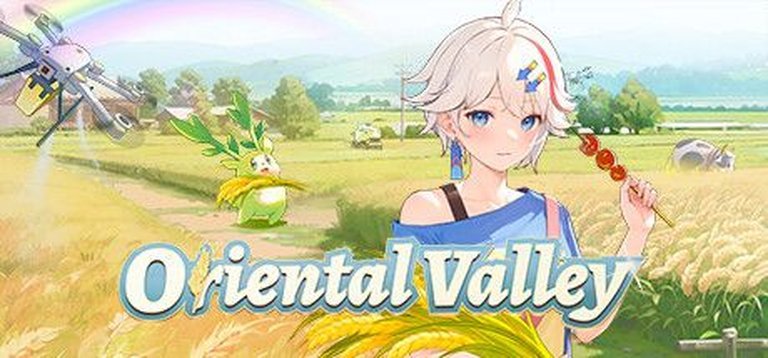
Oriental Valley is an indie simulation adventure that follows Xiao Jiang, who stumbles into the village of Niu Yang and begins a leisurely countryside life. The game emphasizes freedom of exploration, immersing players in a laid-back lifestyle filled with traditional customs, quirky characters, and hidden surprises, all presented in an anime art style with a behind-the-view perspective.
Gameplay Videos
Where to Buy Oriental Valley
Oriental Valley Free Download
Oriental Valley Cracks & Fixes
Oriental Valley Patches & Updates
Oriental Valley Guides & Walkthroughs
Oriental Valley: A Quirky Journey Through Modern Rural China
Introduction
In the ever-expanding landscape of indie simulation games, Oriental Valley emerges as a delightful anomaly—a title that masterfully blends traditional Chinese rural life with whimsical fantasy elements. Released on April 25, 2024, by developer MaoDuo Games and published by ETime Studio, this Windows-exclusive title invites players to step into the shoes of Xiao Jiang, who stumbles into the enigmatic Niu Yang village. While the simulation genre often leans toward familiar Western pastoral tropes, Oriental Valley carves its own niche by infusing “modern new rural construction” with a distinctly Chinese cultural identity, creating a world that feels both refreshingly authentic and playfully surreal. This review will argue that Oriental Valley succeeds not merely as a “cozy game,” but as a vibrant cultural tapestry—elevating its sandbox mechanics through meticulous world-building, endearing character interactions, and a harmonious fusion of tradition and innovation.
Development History & Context
Oriental Valley was birthed from the creative vision of MaoDuo Games, a studio whose name translates to “Cat Duo Games,” hinting at a playful, feline-inspired design philosophy. The game was published by ETime Studio, a publisher specializing in culturally rich indie titles, and launched exclusively on Windows in April 2024—a period saturated with simulation and adventure games. Its arrival amidst titans like Stardew Valley and Animal Crossing could have been overshadowing, yet Oriental Valley distinguished itself through its deliberate focus on Chinese aesthetics and modern rural themes.
Technologically, the game operates on modest system requirements (minimum: GTX 1060/RX 580), reflecting its optimized 3D anime/manga art style rather than graphical ambition. The behind-view perspective and direct control scheme nod to classic simulations like Harvest Moon, while its open-world design aligns with contemporary indie sensibilities. Crucially, the developers clarified that AI was only used for the store page’s farm background—not in the game itself—a stance that underscores their commitment to authentic, handcrafted content. This context is vital: Oriental Valley wasn’t merely chasing trends; it sought to redefine the “cozy game” by centering it on a distinctly Chinese experience, offering global players a window into the nuances of “modern country life” with “traditional customs.”
Narrative & Thematic Deep Dive
The narrative of Oriental Valley unfolds with the gentle cadence of a folk tale. Players assume Xiao Jiang, a traveler who accidentally stumbles into Niu Yang village, sparking an “unexpected railway adventure” that becomes a metaphor for rediscovery. There is no grand villain or epic quest—instead, the plot weaves through the tapestry of daily village life, where “worried village chiefs,” “arrogant conductors,” and “sad hawkers” become the architects of the story. The dialogue is deliberately peppered with dry humor and absurdity, epitomized by the game’s signature “Stick Figures”—NPCs whose “sense of humor as odd as their logic” invites players into a world where logic is secondary to whimsy.
Thematic richness permeates every corner. The game explores the collision of tradition and modernity through its agricultural systems, allowing players to master both “traditional farming” and “cutting-edge agricultural tech.” This duality mirrors real-world rural China’s evolution, where ancient customs coexist with innovation. Relationships are the narrative backbone; building rapport with villagers unlocks “quirky items and hidden surprises,” transforming NPCs from quest-givers into confidants. Cultural immersion is paramount: attending “festive banquets” and navigating “bustling markets” aren’t just activities but rituals that honor community and nostalgia. Even the mines—described as “deep and depressing”—offer thematic depth, with their “magical” transitions symbolizing the unknown lurking beneath the surface of ordinary life.
Gameplay Mechanics & Systems
At its core, Oriental Valley is a sandbox of delightful contradictions. The gameplay loops revolve around pastoral staples—farming, animal husbandry, fishing, and cooking—but infused with unexpected twists. Farming, for instance, ranges from cultivating native plants to deploying “refreshing agricultural technology,” catering to both purists and tech enthusiasts. The progression system is organic, tied to skill mastery and relationship-building, rather than rigid leveling. Unlocking railway access to new regions—the Bamboo Sea, Desert, and Terrace—acts as a powerful motivator, each biome offering unique resources and challenges.
Combat, atypical for the genre, manifests as “jovial skirmishes” for collecting “Agrispirits,” light-hearted battles that prioritize collection over conflict. The UI, while functional, leans into simplicity, with menus mirroring the village’s unhurried pace. However, the game isn’t without flaws. Community discussions highlight occasional bugs, like vanishing fishing rods or unclear quest objectives (e.g., “the village chief says there’s a sound below—where?”). These minor stumbles are offset by ingenious systems: the magical mines, where “swings of the pickaxe could reveal new worlds,” transform resource gathering into exploration, while the Easter egg hunt incentivizes meticulous observation. Ultimately, Oriental Valley thrives on freedom—though its “patient explorers” ethos may frustrate players seeking constant direction.
World-Building, Art & Sound
Niu Yang village is a masterpiece of environmental storytelling. The setting is a “weird and wonderful world” where sunrise-to-sunset rhythms coexist with fantastical elements. The art direction, rendered in vibrant anime/manga style, balances realism and caricature—rolling valleys and bamboo forests breathe with life, while jagged desert dunes and misty old towns offer stark contrasts. The “oriental characteristics” are woven into every detail: from the architecture of markets to the seasonal foliage, the world feels culturally resonant without being a museum piece.
Sound design amplifies the immersion. Ambient chatter of villagers, rustling bamboo leaves, and the gentle chug of the railway create a symphony of rural tranquility. While the soundtrack isn’t extensively detailed, its likely reliance on traditional instruments like the guzheng or pipa would ground the experience in Chinese heritage. The audio cues for actions—satisfying thuds of the pickaxe, splashes of fishing lines—add tactile feedback. Critically, the world feels dynamic; “spectator-only events” like festivals blur the line between background and interaction, making the village feel alive and reactive. This synergy of art and sound transforms Oriental Valley from a game into a living, breathing space.
Reception & Legacy
At launch, Oriental Valley was met with a “Very Positive” reception on Steam, with 83% of 327 reviews praising its charm and cultural authenticity. Players lauded its relaxing pace, “quirky” NPCs, and the novelty of its setting. However, criticisms emerged about its slow start and occasional technical hiccups, with some Steam discussions highlighting navigation issues or vague objectives. Despite this, the game maintained momentum, garnering 364 reviews and an 85/100 Player Score on Steambase by late 2024.
Its legacy is still nascent but promising. While not a commercial juggernaut, Oriental Valley has become a darling of the “cozy game” subreddit, where players debate optimal farming strategies and share Easter egg discoveries. Culturally, it stands as a significant step for Chinese indie games, demonstrating global appetite for non-Western narratives. Thematically, it may influence future simulations by proving that “laid-back lifestyle” games need not be homogenized; its emphasis on cultural specificity—like incorporating traditional festivals—could inspire developers to explore underrepresented settings. As one Reddit user noted, it “totally escaped my radar,” suggesting its word-of-power lies in its quiet, authentic appeal—a testament to its potential as a timeless, if quietly influential, title.
Conclusion
Oriental Valley is more than a game; it’s a love letter to the soul of rural China, wrapped in the playful trappings of indie simulation. Its minor flaws—a sometimes ambiguous UI, pacing that demands patience—are overshadowed by its strengths: a world brimming with life, a narrative that honors community, and systems that reward curiosity. For players seeking respite from high-stakes adventures, Oriental Valley offers a sanctuary—a place where “kicking cardboard boxes” feels profound, and collecting “useless trivia” becomes a joy.
As a historical artifact, it occupies a unique space: a 2024 release that feels both of its time and timeless. It doesn’t just join the lineage of Stardew Valley or Animal Crossing; it enriches it by centering a perspective rarely seen in Western-centric games. Oriental Valley is, in the end, a triumph of authenticity over ambition—a reminder that the most immersive worlds often stem from the most specific hearts. It stands not merely as a “Very Positive” title on Steam, but as a vital, vibrant contribution to the ever-expanding canon of interactive storytelling.