
- Release Year: 2015
- Platforms: Linux, Macintosh, Windows
- Publisher: Volens Nolens Games
- Developer: Volens Nolens Games
- Genre: Action
- Perspective: Side view
- Game Mode: Single-player
- Gameplay: Arcade, Platform
- Average Score: 60/100
Description
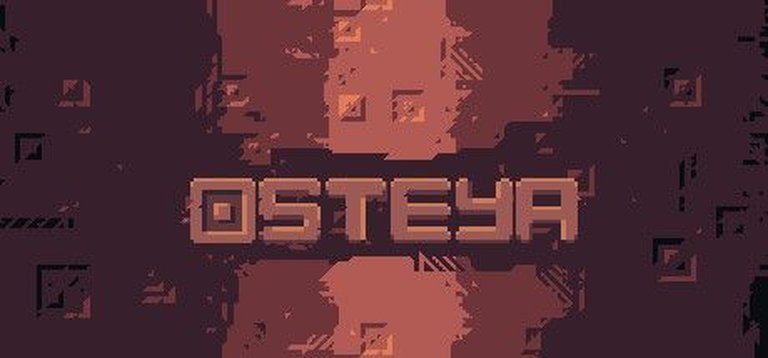
Osteya is a 2D indie pixel art platformer set in a mysterious city trapped between dimensions, following Seed, a traveler and adventurer who becomes entangled in the city’s legendary fate. Featuring 40 challenging levels with innovative wall and time teleportation mechanics, the game combines family-friendly accessibility with hardcore platforming challenges, all accompanied by immersive music and vibrant pixel graphics.
Where to Buy Osteya
PC
Osteya Patches & Updates
Osteya: Review
Introduction
In the vast and often homogenous landscape of indie platformers, Osteya emerges as a peculiar artifact of ambition and limitation. Released on November 20, 2015, by Volens Nolens Games, this 2D pixel-art adventure promises a journey through a city “stuck in time between worlds,” guided by the enigmatic traveler Seed. While its core concept brims with potential—a fusion of temporal manipulation, folklore, and challenging gameplay—Osteya ultimately exists as a study in fractured execution. This review dissects its development, narrative, mechanics, artistic vision, and legacy, arguing that despite its intriguing premise, the game remains a niche curiosity rather than a landmark achievement. Its story is one of unrealized potential, where innovative ideas collide with technical constraints and narrative opacity, leaving behind a fascinating yet frustrating relic of mid-2010s indie game culture.
Development History & Context
The Studio and Visionary Aspirations
Osteya is the singular, enigmatic creation of Volens Nolens Games—a studio whose name, Latin for “willing or unwilling,” hints at themes of fate and choice that permeate the game. The developers, led by figures like Nurlan Kasabulatov (credited on some platforms), envisioned Osteya as more than a simple platformer; it was to be a meditation on time, reality, and mythical urban decay. The concept of a city “stuck in time between worlds” suggests grand ambitions, blending existential philosophy with platforming conventions. This vision materialized after an unspecified development cycle, culminating in a staggered release: iOS on November 12, 2015, followed by Windows, macOS, and Linux on November 20. The studio’s commitment to cross-platform availability was notable, though it came with minimal post-launch support, as evidenced by the abandoned promise of “more levels coming soon.”
Technological Constraints and the Indie Landscape
Born in the peak of the indie renaissance (2014–2016), Osteya entered a market saturated with 2D platformers like Shovel Knight and Hollow Knight. Its technical requirements—modest by today’s standards (Intel Core 2 CPU, 1GB RAM, NVIDIA GT/s 4xx GPU)—reflected both accessibility and the limitations of its era. The game relied on Steam’s digital distribution, leveraging the platform’s reach but lacking the budget for polish or extensive marketing. Crucially, the “innovational teleport through walls and time” mechanic, while conceptually bold, suffered from implementation issues. The fixed/flip-screen perspective and direct control interface were deliberately retro, yet they failed to evolve beyond the constraints of classic arcade design, making Osteya feel like a relic of an older era rather than a forward-thinking title.
Gaming Climate of 2015
2015 was a pivotal year for indie games, with Undertale and Her Story redefining narrative and player agency, while Celeste (released in 2018) would later perfect challenging platforming. In this context, Osteya struggled to stand out. Its folklore-inspired theme and pixel aesthetic were common tropes, and without a unique hook beyond its teleportation mechanic, it was easily overshadowed. The game’s “for all family” tagline signaled a desire for broad appeal, but its “hardcore levels” and complex time-bending puzzles created a jarring tonal dissonance. This mismatch—casual presentation vs. demanding gameplay—mirrored the indie scene’s growing pains, where ambition often outpaced execution.
Narrative & Thematic Deep Dive
The Legend of Osteya and Seed’s Journey
The narrative unfolds through sparse lore, presented as a historical legend: Osteya, a city once teeming with life, now “stuck in time between worlds.” The player embodies Seed, a “traveler and adventurer” whose role in the city’s fate remains undefined. This vagueness is the game’s greatest narrative weakness. With no cutscenes, dialogue, or explicit exposition, Seed is a blank slate—a silent protagonist devoid of personality or motivation. The story exists solely in environmental whispers and the Steam page’s description, reducing Seed’s “heroic involvement” to a passive backdrop. Players are left to infer meaning, but the game offers no thematic anchors to latch onto, resulting in a narrative experience as ethereal and insubstantial as the city it describes.
Themes of Time, Memory, and Reality
Osteya’s core themes—temporal stasis, liminality, and the decay of memory—are rich but underexplored. The teleportation mechanic, allowing Seed to phase through walls and manipulate time, is the most tangible embodiment of these ideas. It symbolizes a rupture in linear reality, inviting players to ponder the fragility of existence. However, the game fails to connect this mechanic to thematic depth. Levels are abstract challenges, not symbolic stages; enemies are obstacles, not metaphors. The “stuck in time” premise becomes a gimmick rather than a narrative driver. Even the folklore angle—hinted at in BoardGameGeek’s “Folklore” theme tag—is reduced to aesthetic dressing, with no characters, myths, or cultural context to enrich the world.
Character and World-Building Deficiencies
The absence of meaningful character development is glaring. Seed is a cipher, and NPCs are nonexistent. Enemies—spiders, floating orbs—lack lore or motivation, serving purely as hazards. The “dream city” of Osteya, while visually varied across 40 levels, offers no history to uncover. There are no secrets, lore tablets, or environmental storytelling beyond locked doors and keys. This lack of cohesion makes the world feel like a disjointed series of challenges rather than a cohesive place. The promised “spellbinding” narrative never materializes, replaced by a hollow shell of a story that teases depth but delivers only ambiguity.
Gameplay Mechanics & Systems
Core Platforming Loop and Structure
Osteya follows a classic arcade-platformer template: 40 self-contained levels where players collect keys and reach exits. The loop is straightforward—jump, run, teleport, avoid enemies—but its brevity is a double-edged sword. Levels are often completed in under a minute, creating a brisk pace that borders on repetitive. The “hardcore” difficulty is concentrated in later stages, demanding pixel-perfect jumps and timing. However, without progression systems (e.g., new abilities, power-ups), the game feels static. The promise of “more levels” unfulfilled exacerbates this, leaving players with a finite, if challenging, experience.
The Teleportation Mechanic: Innovation and Frustration
The teleportation system is Osteya’s most defining feature. By holding a key, Seed can phase through solid walls or even manipulate time-based obstacles (e.g., reversing a moving platform). This mechanic is genuinely innovative, enabling creative solutions to puzzles. For instance, teleporting through a wall might reveal a hidden key, or timing a jump with a temporal shift could avoid a laser trap. However, its implementation is flawed. Controls are finicky, with misfires common, leading to frustrating deaths. Levels rarely integrate the mechanic beyond simple “teleport here” solutions, failing to explore its potential for complex spatial puzzles. This half-realized innovation highlights the gap between ambition and technical execution.
Combat, Enemies, and UI
Combat is rudimentary, with Seed able to defeat enemies via a basic attack. However, most levels emphasize platforming over combat, reducing foes to minor nuisances. The “dangerous enemies” tag is misleading; spiders and drones are predictable and easily dispatched. The UI is minimalist, displaying only key counts and level numbers. Crucially, key remapping is absent—a community complaint—limiting accessibility. The pause menu offers no options beyond basic controls, and the lack of volume sliders for music/sound is an oversight. While the direct control scheme is responsive, the overall interface feels bare-bones, reflecting the game’s rushed polish.
World-Building, Art & Sound
The Ethereal Aesthetic of Osteya
The city of Osteya is a triumph of atmosphere. Levels shift from crumbling ruins to neon-lit voids, each with a distinct color palette that evokes temporal dissonance. The “fixed/flip-screen” perspective creates a diorama-like effect, making levels feel like dioramas in a time-locked museum. Pixel art is detailed and expressive, with subtle animations (e.g., flickering lights, drifting particles) enhancing the dreamlike ambiance. However, the world lacks cohesion; environments feel curated rather than lived-in. There’s no sense of history beyond the lore blurb, robbing Osteya of the depth implied by its “centuries-spanning” backstory.
Sound Design and Musical Ambiance
The soundtrack is one of Osteya’s strongest elements. Ambient melodies, often melancholic or ethereal, reinforce the city’s timeless nature. Sound effects—teleportation zaps, key chimes, enemy hisses—are crisp and satisfying. However, the music loops frequently, and without volume options, it can become overwhelming. The audio design succeeds in immersion but is undermined by the game’s lack of dynamic audio cues for hazards. Despite the “amazing music and sounds” claim, the audio ultimately supports rather than elevates the experience.
Atmosphere vs. Substance
Osteya excels at creating mood. The combination of pixel art, ambient sound, and abstract levels transports players to a liminal space. Yet this atmosphere is skin-deep. The “dream city” never feels real; its mysteries remain unexplored, and its beauty is divorced from meaning. The game prioritizes aesthetic cohesion over narrative depth, resulting in a world that is haunting but hollow.
Reception & Legacy
Launch Reception and Community Response
Upon release, Osteya garnered mixed reviews. On Steam, it holds a “Mixed” rating (57% positive, 88 reviews), with praise for its atmosphere and mechanics but criticism for its brevity and lack of content. Players debated the 40-hour completion time (likely <1 hour total), with some dismissing it as “half an hour of content for $5.” The broken trading card drops and confusing “cloud level” (Level 41, with a different palette and no objectives) fueled frustration. Community forums buzzed with requests for updates, key remapping, and clarification—requests that went unanswered. Metacritic lists no critic reviews, and the user score remains “tbd,” indicating a lack of mainstream attention.
Long-Term Reputation and Influence
Over time, Osteya’s reputation has stabilized as a niche curiosity. Its inclusion in budget bundles (e.g., Volens Nolens Games Complete for $4.26) preserved its visibility, but it remains a footnote in platformer history. The game had no discernible influence on subsequent titles; its teleportation mechanic was not widely adopted, and its narrative shortcomings became a cautionary tale. In 2026, it persists as a “time capsule” of 2015 indie trends—pixel art, vague lore, and ambitious-but-flawed mechanics.
Commercial Performance and Preservation
Commercially, Osteya is a modest success. Frequent 90% sales (e.g., $0.49) drove impulse buys, and its multi-platform release expanded its reach. However, the game’s legacy is defined by what it didn’t achieve: the promised post-launch content, the unrealized narrative potential, and the squandered opportunity to explore its unique themes. It survives as a preserved artifact on platforms like MobyGames and Steam, a reminder of the volatility of indie development.
Conclusion
Osteya is a game of tantalizing fragments. Its pixel-art aesthetic, ethereal atmosphere, and innovative teleportation mechanics create moments of genuine wonder, yet they are shackled by a narrative void, inconsistent design, and broken promises. It is a product of its time—an indie title with big ideas but limited resources, where ambition collided with execution. For players seeking a short, atmospheric challenge on a budget, its $0.49 price point offers value. However, as a holistic experience, it falls short, leaving players with more questions than answers.
In the pantheon of video game history, Osteya occupies a peculiar space: it is neither a masterpiece nor a failure, but a fascinating case study in the fragility of creative vision. It reminds us that even the most intriguing concepts can unravel without proper support and polish. Ultimately, Osteya is a dream half-realized—a city trapped in time, much like its own legacy: perpetually intriguing, perpetually incomplete. For historians, it serves as a poignant artifact of an era when indie games often dared greatly, but rarely delivered fully.