
- Release Year: 2005
- Platforms: Windows
- Publisher: 1C Company
- Developer: Action Forms Ltd.
- Genre: Action
- Perspective: Side view
- Game Mode: Single-player
- Gameplay: Arcade
- Setting: Caribbean, Sea pirates
- Average Score: 93/100
Description
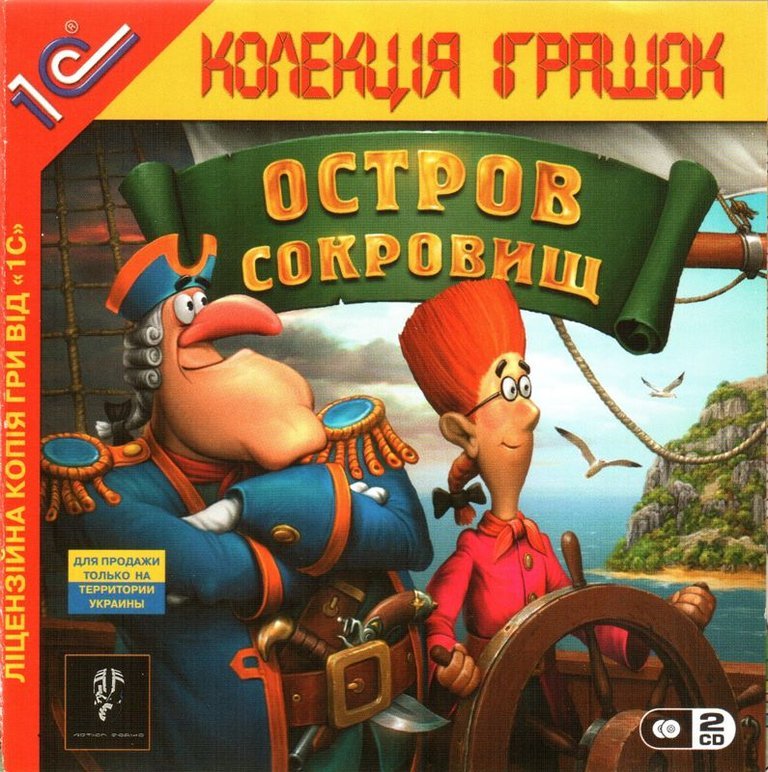
Ostrov Sokrovishch (‘Treasure Island’) is an arcade-style action game based on the 1988 Soviet animated film adaptation of Robert Louis Stevenson’s novel. Players control Jim Hawkins and later Captain Smollett as they battle pirates and other dangers to rescue their captured friends and reclaim the treasure. The game features three levels, including battles on the ship ‘Hispaniola’ and the island itself, with diverse enemies and obstacles like bees and alligators.
Ostrov Sokrovishch Cracks & Fixes
Ostrov Sokrovishch Guides & Walkthroughs
Ostrov Sokrovishch Reviews & Reception
myabandonware.com (93.4/100): No Dr Livesey, no play!
Ostrov Sokrovishch: Review
Introduction
Ostrov Sokrovishch (“Treasure Island”) stands as a unique fusion of classic literature and Soviet animation, brought to life in the video game medium. Based on the 1988 Soviet animated feature – itself a humorous take on Robert Louis Stevenson’s timeless novel – this 2005 action game captures the essence of both sources while adding its own interactive flair.
In an era dominated by Western game development, Ostrov Sokrovishch offers a rare glimpse into Ukraine’s gaming history, courtesy of Action Forms Ltd. The game’s blend of 2D arcade action, pirate swashbuckling, and stylized visuals creates a playground that both captivates and frustrates players, earning it a cult following among abandonware enthusiasts.
Development History & Context
Ostrov Sokrovishch was developed by Action Forms Ltd., a Ukrainian studio founded in 1995 and resting dormant since 2011. The team, known for their work on the Carnivores series, tackled this licensed title with a blend of experience and, perhaps, a touch of nostalgia for the Russian classics of their youth.
Released in November 2005, the game hit the market during a transitional period in video gaming. As 3D graphics became the norm, 2D side-scrollers like Ostrov Sokrovishch risked being overlooked. However, its connection to the beloved Soviet film and the treasured Treasure Island narrative gave it a compelling hook that secured its place on shelves – if only briefly.
The game’s development likely grappled with the constraints of bringing detailed 2D sprites and environments to life within the limitations of early 2000s PC hardware. Choices were made to emulate the cartoon’s visual style, often at the expense of smoother animations or more complex gameplay mechanics. This trade-off would become both a charm and a bane in the game’s legacy.
Narrative & Thematic Deep Dive
Set in the Caribbean during the Golden Age of Piracy, Ostrov Sokrovishch follows the tale of young Jim Hawkins as he joins the crew of the Hispaniola on a quest for buried treasure. But when the crew mutinies under Long John Silver, Jim must fight to save the ship, its treasure, and his friends from the marauding pirates who have captured them.
Plot Summary:
1. The game begins with the capture of the Hispaniola by mutinous pirates. Jim starts on the ship’s deck, battling pirates to free the crew and reach the island.
2. The second level transports players to the island itself, where Jim navigates treacherous swamps filled with alligators and bees, all while avoiding marauding pirates.
3. The final level brings Jim back to the Hispaniola, now under the control of the remaining mutineers. A climactic battle here determines the game’s outcome.
Characters:
– Jim Hawkins: The brave young hero, armed with a cutlass and a trusty pipe for ranged attacks.
– Captain Smollett: The ship’s captain, who later joins Jim in the fight against the mutineers.
– Long John Silver: The primary antagonist, a cunning pirate who instigates the mutiny.
– Other enemy types include axe-wielding pirates, swordsmen, archers, and even supernatural-looking skeleton pirates.
Thematic Highlights:
– The经纬线提供了一系列根(btn)根 cords to继承 ve decision-making under pressure. Jim must battle not just the external enemies but also face personal fears and doubts.
– The theme of loyalty versus greed is prevalent, mirroring the conflicts between the mutineers and the loyal crew members.
The narrative’s adaptation from the animated film includes several callbacks to the original, including some voice acting from the film and visual references. However, the game’s focus on action means that the nuanced character development from the book and film is often glossed over, with Little interactions beyond combat.
Gameplay Mechanics & Systems
At its core, Ostrov Sokrovishch is an action-packed side-scrolling game that combines melee combat, platforming, and environmental challenges. The gameplay loop revolves around battling waves of enemies, traversing treacherous environments, and occasionally solving simple puzzles.
Key Mechanics:
1. Combat: Jim can perform melee attacks using his cutlass, with varying move sets depending on the context. He can also fire his pipe (a unique ranged weapon) to hit enemies from a distance.
2. Character Progression: As players defeat enemies, they earn experience points to level up, which provides small stat boosts. However, this system feels underdeveloped compared to more robust RPG elements of other games.
3. Level Design: Each of the three levels offers distinct environments and challenges. The island level, in particular, includes vertical platforming and environmental hazards like quicksand and collapsing cliffs.
4. AI & Enemies: The ten enemy types each have unique abilities. For example, some pirates can throw axes, while others use ranged attacks. However, the AI’s decision-making can be predictable, leading to repetitive encounters.
5. User Interface: A clean HUD displays Jim’s health, current level, and perhaps a score counter. The interface is functional but lacks depth.
Innovations and Flaws:
– The pipe as a weapon is an interesting twist, referencing the film’s humor.
– The ability to play as both Jim and Captain Smollett (with differing combat styles) adds variety.
– However, the game’s limited level count and sometimes imprecise hit detection can make combat feel lukewarm and the overall experience short-lived.
World-Building, Art & Sound
Visually, Ostrov Sokrovishch is a love letter to the 1988 animated feature. The environments are rendered in bright, pastel colors that immediately recall the film’s aesthetic. Sprites for characters and enemies are detailed and animated, though animations can be a bit stiff due to the 2D format’s limitations.
Sound design stands out as a highlight. The game features voice acting from the original film’s cast, which adds authenticity and immersion. Original compositions inspired by the animation’s music create a swashbuckling atmosphere, while sound effects like clashing swords and firing muskets enhance the combat experience.
World-Building:
– The pirate fort on the island is a playable location from the film, complete with traps and hidden passages.
– The Hispaniola is meticulously detailed, with crew members and objects referencing key moments from the story.
– The island’s swamps, jungles, and rocky cliffs are rendered with a mix of natural beauty and lurking danger.
While the art is appealing, the world’s linear design restricts exploration. The environments are meant to guide players through the narrative without deviation, which, while maintaining story pacing, limits replay value.
Reception & Legacy
Upon its release, Ostrov Sokrovishch struggled for visibility. The game received no critic reviews on MobyGames or major gaming outlets. Player comments on sites like MyAbandonware highlight missing characters (like Dr. Livesey) and a shoestring budget feel, which contributed to a mixed reception.
Commercially, the game likely failed to recoup development costs. However, its status as abandonware has given it a new life. Available for free download, Ostrov Sokrovishch has found a niche audience among fans of pirate adventure games, Soviet-era media, and retro gaming.
Influence-wise, the game’s impact is minimal. It didn’t spawn sequels or inspire similar adaptations. However, for those who discover it, it offers a unique gaming experience that bridges different cultural interpretations of a classic tale.
Conclusion
Ostrov Sokrovishch occupies a curious place in video game history. It’s a rare example of a Soviet/Russian game adaptation of a Western classic, testament to the universal appeal of Treasure Island. While flawed in execution – with limited levels, overly simplistic gameplay, and a sometimes unclear narrative flow – its charm lies in its loving reproduction of the animated film’sworld and the chance to play as heroes from a beloved story.
Despite being consigned to abandonware status, Ostrov Sokrovishch deserves a spot in the annals of pirate games, alongside titles like Gabriel Knight: Sins of the Fathers and Sea Dogs. It’s a gem for those willing to look beyond surface flaws to appreciate the passion and vision that brought Robert Louis Stevenson’s tale to life in 2D glory.