
- Release Year: 2008
- Platforms: Windows
- Publisher: Atari Europe S.A.S.U., JoWooD Productions Software AG, Noviy Disk, Odyssia
- Developer: Phantomery Interactive
- Genre: Adventure
- Perspective: 1st-person
- Game Mode: Single-player
- Gameplay: Puzzle elements
- Average Score: 57/100
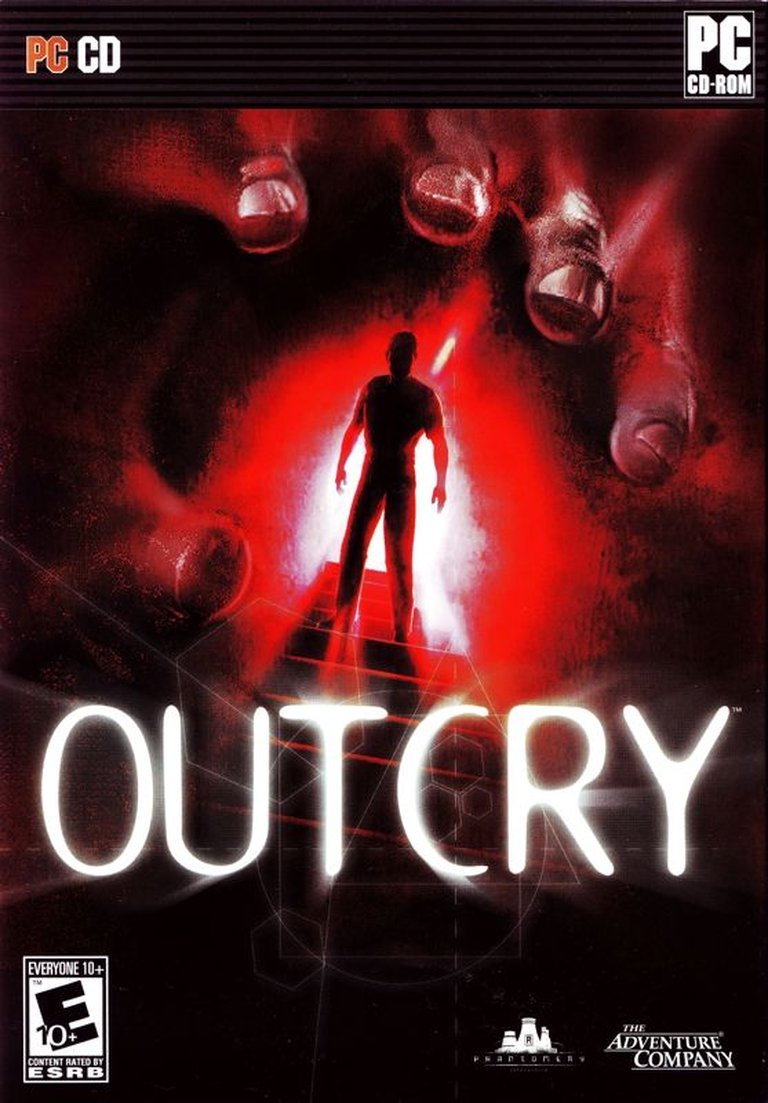
Description
Outcry is a first-person point-and-click adventure game that explores surreal and philosophical themes, blending the paranormal with intricate puzzles. The player assumes the role of an unnamed writer who receives a cryptic letter from his estranged brother, leading him to a mysterious location where he uncovers notes about a machine capable of separating the mind from the body. As the protagonist investigates, he must solve a variety of puzzles—ranging from mechanical to musical—while navigating a hauntingly atmospheric environment with 360-degree panoramic views. The game’s narrative delves into themes of consciousness, time, and the unknown, offering a thought-provoking and immersive experience.
Gameplay Videos
Where to Buy Outcry
PC
Outcry Guides & Walkthroughs
Outcry Reviews & Reception
metacritic.com (63/100): A triumphant return to form for the series.
ign.com (68/100): An atmospheric, yet ultimately disappointing, trip into the psyche.
gameboomers.com : I loved this game, or rather, this whole experience.
gamespot.com (40/100): Outcry is one of the more surreal and impenetrable adventure games ever made.
Outcry: A Surreal Journey Through the Fractured Mind
Introduction
Outcry (2008), known as Sublustrum in Russia, is a first-person psychological thriller and point-and-click adventure game developed by Phantomery Interactive. It is a game that defies easy categorization—a haunting, surreal experience that blends philosophical musings, metaphysical exploration, and intricate puzzle-solving. Released during a time when the adventure genre was waning in mainstream popularity, Outcry stands as a bold, if flawed, attempt to revive the spirit of classic titles like Myst and Scratches while carving out its own niche in the landscape of surreal, narrative-driven gaming.
At its core, Outcry is a game about perception, memory, and the fragility of the human mind. The player assumes the role of an unnamed writer who receives a cryptic letter from his estranged brother, a scientist who has allegedly made a groundbreaking discovery. Upon arriving at his brother’s home, the protagonist finds him missing, leaving behind only a bizarre machine capable of separating consciousness from the body. What follows is a descent into a dreamlike realm known as the Shimmering World, where reality is fluid, time is malleable, and the boundaries between past and present dissolve.
This review will explore Outcry in exhaustive detail, examining its development history, narrative depth, gameplay mechanics, artistic design, and lasting legacy. It is a game that polarizes players—some hail it as a masterpiece of atmospheric storytelling, while others dismiss it as pretentious and overly obscure. Yet, regardless of its flaws, Outcry remains a fascinating artifact of its time, a game that dared to challenge conventions and invite players into a world where logic is secondary to emotion and experience.
Development History & Context
The Studio and Its Vision
Phantomery Interactive, the Russian studio behind Outcry, was a relatively unknown entity in the Western gaming market at the time of the game’s release. The studio’s ambition, however, was anything but modest. Outcry was developed using the proprietary Panopticum engine, which allowed for a first-person perspective with 360-degree panoramic views—a staple of the Myst-like adventure genre. The game’s development was heavily influenced by the works of Russian avant-garde artists, surrealist literature, and the philosophical explorations of consciousness and perception.
The creative team behind Outcry was led by key figures such as Georgy Beloglazov, who handled the game’s scenario, music, and sound design, and Denis Tambovtsev, who oversaw the game’s visual style and design. The game’s soundtrack, composed by Beloglazov under the moniker Anthesteria, is a standout feature, blending dark ambient, neoclassical, and ethereal soundscapes with instruments like the didgeridoo and Tibetan throat singing. This auditory experience was not merely background noise but an integral part of the game’s immersive atmosphere.
Technological Constraints and Innovations
Released in 2008, Outcry was developed during a transitional period in gaming. The adventure genre, once dominant in the 1990s, had seen a decline in popularity with the rise of action-oriented and open-world games. Outcry was an attempt to revitalize the genre by embracing its roots while incorporating modern sensibilities. The game’s use of the Panopticum engine allowed for high-resolution, pre-rendered environments that were both visually striking and technically impressive for the time.
One of the game’s most innovative features was its approach to puzzle design. Unlike traditional adventure games, which often relied on inventory-based or logic puzzles, Outcry incorporated elements of time manipulation, sound-based challenges, and environmental interaction. The game’s puzzles were designed to be self-contained within specific locations, requiring players to observe cause-and-effect relationships and experiment with mechanical and auditory cues.
The Gaming Landscape of 2008
The late 2000s were a period of significant change in the gaming industry. The release of Outcry in 2008 coincided with the rise of digital distribution platforms like Steam, which made niche and independent games more accessible to a global audience. However, the adventure genre was still struggling to regain its former prominence. Games like The Longest Journey and Syberia had proven that there was still an audience for narrative-driven experiences, but the market was increasingly dominated by first-person shooters, RPGs, and action-adventure titles.
Outcry arrived at a time when players were beginning to crave more experimental and emotionally resonant experiences. Its surreal, dreamlike aesthetic and philosophical themes set it apart from the more mainstream offerings of the era. However, its obscurity and lack of widespread marketing meant that it remained a cult favorite rather than a commercial success.
Narrative & Thematic Deep Dive
Plot Summary
The narrative of Outcry is deliberately fragmented and open to interpretation. The game begins with the protagonist, an unnamed writer, receiving a letter from his estranged brother, a scientist who claims to have made a groundbreaking discovery. The letter is cryptic, hinting at something beyond the boundaries of conventional science. Upon arriving at his brother’s home, the protagonist finds the place abandoned, save for a strange machine and a series of notes and diary entries.
The machine, as the protagonist soon discovers, is capable of separating consciousness from the physical body, allowing the user to transcend into a surreal, dreamlike realm known as the Shimmering World. This world is a manifestation of the brother’s fractured psyche, a place where time and space are fluid, and reality is distorted. The protagonist’s journey through this realm is a quest to uncover the truth behind his brother’s disappearance and the nature of the machine itself.
Themes and Symbolism
Outcry is a game steeped in symbolism and philosophical inquiry. Its themes revolve around the nature of consciousness, the fragility of memory, and the blurred line between reality and illusion. The game’s narrative is heavily influenced by surrealist literature and the works of philosophers like Carl Jung, particularly his theories on the collective unconscious and archetypes.
-
Consciousness and Identity: The central premise of the game—the separation of mind and body—raises questions about the nature of identity. What does it mean to exist without a physical form? How does consciousness define who we are? These questions are explored through the protagonist’s journey into the Shimmering World, where he encounters fragments of his brother’s memories and experiences.
-
Memory and Trauma: The game’s narrative is interwoven with hints of past trauma, particularly in the form of childhood memories and repressed emotions. The Shimmering World serves as a metaphor for the subconscious mind, where forgotten or suppressed experiences resurface in distorted forms. The protagonist’s journey is as much about confronting these memories as it is about finding his brother.
-
Time and Reality: Outcry plays with the concept of time in a way that is both mechanical and philosophical. The game’s puzzles often involve manipulating time, allowing the player to alter past events to affect the present. This mechanic reinforces the game’s themes of causality and the fluidity of reality.
-
Isolation and Loneliness: The game’s atmosphere is one of profound isolation. The protagonist is alone in his quest, navigating a world that is both alien and deeply personal. The absence of other characters—save for fleeting glimpses of the brother—heightens the sense of loneliness and introspection.
Characters and Dialogue
Outcry is notable for its lack of traditional character interactions. The protagonist is a silent figure, and the only other “character” of significance is his brother, who is never physically present but whose presence is felt through notes, diary entries, and occasional auditory hallucinations. The brother’s voice, delivered in a gravelly, melancholic tone, is one of the game’s most memorable elements. His musings on science, philosophy, and the nature of existence are both poetic and unsettling.
The game’s dialogue—if it can be called that—is sparse and often cryptic. The brother’s notes are filled with philosophical ramblings, scientific jargon, and personal reflections. These writings are read aloud by the voice actor, adding a layer of immersion but also contributing to the game’s sense of ambiguity. The lack of clear exposition forces the player to piece together the narrative from fragmented clues, which can be both rewarding and frustrating.
The Ending and Interpretations
Outcry’s ending is as ambiguous as its narrative. Without spoiling the details, the conclusion leaves more questions than answers, inviting players to interpret the events for themselves. Some theories suggest that the entire journey is a hallucination induced by the machine, while others propose that the protagonist and his brother are one and the same, representing different aspects of a fractured psyche.
The game’s final moments are open to multiple interpretations, reinforcing its themes of perception and reality. For some players, this ambiguity is a strength, allowing for personal reflection and discussion. For others, it is a source of frustration, as the lack of closure can feel unsatisfying.
Gameplay Mechanics & Systems
Core Gameplay Loop
Outcry is a first-person point-and-click adventure game, meaning that the player interacts with the environment by clicking on objects, solving puzzles, and navigating through pre-rendered scenes. The game’s controls are straightforward: the left mouse button is used to move, interact with objects, and read notes, while the right mouse button brings up the inventory and menu.
The core gameplay loop revolves around exploration and puzzle-solving. Players must examine their surroundings, collect items, and use them to solve a variety of puzzles. These puzzles range from mechanical challenges, such as activating machinery or aligning components, to more abstract sound-based puzzles that require careful listening and experimentation.
Puzzle Design
The puzzles in Outcry are one of its most divisive aspects. On one hand, they are inventive and often require creative thinking. On the other, they can be obscure and frustrating, particularly for players who prefer more straightforward or guided experiences.
-
Mechanical Puzzles: Many of the game’s puzzles involve manipulating machinery or environmental elements. For example, one puzzle requires the player to activate a tram by aligning power cells and connecting cables. These puzzles often involve trial-and-error, as the cause-and-effect relationships are not always immediately apparent.
-
Sound-Based Puzzles: One of the game’s most unique challenges is the Harp Tower puzzle, which requires the player to produce specific sounds to open mechanical flowers. This puzzle is polarizing—some players find it innovative and immersive, while others find it tedious and unclear.
-
Time Manipulation: The game introduces a time key mechanic, allowing the player to travel back in time to alter past events. This adds a layer of complexity to the puzzles, as players must consider the consequences of their actions across different timelines.
-
Inventory and Item Usage: The inventory system is minimalistic, with players carrying only a few items at a time. Items are often used in unconventional ways, requiring players to think outside the box.
UI and Navigation
The game’s user interface is simple but effective. The right mouse button brings up the inventory and notes, which can be toggled on or off. The game world can be navigated by moving the mouse to the edges of the screen, allowing for 360-degree rotation and limited vertical movement. The game also features optional visual effects, such as a flickering “film grain” filter and camera-like transitions between scenes, which enhance the surreal atmosphere but can be disabled if desired.
One of the game’s most criticized aspects is its lack of feedback. Unlike many adventure games, Outcry does not provide clear indicators of progress or success. Players often have to rely on trial-and-error to determine whether their actions have had the desired effect, which can lead to frustration.
Difficulty and Accessibility
Outcry is not a game for the faint of heart. Its puzzles are challenging, and its lack of guidance can make it difficult for casual players. The game assumes a certain level of patience and perseverance, as well as a willingness to engage with its abstract and often cryptic narrative.
The game’s difficulty is compounded by its lack of hints or in-game assistance. Players who become stuck may find themselves resorting to external guides or walkthroughs, which can detract from the immersive experience. However, for those who enjoy a challenge, Outcry offers a rewarding and intellectually stimulating experience.
World-Building, Art & Sound
Setting and Atmosphere
Outcry’s world is a masterclass in atmospheric design. The game is set in a series of surreal, dreamlike environments that blur the line between reality and illusion. The Shimmering World is a fragmented, ever-shifting landscape where geometry defies logic and time is malleable.
-
The Professor’s House: The game begins in the protagonist’s brother’s home, a dilapidated and cluttered space filled with scientific equipment, notes, and personal artifacts. The environment is rendered with a flickering, grainy filter that mimics the look of old film footage, adding to the sense of decay and nostalgia.
-
The Shimmering World: This surreal realm is the heart of the game’s exploration. It is a place of floating islands, mechanical structures, and eerie landscapes. The environments are visually striking, with a mix of Victorian, steampunk, and industrial aesthetics. The Desert area, for example, is a vast, barren expanse filled with hovering power cells and snaking cables, while the Harp Tower is a towering structure adorned with metallic flowers.
-
The Winter World: One of the game’s most haunting locations, the Winter World is a frozen, desolate landscape that evokes a sense of isolation and melancholy.
The game’s environments are not just backdrops but active participants in the narrative. They reflect the protagonist’s psychological state, shifting and distorting as he delves deeper into the mysteries of the Shimmering World.
Visual Design
Outcry’s visual style is a blend of photorealism and surrealism. The game’s pre-rendered environments are highly detailed, with a focus on texture and lighting that creates a sense of depth and immersion. The use of color is subdued, with a palette dominated by earthy tones, grays, and blues, which contributes to the game’s melancholic atmosphere.
One of the game’s most distinctive visual features is its use of dynamic effects. The environments are not static; they shift and sway slightly, as if viewed through a flickering lens. Transitions between scenes are often accompanied by camera-like shutter effects, reinforcing the dreamlike quality of the experience.
Sound Design and Music
The sound design in Outcry is nothing short of extraordinary. The game’s soundtrack, composed by Georgy Beloglazov (Anthesteria), is a haunting blend of dark ambient, neoclassical, and ethereal music. The use of instruments like the didgeridoo, Tibetan throat singing, and strings creates a soundscape that is both immersive and unsettling.
The music is not merely background noise but an active participant in the gameplay. In the Harp Tower puzzle, for example, the player must listen carefully to the sounds they produce and adjust their actions accordingly. The game’s sound effects—from the creaking of machinery to the distant echoes of the brother’s voice—add to the sense of immersion and unease.
The voice acting, particularly the brother’s gravelly narration, is a standout feature. The delivery is slow and deliberate, adding weight to the philosophical and scientific musings that fill the game’s notes and diary entries.
Reception & Legacy
Critical Reception
Outcry received mixed reviews upon its release, with critics praising its atmosphere, visual design, and soundtrack while criticizing its obscure puzzles and lack of narrative clarity. The game’s average score on aggregator sites like MobyGames (6.6/10), GameRankings (61.77%), and Metacritic (63/100) reflects this divide.
Positive Aspects:
– Atmosphere and Visuals: Critics universally praised the game’s haunting atmosphere and striking visual design. The surreal environments and dynamic effects were highlighted as standout features.
– Soundtrack: The game’s musical score was widely acclaimed for its immersive and emotional impact.
– Innovative Puzzle Design: Some reviewers appreciated the game’s unique approach to puzzles, particularly the time manipulation and sound-based challenges.
Negative Aspects:
– Obscure Puzzles: Many critics found the puzzles overly difficult and lacking in clear feedback, leading to frustration.
– Thin Narrative: The game’s story was criticized for being pretentious and difficult to follow, with some reviewers feeling that the philosophical musings overshadowed the plot.
– Lack of Guidance: The absence of hints or in-game assistance was a common point of contention, making the game inaccessible to casual players.
Commercial Performance
Outcry was not a commercial success, partly due to its niche appeal and limited marketing. However, it developed a cult following among fans of surreal and experimental games. Its unique blend of atmosphere, puzzle design, and philosophical themes resonated with a subset of players who appreciated its ambition and originality.
Influence and Legacy
While Outcry did not spawn a direct sequel or franchise, its influence can be seen in subsequent indie games that embrace surrealism and psychological horror. Games like The Void (also developed by Phantomery Interactive) and Pathologic share Outcry’s focus on atmospheric storytelling and philosophical depth.
Outcry remains a fascinating case study in the evolution of the adventure genre. It is a game that prioritizes experience over exposition, inviting players to engage with its world on an emotional and intellectual level. Its legacy is one of ambition and experimentation, a reminder of the potential for games to be more than just entertainment—they can be works of art.
Conclusion
Outcry is a game that defies easy classification. It is a surreal, atmospheric journey through the fractured mind of its protagonist, a blend of philosophical inquiry, mechanical puzzle-solving, and haunting visual and auditory design. It is not a game for everyone—its obscurity, lack of guidance, and abstract narrative will frustrate many players. However, for those willing to engage with its challenges and embrace its ambiguities, Outcry offers a deeply immersive and thought-provoking experience.
The game’s strengths lie in its atmosphere, sound design, and innovative puzzle mechanics. Its weaknesses—its thin narrative, lack of feedback, and occasional pretentiousness—are significant but do not detract from its overall impact. Outcry is a game that lingers in the mind long after the credits roll, a testament to the power of surrealism and psychological storytelling in video games.
In the pantheon of adventure games, Outcry occupies a unique and somewhat overlooked position. It is not a masterpiece in the traditional sense, but it is a bold and ambitious work that pushes the boundaries of what the genre can achieve. For fans of surreal, narrative-driven experiences, Outcry is a hidden gem worth discovering. For others, it may serve as a cautionary tale of the challenges inherent in balancing innovation with accessibility.
Ultimately, Outcry is a game that demands to be experienced rather than merely played. It is a journey into the unknown, a descent into the depths of the human psyche, and a testament to the enduring power of video games as a medium for artistic expression.
Final Verdict: 7.5/10 – A flawed but fascinating surreal adventure that rewards patience and perseverance.