
- Release Year: 2019
- Platforms: Nintendo Switch, PlayStation 4, PlayStation 5, Windows Apps, Windows, Xbox Cloud Gaming, Xbox One
- Publisher: Annapurna Games, LLC
- Developer: Mobius Digital, LLC
- Genre: Adventure, Puzzle
- Perspective: 1st-person
- Game Mode: Single-player
- Gameplay: Jetpack, Open World, Sandbox, Space flight
- Setting: Futuristic, Sci-fi
- Average Score: 88/100
Description
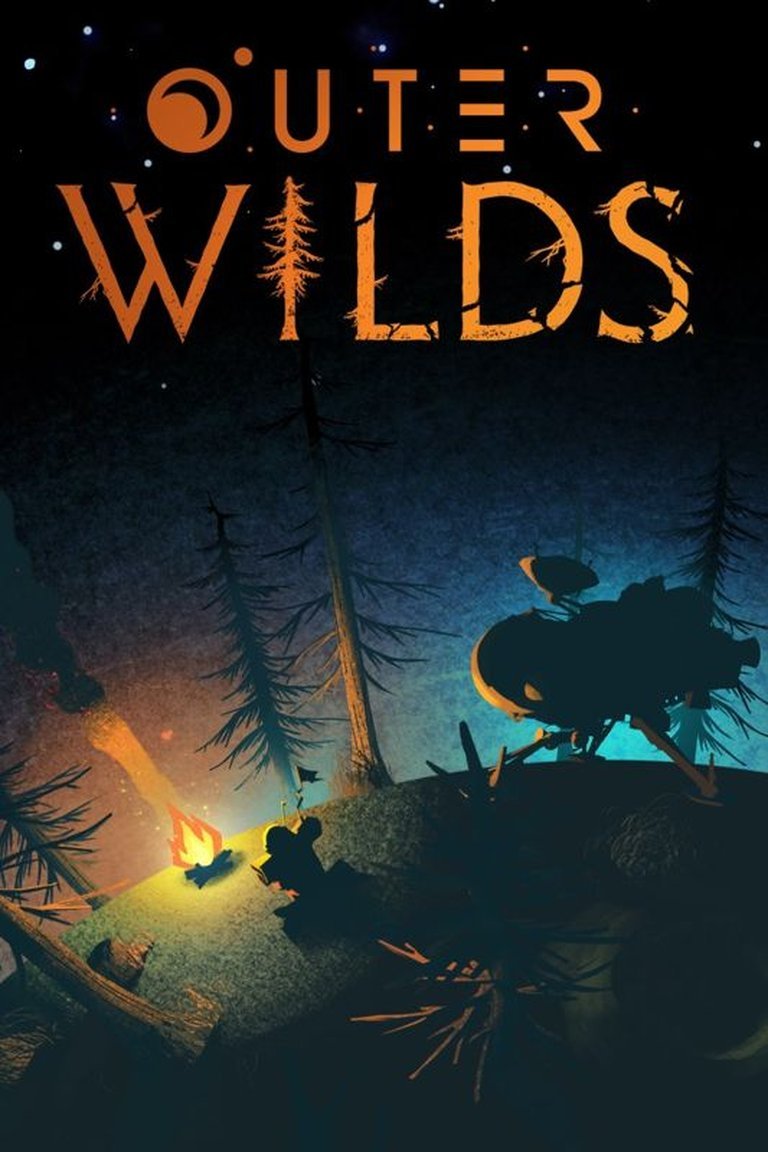
Outer Wilds is a single-player open-world exploration and puzzle game set in a small solar system trapped in a continuous 22-minute time loop. Players embody a novice Hearthian astronaut, venturing into space to investigate ancient Nomai ruins across planets, moons, and derelict stations, piecing together knowledge that persists between loops to unravel the mysteries of the loop and the system’s secrets through observation, experimentation, and tools like signalscopes and translators.
Gameplay Videos
Where to Buy Outer Wilds
PC
Outer Wilds Free Download
Outer Wilds Mods
Outer Wilds Guides & Walkthroughs
Outer Wilds Reviews & Reception
metacritic.com (85/100): This is a rare adventure game in which the journey is actually more of a reward than the destination.
opencritic.com (85/100): Beneath its charming and inventive worlds, Outer Wilds hides a cleverly unfolding mystery.
imdb.com : A masterpiece that should teach others how to make a game!
hypercritic.org : The game offers a comforting perspective on life’s meaning.
steambase.io (96/100): Overwhelmingly Positive
Outer Wilds: Review
Introduction
Imagine awakening to the strum of a banjo around a crackling campfire on a rustic, forested planet, only to launch into a fragile spaceship and witness your sun swell into a supernova—every 22 minutes, for eternity. This is the hypnotic pull of Outer Wilds, a 2019 indie gem from Mobius Digital that traps players in a handcrafted solar system brimming with existential mysteries. Since its release, it has ascended from obscurity to legendary status, earning accolades like the BAFTA for Best Game and spots on decade-defining lists from Polygon and Eurogamer. As a game historian, I’ve chronicled countless titles, but Outer Wilds stands apart: a thesis project turned paradigm shift, where knowledge eclipses combat, and player-driven curiosity forges a profoundly personal narrative. My thesis? Outer Wilds isn’t just a game—it’s a philosophical odyssey that captures the awe and terror of cosmic exploration, cementing its place as a modern Myst for the space age.
Development History & Context
Outer Wilds emerged from humble, ambitious origins, embodying the indie spirit amid a 2010s landscape dominated by procedurally generated behemoths like No Man’s Sky and sprawling RPGs like The Outer Worlds (a frequent point of confusion). It began in 2012 as Alex Beachum’s master’s thesis at USC’s Interactive Media & Games Division, a tech demo blending spaceflight, quantum mechanics, and procedural destruction. Beachum, inspired by Apollo 13‘s peril and The Legend of Zelda: The Wind Waker‘s enticing lore, aimed for a “NASA meets backpacking” vibe: fragile explorers in an indifferent universe. Collaborators like Loan Verneau (future Mobius co-founder) prototyped dynamic planets—Brittle Hollow crumbling into a black hole, Hourglass Twins exchanging sand—using Unity’s physics for seamless, real-time simulation.
Post-graduation, Beachum joined Mobius Digital in 2014, founded by Verneau and actor Masi Oka. The project simmered as a side gig amid mobile titles like Terra Chroma, but its 2015 IGF demo—featuring core loop mechanics—clinched the Seumas McNally Grand Prize and Excellence in Design. This propelled a Fig crowdfunding campaign (first featured game), raising $125K and enabling commercial polish. Annapurna Interactive acquired rights in 2018, funding a third art pass and delaying release from 2016 to May 28, 2019 (PC/Xbox One; PS4 later that year). Technological constraints shaped its genius: Unity’s limits forced handcrafted ingenuity over procedural sprawl, while era-specific trends (post-Kerbal Space Program realism) amplified its semi-Newtonian flight.
Development spanned seven years across three phases: thesis experiments, IGF alpha, and Annapurna refinement. Kelsey Beachum refined Nomai lore via branching texts; Andrew Prahlow composed a folk-sci-fi soundtrack; Wesley Martin’s art evoked redwood forests and 1960s NASA rusticity. Echoes of the Eye (2021 DLC) added horror-tinged Stranger lore. Amid Xbox Game Pass and Epic exclusivity debates, Mobius wrung miracles from Unity—seamless planet-to-space transitions—proving small teams could rival AAA immersion in a post-No Man’s Sky skepticism era.
Key Milestones
- 2012-2013: USC thesis prototypes (e.g., marshmallow-roasting supernova opener).
- 2015: IGF wins; Fig campaign.
- 2018: Annapurna partnership; art overhaul.
- 2019+: Multi-platform ports (PS5/Xbox Series 2022; Switch 2023); 2M+ sales by 2021.
Narrative & Thematic Deep Dive
Outer Wilds‘ narrative is a nonlinear tapestry of extinction and rebirth, pieced from Nomai ruins, Hearthian chatter, and environmental echoes—no cutscenes, just player agency. You embody the “Hatchling,” a novice Hearthian astronaut on Timber Hearth, launching amid a 22-minute loop triggered by the star’s supernova. Knowledge persists in your ship’s log, turning death into enlightenment.
Plot Layers
- Hearthian Prelude: Four-eyed, banjo-strumming explorers idolize Nomai relics. Fellows like Gabbro (meditative) and Chert (anxious) hint at quantum oddities.
- Nomai Saga: Nomadic antlered aliens warp in via Vessel, ensnared in Dark Bramble. Survivors rebuild, chasing the pre-universal “Eye of the Universe” signal (briefly unshielded by Stranger renegade). Innovations: warp tech (time-reversal via black/white holes), Ash Twin Project (probe cannon looping 9M+ launches), Sun Station (failed nova inducer). Ghost matter from Interloper comet wipes them out.
- Quantum Twists: Quantum Moon orbits unobserved; Solanum’s superposition embodies Nomai philosophy.
- Climax & Endings: Fuel Vessel to Eye; echoes of friends/Nomai/Prisoner gather ’round campfire as universe dies, birthing a new Big Bang—new life 14.3B years later.
- Echoes of the Eye: Nocturnal “owl-elks” (Stranger race) ravage moon for ringworld, block Eye in terror, enter VR afterlife. Prisoner reactivates signal; player frees them for redemptive finale.
Themes probe curiosity vs. fear: Nomai embrace knowledge/sacrifice; Strangers flee into simulation; Hearthians embody whimsy amid doom. Existential motifs—mortality, observation collapsing reality—echo Majora’s Mask‘s doom and campfire intimacy scales personal joy against cosmic entropy. Dialogue shines: Nomai texts as branching “conversations”; Hearthian subtitles convey personality sans voice acting. Profound eurekas (e.g., sand timing on Hourglass Twins) reward iteration, mirroring life’s trial-and-error.
Gameplay Mechanics & Systems
No combat, upgrades, or hand-holding—progression is metaknowledge: log entries link clues in a web, turning loops into iterative mastery. Core loop: launch, explore, die/learn/repeat.
Core Systems
- Flight & Traversal: Newtonian spaceship (infinite ship O2/fuel; repairable damage). Jetpack for low-G soaring; O2/fuel deplete outside (recharge via trees/canisters). Probe scouts hazards/photos.
- Tools:
Tool Function Signalscope Tracks radios (e.g., explorers’ instruments aligning for motif). Scout Probe Illuminates, snapshots quantum/dark areas. Translator Decodes Nomai branching lore. - Hazards & Puzzles: Time-sensitive (e.g., Giant’s Deep cyclones yeet islands; Brittle Hollow meteors feed black hole). Observation-based (Quantum Moon vanishes); environmental (Dark Bramble anglerfish devour impulsives).
- UI/Log: Minimalist HUD (O2/fuel bars); log organizes by location/connections—player’s “external brain.”
- Flaws: Tedious resets (no quick-loop button); trial-error frustration in precision flight/platforming; obscure late-game puzzles risk guides.
Innovations shine: loop enforces observation/experimentation, yielding “eureka” highs rivaling any puzzle game. Echoes adds stealth/horror (lantern-sim entry, seal glitches).
World-Building, Art & Sound
The solar system—Timber Hearth (cozy village), Giant’s Deep (stormy oceans), Brittle Hollow (crumbling ruins), Dark Bramble (viney angler maze), Hourglass Twins (sand clock)—feels intimately vast, each body a puzzle-box with auditory ID (e.g., banjo on Hearth). Art: flat-shaded/low-poly rustic sci-fi (Yellowstone reds, Icelandic craters); camping motif scales humanity against stars. Unity enables pop-in-free transitions, though occasional stutters mar.
Soundscape elevates: Prahlow’s OST blends acoustic folk (Hearthian banjo/harmonica) with synths (Nomai tech, supernova dread)—contextual, evoking isolation/awe. Effects immerse: whirring switches, fish shrieks, orbital hums. No VA keeps focus on subtlety, though subtitles suffice.
Atmosphere? Whimsical peril: dead Nomai corpses ground fantasy; campfire motif humanizes doom.
Reception & Legacy
Launched quietly (post-IGF word-of-mouth), Outer Wilds exploded: MobyScore 8.5 (#322/26K), critics 85% (100% from USgamer/TheGamer). Praised as “indie darling” (Polygon), “this gen’s Myst” (player reviews); critiques hit loop tedium, obtuse puzzles (Video Chums 60%). Sold 2M+; GOTY lists (Eurogamer/Polygon #1 2019); BAFTA Best Game/Design; IGF precursor honors.
Legacy: Redefined knowledge-gated exploration, influencing Tunic, Inscryption. Echoes (2021) earned acclaim (Metacritic 85+), expanding horror. Ports broadened reach; books (Field Guide, Design Works) preserve history. In a loot-shooter era, it proved compact handcraft trumps procedural infinity—echoed in Cocoon, modern indies.
Critical Consensus
- Strengths: Immersion, eurekas, themes (GameSpot 9/10).
- Weaknesses: Difficulty spikes, resets (IGN 8.4/10).
Conclusion
Outer Wilds masterfully fuses peril, wonder, and philosophy into 22-minute symphonies of discovery, where every loop etches deeper into the soul. Minor gripes—repetitive resets, opacity—pale against its triumphs: a living solar system, lore-rich ruins, and campfire catharsis amid annihilation. As historian, I declare it a pantheon entry—IGF genesis to BAFTA pinnacle—rivaling Shadow of the Colossus in evoking sublime fragility. Verdict: Essential masterpiece (10/10). Launch your ship; the Eye awaits.