
- Release Year: 2011
- Platforms: Linux, Macintosh, PlayStation 3, Windows, Xbox 360
- Publisher: Housemarque Ltd., Ubisoft Entertainment SA
- Developer: Housemarque Ltd.
- Genre: Action
- Perspective: Side view
- Game Mode: Online Co-op, Single-player
- Gameplay: Bullet hell, Combat, Exploration, Metroidvania, Platform, Polarity system
- Setting: Fantasy
- Average Score: 84/100
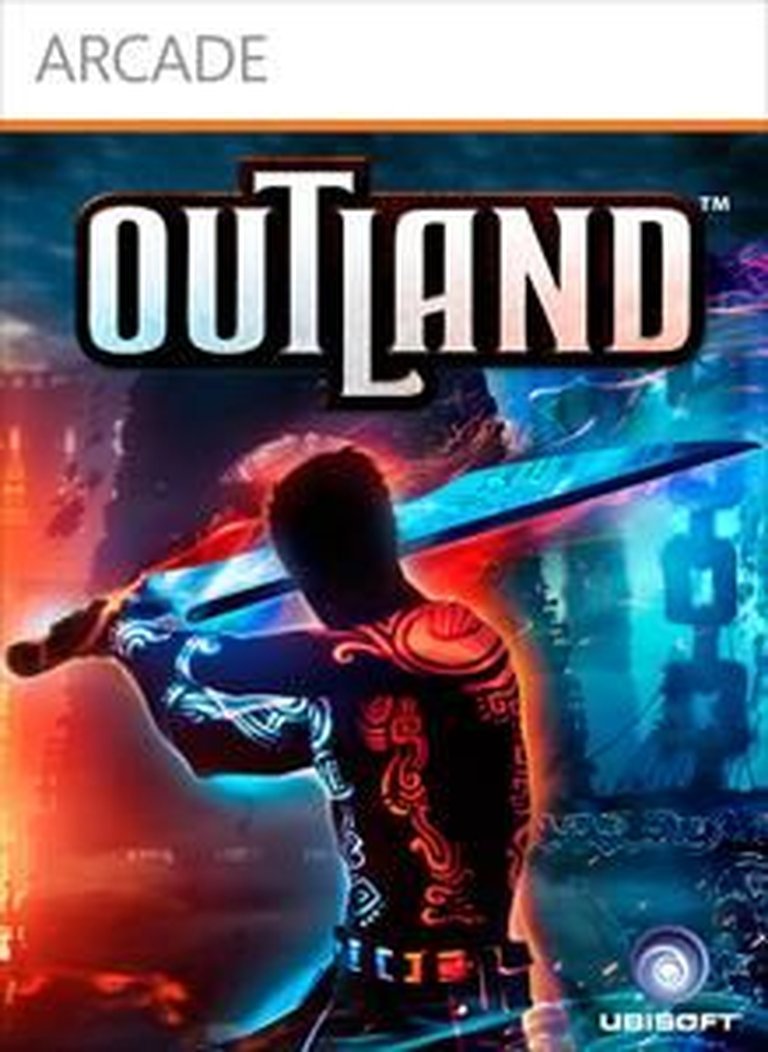
Description
Outland is a 2D platformer set in a mystical world where players control a hero seeking balance between two contradictory forces—blue (light) and red (dark). The game features fast-paced movement, Metroidvania-style exploration with ability-gated paths, and a unique polarity system inspired by bullet hell shooters, requiring quick colour switches to combat enemies, absorb environmental hazards, and solve puzzles across five interconnected worlds.
Gameplay Videos
Where to Buy Outland
PC
Outland Cracks & Fixes
Outland Reviews & Reception
metacritic.com (84/100): It’s a visually striking game, combined with a beautiful soundtrack and challenging platforming and the pacing of the new abilities and moments between boss fights is pretty well executed.
ign.com : Outland isn’t only an incredibly fun foray into the ever-expanding potential of downloadable titles on services like PlayStation Network.
Outland: A Masterpiece of Polarity and Precision
Introduction: The Duality of Light and Shadow
In the crowded landscape of 2011’s digital storefronts, Outland exploded onto the scene not as a mere clone of its inspirations, but as a fearless synthesizer of disparate genres. Developed by the Finnish studio Housemarque and published by Ubisoft, the game arrived with a potent thesis: that the intricate, screen-filling bullet patterns of a shoot-’em-up like Ikaruga could be married to the deliberate, exploratory platforming of a Metroid or Castlevania. The result was a title that critics immediately hailed as one of the finest and most stylish downloadable experiences of its generation. Outland is more than a game; it is a calculated alchemy of opposing forces—light and dark, agility and precision, simplicity and depth—forged into a cohesive, demanding, and breathtaking adventure. Its legacy is that of a cult classic, a game whose brilliance was somewhat obscured by the turbulent waters of digital distribution but whose core mechanic remains a landmark in 2D action design.
Development History & Context: From Shooters to Saviors
The Studio and the Pivot: Housemarque, prior to Outland, was best known for its razor-sharp arcade shooters, most notably Super Stardust HD. The decision to pivot to a 2D platformer was a significant gamble. As detailed in post-mortem analyses, the project began in 2009 with a small core team that expanded to about a dozen developers over its 22-month development cycle. The initial concept was a jungle-based exploration game inspired by classics like Pitfall II and Jumpman Jr., but it lacked a defining, unifying mechanic.
The Ikaruga Salvation: The breakthrough came approximately six months into pre-production. Lead designer Aki Raula and CEO Ilari Kuittinen, facing a project at risk of losing its direction, overhauled the core design. They introduced the binary polarity-switching system, explicitly cited as being inspired by Treasure’s seminal shoot-’em-up Ikaruga and earlier titles like Silhouette Mirage. This was not a minor addition; it salvaged the entire vision. The team realized this mechanic could govern not just combat, but traversal, puzzle-solving, and environmental interaction. They stripped away early ideas of projectile weapons in favor of precise melee attacks, ensuring the player’s focus remained on fluid movement and constant polarity management rather than unwieldy controls. As Kuittinen later stated, “Outland might have never released if [we] hadn’t cribbed Ikaruga-style mechanics midway into the game’s development.”
Technical and Publishing Context: Building a new 2D engine and systems for platforming, animation, and particle effects from their 3D shooter expertise presented a major technical hurdle. The game was crafted using proprietary tools, with middleware like Scaleform GFx SDK for UI and FMOD for sound. Ubisoft provided crucial publishing support and milestone feedback, notably during the pivotal polarity overhaul. The release was marred by the 2011 PlayStation Network outage, delaying the PS3 version by over a month while the Xbox 360 version launched on April 27, 2011. This digital-only launch (1200 Microsoft Points / $15 USD) placed it squarely in the thriving Xbox Live Arcade and PSN ecosystem, competing with other indie darlings but leveraging a unique hook.
Narrative & Thematic Deep Dive: The Hero’s Cyclical Burden
Outland’s narrative is presented through the lens of a frame story, delivered by a solemn, ethereal narrator. A nameless, present-day man is plagued by visions. A shaman reveals he is the reincarnation of a hero from 30,000 years ago who, using his own soul, imprisoned the two Sisters of Chaos—one of Light (from the Sun) and one of Darkness (from the Moon)—who had created the world and then sought to unmake it.
The protagonist’s journey is archetypal: a call to adventure (the visions), a crossing of the threshold (the Crossroads shrine), and a quest through four corrupted realms (Jungle, Underworld, City, Sky) to defeat the four “Protectors” tainted by Chaos. Each protector’s defeat activates a rune and provides a vignette on their fall from grace, building a mythos of a world perverted from its original balance.
The climax occurs at the Temple of Eternity. Confronting the Sisters, the hero defeats them, but as he prepares the final blow, the temple collapses. In a moment of subversion, the Sisters do not rage but are awestruck by the world’s beauty—a product of 30,000 years of time and mortal endeavor. They humbly surrender, returning to the Sun and Moon. The ancient hero’s spirit departs the protagonist’s body, its work complete.
Themes: The narrative is a meditation on duality, balance, and cyclical renewal. The Sisters are not simply “evil”; they are primordial, contradictory forces whose unchecked opposition threatens chaos. The hero’s power lies not in choosing a side, but in embodying and balancing both. This philosophical core is perfectly mirrored in the gameplay’s polarity system. The Mesoamerican-inspired aesthetic—with its stepped pyramids, serpent deities (Quetzalcoatl), and intricate carvings—grounds this cosmic struggle in a tangible, ancient mythology, suggesting this battle for equilibrium is a timeless, universal myth. The frame story also touches on the idea of legacy and the weight of ancestral duty on an ordinary individual.
Gameplay Mechanics & Systems: The Polarity Engine
Outland is a 2D side-scrolling platformer that grafts a Metroidvania structure onto a combat-and-puzzle core dictated by its polarity system.
Core Loop & Progression: The world is divided into five large, interconnected zones (Origin, Jungle, Underworld, City, Sky, plus the final Temple). Progression is largely linear within each zone, with abilities—such as a slide, a charge attack that breaks certain walls, an upward slash, a screen-filling “Beam” attack, and the crucial polarity toggle—granted primarily by defeating area bosses or finding shrines. This creates a “gating” system where a new ability often opens a path in the current zone, but also incentivizes backtracking to previous zones once the teleporter is unlocked, revealing secrets and alternate paths. This is Metroidvania in spirit, but critics often noted its relative linearity compared to the interconnectivity of Super Metroid.
The Polarity System: This is the game’s genius. The protagonist can switch between Blue (Light) and Red (Dark) states.
* Combat: Enemies are color-coded. You can only damage an enemy when your polarity is the opposite of theirs. Matching their color causes your attacks to deflect, and theirs to harmlessly pass through you (or be absorbed for energy).
* Environment: Platforms, lasers, energy balls, and cannons are also color-coded. You can only stand on platforms matching your color and can safely absorb projectiles of your color. Switching allows you to navigate hazards and activate switches.
* Puzzle Integration: This system transforms every screen into a dynamic puzzle. Later stages and bosses flood the screen with intersecting waves of red and blue projectiles, forcing the player to constantly toggle polarity mid-jump, mid-attack, while managing enemy threats. It’s a rhythmic, twitch-based mechanic that feels like playing a bullet-hell shooter on foot.
Combat & Mobility: Basic combat is a swift sword combo, but it expands with unlocks. The charge attack is vital for breaking specific walls and stunning foes. The Bomb mechanic—picked up from certain enemies—can be swung in a wide arc to solve puzzles or clear groups. The Absorb ability (later unlocked) lets you gather compatible projectiles into a devastating energy blast. Movement is fluid and responsive, featuring a double jump, wall-clinging, and slides, emphasizing momentum.
Other Systems: Health is upgraded via gold collected from enemies and deposited at statues. “Masks of the Gods” are the primary collectible, hidden in secret areas. While mostly unlocking concept art, a full set grants meaningful upgrades like extended wall-cling time or a melee damage boost. The game features Online Co-op for the entire campaign and exclusive co-op challenge rooms requiring tight teamwork and polarity coordination. An Arcade Mode turns each zone into a timed score-attack run, boosting replayability.
Criticisms of Design: Some reviewers and players found the game too linear for a true Metroidvania, with ability gating feeling scripted rather than organic. The difficulty can spike abruptly, particularly in later stages and during boss fights. A noted flaw is the lack of mid-boss checkpoints; dying deep into a multi-phase boss encounter means replaying the entire lead-in sequence, which can be frustrating. The variety of acquired special moves is also seen by some as underutilized outside of specific puzzles.
World-Building, Art & Sound: A Silhouette of Myth
Visual Direction & Setting: Outland’s most universally praised aspect is its stunning, hand-drawn silhouette art style. The protagonist and foreground elements are dark, solid black shapes, set against vibrant, layered, parallax-scrolling backgrounds that blend Mesoamerican iconography (stepped pyramids, serpent motifs, intricate stonework) with surreal, organic underworlds and futuristic cityscapes. This creates a powerful sense of depth and mythic scale. The polarity mechanic is visually integral: the world shifts dramatically between cool blues and warm reds, with energy auras, platforms, and projectiles glowing against the dark foreground. It’s a masterclass in color theory and clarity; the player’s immediate need—what color am I?—is communicated instantly by the world itself. The aesthetic evokes ancient cave paintings given life, a world of spirits and stone.
Sound Design & Music: Composer Ari Pulkkinen (known for Angry Birds, Trine 2) delivered a score that is both atmospheric and pulse-pounding. Drawing inspiration from films like Apocalypto and The Passion of the Christ, he used tribal percussion, ethnic flutes, and synthetic textures to evoke an ancient, ritualistic world. Tracks like the main theme, “The End of All Things,” and the seven-minute dirge “Trail of Tears” underscore the game’s epic scope and melancholy undertones. The sound design is crisp and functional: a satisfying hum on polarity switch, sharp impacts for attacks and jumps, and distinct audio cues for different enemy types and environmental hazards, all critical for gameplay feedback in the chaotic later levels. Voice acting is minimal—just the narrator and occasional grunts—which maintains the game’s atmospheric purity.
Reception & Legacy: Critical Darling, Commercial footnote
Launch Reception: Outland was met with widespread critical acclaim. Aggregate scores are strong: 84/100 on Xbox 360 (55 critic reviews) and 83/100 on PS3 (28 reviews) on Metacritic, with the PC port later scoring 79/100. The praise was remarkably consistent across outlets:
* IGN (9/10) and GameSpot (9/10) awarded it “Editors’ Choice,” calling it a “hell of a game” and an “expertly crafted platformer.”
* Publications lauded the “clever duality system” (GameSpot), “visual panache” (Giant Bomb), and “stunning artistic design” (IGN).
* The online co-op and Arcade Mode were highlighted as valuable additions.
* Common critiques included its relatively short length (5-6 hours for a main playthrough), linearity compared to classic Metroidvanias, occasional difficulty spikes, and a thin narrative some found disjointed.
Awards: It was named Best PSN Game of 2011 by IGN and 4Players, and Best Download-Only Console Game 2011 by GameSpot. It also won the Finnish Game of the Year 2012 (FIGMA).
Commercial & Distribution History: The game sold well digitally at its $15 price point but followed a rocky distribution path. After its console launches, Housemarque self-published ports to Windows (2014), macOS (2014), and Linux (2015). However, due to the expiration of Ubisoft’s publishing rights, it was delisted from Steam and Humble in December 2018. It briefly returned to Steam in October 2020, only to be delisted again in April 2024. As of late 2025, it remains available digitally on Xbox 360 (backward compatible on Xbox One/Series X|S) and PS3 stores, but is absent from modern PC and console storefronts, creating a preservation challenge.
Legacy & Influence: Outland’s legacy is that of a cult classic and a design curiosity. It is frequently cited in discussions of the best Metroidvanias on Steam and is remembered as the game that most successfully integrated Ikaruga’s polarity mechanics into a 2D platformer. It solidified Housemarque’s reputation for polished, arcade-inspired digital titles—a lineage that continued with Resogun, Alienation, and ultimately the PlayStation-exclusive hit Returnal. The game has an active speedrunning community (with runs featured at Summer Games Done Quick 2019) and is a staple in retrospectives on innovative 2D platformers. While its direct influence is hard to trace in major AAA titles, its core idea—using a simple binary toggle to fundamentally reshape traversal, combat, and puzzle design—remains a brilliant case study in game design economy. It demonstrated that a game could feel both classic and novel by applying an arcade shooter’s core tension to a platforming framework.
Conclusion: An Enduring Testament to Focused Design
Outland is not a perfectly polished gem. Its linearity, repetitive elements in later stages, and punishing checkpointing in boss fights are genuine blemishes. Yet, to focus on these is to miss the forest for the meticulously painted trees. Housemarque achieved something rare: a game where every single Systems is in service of a single, brilliant, unifying idea. The polarity mechanic is not a gimmick; it is the language of the world. It dictates how you fight, how you jump, how you think, and how you feel the rhythm of the game’s dangerous beauty.
Coupled with a breathtaking silhouette art style that makes every screen a piece of dynamic mythology, and a soundtrack that swells with tribal urgency, Outland transcends the sum of its parts. It is a game that demands to be felt as much as played—a constant, engaging dance between two opposing states. Despite its problematic availability on modern platforms, its reputation among those who have played it remains steadfastly high. It stands as a high-water mark for downloadable console games of the 2010s and a profound lesson in design: that the most memorable experiences often come not from adding more systems, but from exploring the profound, versatile depth of a single, exquisitely executed one. Outland is a masterpiece of polarity and precision, and its place in the pantheon of great 2D action games is secure.