
- Release Year: 2023
- Platforms: Windows
- Publisher: Nacon S.A.
- Developer: Neopica, BVBA
- Genre: Driving, Racing
- Perspective: 1st-person
- Game Mode: Single-player
- Gameplay: Off-roading, Vehicular simulation
- Setting: Contemporary
- Average Score: 53/100
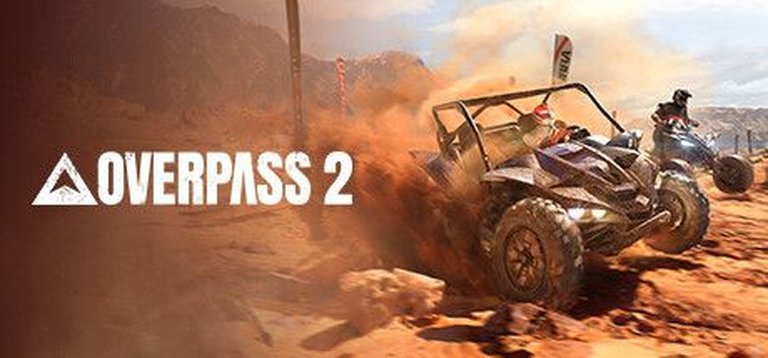
Description
Overpass 2 is an off-road racing simulation game where players navigate challenging terrains using UTVs, ATVs, and Rock Bouncers. Set in contemporary environments, the game emphasizes balancing power, speed, and precision to overcome obstacles, with solo and multiplayer modes available. Developed by Neopica and published by Nacon, it features realistic driving mechanics and diverse challenges like off-road sprints, circuits, and hill climbs, requiring strategic technique and control to succeed.
Gameplay Videos
Where to Buy Overpass 2
PC
Overpass 2 Free Download
Overpass 2 Cracks & Fixes
Overpass 2 Guides & Walkthroughs
Overpass 2 Reviews & Reception
metacritic.com (60/100): As with the first game, Overpass 2 is not what one would consider a traditional racing game given the events you participate in and the sim-like management of your team.
playstationcountry.com (68/100): It’s a sport similar to trials in that you’re tasked with traversing rugged terrain and man-made obstacles.
gamingbolt.com (40/100): As a confounding racing slog, this unnecessary sequel remains as unsatisfactory as its predecessor.
ign.com (45/100): Drivers compete in races and try to set the best time on extreme tracks behind the wheel of powerful and officially licensed ATVs and UTVs.
Overpass 2: Review
Introduction
In the rugged landscape of simulation racing, Overpass 2 arrives as a sequel to Neopica and Nacon’s 2019 off-road experiment, promising refined physics, expanded content, and Unreal Engine 5-powered vistas. Yet, beneath its lofty ambitions lies a game grappling with its identity: a technically demanding sim shackled by inconsistent execution. This review dissects Overpass 2’s attempt to dominate the niche of obstacle-centric off-roading, exploring whether its incremental improvements justify a place in the pantheon of racing simulations or if it remains trapped in the mud of missed potential.
Development History & Context
Neopica, the Belgian studio behind the Overpass franchise, carved a niche with its debut title’s focus on precision-driven terrain traversal over traditional racing spectacle. Released in September 2023, Overpass 2 emerged against a backdrop of advancing racing simulators like SnowRunner and WRC Generations, demanding greater realism and depth. Built in Unreal Engine 5, the sequel aimed to leverage modern hardware for enhanced visuals and physics while responding to fan feedback on vehicle variety and career-mode complexity.
Nacon’s publishing strategy positioned Overpass 2 as a budget-friendly alternative to AAA competitors, launching at $39.99 (frequently discounted to $3.99 on Steam). This pricing underscored its target audience: niche enthusiasts willing to endure quirks for a dedicated off-road experience. However, the game’s technical aspirations clashed with the studio’s limited resources, resulting in a title that felt simultaneously ambitious and underbaked.
Narrative & Thematic Deep Dive
While Overpass 2 lacks a traditional narrative, its thematic core revolves around conquest—of nature, machinery, and legacy. Players embody an off-road team manager navigating a grueling calendar of events across five regions (Baja Desert, Utah, Western Europe), battling not just rivals but the terrain itself. Rocks, mud, and steep inclines serve as antagonists, demanding patience and strategy.
The game’s “story” unfolds through its career mode, where players juggle sponsors, R&D upgrades, and vehicle maintenance—a metaphor for the real-world pressures of motorsport management. Yet, this thematic potential is undercut by sterile presentation; static menus and lifeless voice acting drain the drama from what should feel like an adrenaline-fueled odyssey. The absence of human stakes (e.g., rivalries or crew dynamics) reduces the campaign to a checklist rather than an epic.
Gameplay Mechanics & Systems
Core Loop and Vehicle Handling
Overpass 2’s gameplay orbits three pillars: pathfinding, throttle control, and vehicle customization. Players pilot ATVs, UTVs, and Rock Bouncers across five event types—hill climbs, obstacle courses, sprints—each demanding unique tactics. Success hinges on slow, methodical navigation: adjusting differentials, balancing power distribution, and picking optimal routes to avoid rollovers or stuck tires.
The physics system, while improved from the first game, remains divisive. Input lag and floaty steering undermine precision, especially on rock-heavy trails where millimeter adjustments matter. Vehicles often feel unmoored from terrain, with weight distribution inconsistently simulated. Conversely, the drivetrain management system (switching between 2WD, 4WD, and locked differentials) adds strategic depth, rewarding mastery with faster ascents.
Career Mode and Progression
Career mode layers RPG-like elements atop racing:
– Team Management: Hire staff, secure sponsors, and allocate funds to repair/upgrade vehicles.
– Skill Tree: Unlock perks like reduced repair costs or improved grip.
– Calendar System: Simulate/skip events to prioritize high-stakes championships.
While structurally sound, the mode suffers from shallow execution. Sponsors offer generic objectives (“Finish 3rd in X event”), staff hires lack personality, and R&D choices feel inconsequential. The economy is overly generous, negating the tension of resource scarcity.
Multiplayer and Customization
Online races support 8 players, but lobbies were sparsely populated at launch. Split-screen/local multiplayer thrives as a chaotic party option, while vehicle customization (liveries, driver gear) is robust but aesthetically limited by dated models.
World-Building, Art & Sound
Environments and Atmosphere
Overpass 2’s five regions teem with geographic diversity: sun-scorched dunes, forested泥沼, and alpine switchbacks. UE5 delivers sporadic beauty—sandstorms obscuring tracks, dynamic lighting on rock faces—but overall, textures and geometry feel last-gen. Vegetation is sparse, and repetitive asset use drains immersion.
Sound Design
The audio landscape oscillates between highlights and missteps. Engine growls (particularly Yamaha and Polaris models) roar with authenticity, and crunching gravel sells impacts. Negligible ambient sounds (wildlife, wind) and a forgettable electronic soundtrack, however, leave stages feeling sterile.
Reception & Legacy
At launch, Overpass 2 garnered mixed reviews (Metacritic: 60 on Xbox/63 on PC; Steam: 58% positive). Critics praised its niche ambition but lambasted janky controls, AI ineptitude (对手经常鲁莽碰撞), and undercooked management sim elements. User reviews highlighted its value at discounted prices (“Worth $4, not $40”) but bemoaned the steep learning curve.
While lacking the cultural impact of SnowRunner or Forza Horizon, Overpass 2 solidified Neopica’s reputation as a boutique developer for hardcore off-road fans. Its legacy may lie in prototyping ideas—pathfinding emphasis, modular difficulty—that AAA studios could refine. Post-launch patches addressed camera bugs and stability, yet failed to overhaul core complaints.
Conclusion
Overpass 2 is a paradoxical sequel: mechanically deeper than its predecessor yet equally flawed. Its uncompromising focus on terrain traversal will gratify sim diehards seeking a deliberate, punishing challenge, while casual players will collide with its clunky controls and austere presentation. At full price, it’s a tough sell; as a discounted curiosity, it offers fleeting novelty. In the grand tapestry of racing games, Overpass 2 remains a footnote—a rocky detour rather than a destination.