
- Release Year: 2024
- Platforms: Windows
- Publisher: Erbe Software, S.L.
- Developer: Alcachofa Soft S.L.
- Genre: Adventure
- Perspective: Side view
- Game Mode: Single-player
- Gameplay: Graphic adventure
- Setting: Futuristic, Sci-fi
- Average Score: 78/100
Description
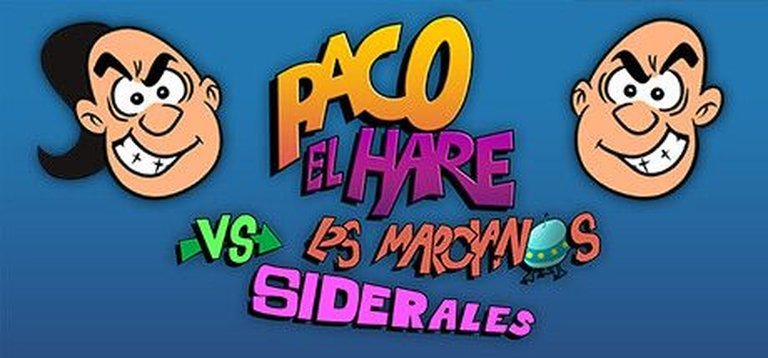
Paco El Hare vs Los Marcianos Siderales is a sci-fi graphic adventure game released in 2024 for Windows, featuring side-view perspective, fixed/flip-screen visuals, and point-and-select interface. Players guide the heroic hare Paco through a futuristic setting to battle invading space martians, in a nod to classic Spanish software and video game history.
Paco El Hare vs Los Marcianos Siderales: Review
Introduction
Imagine a universe where life springs from sausage molecules, interstellar invaders pilot “Sausage-Wing” ships, and Earth’s salvation rests on the floppy-eared shoulders of a vegetarian Hare Krishna wielding nothing but an evangelizing tome. This is the delightfully deranged premise of Paco El Hare vs Los Marcianos Siderales, a 1994 point-and-click adventure demo resurrected in 2024 as a free Steam release. Born from Spain’s vibrant yet underappreciated 8-bit and early PC scene, this pint-sized prototype not only captures the quirky humor of its era but serves as a crucial historical footnote—the genesis of Alcachofa Soft’s legacy, paving the way for cult classic Dráscula: The Vampire Strikes Back. In this exhaustive review, I argue that Paco El Hare is more than a nostalgic curiosity; it’s a testament to indie ingenuity amid technological constraints, blending absurd sci-fi satire with classic adventure tropes to earn its place as a preserved artifact of Spanish gaming history.
Development History & Context
Alcachofa Soft S.L., a modest Spanish studio, cut their teeth on Paco El Hare vs Los Marcianos Siderales in 1994, crafting it as a VGA-era MS-DOS demo on humble hardware. This was pitched to industry heavyweight Dinamic Multimedia—a key player in Spain’s “clon” era of the 1980s and ’90s, known for ripping off hits like Pac-Man (hence the “Paco” nod) while fostering local talent. Dinamic passed, but the project proved pivotal: it honed Alcachofa’s skills in point-and-click design, directly informing their 1996 breakout Dráscula, a Spanish adventure gem often compared to LucasArts’ Monkey Island series for its wit and pixelated charm.
The mid-90s Spanish software landscape was a gold rush of bedroom coders and small teams battling piracy, limited distribution, and the shadow of American blockbusters. PCs ran on 386/486 processors with 4MB RAM tops, VGA graphics (320×200 resolution), and Sound Blasters for audio—constraints that forced clever compression and parser-free interfaces. Paco embodies this: a side-view, fixed-screen graphic adventure using point-and-select mechanics, sidestepping text parsers for accessibility. Released digitally in 2024 by publisher Erbe Software (another Spanish veteran reissuing classics), it’s emulated via DOSBox-like tech, with Steam’s free tier (5GB storage, 156MB RAM) making it trivially accessible. This re-release, amid a retro boom (Jet Paco homages abound), underscores preservation efforts, archiving a “brief piece of history about Spanish software and video games” on platforms like Internet Archive.
Narrative & Thematic Deep Dive
At its core, Paco El Hare is a riotous sci-fi farce skewering invasion tropes with carnivorous absurdity. In a distant galaxy, a planet’s sausage-based lifeforms—evolving from “sausage molecules”—launch Sausage-Wing armadas to abduct and process planetary populations into processed meats. Earth falls victim when Los Angeles residents are beamed up; enter Paco, a pacifist Hare Krishna bunny, vegetarian evangelist armed solely with his holy book. His quest: infiltrate the mothership, rescue the captives, and thwart the salchicha (sausage) apocalypse without violence.
Plot Breakdown: The demo teases a linear yet branching tale across fixed screens aboard the alien vessel. Paco boards amid chaos, confronting sausage-mutating machines, evasive crew, and environmental hazards. Dialogue is sparse but punchy—expect Krishna chants clashing with alien grunts—in Spanish (English unsupported), emphasizing cultural flavor. Puzzles tie into the lore: use the book to “convert” foes non-lethally, manipulate sausage tech, or navigate LA-to-ship transitions.
Characters: Paco is the star—a floppy-eared everyman with unshakeable faith, evoking Sam & Max‘s lunacy or Monkey Island‘s Guybrush but rooted in Spanish humor (think Mortadelo y Filemón comics). Aliens are grotesque, wiener-limbed caricatures, theming consumption as cosmic horror. No deep arcs in the demo, but hints of satire emerge: vegetarianism vs. carnivory mirrors 90s cultural clashes, while LA abductees nod to Hollywood excess.
Themes: Absurdism reigns, lampooning sci-fi staples (Mars Attacks!-esque) and Spanish sausage culture (chorizo imperialism?). Pacifism critiques action-hero norms; Paco’s book-as-weapon subverts gunplay. It’s a product of 1994’s post-Cold War whimsy, blending Hare Krishna spirituality with B-movie invasions—profoundly silly, yet thematically cohesive in mocking exploitation across scales galactic and gastronomic.
Gameplay Mechanics & Systems
As a traditional point-and-click graphic adventure, Paco El Hare loops around examine-use-combine: hover hotspots, left-click to interact/look, right-click inventory. Core loop: traverse fixed/flip-screen rooms (side-view perspective), solve inventory puzzles, evade timed hazards.
Combat & Progression: No traditional combat—Pacifist purity! “Fight” via wit: evangelize aliens into stupor, repurpose sausage guns. Progression is gate-based: collect items (book upgrades? machine parts), no XP but skill trees implied in full vision. Demo limits scope, but systems shine in parser-free UI—intuitive drag-drop, context menus.
Innovations & Flaws: Ahead of its time, icon-based interactions prefigure Broken Sword. Flaws? Era-typical pixel-hunting (VGA fuzziness), potential dead-ends (save-scum advised), Spanish-only dialogue barriers non-speakers. Steam tags (2D Fighter? Beat ’em up?) seem erroneous—user mis-tags for its punchy action feel—but PvE co-op hints at modern ports. UI is clean: bottom inventory bar, verb list (walk-to, use, give). Puzzles escalate logically: early book-thumps, later multi-step chains. Short demo (~30-60 mins) avoids frustration, but lacks save-states in original DOS.
Controls: Mouse-only, full controller? Steam says limited. Responsive on modern rigs, though flip-screens feel choppy emulated.
World-Building, Art & Sound
The setting—a pulsating alien ship juxtaposed Earthly LA—builds a claustrophobic, fleshy atmosphere. Interiors ooze sausage viscera: conveyor belts churning humans, glowing vats, throbbing hulls evoking Half-Life‘s Black Mesa but cartoon-gross.
Visuals: VGA pixel art (256 colors) is charmingly crude—blocky sprites, dithered gradients. Paco’s ears flop expressively; aliens wobble phallically. Fixed screens layer parallax scrolls minimally, side-view aiding navigation. 2024 port preserves authenticity, no HD filters—raw nostalgia.
Sound Design: MIDI chiptunes beep whimsy: jaunty invasion marches, Krishna flutes clashing synth blips. SFX pop crisply (sausage squelches, book thwacks). Full Spanish audio/subtitles immerse, but mono-channel limits depth. Collectively, elements amplify farce: visuals grotesque-funny, sound irreverent, forging a cohesive “product of its time” vibe—cozy like old SCUMM engines.
Reception & Legacy
1994 launch? Vaporware demo, no formal release—critical void, circulated via floppies/shareware. 2024 Steam drop: “Mostly Positive” (78% of 14 reviews, ~79/100 player score). Positives laud history/preservation; negatives cite brevity, language lock, bugs (e.g., Steam forums: stuck puzzles, “salchichas” endings). No Metacritic/MobyScores yet—niche appeal.
Evolution: From obscure pitch to Archive.org gem, Steam elevates it. Influences Dráscula directly (humor, mechanics), echoes in Spanish adventures (Los Rodríguez). Ties to Jet Paco (Amstrad/NES homages) cement “Paco” mascot status. Industry impact: spotlights Spain’s “golden age” (Dinamic/Opera Soft), inspiring retro ports amid 2020s indiepocalypse. Cult potential grows via GOG Dreamlist votes.
Conclusion
Paco El Hare vs Los Marcianos Siderales is a delectable demo-delicacy: brief, baffling, brilliant in absurdity. Alcachofa Soft’s 1994 prototype transcends obscurity, birthing a legacy via Dráscula while capturing Spanish dev grit. Gameplay holds via clever puzzles, art/sound evoke VGA joy, narrative skewers with glee. Flaws—short scope, language—pale against free access. Verdict: Essential for adventure historians, 8/10 for retro fans. In video game canon, it’s a sausage-link to forgotten roots—play it, preserve it, chant “Hare Krishna” to the stars. Final Score: 8.5/10 – A quirky cornerstone of Iberian interactivity.