
- Release Year: 2016
- Platforms: PlayStation 4, Windows
- Publisher: Epic Games, Inc.
- Developer: Epic Games, Inc.
- Genre: Action
- Perspective: Behind view
- Game Mode: Online PVP
- Gameplay: ARTS, MOBA, Shooter
- Setting: Fantasy
- Average Score: 68/100
Description
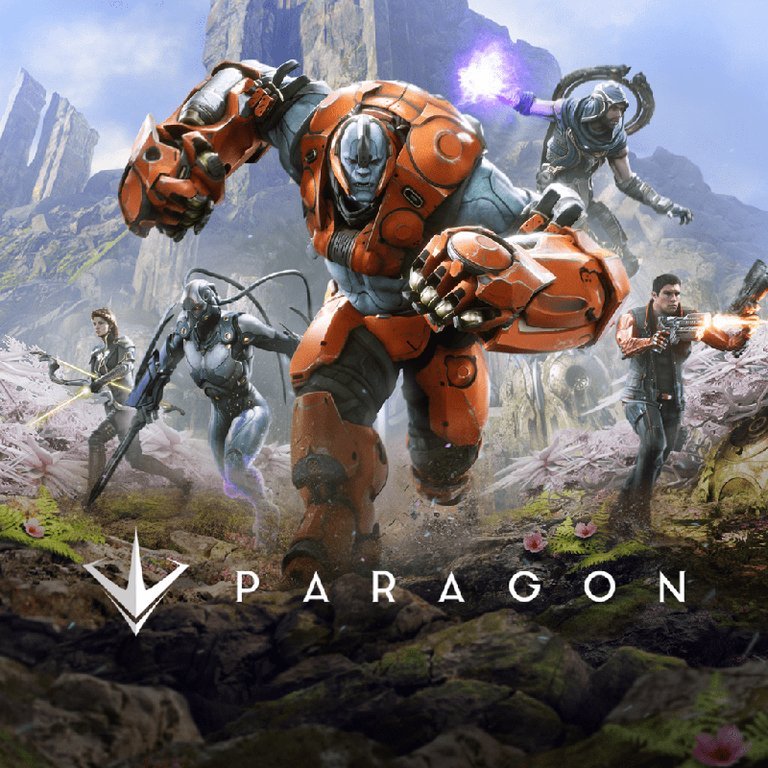
Paragon was a free-to-play, third-person multiplayer online battle arena (MOBA) game developed and published by Epic Games, utilizing the Unreal Engine 4. Set in a fantasy world, players controlled unique heroes with distinct abilities, battling in teams to destroy the enemy’s core while navigating symmetrical maps with lanes, defensive towers, and jungles filled with resources. The game launched in early access in March 2016 and transitioned to an open beta in August 2016, but despite its innovative blend of MOBA and shooter mechanics, it struggled to maintain a player base and was ultimately shut down in April 2018.
Gameplay Videos
Where to Buy Paragon
PC
Paragon Guides & Walkthroughs
Paragon Reviews & Reception
metacritic.com (56/100): I feel I must address some of the unfair critics below giving this game a ‘0’ rating.
opencritic.com : Paragon, a recent discovery, attempts to bring the MOBA genre to consoles. A difficult task, given the style of the action, but Paragon does put up a good showing.
gamesreviews2010.com (80/100): Paragon was a truly innovative MOBA that pushed the boundaries of the genre with its explosive action, direct third-person control, and deep strategic choice.
Paragon: A Visionary MOBA That Burned Too Bright
Introduction
Paragon was a game of contradictions—a title that dared to redefine the MOBA genre with its third-person shooter mechanics, vertical combat, and breathtaking visuals, yet ultimately succumbed to the pressures of an oversaturated market and internal studio priorities. Developed by Epic Games and powered by Unreal Engine 4, Paragon entered early access in March 2016, promising a fresh take on the multiplayer online battle arena (MOBA) formula. However, despite its ambition and innovation, the game was shut down in April 2018, leaving behind a legacy of unfulfilled potential and a community that still mourns its loss.
This review explores Paragon‘s development, gameplay, narrative depth, and the factors that led to its untimely demise. It also examines the game’s enduring influence, as its assets were released for free, inspiring a new wave of MOBA titles that sought to carry its torch.
Development History & Context
The Birth of a New MOBA
Epic Games, fresh off the success of Gears of War and Unreal Tournament, sought to innovate within the MOBA genre, which was dominated by titles like League of Legends and Dota 2. According to executive producer John Wasilczyk, the team was given creative freedom to “make anything,” and they chose to blend the strategic depth of MOBAs with the action-packed gameplay of third-person shooters. This vision led to the creation of Paragon, a game that emphasized mobility, verticality, and direct control over heroes.
The game’s development was marked by several key decisions:
– Third-Person Perspective: Unlike traditional MOBAs, Paragon adopted a behind-the-shoulder viewpoint, allowing players to aim attacks manually and dodge with precision.
– Vertical Combat: Maps were designed like “bowls,” enabling players to traverse multiple elevations and engage in dynamic battles.
– Card System: A deck-building mechanic replaced the traditional item shop, offering strategic depth and customization.
Early Access and Open Beta
Paragon entered early access on March 18, 2016, with three paid tiers (Founder’s Pack, Challenger Pack, and Master Pack) that included cosmetic items and boosts. The game transitioned to a free-to-play open beta on August 16, 2016, attracting a surge of players. However, the shift from the original map (Legacy) to the redesigned Monolith in December 2016 alienated some of the player base, as the new map altered the game’s pacing and mechanics.
The Rise and Fall
Despite its promising start, Paragon struggled to retain players. The game’s development was overshadowed by the meteoric rise of Fortnite Battle Royale in late 2017. Epic Games, recognizing Paragon‘s limited growth, redirected resources to Fortnite, ultimately leading to Paragon‘s shutdown in April 2018. In a gesture of goodwill, Epic released all of Paragon‘s assets—valued at $17 million—for free on the Unreal Engine Marketplace, allowing developers to repurpose them for new projects.
Narrative & Thematic Deep Dive
The World of Agora
Paragon was set in a sci-fi/fantasy universe called Agora, a planet with three moons—Omeda, Letha, and Zechin—each with distinct civilizations and cultures. The game’s lore, though sparse, hinted at a grander narrative involving the Ashur, an ancient race that had once ruled Agora. The Ashur’s downfall and the opening of “seals” on the moons allowed warriors from each world to compete in a trial to determine the ultimate Paragon, a champion destined to shape the fate of Agora.
Heroes and Their Stories
The game featured a diverse roster of heroes, each with unique backstories and motivations:
– Gideon: A power-hungry mage seeking the secrets of the Ashur.
– Kallari: A shadowy assassin with a mysterious past.
– Greystone: A warrior seeking redemption after a tragic loss.
– Muriel: A robotic guardian with a developing sense of humor.
While Paragon lacked a traditional campaign, its lore was expanded through character bios, loading screen texts, and community-driven theories. The game’s narrative was open-ended, leaving players to speculate about the connections between heroes and the larger conflict unfolding in Agora.
Gameplay Mechanics & Systems
Core Gameplay Loop
Paragon followed the standard MOBA structure: two teams of five players battled to destroy the enemy’s core, protected by towers and inhibitors. However, the game introduced several innovations:
– Third-Person Combat: Players had direct control over their heroes’ movements and attacks, making skill and positioning crucial.
– Verticality: Maps featured multiple elevations, allowing for ambushes, escapes, and strategic positioning.
– Card System: Instead of purchasing items during matches, players built decks of cards that granted passive bonuses and active abilities.
Heroes and Roles
The game’s roster was divided into several roles:
– Fighters (e.g., Kwang, Greystone): Melee bruisers with high durability.
– Casters (e.g., Gideon, Lt. Belica): Ranged mages with powerful spells.
– Assassins (e.g., Kallari, Countess): Stealthy killers specializing in burst damage.
– Tanks (e.g., Steel, Riktor): Frontline defenders with crowd control.
– Supports (e.g., Muriel, Dekker): Healers and buffers who aided teammates.
Each hero had a unique ultimate ability, such as Murdock’s infinite-range laser or Rampage’s devastating charge.
Progression and Customization
Players earned experience and gold by defeating enemies and destroying structures. Experience allowed heroes to level up and unlock new abilities, while gold was used to purchase upgrades from their pre-built card decks. The card system was designed to simplify the traditional MOBA item shop, but it also introduced complexity, as players had to balance affinities and synergies.
World-Building, Art & Sound
Visual Design
Paragon was a visual masterpiece, showcasing the power of Unreal Engine 4. The game’s art style blended sci-fi and fantasy elements, with heroes ranging from cybernetic warriors to mystical archers. The maps were meticulously crafted, featuring lush jungles, futuristic cities, and ancient ruins. The vertical design of the maps added a layer of depth rarely seen in MOBAs, allowing for dramatic encounters and strategic plays.
Sound and Music
The game’s soundtrack, composed by Rom Di Prisco, was a mix of orchestral and electronic music, perfectly capturing the epic scale of the battles. Each hero had unique voice lines and sound effects, adding personality and immersion to the gameplay.
Reception & Legacy
Critical and Commercial Reception
Paragon received mixed reviews during its lifespan. Critics praised its innovative gameplay and stunning visuals but criticized its steep learning curve and balance issues. The shift from Legacy to Monolith was particularly divisive, as it altered the game’s pacing and mechanics.
Commercially, Paragon struggled to compete with established MOBAs like League of Legends and Dota 2. The rise of Fortnite Battle Royale further diverted attention and resources away from the game, leading to its eventual shutdown.
The Legacy of Paragon
Despite its short lifespan, Paragon left a lasting impact on the gaming industry. Epic’s decision to release its assets for free inspired several spiritual successors:
– Fault: Elder Orb: A third-person MOBA that entered early access in 2020 but shut down in 2022.
– Predecessor: A crowdfunded MOBA that raised $2.2 million to revive Paragon‘s gameplay.
– Paragon: The Overprime: A Netmarble-developed MOBA that used Paragon‘s assets but also shut down in 2024.
These projects demonstrated the enduring appeal of Paragon‘s mechanics and art style, even as they struggled to replicate its success.
Conclusion
Paragon was a game ahead of its time—a bold experiment that sought to merge the depth of MOBAs with the action of third-person shooters. Its innovative mechanics, vertical combat, and stunning visuals set it apart from its competitors, but internal challenges and market pressures ultimately led to its downfall. Despite its short lifespan, Paragon remains a cult classic, remembered for its ambition and the community that still cherishes its legacy.
Final Verdict: Paragon was a visionary title that pushed the boundaries of the MOBA genre. While its execution was flawed and its lifespan cut short, its influence can still be felt in the games that followed. For those who experienced it, Paragon was a glimpse of what could have been—a game that dared to dream big and, for a brief moment, soared.
Score: 8/10 – A flawed masterpiece that burned too bright but left an indelible mark on gaming history.