
- Release Year: 2002
- Platforms: Windows
- Publisher: Megaware Multimedia B.V.
- Developer: Fusion Digital Entertainment
- Genre: Action
- Perspective: 3rd-person
- Game Mode: Single-player
- Gameplay: Platform
- Setting: Fantasy
- Average Score: 80/100
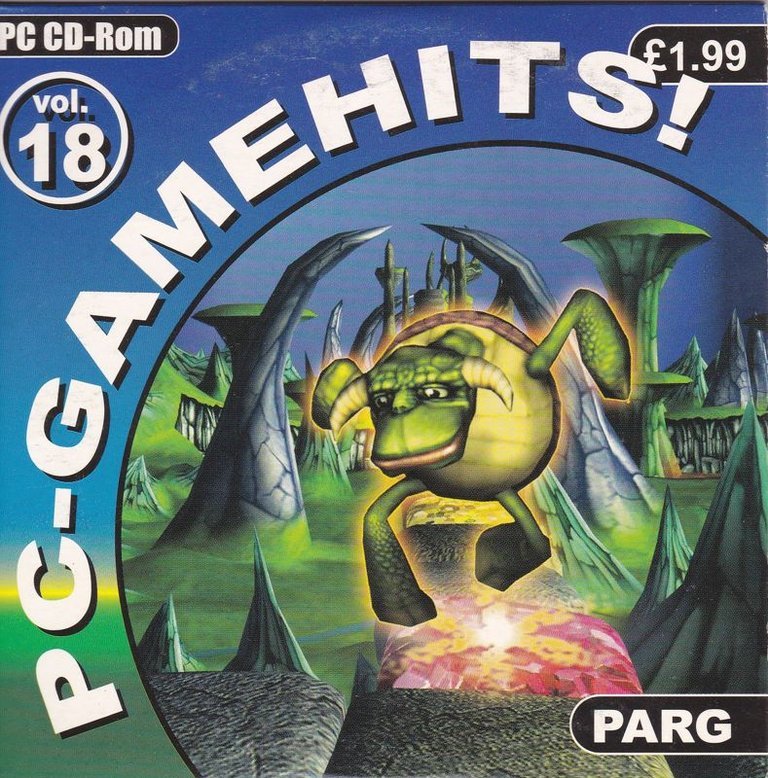
Description
Parg is a single-player, keyboard-controlled 3D platform game where players navigate a constantly moving creature called a Parg through seven magical worlds. The goal is to collect power orbs while avoiding hazards like narrow bridges, trapdoors, and timed jumps. Originally planned as a two-player game, the final release by Megaware Multimedia in 2002 featured only a solo experience with a fantasy setting and direct control mechanics.
Parg Reviews & Reception
gamepressure.com (80/100): A very simple arcade game created for younger players.
Parg: A Forgotten Gem of Early 2000s Platforming
Introduction
In the vast, ever-expanding universe of video games, some titles shine brightly for a moment before fading into obscurity, remembered only by a handful of dedicated enthusiasts. Parg, a 2002 3D platformer developed by Fusion Digital Entertainment and published by Megaware Multimedia B.V., is one such game. A quirky, charming, and ultimately overlooked title, Parg offers a fascinating snapshot of early 2000s game design, blending simple mechanics with an ambitious vision. This review aims to resurrect Parg from the depths of gaming history, examining its development, gameplay, narrative, and legacy to determine why it deserves a place in the annals of platforming history.
Development History & Context
The Studio and Creators’ Vision
Fusion Digital Entertainment, the studio behind Parg, was a relatively obscure developer in the early 2000s, with a portfolio that included a mix of budget titles and licensed games. Parg was one of their more ambitious projects, designed as a single-player, keyboard-controlled 3D platformer. The game’s premise was straightforward: players control a creature called a Parg, a magical being that must navigate seven fantastical worlds, collecting power orbs while avoiding hazards like trapdoors, narrow bridges, and environmental obstacles.
The developers envisioned Parg as a family-friendly title, aiming to capture the whimsy and charm of late 90s and early 2000s platformers like Rayman and Kao the Kangaroo. The game’s art style and level design reflect this intent, with vibrant, cartoonish visuals and a focus on accessibility. However, Parg also attempted to innovate with its “diagonal-down” perspective, a hybrid of 3D and isometric views that gave the game a unique visual identity.
Technological Constraints and the Gaming Landscape
Parg was released in 2002, a transitional period for platformers. The genre was dominated by 3D titans like Super Mario Sunshine and Ratchet & Clank, while 2D platformers were increasingly niche. Parg’s 3D presentation was a necessity to compete, but the game’s modest budget and technical limitations meant it couldn’t match the polish or scope of its AAA contemporaries.
The game’s system requirements were modest even for the time—a Pentium II 333MHz processor, 128MB of RAM, and an 8MB graphics card—reflecting its status as a budget title. This technical modesty allowed Parg to run on lower-end PCs, but it also constrained the game’s ambition. The developers had to balance visual appeal with performance, resulting in a game that was colorful but not particularly detailed.
The Planned Two-Player Mode
One of Parg’s most intriguing “what ifs” is its planned two-player mode. According to promotional materials, the game was originally intended to feature a competitive split-screen mode where players could race to complete levels or even sabotage each other with weapons. This mode, however, was conspicuously absent from the final release. The reasons for its omission remain unclear, but it’s likely that time constraints or technical limitations forced the developers to cut it. The absence of this feature is a missed opportunity, as it could have added significant replay value and set Parg apart from other platformers of the era.
Narrative & Thematic Deep Dive
Plot and Characters
Parg’s narrative is minimalist, even by the standards of early 2000s platformers. The game follows an unnamed Parg—a small, magical creature—as it traverses seven distinct worlds, each filled with obstacles and power orbs to collect. There is no dialogue, no cutscenes, and no overarching story beyond the basic premise of exploration and collection. The Parg itself is a silent protagonist, its motivations and backstory left entirely to the player’s imagination.
This lack of narrative depth is not necessarily a flaw. Parg’s strength lies in its environmental storytelling and atmospheric world-building. Each of the seven worlds has a distinct theme and visual style, from lush forests to icy tundras, and the game’s charm comes from the sheer joy of discovery. The Parg’s constant movement—it cannot stop, only change direction—adds a sense of urgency and momentum, reinforcing the idea that the creature is on a relentless quest.
Themes: Persistence and Exploration
While Parg lacks a traditional narrative, it does convey themes of persistence and exploration. The Parg’s inability to stop moving mirrors the player’s own journey through the game’s worlds. There is no pause, no respite—only forward motion. This design choice subtly reinforces the game’s core theme: the joy of exploration and the satisfaction of overcoming obstacles.
The game’s worlds are also thematically rich, even if they are not narratively developed. Each world feels distinct, with its own color palette, environmental hazards, and atmospheric music. The absence of dialogue or text allows players to project their own interpretations onto the game, making Parg a uniquely personal experience.
Gameplay Mechanics & Systems
Core Gameplay Loop
At its heart, Parg is a straightforward platformer. The player controls the Parg as it moves continuously along narrow bridges and pathways, collecting power orbs and avoiding hazards. The game’s most defining mechanic is the Parg’s constant movement—it cannot stop, only turn left or right. This creates a unique rhythm, as players must time their jumps and direction changes carefully to avoid falling off the edges of the world.
The gameplay is divided into seven worlds, each with multiple levels. The objective in each level is to collect a certain number of power orbs while navigating the environment’s hazards. These hazards include trapdoors, moving platforms, and enemies that must be avoided or outmaneuvered. The game’s difficulty curve is gentle, making it accessible to younger players, but the later worlds introduce more complex obstacles that require precision and timing.
Combat and Character Progression
Parg is not a combat-heavy game. The Parg has no weapons or attacks; instead, the focus is entirely on platforming and avoidance. This design choice sets Parg apart from many of its contemporaries, which often included combat as a core mechanic. The absence of combat allows the game to focus on its strengths: tight platforming controls and creative level design.
There is no character progression in the traditional sense. The Parg does not gain new abilities or upgrades as the game progresses. Instead, the challenge comes from the increasing complexity of the levels and the player’s growing familiarity with the Parg’s movement mechanics. This simplicity is both a strength and a weakness. On one hand, it makes Parg easy to pick up and play. On the other, it limits the game’s depth and replayability.
UI and Controls
The game’s UI is minimalist, with a simple HUD displaying the player’s current score and the number of power orbs collected. The controls are equally straightforward, with the Parg controlled entirely via the keyboard. The lack of mouse support is notable, as it reflects the game’s budget constraints and its target audience of younger players who might not have had access to more advanced input devices.
The controls are responsive, but the Parg’s constant movement can take some getting used to. Players must learn to anticipate the Parg’s trajectory and time their jumps accordingly. This learning curve is part of the game’s charm, as mastering the Parg’s movement becomes a satisfying challenge in its own right.
Innovative and Flawed Systems
Parg’s most innovative feature is its diagonal-down perspective, which gives the game a unique visual style. This perspective allows for a mix of 3D and 2D platforming elements, creating a sense of depth and verticality that is rare in platformers of the era. However, this perspective also introduces some flaws. The camera angle can occasionally obscure hazards or make it difficult to judge distances, leading to frustrating moments where the player falls off a platform due to poor visibility.
Another notable feature is the game’s split-screen multiplayer mode, which was planned but ultimately cut from the final release. Had it been included, this mode could have added significant replay value and made Parg a more memorable title. As it stands, the game’s single-player focus limits its longevity.
World-Building, Art & Sound
Setting and Atmosphere
Parg’s seven worlds are its greatest strength. Each world is visually distinct, with its own color palette, environmental themes, and atmospheric music. The worlds range from lush forests to icy tundras, fiery volcanoes to floating islands, each filled with unique hazards and obstacles. The game’s art style is cartoonish and vibrant, with a focus on bright colors and exaggerated proportions.
The diagonal-down perspective enhances the game’s sense of depth and verticality, making the worlds feel expansive and immersive. The Parg’s constant movement reinforces the idea that these worlds are alive and dynamic, with the player always on the move, exploring new areas and uncovering hidden secrets.
Visual Direction
The game’s visual direction is simple but effective. The Parg itself is a charming, round creature with a expressive face, and the environments are filled with whimsical details. The game’s use of color is particularly noteworthy, with each world featuring a distinct palette that reinforces its theme. For example, the forest world is dominated by greens and browns, while the ice world is awash in blues and whites.
The game’s 3D graphics are modest by modern standards, but they were serviceable for the time. The textures are simple, and the models are low-poly, but the game’s art style and vibrant colors make up for its technical limitations. The diagonal-down perspective also adds a unique visual flair, setting Parg apart from other platformers of the era.
Sound Design
The sound design in Parg is functional but unremarkable. The game features a simple, looping soundtrack that changes to reflect the theme of each world. The music is cheerful and upbeat, reinforcing the game’s lighthearted tone. Sound effects are minimal, with the Parg’s movements and jumps accompanied by simple, cartoonish noises.
While the sound design does not stand out as a particularly strong aspect of the game, it does its job well. The music and sound effects complement the gameplay without becoming distracting or repetitive.
Reception & Legacy
Critical and Commercial Reception
Parg was released to little fanfare in 2002. The game received no major reviews from mainstream gaming publications, and its commercial performance was similarly underwhelming. The lack of critical attention is not surprising, given the game’s budget nature and the dominance of more high-profile platformers at the time.
However, Parg did find a small but dedicated audience among younger players and platformer enthusiasts. The game’s accessibility and charming visuals made it a hit with children, while its unique mechanics and level design appealed to fans of the genre. Today, Parg is remembered fondly by those who played it, though it remains largely unknown to the broader gaming community.
Evolution of Reputation
In the years since its release, Parg has gained a modest cult following. The game’s unique mechanics and charming aesthetic have made it a favorite among retro gaming enthusiasts, and it is occasionally discussed in online forums and gaming communities. However, its reputation has not evolved significantly beyond its initial reception. Parg is still seen as a minor, budget title—a footnote in the history of platformers rather than a landmark.
Influence on Subsequent Games
Parg’s influence on subsequent games is difficult to trace. The game’s diagonal-down perspective and constant-movement mechanic are unique, but they have not been widely adopted by other developers. This is likely due to the game’s obscurity and the fact that its mechanics are somewhat niche.
However, Parg does share some similarities with later indie platformers that emphasize exploration and momentum-based movement. Games like Super Meat Boy and Celeste also focus on tight controls and challenging level design, though they are far more complex and polished than Parg. It’s possible that Parg’s emphasis on movement and exploration helped pave the way for these later titles, even if its direct influence is minimal.
Conclusion
Parg is a fascinating relic of early 2000s gaming—a charming, ambitious, but ultimately flawed platformer that deserves to be remembered. The game’s unique mechanics, vibrant visuals, and accessible gameplay make it a standout title, even if it was overshadowed by more high-profile releases at the time. While Parg may not be a masterpiece, it is a testament to the creativity and innovation of its developers, who managed to create a memorable and enjoyable experience despite the game’s technical and budgetary limitations.
In the grand tapestry of video game history, Parg is a small but colorful thread—a game that may not have changed the industry but nevertheless left its mark on those who played it. For fans of retro platformers and obscure gems, Parg is well worth revisiting. It’s a reminder that even the most modest games can offer moments of joy, challenge, and discovery.
Final Verdict: 7/10 – A charming and innovative platformer that deserves a second look.