
- Release Year: 2024
- Platforms: Linux, Windows
- Publisher: Walaber Entertainment LLC
- Developer: Walaber Entertainment LLC
- Genre: Driving, Racing
- Perspective: Behind view
- Game Mode: Online PVP, Single-player
- Gameplay: Arcade Racing, Drifting, Time-attack
- Setting: North America
- Average Score: 77/100
Description
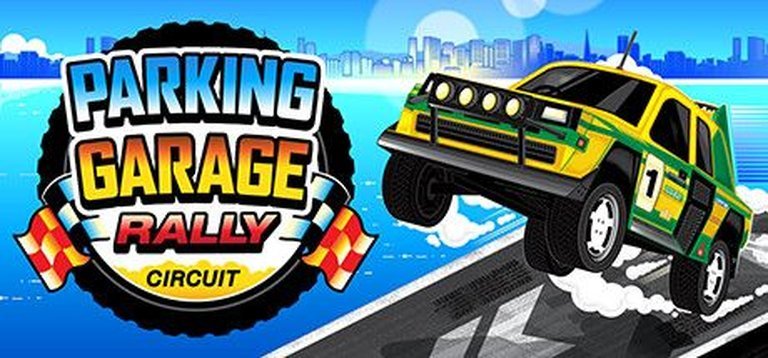
Parking Garage Rally Circuit is an arcade-style racing game set in North America, offering a nostalgic experience reminiscent of SEGA arcade racers from the mid-90s. Players can enjoy high-speed, challenging races through tight circuits, with a focus on skill and precision. The game features a behind-view perspective, direct control interface, and supports both offline and online multiplayer modes. With its Saturn-inspired visuals and jaunty ska soundtrack, it provides a fun and engaging time-attack racing experience.
Gameplay Videos
Where to Buy Parking Garage Rally Circuit
PC
Parking Garage Rally Circuit Patches & Updates
Parking Garage Rally Circuit Mods
Parking Garage Rally Circuit Guides & Walkthroughs
Parking Garage Rally Circuit Reviews & Reception
metacritic.com (77/100): It’s miles more fun than parallel parking.
destructoid.com : Parking Garage Rally Circuit is the absolute best Sega Saturn-style parking garage drift racing game ever released.
bigredbarrel.com : The physics and driving feel sloppy and unpredictable and can easily result in a frustrating experience.
Parking Garage Rally Circuit Cheats & Codes
PC
Enter codes in the options menu under Gameplay > Cheat Codes.
| Code | Effect |
|---|---|
| LD54 | Unlocks a new car and a new racetrack |
| DPAD | Unlocks the Dpad car from the training video |
| pluto | Low gravity mode |
| WAGON | Wagon spectator car |
| MOON | Moon gravity mode |
| JUPITER | Heavy gravity mode |
| OLDSCHOOL | Original learning lot racetrack |
| IMONTV | Replay camera during races |
| REVOLT | RC car mode |
| OST | Record mobile (Holophonic special) car |
Parking Garage Rally Circuit: Review
Introduction
In an era dominated by hyper-realistic racing simulators and open-world automotive epics, Parking Garage Rally Circuit emerges as a defiant love letter to the arcade racing renaissance of the mid-1990s. Developed by solo indie creator Tim FitzRandolph (Walaber), this Sega Saturn-inspired racer trades sprawling landscapes for multi-story concrete jungles, channeling the spirit of Sega Rally Championship and Daytona USA while carving its own identity. With its chunky low-poly aesthetics, ska-punk adrenaline, and unapologetic focus on precision drifting, PGRC is both a nostalgic time capsule and a modern testament to the enduring appeal of arcade purity. This review argues that while the game stumbles with inconsistent physics and limited content, its infectious energy and meticulous retro craftsmanship cement its place as a cult classic for enthusiasts of 90s gaming euphoria.
Development History & Context
Studio Vision and Creator Background
Walaber Entertainment, the one-man studio behind PGRC, is helmed by Timothy FitzRandolph—a veteran designer with credits on Disney’s JellyCar and Where’s My Water? FitzRandolph’s vision for PGRC crystallized during Ludum Dare 54, where the theme “limited space” inspired the concept of shrinking rally racing into parking garages. Drawing from his lifelong fascination with Sega’s Saturn-era arcade ports, he sought to recreate the “authentish” feel of a lost 1998 Saturn title, leveraging modern tools like Godot Engine and Blender to emulate period-accurate technical constraints.
Technological and Era Constraints
The 32-bit era’s limitations became PGRC’s creative foundation: low-resolution textures, dithered transparency effects (to mimic CRT blur), and pop-in draw distances mirror Saturn hardware. FitzRandolph even added graphical presets—“Original Hardware,” “Modern Emulator,” “Handheld LCD,” and “PC Port”—to let players toggle between faux-Saturn fidelity and cleaner modern displays. This commitment extended to audio, where synthesized engine roars and a ska soundtrack by The Holophonics evoked Sega’s iconic soundscapes.
Gaming Landscape
Released in September 2024, PGRC arrived amid a resurgence of retro-styled indies (Sports Story, Teenage Mutant Ninja Turtles: Shredder’s Revenge) and renewed interest in Saturn-era aesthetics. Its $9.99 price point and Steam-first strategy positioned it as an accessible throwback, contrasting with AAA juggernauts like Forza Motorsport while appealing to fans craving minimalist, skill-based gameplay.
Narrative & Thematic Deep Dive
Plot and Premise
PGRC foregoes traditional narrative for a high-concept premise: a fictional motorsport tour converts North American parking garages into temporary rally circuits. Each track—set in landmarks like Mount Rushmore or Chicago’s Marina City—becomes a week-long event, justifying the game’s erratic hazards (falling boulders, blackouts) and closed-course layouts. While no characters or storylines exist, the game’s “lore” cheekily frames it as a Walaber Pluto console release (a Saturn stand-in), complete with vintage box art and cheat codes.
Themes and Design Philosophy
Thematically, PGRC celebrates mastery through repetition—a hallmark of arcade classics. Its lack of narrative fluff mirrors FitzRandolph’s design mantra: “simple, short, sweet.” The game’s identity revolves around nostalgia-as-mechanics, urging players to chase leaderboard ghosts rather than plot twists. This purity aligns with Saturn-era sensibilities, where immediacy and score-chasing trumped cinematic ambition.
Gameplay Mechanics & Systems
Core Loop and Controls
At its heart, PGRC is a time-trial racer with eight tracks and three car classes (Light, Heavy, Ultra). Progression requires securing bronze or higher medals to unlock subsequent courses and vehicle tiers. The handling model borrows from Mario Kart’s drift-to-boost system: holding a drift charges a temporary speed burst, while chaining drifts escalates top speed into chaotic, physics-defying territory. Controls are elegantly minimal—gas, brake, drift—but demand precision, as minor collisions can catapult cars into uncontrollable spins.
Innovations and Flaws
The game’s standout innovation is its “seamless leaderboard” integration: beating a course’s gold time downloads ghosts of players marginally faster than you, creating a perpetually escalating rivalry. However, this brilliance is undermined by inconsistent physics. Cars feel weightless, clipping edges often sends them ricocheting like pinballs, and boosts occasionally override braking inputs—a flaw critics likened to “driving Styrofoam” (Destructoid).
Multiplayer and Replayability
Online multiplayer supports 2-8 players in non-contact ghost races, while local split-screen offers couch competition. Yet, barren servers at launch (per Team VVV) highlighted a missed opportunity. Endurance modes and 10 hidden cheats (e.g., turbo cars, mirror modes) extend longevity, but the ~2-hour campaign left some players craving more variety (Kakuchopurei).
World-Building, Art & Sound
Visual Design and Atmosphere
PGRC’s Saturn mimicry is painstaking: jagged polygons, texture warping, and CRT filter options replicate the era’s “warm, bright, colourful” aesthetic (Big Red Barrel). Each garage embodies a unique locale—Seattle’s airport baggage carts, New York’s Statue of Liberty jump—though cluttered layouts sometimes obscure racing lines. Replay modes with freecam controls showcase these details, letting players freeze-frame chaotic crashes or perfect drifts.
Soundtrack and Audio
Eric Daino’s band The Holophonics delivers a ska-punk masterpiece, blending frenetic horns with basslines that echo Crazy Taxi’s kinetic energy. Tracks like “Liberty Island” synchronize musical peaks with track landmarks (e.g., trumpets blare as sunlight floods the garage), while nighttime courses feature moody saxophone solos. Sound effects, though sparse, emphasize tire screeches and crunching metal, though Eurogamer.de noted the absence of nuanced engine tones.
Reception & Legacy
Critical and Commercial Reception
PGRC earned a 68% average on MobyGames (13 critics) and 77 on Metacritic, with praise for its aesthetics and drift mechanics (Destructoid: 90/100; God is a Geek: 90/100) but criticism of physics and content depth (Gamereactor: 40/100). Players praised its “just one more run” addictiveness (Strat Packer) but lamented repetitive track memorization (Kakuchopurei). Sales figures remain undisclosed, though FitzRandolph’s pledge to port it to Sega Saturn if it sells 100K copies became a viral talking point (SEGAbits).
Industry Influence
The game’s legacy lies in its fidelity to retro design principles. By proving that Saturn-era aesthetics could thrive commercially (via brisk Steam sales), PGRC inspired indie devs to explore niche hardware emulation. Its leaderboard ghost system has since been echoed in titles like Time Trials Fusion, while The Holophonics’ soundtrack cemented ska as a viable retro-gaming genre.
Conclusion
Parking Garage Rally Circuit is a paradox: a flawed gem that resonates most with those who cherish its imperfections. Its jittery physics and brevity prevent it from ascending to the pantheon of Sega Rally or Daytona USA, yet its authenticity as a Saturn-era homage is undeniable. For $9.99, it delivers a shot of pure, unadulterated arcade adrenaline—a reminder that joyrides need not be sprawling to be unforgettable. While it won’t convert realism devotees, PGRC secures its legacy as a passionate, grassroots tribute to the 90s racing ethos. As Walaber himself quipped, it’s “miles more fun than parallel parking”—and for retro enthusiasts, that’s enough.
Final Verdict: 7.5/10 – A lovingly crafted, if uneven, ode to Sega’s arcade glory days. Essential for Saturn fans; cautiously recommended for arcade racing purists.