
- Release Year: 2020
- Platforms: Windows
- Publisher: Daedalic Entertainment GmbH
- Developer: Alter Games
- Genre: Strategy, Tactics
- Perspective: Diagonal-down
- Game Mode: Single-player
- Gameplay: Base building, Grid inventory, Real-time tactics, Stealth
- Setting: World War II
Description
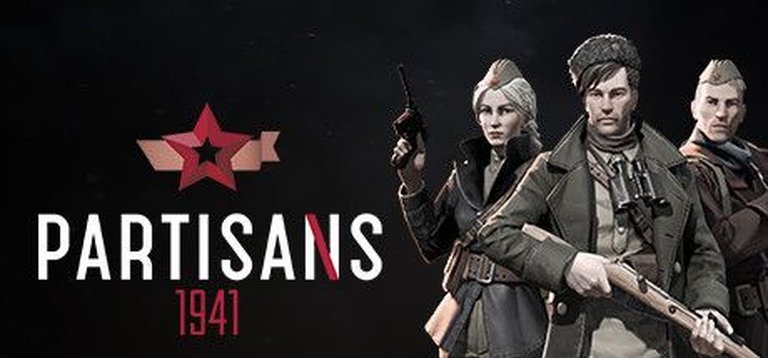
Partisans 1941 is a real-time tactics game set during World War II, where players lead a squad of Soviet partisans in guerrilla warfare missions across the Eastern Front. Combining stealth strategy with base-building mechanics between operations, it offers historically inspired scenarios and an immersive experience of commanding a resistance movement against enemy forces.
Gameplay Videos
Where to Buy Partisans 1941
Partisans 1941 Free Download
Partisans 1941 Mods
Partisans 1941 Guides & Walkthroughs
Partisans 1941 Reviews & Reception
pcgamer.com : Partisans combines a classic real-time tactics structure with more flexible systems for a winning formula.
rockpapershotgun.com : I’ve just fallen slightly in love with Partisans 1941.
Partisans 1941: A Flawed but Fascinating Foray into Guerrilla Warfare
Introduction: The Partisan’s Plight
In the vast and often glutinous library of World War II video games, the Eastern Front has historically been a stage dominated by tank blitzes, massive encirclements, and the blunt force of Soviet “Zerg rush” tactics. The gritty, intimate, and desperate struggle of the Soviet partisan—the farmer, the teacher, the escaped POW who took to the forests to harry the Wehrmacht—has been a curiously underserved narrative. Partisans 1941, a 2020 real-time tactics (RTT) title from Russian studio Alter Games and published by Daedalic Entertainment, strides onto this neglected stage with an audacious goal: to marry the meticulous, puzzle-box stealth of the classic Commandos series with the emergent, squad-based drama of modern tactical RPGs. Its execution is a study in contrasts—a game that often feels both thrillingly fresh and frustratingly unpolished, a sincere tribute to a brutal chapter of history that occasionally trips over its own ambitions. This review argues that Partisans 1941 is a significant, if imperfect, evolution of the RTT genre, whose core innovation—the persistent, resource-strapped resistance camp—lends it a thematic weight and strategic depth rarely seen, but whose technical and design shortcomings prevent it from ascending to the upper echelons of its genre pantheon.
Development History & Context: From Russian Forests to Global Steam
Partisans 1941 was developed by Alter Games, a Moscow-based studio founded by veterans of the Russian games industry with prior credits on titles like Silent Storm, the Blitzkrieg series, and Allods Online. This pedigree is telling: Silent Storm was a groundbreaking tactical RPG with full 3D environments and physics, while the Blitzkrieg series was a real-time strategy franchise focused on historical Eastern Front battles. Alter Games’ DNA is thus a fusion of tactical depth and historical WWII simulation, a unique position from which to approach the dormant “Commandos-like” genre.
The game’s development occurred against the backdrop of a genre renaissance led by Munich’s Mimimi Games. Their Shadow Tactics: Blades of the Shogun (2016) and Desperados III (2020) had painstakingly refined the RTT formula, raising the bar for AI, level design, and environmental interaction to unprecedented heights. Partisans 1941 entered this arena not as a direct competitor in polish, but as a challenger with a different philosophical core: where Mimimi’s titles were finely clockwork puzzles, Alter Games aimed for a more systemic, “sandbox” experience where player ingenuity and adaptability were paramount. Powered by Unreal Engine 4 and using PhysX for physics and Wwise for audio, the game had the technical tools, but its relatively modest budget as an indie title from a studio making its debut in the genre likely contributed to the uneven final product. Released on October 14, 2020, for Windows, it was soon followed by the Back Into Battle DLC (April 2021), which added standalone missions and a horde mode, and the Extended Edition bundle.
Narrative & Thematic Deep Dive: Morality in the Mud
The campaign of Partisans 1941 is a sprawling, episodic saga that follows Commander Alexey Zorin, a Red Army officer who escapes a Nazi prison camp at the outset of Operation Barbarossa. He quickly assembles a core group—including the seasoned Sergeant Fetisov, the teenage pickpocket Sanek, and the sniper Valya—and establishes a hidden base in the Pripet Marshes. From there, the narrative unfolds through a series of missions that escalate in scale and daring, from small-scale sabotage and rescue operations to full-scale assaults on German garrisons and infrastructure, all framed within a larger operation to disrupt German supply lines to Leningrad.
Thematically, the game is deeply invested in the lived experience of resistance. Between missions, the base-camp management segments force players to confront the mundane horrors of guerrilla life: scavenging for food to prevent starvation, treating injuries that linger and hamper performance, and crafting weapons from scraps. This systemic integration of survival mechanics into the narrative is its most profound storytelling device. When a character is wounded and must spend a mission in the medical tent, it’s not just a gameplay penalty; it’s a narrative beat about the cost of constant combat. The need to constantly scavenge ammunition and supplies from defeated enemies reinforces the central theme of a force perpetually on the brink of dissolution, surviving on the spoils of its own victories.
However, the narrative’s execution is markedly inconsistent. The premise—a diverse group of ordinary people united by a common enemy—is strong and historically resonant. The writing, however, often falters. Critics widely noted the dialogue’s reliance on cliché and, at times, outright baffling anachronism. The infamous “hot bimbo” line, cited by Checkpoint Gaming, is a stark example of a script that fails to reconcile its historical setting with a modern, casual tone, shattering immersion. Character development is similarly shallow; while Zorin has a gruff charisma, other members of the squad suffer from underwriting, functioning more as ability sets than fully realized people. The story’s greatest strength is in its implied narrative—the organization of a cell, the growing list of names on a memorial wall, the shift from desperate scavenging to confident offensives. It tells the story of a movement more effectively than that of its individual protagonists, a choice that is thematically apt but leaves emotional connections underdeveloped.
Gameplay Mechanics & Systems: The Ballet of the Bush
At its core, Partisans 1941 is a real-time tactics game where players control a small squad (typically 3-6 partisans) on a mission map with specific objectives (destroy this, rescue that, poison the other). The fundamental loop is pure genre: scout the area using the vision cones of enemies, plan an efficient route to the objective using stealth (silent kills, distractions, hiding in bushes/structures), and exfiltrate without raising a general alarm.
Where Partisans distinguishes itself is in its blend of systems:
1. Forgiving, Nuanced Stealth: Unlike the razor-sharp, instant-failure detection of Commandos, Partisans offers more latitude. Guards have auditory as well as visual detection. Hiding in foliage provides near-invisibility, but rustling bushes while moving nearby can alert them. Silent kills are complex: even a knife-throw from Zorin creates a thud that can be heard. This creates a more dynamic risk/reward calculus where detection doesn’t automatically mean disaster, but rather a shift to a combat scenario you may or may not be prepared for. As PC Gamer noted, this approach is “more forgiving… but also more nuanced.”
2. Environmental Interactivity & Improvisation: The game heavily encourages using the environment. Bottles of water can lure thirsty guards, logs and barrels can be dropped on heads, and tripwire mines are a staple. This interactivity is a pleasure, though some critics (like Third Coast Review) found the logic inconsistent—some environmental kills would aggro enemies while others wouldn’t, breaking the player’s established understanding of the rules.
3. Character Progression & Specialization: Each partisan has a unique skill tree unlocked via mission experience and camp assignments. Zorin masters knife-throwing, Sanek becomes a better distraction artist, Fetisov unlocks devastating squad-wide suppressive fire. This creates meaningful long-term attachment to your squad, as choices in skill upgrades affect mission viability. The ability to choose which partisans to deploy per mission (with Zorin usually mandatory) adds a pre-mission tactical layer.
4. The Camp Management Layer: This is the game’s signature innovation and its most divisive element. Between missions, players return to a 2D base-management screen. Here, they assign partisans to tasks (fishing, woodcutting, guard duty, scouting for recruits) to generate food, resources, and recruitment opportunities. Wounded partisans must be healed here. Weapons and gear carry over between missions, encouraging careful conservation. Thematically, this is brilliant. It constantly reinforces the logistical strain of resistance warfare and makes every scavenged bullet meaningful. Mechanically, however, many found it underdeveloped. As PC Gamer stated, the camp segments “aren’t involved enough to be truly engaging,” and after a while, they felt like necessary busywork delaying the next tactical mission. It sits awkwardly between a meaningful simulation and a shallow minigame.
Flaws in the Machinery: The systems are undermined by persistent technical and design issues. The user interface is frequently criticized as clunky and unintuitive, with small icons and problematic door interactions (noted by PC Gamer’s “Laurel and Hardy” analogy). Pathfinding is often illogical, with units taking exposed routes to cover. Most critically, AI behavior can be erratic and opaque. Enemy detection ranges and reactions are not always clearly telegraphed, leading to frustrating “gotcha” moments where a guard seemingly spots you through a wall or across a map. This volatility heavily incentivizes the genre’s infamous save-scumming, undermining the tension and the impact of the persistent injury system. The “hard mode” that disables manual saving is presented as a masochistic challenge rather than a balanced alternative.
World-Building, Art & Sound: Beauty in the Bleakness
Technically built in Unreal Engine 4, Partisans 1941 presents a vision of war-torn Russia that is both visually appealing and intentionally muted. The art style leans towards a slightly stylized, almost cartoonish realism—character models have a plastic sheen noted by Third Coast Review, and environments are composed of browns, greys, and muted greens. While sometimes derided as “bland” or “featureless” (Entertainium, OpenCritic), this aesthetic serves a purpose. It avoids the grimdark fetishization of war while conveying a sense of devastated, exhausted landscapes. The lighting is often praised, creating beautiful dawn and dusk vistas over the marshes and forests that feel authentically Eastern European.
The sound design complements this atmosphere. The ambient noises of wind, dripping water, and distant artillery are effective. The weapon sounds are serviceable, if not particularly standout. The voice acting, however, is a major point of contention. The original Russian audio is widely regarded as superior—more authentic, grittier, and better acted. The English dub, by contrast, is frequently panned as “patchy” (Rock Paper Shotgun) and “unrealistic,” with character voices that range from oddly modern (“yikes”) to comically miscast (Zorin sounding like a superhero). This dissonance between the serious setting and the uneven performances significantly damages narrative immersion.
The score is subdued and atmospheric, using orchestral motifs and folk influences to underscore the melancholy and tension of the partisan life. It never overpowers the gameplay, successfully operating in the background to maintain mood.
Reception & Legacy: The Underdog’s Standing
Upon release, Partisans 1941 received a mixed-to-positive critical reception, aggregating to a Metascore of 74 and a MobyGames score of 7.6/10. The spectrum of opinion is revealing:
* The Praise (80-100%): Critics like MKAU Gaming (100%) and PC Gamer (80%) celebrated its “winning formula”—the successful fusion of stealth tactics with base-building and progression, the engaging mission design, and the fresh, respectful historical perspective. They saw it as a worthy, if slightly rougher, companion to Desperados III.
* The Middle Ground (73-80%): Most reviews (GameStar, PC Games, Jump Dash Roll, WellPlayed) landed here, acknowledging its strong core gameplay, atmospheric strengths, and innovative systems while citing “clunky controls,” “technical hiccups,” “weak story,” and a lack of the polished “sizzle” of Mimimi’s titles. The sentiment is “very good, with patches it could be great.”
* The Criticism (50-73%): Outlets like Cubed3 (50%) and Gameplay Benelux (73%) were harsher, highlighting “balance issues,” “hyper-alert enemies,” and a core combat/stealth loop that felt fundamentally broken or unsatisfying due to AI inconsistencies.
Commercially, it found a solid audience on Steam, holding a “Mostly Positive” rating (77% of ~1,654 reviews) with an estimated 454,000 units sold (GameRebellion). The player consensus mirrors the critics: appreciation for its unique setting, character diversity, and satisfying stealth, but major frustration with technical issues, clunky UI, and unpredictable AI.
Its legacy is twofold. First, it stands as the most significant mainstream attempt to portray the Soviet partisan experience in a dedicated tactical game, offering a perspective absent from Western-centric WWII game canon. Second, it serves as a cautionary tale of ambition versus execution. Its core idea—the persistent resistance camp—was genuinely innovative for the genre, suggesting a direction where tactical missions have meaningful strategic consequences. However, its failure to achieve the level of polish, AI consistency, and interface design of Shadow Tactics or Desperados III means it is often discussed as a fascinating “what if” rather than a must-play classic. The DLC and Extended Edition provided additional content but did not fundamentally alter this perception. In the current landscape, with Mimimi Games having moved on to Shadow Gambit (and subsequently shutting down), Partisans 1941 remains one of the few games actively carrying the torch for this specific subgenre, for better and for worse.
Conclusion: A Campaign Worth Waging, Despite the Bugs
Partisans 1941 is a game of profound and frustrating dichotomies. It is both a loving homage to the Commandos legacy and a bold, if clumsy, experiment in expanding the real-time tactics genre. Its greatest triumph is thematic: the integration of base management and persistent consequences makes you feel the exhausting, hand-to-mouth existence of a guerrilla fighter in a way no other game has. Every bullet scavenged, every partisan healed in a mud-hut clinic, every risky mission for a crate of food is imbued with narrative weight. The core tactical gameplay, when functioning correctly, is a deeply satisfying blend of stealth, planning, and explosive improvisation.
However, this satisfaction is perpetually undercut by a litany of issues: a clunky and opaque interface, pathfinding that defies common sense, AI whose logic is more cryptic than a German Enigma machine, and dialogue that ranges from passable to cringe-worthy. These are not minor quibbles; they are core structural flaws that interrupt the flow, break immersion, and often force the player into the save-scumming loop the game’s design otherwise seeks to discourage.
In the grand history of video games, Partisans 1941 will not be remembered as a masterpiece. It will not be held up as the pinnacle of its genre. Instead, its place is more nuanced and valuable. It is a crucial and courageous footnote—a game that looked at a well-trodden genre through a historically significant and rarely explored lens, and had the audacity to graft on a strategic layer that fundamentally altered the feel of the experience. It proves that the “Commandos” formula has room to grow beyond the puzzle-box elegance of its forebears. For historians and genre completists, it is an essential, if messy, study. For the average tactician, it is a recommendation heavily qualified by patience: a game with a powerful, resonant heart, but whose body is riddled with technical scars. To play Partisans 1941 is to understand the true partisan struggle—not just against the Nazi war machine, but against the very bugs and imbalances that threaten to undermine your campaign at every turn. It is a difficult, uneven, but ultimately rewarding fight.