
- Release Year: 1997
- Platforms: PlayStation, Windows
- Publisher: Cryo Interactive Entertainment, Dice Multi Media Europe B.V., R&P Electronic Media
- Developer: Cryo Interactive Entertainment
- Genre: Action
- Perspective: Third-person
- Game Mode: Single-player
- Gameplay: Level progression, Shooting, Weapon Upgrades
- Setting: Cyberpunk, dark sci-fi
- Average Score: 31/100
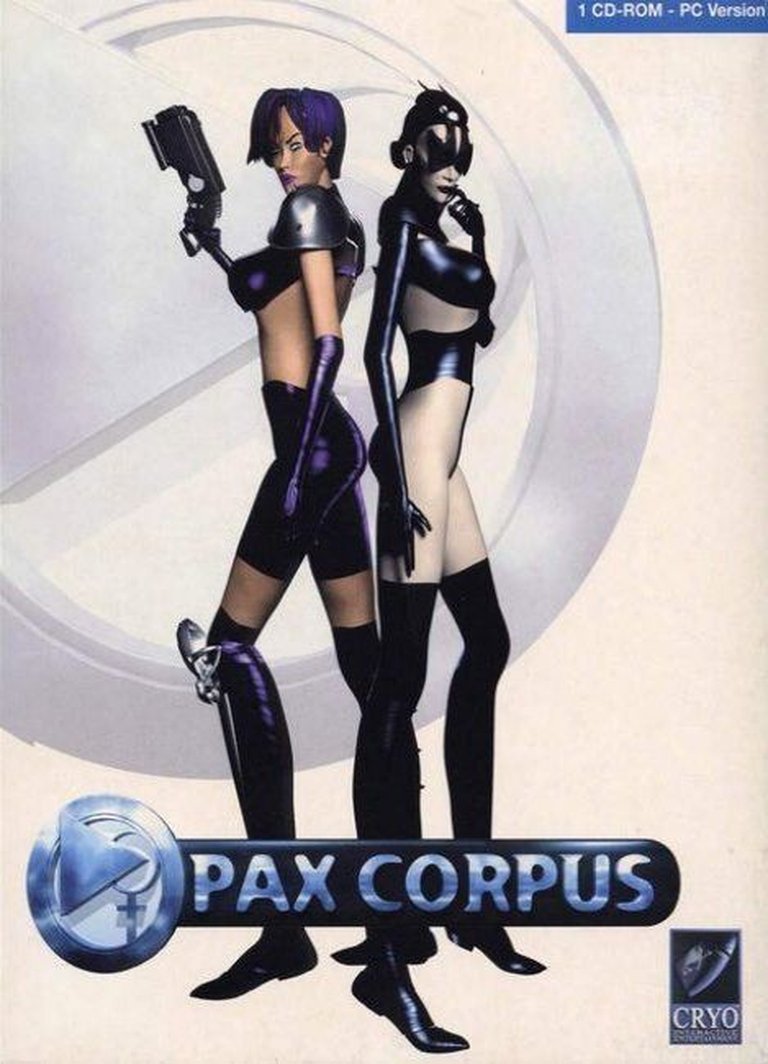
Description
In ‘Pax Corpus’, players assume the role of a female mercenary with a shrouded past, tasked with unraveling the mysteries behind Corporation Alcyon’s ‘Pax Corpus Project’ and neutralizing its global threats. Set in a grim cyberpunk future, the game combines third-person shooter mechanics, weapon upgrades, and level progression via keycard collection, all underscored by an energetic rave-style soundtrack. Originally conceived as an adaptation of the cult series ‘Aeon Flux’, the game underwent narrative and visual changes to become a standalone experience, retaining its dark sci-fi aesthetic and fast-paced action.
Gameplay Videos
Pax Corpus Guides & Walkthroughs
Pax Corpus Reviews & Reception
en.wikipedia.org (19/100): I’m going to be brutally honest and say this game is the worst to ever be released on the PlayStation in its entire history
mobygames.com (43/100): A little known fact is that Pax Corpus was originally based on the cult animated series Aeon Flux and was supposed to be released as such.
Pax Corpus Cheats & Codes
PC
Enter codes during gameplay.
| Code | Effect |
|---|---|
| bidytj | Go to Prison |
| codup | Go to Rocket Silo |
| benyo | Go to Space Lab |
| knutw | Go to Temple |
| BIDYTE | Go to Prison |
| CODUZ | Go to Rocket Silo |
PlayStation
Enter codes as passwords or perform button sequences.
| Code | Effect |
|---|---|
| NOHIT | Enable Invincibility |
| HITTT | Disable Invincibility |
| BIDYE | Go to Prison |
| KNUTW | Go to Temple |
| BENYO | Go to Space Lab |
| CODUP | Go to Rocket Silo |
| CODUZ | Go to Rocket Silo (alternate) |
| Start + Select, then L1 + L2 + R1 + R2 | View all FMV sequences |
PlayStation 1
Enter codes with a GameShark/Action Replay device.
| Code | Effect |
|---|---|
| C1000000 0000 | Master Code – PAL To NTSC |
| D0078660 0010 | Master Code – PAL To NTSC |
| 80078660 0000 | Master Code – PAL To NTSC |
| D00950C0 0001 | Master Code – PAL To NTSC |
| 800950C0 0000 | Master Code – PAL To NTSC |
| 800AD13A 0000 | Max White Energy (HP) |
| 800AD146 0000 | No Blue Energy (Radiation) |
Pax Corpus: Review
Introduction
In the annals of video game history, few titles embody the precarious dance between ambition and catastrophe as starkly as Pax Corpus (1997). Developed by Cryo Interactive Entertainment—a studio better known for Dune and Atlantis series—this cyberpunk action-adventure emerged as a Frankenstein’s monster of creative compromise. Born from the ashes of an ill-fated Aeon Flux adaptation, Pax Corpus stumbled into the world as a clumsy Tomb Raider clone set in a dystopian matriarchy. Its legacy? A cautionary tale of corporate meddling, technical calamity, and the perils of chasing trends. This review unearths how a game once poised to capitalize on MTV’s edgy animation became one of the PlayStation era’s most derided relics—and why it remains a morbidly fascinating footnote in gaming’s evolution.
Development History & Context
The Rise and Fall of an Aeon Flux Dream
Pax Corpus began life as a licensed tie-in to MTV’s cult animated series Aeon Flux, spearheaded by Viacom New Media in 1996. Cryo Interactive, fresh off the atmospheric success of Dune (1992), was tasked with translating Peter Chung’s avant-garde aesthetic into a 3D action game. Early previews at E3 1996 showcased a beta inspired by the episode “The Demiurge,” promising a narrative steeped in the series’ trademark existential espionage.
However, corporate upheaval scuttled the project. Following Viacom’s acquisition of Spelling Entertainment and the subsequent merger of its gaming division into Virgin Interactive, Aeon Flux was canceled. Cryo, unwilling to waste two years of development, hastily scrubbed copyrighted elements: protagonist Aeon became Kahlee, villain Trevür mutated into Kiyiana Soro, and the surrealist biomechanics of Nation Monica were rebranded as the Alcyon Corporation.
A Studio in Crisis
Cryo’s late-’90s output reflected a studio straining against technological limitations and market pressures. The team—led by producer Jean-Martial Lefranc and programmer Stéphane Petit—struggled to retrofit an Aeon Flux skeleton into an original IP amidst tight deadlines and dwindling budgets. The PlayStation’s hardware constraints exacerbated issues: texture rendering, camera systems, and collision detection proved Sisyphean challenges. Compounded by the dissolution of Viacom’s support, Pax Corpus arrived as a patchwork of half-realized ideas—a Frankenstein’s monster stitched together from abandoned assets.
The Shadow of Tomb Raider
1996’s Tomb Raider had reshaped the industry, making female action heroes bankable and solidifying third-person 3D as the genre du jour. Cryo, eager to mimic Eidos’ windfall, retooled Pax Corpus into a glorified clone, swapping tombs for techno-dystopian labs and trading Lara Croft’s dual pistols for Kahlee’s plasma blaster. Yet where Tomb Raider epitomized polish, Pax Corpus became a case study in rushed imitation.
Narrative & Thematic Deep Dive
A Dystopian Matriarchy’s Hollow Core
Pax Corpus unfolds on Oz-Nama, a planet where women rule and men exist as lobotomized slaves. Players embody Kahlee, a mercenary unraveling Alcyon’s titular project—a bio-technological weapon emitting radiation that erases free will. The plot orbits Kahlee’s cat-and-mouse dynamic with Kiyiana Soro, Alcyon’s enigmatic CEO, weaving themes of corporate hegemony, bodily autonomy, and existential enslavement.
While ambitious in premise, the narrative is hamstrung by its Aeon Flux-infused origins. Kahlee’s amnesia and morally ambiguous missions echo Aeon’s fragmented identity, yet the excision of Chung’s surrealist vision leaves a void. Dialogue, delivered via stilted cutscenes, oscillates between sci-fi grandeur (“Pax Corpus offers eternal life… at the expense of free will”) and laughable melodrama. Supporting characters—like the traitorous scientist Dr. Ellys—feel underbaked, vestiges of a richer storyline neutered by legal revisions.
Thematic Resonance vs. Execution
At its core, Pax Corpus grapples with body horror and autonomy—the Pax Corpus hivemind literalizes fears of corporate dehumanization. Alcyon’s cloning technology critiques commodification of life, while the all-female society subverts gender norms, albeit superficially. Yet these ideas crumble under inconsistent writing. The “love-hate” dynamic between Kahlee and Soro hints at Aeon Flux’s psychosexual tension but devolves into cartoonish villainy. Six missions culminate in two endings (penultimate and “ultimate”), yet neither delivers catharsis, underscoring the game’s identity crisis.
Gameplay Mechanics & Systems
A Broken Foundation
Pax Corpus merges third-person shooting, keycard hunts, and rudimentary platforming across 20 levels. Kahlee wields upgradable weapons (plasma rifles, grenade launchers) against drones, mutants, and Alcyon guards, with progression tied to scavenging keycards and “enhanced reflex” power-ups.
At launch, critics savaged its systems:
– Combat: Aiming is imprecise, enemies spawn erratically, and hit detection falters. The MAN!AC review (39%) deemed it “miserable to control.”
– Movement: Tank-like controls and janky physics make jumps feel treacherous. The German Video Games (34%) noted, “The camera is always late, and entire torsos vanish mid-leap.”
– Progression: Keycard hunts devolve into pixel-hunting tedium. Consoles Plus (21%) dismissed it as “empty and ugly.”
First-Person Gimmickry
A optional first-person mode—likely cobbled from Cryo’s Dune tech—adds immersion but magnifies flaws. Narrow field-of-view and sluggish turning render it unviable in firefights.
UI and Technical Failures
Menus are functional but plagued by typos (“Logo items” for key objectives). Load times, particularly on PlayStation, stretch to 30 seconds—a death knell in an action game. The German release substituted green blood to dodge an 18+ rating, symbolizing the game’s slapdash localization.
World-Building, Art & Sound
Cyberpunk Aesthetics on a Budget
Oz-Nama’s world-building leans on grungy techno-fascism: neon-lit labs, rusted pipelines, and Alcyon’s sterile boardrooms. Art director Benoit Munoz’s team retained Aeon Flux’s angular character designs—Kahlee’s sleek bodysuit and Soro’s dominatrix-chic attire—but environments suffer from barren textures and crude geometry. PlayStation’s hardware exacerbates this, with polygonal clipping and flat lighting evoking early 32-bit growing pains.
Rave-Rave Revolution
Soundtrack composers Gilles Sivilotto and Thierry Prost inject pulsating electronica, evoking Wipeout-era techno. While repetitive, tracks like ”Neuro-Spasm” amplify the dystopian vibe. Voice acting, however, grates—Kahlee’s deadpan delivery clashes with Soro’s pantomime villainy, while NPCs spout unconvincing technobabble.
Reception & Legacy
Critical Carnage
Pax Corpus bombed critically, averaging 43% across eight reviews:
– Power Unlimited (72%) praised its “bizarre” Dutch localization but conceded it was “nothing special.”
– Extreme PlayStation (19%) declared it “the worst PlayStation game ever,” lambasting “piss-ugly” visuals.
– PC Player Germany (19%) skewered it as “the clumiest Lara Croft imitation.”
Player scores averaged 2/5, citing broken controls and dreary level design.
A Buried Relic
The game sold poorly and vanished from shelves within months. Yet its legacy persists in three curious ways:
1. Cult Curiosity: Aeon Flux fans dissect it as a “lost” adaptation, analyzing Kahlee’s resemblance to Aeon.
2. Cautionary Tale: It epitomizes pitfalls of licensed game development—rights disputes, asset repurposing, and market-driven design.
3. Historical Footnote: As Cryo’s nadir, it foreshadowed the studio’s 2002 bankruptcy, a victim of overambition and industry consolidation.
Conclusion
Verdict: Pax Corpus is less a game than an archaeological artifact—a mangled testament to corporate hubris and creative compromise. Its Aeon Flux DNA tantalizes, and its cyberpunk themes occasionally resonate, but these glimmers drown in technical ineptitude and design apathy. Today, it survives only as a curio for completionists and industry historians, a grim reminder that not all buried treasure glitters.
Final Score: ★★☆☆☆ (2/5) — A noble failure with more historical intrigue than playable merit.