
Description
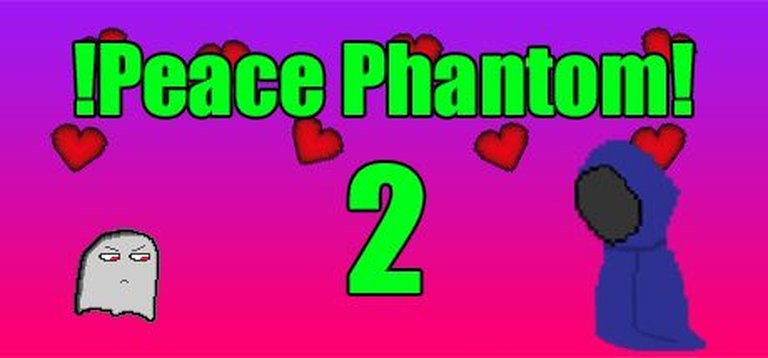
Peace Phantom! 2 is a 2D side-scrolling platformer where players take on the role of a ghost navigating through a fantasy world to save the souls of innocent mutants. The game features a large, expansive map, challenging gameplay, and vibrant graphics as the ghost collects coins and hearts while evading evil enemies across various locations in a vast, otherworldly space.
Peace Phantom! 2 Guides & Walkthroughs
Peace Phantom! 2: A Ghostly Odyssey of Frustration and Forgotten Potential
Introduction: The Phantom That Haunts the Steam Backlog
In the vast, often uncharted depths of Steam’s indie library, Peace Phantom! 2 (2018) lingers like its spectral protagonist—elusive, overlooked, and shrouded in obscurity. Developed and published by the enigmatic armogames, this sequel to the equally obscure Peace Phantom (2018) promises a “cool gameplay” experience with “nice graphics” and a “big map.” Yet, beneath its whimsical premise—a ghost dodging enemies to ransom mutant souls—lies a game that embodies the double-edged sword of indie development: boundless creativity tempered by glaring technical and design shortcomings.
This review dissects Peace Phantom! 2 not merely as a game, but as a cultural artifact—a relic of the mid-2010s indie boom, where ambition often outpaced execution. Through an exhaustive analysis of its development, narrative, mechanics, and legacy, we uncover why this title remains a cautionary tale in the annals of platformer history.
Development History & Context: The Rise and Fall of armogames
The Studio Behind the Specter
armogames is a shadowy figure in the indie development scene, with no publicly available information about its founders, team size, or prior experience. The studio’s portfolio is a curious mix of titles, including Peace, Death! (2017), Rage in Peace (2018), and Peace Duke (2018), all of which share a common thread: low-budget, high-concept games with mixed reception. Peace Phantom! 2 emerged just two months after its predecessor, suggesting a rapid, possibly rushed development cycle—a red flag in an industry where even the most polished indies often take years to refine.
The Gaming Landscape of 2018: A Crowded Afterlife
2018 was a pivotal year for indie platformers. Masterpieces like Celeste and Dead Cells redefined the genre, while Hollow Knight and Ori and the Will of the Wisps (2020) set new benchmarks for atmospheric world-building. Meanwhile, Peace Phantom! 2 arrived with little fanfare, buried under an avalanche of more polished competitors. Its Steam release on March 13, 2018, coincided with the launch of Sea of Thieves and Far Cry 5, ensuring it would be lost in the shuffle.
Technological Constraints: A Ghost in the Machine
The game’s 2D side-scrolling presentation and direct control mechanics suggest it was built using a simple engine, likely Unity or GameMaker, given its modest visual fidelity. The “big map” touted in its marketing is less a sprawling Metroidvania and more a linear gauntlet of repetitive obstacles, a common pitfall in underfunded indie projects. The lack of critical or commercial success (with only 2 players tracking it on MobyGames) hints at a game that failed to capitalize on even the most basic quality-of-life expectations of its era.
Narrative & Thematic Deep Dive: A Haunting Lack of Depth
Plot: A Spectral Errands Simulator
The premise of Peace Phantom! 2 is deceptively intriguing:
“You play as a ghost who wants to save the souls of innocent people-mutants. You have to collect coins for ransom of souls in different locations of large space… If you want this world not to die like the rest, then save it right now…”
On paper, this setup evokes Ghosts ‘n Goblins meets Limbo, with a dash of existential dread. In practice, the narrative is barely present, reduced to a Steam description and a handful of cryptic in-game text prompts. There are no cutscenes, no character interactions, and no lore to speak of—just a ghost floating through a surreal, monotonous purgatory.
Characters: The Phantom Menace (of Boredom)
- The Protagonist (The Ghost): A silent, amorphous specter with no backstory, motivations beyond “save souls,” or personality. Its design is functional but forgettable—a floating white blob with hollow eyes.
- The Enemies: Generic “evil” entities that exist solely to impede progress. Their designs are rudimentary, with no distinguishing traits or behaviors beyond basic movement patterns.
- The “Innocent People-Mutants”: Never seen, only referenced. Their fate is the player’s supposed driving force, yet their absence renders the stakes meaningless.
Themes: A Shallow Grave of Missed Opportunities
The game’s themes—redemption, sacrifice, and the cyclical nature of suffering—are buried under repetitive gameplay and zero narrative payoff. The idea of a ghost ransoming souls in a dying world could have been a poignant allegory for environmental decay, capitalism, or even the indie developer’s struggle. Instead, it’s a hollow shell, a ghost story with no haunting.
Gameplay Mechanics & Systems: A Platformer Purgatory
Core Gameplay Loop: Collect, Dodge, Repeat
Peace Phantom! 2 is, at its core, a 2D platformer with light survival elements. The player controls a ghost that must:
1. Navigate a side-scrolling environment (the “big map” is, in reality, a series of connected screens).
2. Avoid enemies (touching them results in instant death).
3. Collect coins and hearts (coins are used to “ransom souls,” hearts restore health).
4. Reach the end of each “location” (levels are procedurally generated but feel identical).
Combat (or Lack Thereof): The Art of Avoidance
There is no combat system. The ghost cannot attack, block, or interact with enemies beyond dodging. This design choice could have been compelling if the movement and level design were tight, but instead, it feels unfinished. Enemies move in predictable patterns, making evasion a mindless chore rather than a skill-based challenge.
Progression: A Grind Without Reward
- Health System: The ghost has a health bar (represented by hearts), but since enemies kill in one hit, the hearts serve little purpose beyond padding.
- Coin Collection: The primary objective is to gather coins to “ransom souls,” but the game never explains how many are needed or what happens when you succeed.
- Level Design: The “large space” is a lie—levels are small, repetitive corridors with pallette-swapped backgrounds. There is no exploration, no secrets, and no reason to revisit areas.
UI & Controls: Clunky and Unintuitive
- The controls are stiff, with the ghost’s movement feeling floaty and imprecise—a cardinal sin in a precision platformer.
- The UI is minimalist to a fault, with no map, no objective tracker, and no feedback on progress.
- Death results in an instant respawn at the start of the level, with no checkpoint system, leading to frustrating repetition.
Innovation? More Like Stagnation
The game’s only “innovative” mechanic is its ghostly theme, but even that is underutilized. Unlike Hollow Knight’s soul-based mechanics or A Story About My Uncle’s grappling hooks, Peace Phantom! 2 fails to leverage its premise in any meaningful way. The ghost could just as easily be a generic humanoid—its spectral nature is purely aesthetic.
World-Building, Art & Sound: A Ghost Town of Design
Setting: A Surreal, Yet Empty, Purgatory
The game’s world is described as a “large space” where the ghost must save mutant souls. In reality, it’s a series of abstract, low-detail environments that resemble:
– Floating platforms in a void
– Generic “hellscape” backdrops
– Repetitive tile-based structures
There is no environmental storytelling, no lore, and no sense of place. The world feels procedurally generated for the sake of it, with no thought given to atmosphere or immersion.
Visual Design: “Nice Graphics” Is a Generous Lie
The Steam description boasts “nice graphics,” but the reality is far less impressive:
– Sprite Work: The ghost and enemies are basic, low-resolution sprites with minimal animation.
– Backgrounds: Static, low-effort designs that lack depth or detail.
– Effects: No particle effects, no lighting tricks—just a ghost floating over flat colors.
Sound Design: The Silence of the Lambs (or Lack Thereof)
- Music: A single, looping ambient track that grows irritating within minutes.
- Sound Effects: Nonexistent—no footsteps, no enemy noises, no feedback for collecting coins. The game is eerily silent, but not in an intentional, atmospheric way.
- Voice Acting: Absent entirely.
The lack of audio feedback makes the game feel lifeless, ironically undermining its ghostly theme.
Reception & Legacy: The Game That Time Forgot
Critical Reception: A Resounding Lack of Interest
- Metacritic: No critic reviews. User score: 3.0/10 (Generally Unfavorable).
- Steam: No user reviews at launch; the game was quickly buried under more polished indies.
- MobyGames: Only 2 players have it in their collections.
The game’s complete lack of marketing, polish, or innovation ensured it would be ignored by critics and players alike.
Commercial Performance: A Financial Phantom
There are no sales figures available, but given its obscurity and negative reception, it’s safe to assume Peace Phantom! 2 was a commercial failure. It was likely pulled from digital storefronts (as suggested by its inclusion in MobyGames’ “Games pulled from digital storefronts” group).
Legacy: A Cautionary Tale for Indie Developers
Peace Phantom! 2 serves as a textbook example of how not to make a sequel:
1. No Iteration on the Original: The first Peace Phantom (2018) was equally obscure, and the sequel failed to improve in any meaningful way.
2. Lack of Vision: The game lacks a clear identity—is it a platformer? A survival game? A narrative experience? It fails at all three.
3. Technical Neglect: No polish, no QA, no player feedback—just a rushed product thrown into the void.
Its only “legacy” is as a footnote in the history of forgotten indie games, a ghost in the machine of Steam’s vast library.
Conclusion: A Game Best Left in the Afterlife
Peace Phantom! 2 is not a bad game in the traditional sense—it’s worse than that. It’s a game that doesn’t know what it wants to be, a spectral husk of a concept that fails to deliver on every front.
- Narrative? Nonexistent.
- Gameplay? Repetitive and shallow.
- Art & Sound? Barely functional.
- Legacy? None.
In the pantheon of indie platformers, Peace Phantom! 2 is not a hidden gem—it’s a warning. A reminder that ambition without execution leads only to obscurity.
Final Verdict: 2/10 – A Hauntingly Bad Experience
Should you play it? Only if you’re a completionist, a masochist, or a game historian documenting the failures of the indie boom. For everyone else, Peace Phantom! 2 is best left resting in peace.
Epilogue: The Phantom’s Lament
In the end, Peace Phantom! 2 is a game about a ghost trying to save souls. The irony? It’s the game itself that needs saving.