
- Release Year: 2001
- Platforms: Windows
- Publisher: Simon & Schuster Interactive
- Developer: ASAP Games LLC
- Genre: Action
- Perspective: Third-person
- Game Mode: Single-player
- Gameplay: Arcade, Aviation, Flight
- Setting: Hawaiian, World War II
- Average Score: 55/100
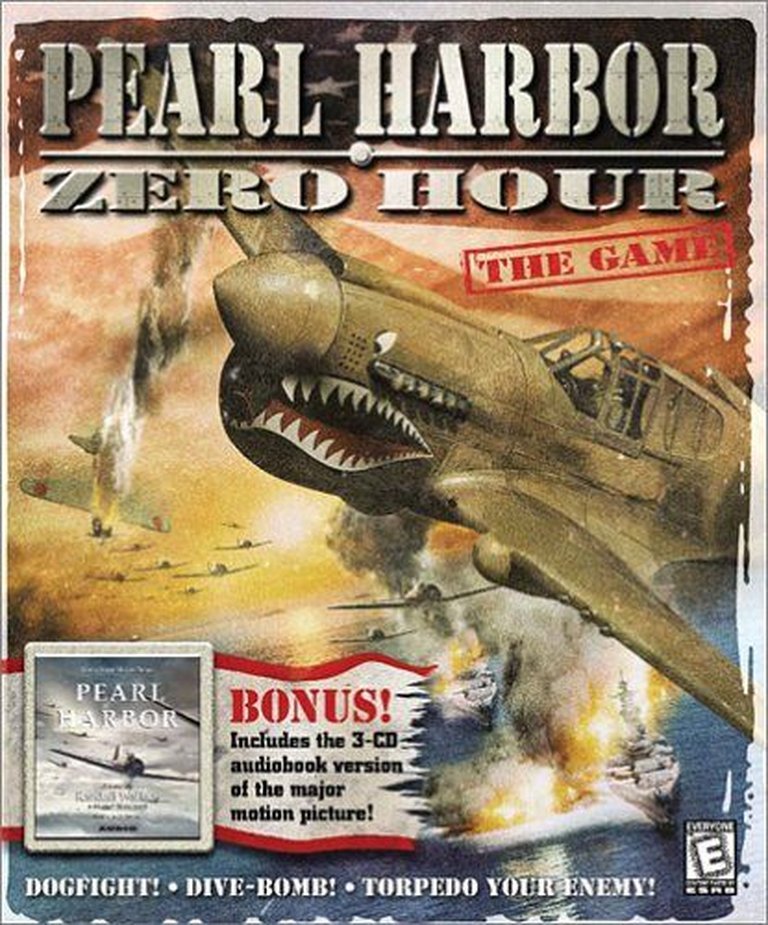
Description
Pearl Harbor: Zero Hour is an arcade-style World War II air combat game focused on fast-paced action rather than realism. Set in the Pacific Theater, the game features only one mission directly tied to the Pearl Harbor attack, with the remaining ten missions following key historical battles like Midway, Guadalcanal, and Okinawa. Players pilot various American aircraft against Japanese forces in simplified, accessible dogfights designed for casual gamers.
Gameplay Videos
Pearl Harbor: Zero Hour Free Download
Pearl Harbor: Zero Hour Cracks & Fixes
Pearl Harbor: Zero Hour Patches & Updates
Pearl Harbor: Zero Hour Mods
Pearl Harbor: Zero Hour Guides & Walkthroughs
Pearl Harbor: Zero Hour Reviews & Reception
metacritic.com (55/100): Despite interesting missions like Midway and Guadalcanal, experienced gamers can blow through Zero Hour in a day. Ambitious flyboys will gladly return to it as coffee break filler, but long-term companionship is doubtful.
gamefaqs.gamespot.com (58/100): The game fails to tread new water in the field. It may have been a solid title, without the Pearl Harbor title, five years ago. It is a fair arcade, third-person perspective flight sim, and nothing more.
ign.com (53/100): Overall I’d rather watch the movie again…and I hated the movie.
Pearl Harbor: Zero Hour Cheats & Codes
PC
Enter codes by pressing Enter at any level, typing the code, and pressing Enter again.
| Code | Effect |
|---|---|
| bigboy | Grants control of an indestructible battleship with unlimited torpedoes/ammo, submerging capabilities, automatic AA guns, and ability to traverse land/air. |
Pearl Harbor: Zero Hour: Forgotten Sortie of the Arcade Flight Combat Era
Introduction
Two decades after its 2001 release, Pearl Harbor: Zero Hour endures as a cultural artifact—a hastily assembled arcade combat game riding the coattails of Michael Bay’s blockbuster Pearl Harbor. Developed by the largely obscure ASAP Games LLC and published by Simon & Schuster Interactive, this title promised pulse-pounding dogfights across pivotal Pacific Theater battles but delivered a hollow, technologically dated experience. Though it garnered brief attention for its cinematic ambitions and accessible controls, history remembers it as a cautionary tale of rushed licensing tie-ins. This review argues that Zero Hour is a fascinating case study in early-2000s design compromises: an ambitious arcade flight game hamstrung by shallow systems, historical detachment, and cynical market timing.
Development History & Context
Studio Origins and Vision
ASAP Games LLC—a studio with minimal industry footprint—approached Zero Hour as a deliberately arcade-focused alternative to hardcore simulations like IL-2 Sturmovik (2001). Led by project lead Ed Zobrist and designer Scott McClellan, the team prioritized accessibility over realism, aiming to “provide a fun, absorbing game” for casual players (official description). The era’s technological constraints loom large: DirectX 8.0a compatibility, 640×480 resolution caps, and Pentium 233 MHz minimum specs reflect a game built for low-end PCs.
Market Landscape and Timing
May 2001 placed Zero Hour in a crowded WWII gaming zeitgeist. Competitors like Secret Weapons Over Normandy and Blazing Angels offered deeper mechanics, while Ubisoft’s IL-2 series dominated the sim niche. Crucially, Zero Hour’s release deliberately synced with Bay’s Pearl Harbor film—a strategic gamble that backfired when critics noted the game’s sole Pearl Harbor mission was relegated to a cutscene. The result was perceived as exploitative, with IGN lambasting it as “a pretty mediocre attempt to capitalize on the heightened visibility of Pearl Harbor in the media.”
Narrative & Thematic Deep Dive
Structure and Historical Representation
Despite its title, Zero Hour sidesteps the Pearl Harbor attack itself, depicting it via an in-engine cinematic while thrusting players into post-1941 campaigns. The 10-mission arc spans Midway, Guadalcanal, and Okinawa, casting players as anonymous U.S. pilots across 14 aircraft—from the P-51 Mustang to the B-25 Mitchell. This narrative detachment robs the game of emotional stakes; no characters, dialogue, or campaign log contextualize the battles beyond functional briefings.
Thematic Shortcomings
ASAP’s focus on arcade action neutered the potential for meaningful engagement with WWII’s gravity. Missions reduce complex battles to repetitive “destroy X targets” checklists, devoid of historical nuance. The absence of a Japanese campaign—despite hints of dual perspectives in early marketing—further flattened the conflict into jingoistic simplicity. While Zero Hour included “Hidden Surprises” for completists (likely unlockable aircraft), these did little to deepen its thematic resonance.
Gameplay Mechanics & Systems
Core Loop and Controls
Zero Hour’s arcade DNA manifests in its simplified controls: keyboard/mouse pilots handle throttle, weapons, and maneuvering with minimal friction. Dogfights prioritize fast-paced action over physics, requiring players to lead targets with a forgiving auto-aim reticle. Missions blend airborne combat (strafing Zeroes) and ground assaults (bombing carriers)—albeit with repetitive objectives and brain-dead AI.
Flawed Innovations
The game’s sole innovation—seamless switching between aircraft mid-mission—was undermined by clumsy execution. Upon a pilot’s death, players respawn miles from combat in a new plane, creating tedious commutes (IGN noted it “quickly grows tiresome”). The third-person camera, fixed to a rear chase view, obstructed situational awareness—a fatal flaw in chaotic dogfights. While patch 1.22 later tweaked physics and stability, it couldn’t salvage the shallow progression or lack of difficulty scaling.
UI and Feedback
A spartan HUD displays health, ammunition, and radar—functional but aesthetically lifeless. Post-mission scoring, based on kills and accuracy, offered little incentive for replayability. The omission of multiplayer (a staple even in 2001 arcade titles) further limited its longevity.
World-Building, Art & Sound
Visual Design: Ambition vs. Reality
ASAP aimed for authenticity with “authentically designed” planes and locales, but 2001 hardware constraints birthed jagged, low-poly models and flat textures. Explosions and water effects resembled N64-era sprites, while draw distances crumpled under pressure. Contemporary critics derided the graphics as “a quaint throwback to the mid-’90s” (GamePower), though modern abandonware enthusiasts may find charm in its chunky aesthetic.
Soundscapes and Atmosphere
The sound design fares better: engine roars and gunfire carry weight, while orchestral swells during key moments evoke Hollywood grandeur. Yet repetitive voice lines (“Bandits! 6 o’clock!”) and absent radio chatter sap immersion. Environmental ambience—like waves or anti-aircraft fire—rarely transcends basic stereo effects.
Reception & Legacy
Critical Backlash and Commercial Obscurity
Zero Hour debuted to tepid reviews, earning a 53% average on MobyGames and a 55 Metascore. Critics universally panned its repetitive mission design, with Absolute Games quipping, “Not missing: slowly falling soldiers screaming ‘Oh my god!’” Retail underperformance buried it amid 2001’s stronger contenders, and franchise plans died with ASAP Games’ closure shortly after.
Preservation and Retrospective Appeal
Today, Zero Hour survives through abandonware portals and niche forums, celebrated for its unintentional camp. PCGamingWiki’s widescreen mods and FOV fixes have granted it minor posthumous polish, while Retrolorean.com frames it as a “tribute to real-time strategy’s golden age”—nostalgia outweighing its flaws. Its minimal influence is evident: later arcade fliers like Blazing Angels (2006) learned from Zero Hour’s mistakes, prioritizing spectacle and mission variety.
Conclusion
Pearl Harbor: Zero Hour is a historical curiosity—a B-tier arcade shooter lost in the shadow of its cinematic namesake. While its accessible controls and earnest attempt to dramatize WWII’s Pacific battles merit acknowledgment, the game crumbles under rushed development, shallow systems, and a cynical marketing hook. For historians, it exemplifies early-2000s licensed-game pitfalls; for players, its preserved abandonware status offers 90 minutes of kitschy fun before repetition overwhelms novelty. In the annals of flight combat, Zero Hour remains a footnote—a fleeting dogfight forgotten by history, notable only for its cautionary tale of ambition exceeding execution.
Final Verdict: A 5.3/10 experience (per IGN)—a passable weekend rental in 2001, but a relic best left to archivists and irony-loving completionists.