
- Release Year: 2007
- Platforms: Windows
- Publisher: PopCap Games, Inc.
- Developer: PopCap Games, Inc.
- Genre: Puzzle
- Perspective: Fixed
- Game Mode: Hotseat, Single-player
- Gameplay: Fever Mode, Turn-based
- Setting: Fantasy
- Average Score: 87/100
Description
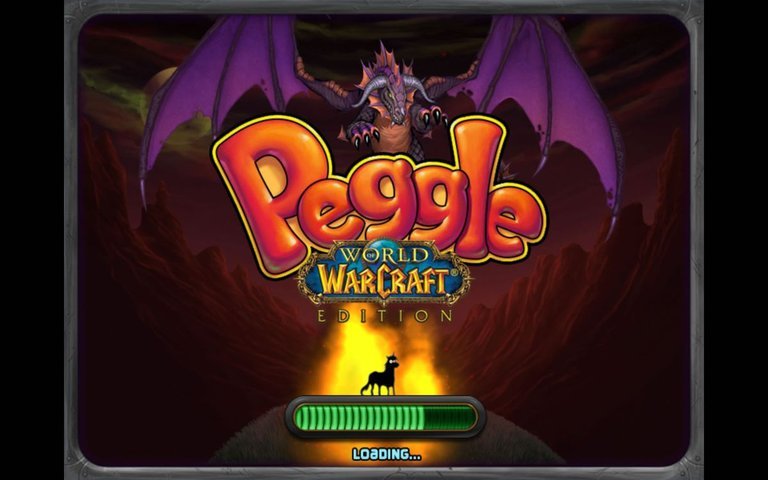
Peggle: World of Warcraft Edition is a free promotional crossover game blending the addictive pachinko-style gameplay of Peggle Nights with the iconic art and characters from the World of Warcraft universe. Players control a cannon to shoot balls, targeting vibrant orange pegs across themed stages inspired by Blizzard’s MMORPG, all while triggering the signature Fever mode for high-scoring rewards. The game features Adventure mode with ten unique levels, Quick Play for immediate challenges, Duel mode for competitive two-player action, and ten special tasks in Challenge mode, all while offering two playable characters and maintaining the core mechanics that made Peggle a phenomenon.
Gameplay Videos
Peggle: World of Warcraft Edition Mods
Peggle: World of Warcraft Edition Guides & Walkthroughs
Peggle: World of Warcraft Edition Reviews & Reception
metacritic.com (76/100): Peggle: WoW Edition is like if God and Budha had a baby. It is the pinnacle of gaming and I will play it forever.
myabandonware.com (98/100): so many sleepless nights spent on peggle games.
Peggle: World of Warcraft Edition: Review
Introduction
In the pantheon of crossover gaming curiosities, few titles embody the joyous absurdity of intellectual property synergy quite like Peggle: World of Warcraft Edition. Released in 2009 as a free promotional collaboration between PopCap Games and Blizzard Entertainment, this standalone spin-off masterfully blended the addictive, physics-based puzzle gameplay of Peggle Nights with the rich lore and vibrant aesthetics of Azeroth. While not a canonical entry in either franchise, it stands as a testament to the power of creative licensing and the universal appeal of simple, euphoric mechanics. This review will dissect its place in gaming history, examining its development, thematic resonance, gameplay innovations, artistic fidelity, and enduring legacy. Our thesis: Peggle: World of Warcraft Edition transcends its promotional origins to become a charming, self-contained artifact that exemplifies the magic of crossover collaborations and the timeless appeal of accessible, cathartic gameplay.
Development History & Context
Peggle: World of Warcraft Edition emerged from a perfect storm of industry trends. PopCap Games, riding the wave of Peggle’s success (fueled by the The Orange Box crossover in 2007), sought to expand its reach through strategic partnerships. Meanwhile, Blizzard Entertainment was solidifying World of Warcraft’s dominance in the MMORPG space, seeking fresh avenues to engage its massive player base. The collaboration was spearheaded by PopCap associate producer T. Carl Kwoh, who noted the team’s initial experiment in April 2009 to “test the waters” before formally partnering with Blizzard.
Technologically, the game was constrained by its origins as a reskin of Peggle Nights, leveraging PopCap’s established SexyApp Framework engine. This meant no radical overhauls, but rather a focused reapplication of proven mechanics. The gaming landscape of 2009 was dominated by the rise of digital distribution platforms like Steam and Xbox Live Arcade, with free-to-play models gaining traction. PopCap capitalized on this by releasing WoW Edition as a free download—a bold move that removed barriers to entry while serving as a Trojan horse for both brands. The studio’s vision was clear: create a high-quality, thematically rich product that would delight Peggle fans and convert WoW players, all without diluting the core experience. This synergy was bolstered by Blizzard’s provision of exclusive assets, including background art and character designs, ensuring visual fidelity to its flagship IP.
Narrative & Thematic Deep Dive
As a non-canonical spin-off, Peggle: World of Warcraft Edition eschews complex storytelling in favor of thematic immersion. Its narrative is conveyed through level design, character interactions, and environmental storytelling. The game’s ten stages are narrated by Peggle Masters Bjorn and Splork, whose quips and introspective musings bridge the gap between Peggle’s whimsy and WoW’s epic fantasy. Bjorn’s proclamation—“I can’t wait to visit Azeroth! I clicked ‘Accept’ for every quest in the tour package!”—perfectly encapsulates the game’s tone: playful reverence for its source material.
The levels themselves are love letters to WoW lore. Stage 1 journeys through iconic locations like Valley of Heroes and The Dark Portal, while Stage 2 delves into the Burning Crusade era with Arcane Affinity and Ley of the Land. Each stage opens with a vignette featuring Peggle characters interacting with WoW NPCs—Bjorn riding a gryphon, Splork studying a fel crystal—fleshing out a meta-narrative of interdimensional tourism. Themes of mastery and destiny permeate the game, mirroring WoW’s hero-journey tropes while Peggle’s core loop of precision and luck embodies the MMORPG’s blend of skill and serendipity. Dialogue is sparse but effective, blending Peggle’s signature cheerfulness with WoW’s gravitas. Splork’s alien perspective (“Super advanced alien technology!”) contrasts humorously with Bjorn’s earthy wisdom, creating a dynamic that mirrors the Alliance-Horde duality.
Gameplay Mechanics & Systems
At its core, WoW Edition retains the flawless Peggle formula: players shoot balls from a cannon to clear orange pegs, with green pegs activating special abilities and purple pegs granting bonus points. Two Peggle Masters are playable:
– Bjorn Unicorn (from Peggle Nights) wields the Super Guide, revealing the ball’s trajectory for three turns—a boon for newcomers.
– *Splork Sporkan, a new character, uses the Space Blast, lighting up nearby pegs with “alien technology.”
The game’s structure includes:
– Adventure Mode: Two stages of five levels each, escalating in complexity with moving obstacles like floating blocks.
– Challenge Mode: Ten tasks demanding precision (e.g., “Clear 75% of pegs in 5 shots”).
– Duel Mode: Split-screen battles against AI or a friend, where score-based competition replaces cooperative clearing.
– Quick Play: Instant access to unlocked levels for casual sessions.
UI is clean and functional, with WoW-themed menus and a dashboard tracking high scores. Notably, the game lacks the extensive character roster or Master-level selection of full Peggle titles, a trade-off for its focused scope. Yet this limitation fosters replayability: mastering Splork’s explosive mechanics or Bjorn’s predictive aids becomes a satisfying meta-goal. The “Fever” mode—triggered by clearing all orange pegs—remains the series’ ecstatic crescendo, with Ode to Joy erupting as rainbows and confetti celebrate victory.
World-Building, Art & Sound
WoW Edition’s art is its crowning achievement. Blizzard’s asset team delivered stunning, high-resolution backdrops lifted directly from WoW—from the sun-drenched Valley of Heroes to the icy blues of The Dark Portal. These are not mere static images; they’re teeming with life: Murlocs skitter in the shallows, dragons soar in the distance, and Leeroy Jenkins’ infamous chicken cameo appears in one level. Peggle Masters are reimagined with WoW flair: Bjorn wears a tabard emblazoned with Stormwind’s lion, while Splork’s pod features WoW-esque runes. The game’s visual direction balances PopCap’s cartoonish exuberance with Blizzard’s painterly detail, creating a seamless fusion.
Sound design is equally meticulous. Level intros feature orchestral swipes from WoW’s score, and sound effects are tailored to the setting—magical pings for arcane pegs, metallic clangs for armor. Bjorn and Splork’s voice lines are peppered with WoW jargon (“For the Horde!” / “For the Alliance!”), and victory animations trigger WoW-style loot explosions. The result is an auditory tapestry that grounds Peggle’s abstract physics in Azeroth’s tangible world.
Reception & Legacy
Upon release, WoW Edition was lauded as a promotional triumph. Critics praised its thematic cohesion and polished production, averaging 90% on MobyGames based on four reviews. Hrej! awarded it a perfect 100%, calling it “a cherry on the freeware cake,” while Freegame.cz highlighted its “gorgeous graphics” and “perfect sound design.” Commercially, its free status ensured widespread adoption, though exact download figures remain elusive. Player reception was equally warm, with MyAbandonware users rating it 4.91/5, noting its “sleepless nights” of addictive play.
Legacy-wise, the game cemented Peggle’s status as a versatile IP, proving its mechanics could thrive in any thematic skin. It also exemplified the era’s trend of branded freeware, paving the way for titles like Plants vs. Zombies crossovers. Though it vanished after PopCap’s 2011 EA acquisition, it endures in abandonware archives and as a cult favorite. Its influence is visible in modern crossover minigames (e.g., Fortnite’s Rocket League modes), which prioritize thematic fidelity over reinvention. Perhaps most significantly, it stands as a relic of a pre-microtransaction era, where promotional goodwill—not monetization—drove collaborative creativity.
Conclusion
Peggle: World of Warcraft Edition is more than a footnote; it’s a vibrant, self-contained masterpiece that epitomizes the joy of crossovers. By marrying Peggle’s euphoric puzzle gameplay with WoW’s immersive world-building, PopCap and Blizzard created a product that’s both a loving homage and a standalone delight. Its lack of narrative depth is irrelevant—the game’s triumph lies in its thematic authenticity and mechanical purity. Though limited to 10 levels and two Masters, every shot feels like a pilgrimage to Azeroth, every Fever moment a shared celebration of two giants of gaming. In an industry often criticized for cynical licensing, WoW Edition stands as a beacon of collaborative artistry. It’s not just a game; it’s a time capsule of 2009’s digital optimism, a testament to the idea that sometimes, the best adventures come from bouncing balls and rainbows in a world of warcraft. Verdict: Timeless, essential, and—like Bjorn’s magic—unforgettably joyful.