
- Release Year: 2005
- Platforms: Windows
- Publisher: High-5 Explosion
- Developer: High-5 Explosion
- Genre: Action
- Perspective: Side view
- Game Mode: Single-player
- Gameplay: Platform, Puzzle elements
- Setting: Antarctica, North Pole
Description
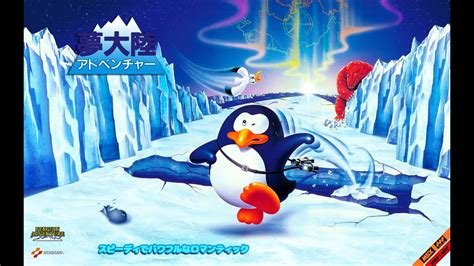
In ‘Penguin Adventure: Assault on Polar Bear Mountain,’ players take on the role of Tooks, a young penguin on a quest to rescue his mother after she is kidnapped by polar bears from the North Pole. Armed with a trusty purple parasol, Tooks must navigate through 5 worlds, each containing 4 levels, including exploration levels where he must find exits within a time limit and time attack levels where speed is key. Along the way, Tooks can unlock new abilities, earn medals based on performance, and collect points to unlock additional levels. The game combines platforming action with puzzle elements, offering a mix of challenge and adventure as Tooks battles to save his mother from a ‘grizzly’ fate.
Gameplay Videos
Penguin Adventure: Assault on Polar Bear Mountain Guides & Walkthroughs
Penguin Adventure: Assault on Polar Bear Mountain Reviews & Reception
gamesfromtheblackhole.wordpress.com : Penguin Adventure deserves better.
Penguin Adventure: Assault on Polar Bear Mountain Cheats & Codes
MSX
Enter codes at the title screen or when choosing a level.
| Code | Effect |
|---|---|
| NORIKO | Enables continue option; press F5 at game over to continue without fish. |
| KAZUMI | Enables continue option; press F5 at game over to continue without fish and items. |
Penguin Adventure: Assault on Polar Bear Mountain: A Deep Dive into a Forgotten Gem
Introduction
In the vast, icy expanse of video game history, few titles manage to carve out a niche as uniquely charming and mechanically innovative as Penguin Adventure: Assault on Polar Bear Mountain. Released in 2005 by the indie studio High-5 Explosion, this game is a delightful anomaly—a platformer that eschews the punishing difficulty of its contemporaries in favor of a more forgiving, exploration-driven experience. While it may not have the name recognition of Super Mario Bros. or Sonic the Hedgehog, Penguin Adventure is a hidden treasure that deserves reconsideration, both for its inventive design and its whimsical narrative.
At its core, Penguin Adventure is a story of resilience and determination. Players take on the role of Tooks, a young penguin whose mother is kidnapped by polar bears. Armed with nothing but a trusty purple parasol, Tooks embarks on a quest across five distinct worlds, each filled with time-sensitive challenges and hidden secrets. The game’s premise is simple, but its execution is anything but. With a unique blend of platforming, puzzle-solving, and time-based mechanics, Penguin Adventure offers a refreshing take on the genre, one that prioritizes player curiosity and experimentation over brute-force skill.
This review will explore the game’s development history, its narrative and thematic depth, its gameplay mechanics, and its lasting legacy. By the end, it will become clear why Penguin Adventure is more than just a footnote in gaming history—it’s a testament to the creativity and passion of indie developers in the mid-2000s.
Development History & Context
The Studio Behind the Game
Penguin Adventure: Assault on Polar Bear Mountain was developed by High-5 Explosion, a small indie studio that, despite its modest size, managed to craft a game with remarkable polish and charm. The team consisted of nine individuals, each contributing to different aspects of the game’s design, programming, art, and music. Key figures included:
- Eric Del Priore, who served as both the project leader and one of the programmers.
- Lisa Allen, the artist and website designer, whose work gave the game its distinctive visual style.
- John Berges, the musician, who composed the game’s catchy and atmospheric soundtrack.
- Eric Cunningham, the writer and level designer, who crafted the game’s narrative and intricate level layouts.
The game was built using the GameX engine, a tool that allowed the team to create a polished experience despite the technological limitations of the era. Released in December 2005 as freeware for Windows, Penguin Adventure was a labor of love, developed with the support of advisors like Professor David Schwartz and Mohan Rajagopalan.
The Gaming Landscape of 2005
The mid-2000s were a transitional period for the gaming industry. The sixth generation of consoles (PlayStation 2, Xbox, GameCube) was in its twilight, while the seventh generation (PlayStation 3, Xbox 360, Wii) was on the horizon. Indie games, while not yet the cultural force they are today, were beginning to gain traction thanks to digital distribution platforms like Newgrounds and GarageGames.
In this context, Penguin Adventure stood out as a platformer with a difference. While many indie games of the time leaned into retro aesthetics or punishing difficulty (e.g., Cave Story, I Wanna Be The Guy), Penguin Adventure opted for a more accessible, exploration-focused approach. Its emphasis on time-based challenges and medal-based progression was reminiscent of arcade-style games, but its forgiving mechanics (e.g., no permadeath, only temporary stunning) made it appealing to a broader audience.
Technological Constraints and Innovations
Developing a game in 2005 came with its own set of challenges. The GameX engine, while capable, was not as robust as modern game engines like Unity or Unreal. Despite this, High-5 Explosion managed to create a game with:
- Smooth, responsive controls that made platforming a joy.
- A dynamic camera system that followed Tooks as he navigated through levels.
- A medal-based progression system that encouraged replayability.
- Hidden secrets and upgrades that rewarded exploration.
The game’s 2D side-scrolling perspective was a deliberate choice, harkening back to classic platformers while incorporating modern sensibilities. The decision to make Tooks invincible to death (only susceptible to temporary stunning) was particularly bold, as it allowed players to focus on mastery rather than survival.
Narrative & Thematic Deep Dive
The Story: A Penguin’s Quest
The narrative of Penguin Adventure is deceptively simple but effectively heartfelt. The game opens with Tooks, a young penguin, enjoying a peaceful fishing trip with his mother in Antarctica. Their tranquility is shattered when a group of polar bears ambushes them, kidnapping Tooks’ mother and leaving him alone. Determined to rescue her, Tooks retrieves his trusty purple parasol—a weapon as whimsical as it is effective—and sets off on a journey across five worlds to confront the polar bears and save his mother.
The story is told through minimalist cutscenes and environmental storytelling, with the game’s manual providing additional context. While the premise may seem lighthearted, it carries themes of perseverance, family, and overcoming adversity. Tooks is not a traditional hero; he’s a small, seemingly helpless penguin armed with nothing but determination and an umbrella. His journey is one of growth and discovery, as he unlocks new abilities and faces increasingly challenging obstacles.
Characters: Tooks and His Foes
-
Tooks: The protagonist is a relatable underdog. His design is cute and expressive, with animations that convey his emotions—whether it’s the tear rolling down his face in the title screen or his triumphant flipper raise upon completing a level. Tooks’ belly slide, umbrella float, and grapple hook abilities make him a versatile and fun character to control.
-
Tooks’ Mother: While she doesn’t appear much in the game, her presence is felt throughout. The manual describes her as a loving figure who enjoys fishing and wearing hats with flowers. Her kidnapping serves as the emotional core of the story, driving Tooks’ quest.
-
Walter the Walrus: The proprietor of Wal’R’Us, the shop where Tooks exchanges medals for umbrella upgrades. Walter is a comical, profit-driven character who adds a touch of humor to the game. His shop is where players can gamble fish tokens on a slot machine, adding a layer of risk and reward to the progression system.
-
Mean Mr. Polar Bear: The primary antagonist, a growling, evil-looking polar bear who resides at the peak of Polar Bear Mountain. His design is intentionally cartoonish, making him a memorable villain without being overly threatening.
Themes: Determination and Exploration
At its heart, Penguin Adventure is a game about overcoming obstacles through cleverness and persistence. The polar bears represent an unexpected threat—creatures from the North Pole invading Antarctica, disrupting the natural order. Tooks’ journey is not just about rescuing his mother but also about restoring balance to his world.
The game’s exploration levels reinforce this theme. Unlike traditional platformers where the goal is simply to reach the end, Penguin Adventure encourages players to search for hidden exits, collect fish tokens, and uncover secrets. This design choice makes the game feel like a true adventure, where curiosity and experimentation are rewarded.
The medal system (Bronze, Silver, Gold, Platinum) further emphasizes the idea of continuous improvement. Players are not just completing levels; they’re mastering them, striving for better times and higher rewards. This creates a sense of progression that goes beyond simply unlocking new areas—it’s about becoming a better player.
Gameplay Mechanics & Systems
Core Gameplay Loop
Penguin Adventure is structured around two types of levels:
-
Time Attack Levels (3 per world): These are linear, speed-based challenges where Tooks must reach the exit as quickly as possible. The faster he completes the level, the higher the medal he earns (Bronze, Silver, Gold, or Platinum). These levels test the player’s platforming skills and mastery of Tooks’ abilities.
-
Exploration Levels (1 per world): These are non-linear, maze-like stages where Tooks must find one of four exits (each corresponding to a different medal) before time runs out. These levels encourage exploration and discovery, often hiding shortcuts, secret shops, and bonus fish tokens.
The medal system is central to progression. Medals are worth points, and accumulating enough points allows Tooks to purchase umbrella upgrades from Walter the Walrus. These upgrades include:
- Umbrella Float: Allows Tooks to drift slowly to the ground, enabling him to reach distant ledges.
- Umbrella Tip: A diamond-tipped upgrade that can break certain types of ice blocks.
- Grapple Hook: Lets Tooks swing from pegs, allowing for faster climbing and access to hidden areas.
- Pogo-Tip: Enables Tooks to bounce high into the air, useful for reaching high platforms or breaking blocks below.
Combat and Enemy Design
Combat in Penguin Adventure is simple but effective. Tooks’ primary weapon is his purple parasol, which he can use to stun enemies (primarily polar bears). Unlike traditional platformers where enemies are often lethal, getting hit in Penguin Adventure only stuns Tooks temporarily, wasting precious time but not resulting in death. This design choice makes the game more accessible while still maintaining tension, as every second counts in Time Attack levels.
Enemies are strategically placed to disrupt the player’s flow, forcing them to either avoid or stun them efficiently. Some polar bears are stationary, while others patrol specific areas, adding a layer of predictability and pattern recognition to the gameplay.
Movement and Platforming
Tooks is an agile and responsive character, with a moveset that includes:
- Running and Walking: Tooks can run by holding the direction keys, allowing for quick traversal.
- Jumping: A standard jump that can be charged for greater height.
- Belly Slide: A speed-boosting move that can be performed on slopes or flat ground by double-tapping the direction keys.
- Wall Bounce: A technique that allows Tooks to gain extra height by bouncing off walls.
- Floating, Grappling, and Pogo-ing: Abilities unlocked through upgrades, each adding new dimensions to platforming.
The belly slide is particularly noteworthy, as it rewards skilled players who can chain it with jumps and other moves to traverse levels more efficiently. The grapple hook is another standout feature, allowing for vertical mobility and access to hidden areas.
Level Design: A Masterclass in Variety
One of Penguin Adventure’s greatest strengths is its level design. Each of the five worlds features distinct themes and mechanics, ensuring that the gameplay never feels repetitive. Some notable level types include:
- Ice Levels: Slippery surfaces that require precise movement.
- Forest Paths: Dense with obstacles like boulders and enemy ambushes.
- Caves: Dark, claustrophobic areas with crumbling blocks and hidden passages.
- Underwater Sections: Slow-moving segments that test the player’s patience and timing.
- Space Bonus Levels: A surreal, gravity-defying detour that rewards exploration.
The Exploration Levels are where the game truly shines. These stages are filled with secrets, from hidden shops run by fishermen (some friendly, some not) to easter eggs like golden wings that let Tooks fly into space. The looping levels (which require finding a specific shop to progress) are a particularly clever design choice, adding a puzzle-like element to the platforming.
Replayability and Progression
Penguin Adventure is designed to be replayed. The medal system incentivizes players to return to previous levels to improve their times and earn higher rewards. Additionally, new umbrella upgrades can make older levels easier to master, encouraging players to revisit them with fresh strategies.
The fish token system adds another layer of replayability. Collecting all 50 fish in a maze level grants a bonus gold medal, providing an extra challenge for completionists. The slot machine in secret shops also adds a gambling mechanic, allowing players to risk fish tokens for a chance at rare items.
World-Building, Art & Sound
Visual Design: A Whimsical Antarctic
Penguin Adventure’s art style is colorful, cartoonish, and full of charm. The game’s hand-drawn sprites and vibrant backgrounds create a cohesive, inviting world that feels both familiar and fresh. Key visual elements include:
- Tooks’ Design: His round, expressive body and purple parasol make him instantly recognizable. His animations—whether sliding on his belly or floating with his umbrella—are fluid and full of personality.
- Environmental Details: Each world has a distinct visual identity, from the icy caverns of Antarctica to the lush forests and underwater tunnels. The backgrounds are rich with detail, adding depth to the game’s setting.
- Enemy and NPC Design: The polar bears are comically menacing, while characters like Walter the Walrus and the secret shopkeepers add humor and personality to the world.
The game’s title screen is particularly memorable, featuring a tender moment where Tooks looks off into the distance, a tear rolling down his face as he thinks of his mother. It’s a small but emotionally resonant detail that sets the tone for the adventure.
Sound Design: A Catchy, Atmospheric Score
The soundtrack, composed by John Berges, is a standout feature of Penguin Adventure. The music is upbeat and melodic, perfectly complementing the game’s lighthearted tone while still conveying a sense of urgency during Time Attack levels. Key tracks include:
- The Overworld Theme: A cheerful, adventurous tune that plays as Tooks navigates the game’s hub areas.
- Time Attack Music: A fast-paced, energetic track that ramps up the tension as the clock ticks down.
- Exploration Level Music: A more relaxed, exploratory melody that encourages players to take their time and uncover secrets.
The sound effects are equally well-crafted, from the whoosh of Tooks’ umbrella to the crunch of breaking ice blocks. The stun sound when Tooks is hit by an enemy is particularly satisfying, reinforcing the game’s forgiving mechanics.
Atmosphere: A Cozy Yet Challenging Adventure
Penguin Adventure strikes a perfect balance between charm and challenge. The game’s whimsical visuals and music create a welcoming atmosphere, while the time-based mechanics and hidden secrets provide plenty of depth for players who want to master it.
The narrative framing—Tooks’ quest to save his mother—adds an emotional weight that elevates the game beyond a simple platformer. The humor and personality infused into the world (e.g., Tooks’ daydreams of beer and the Konami logo) make it feel lived-in and memorable.
Reception & Legacy
Critical and Commercial Reception
Upon its release in 2005, Penguin Adventure: Assault on Polar Bear Mountain received limited attention, likely due to its status as a freeware title and the lack of a major marketing push. However, those who discovered it praised its innovative mechanics, charming presentation, and replayable design.
The game’s MobyGames entry notes its unique approach to platforming, particularly its forgiving difficulty curve and medal-based progression. While it didn’t achieve mainstream success, it developed a cult following among indie game enthusiasts who appreciated its creativity and polish.
Influence on Subsequent Games
While Penguin Adventure may not have directly inspired major titles, its design philosophies can be seen in later indie platformers that prioritize exploration and mastery over punishing difficulty. Games like Celeste (2018) and A Short Hike (2019) share similar accessible yet deep mechanics, where the focus is on player improvement rather than brutal challenge.
The game’s medal system also foreshadowed the ranking systems seen in modern platformers and arcade-style games, where players are encouraged to replay levels for higher scores.
Preservation and Modern Relevance
Today, Penguin Adventure is preserved on platforms like the Internet Archive, where it can still be downloaded and played for free. Its legacy lives on in the memories of those who played it during its heyday, as well as in the ongoing appreciation from retro gaming communities.
The game’s official website, though no longer updated, remains a time capsule of its development, featuring concept art, developer notes, and even a full manual that provides insight into the team’s vision.
Conclusion: A Hidden Masterpiece
Penguin Adventure: Assault on Polar Bear Mountain is a gem of indie game design, a title that defies conventions while delivering a memorable, engaging experience. Its forgiving mechanics, inventive level design, and charming presentation make it a standout in the platformer genre, offering something unique and refreshing in an era dominated by punishing difficulty.
While it may not have achieved the commercial success of bigger titles, its cult status is well-deserved. For those willing to explore its depths, Penguin Adventure rewards with secrets, challenges, and a heartfelt story that resonates long after the final level is completed.
Final Verdict: Penguin Adventure: Assault on Polar Bear Mountain is a must-play for platformer fans and indie game enthusiasts. Its innovative mechanics, charming world, and replayable design make it a hidden masterpiece that deserves a place in gaming history. 9/10.
Additional Resources
- Download the Game: Internet Archive – Penguin Adventure
- Official Website: Penguin Adventure: Assault on Polar Bear Mountain
- MobyGames Entry: Penguin Adventure on MobyGames
Whether you’re a retro gaming enthusiast or a modern player looking for something different, Penguin Adventure is a journey worth taking. Grab your parasol and dive in—Tooks’ mother is waiting!