
- Release Year: 2003
- Platforms: DOS, Linux, Windows
- Publisher: Malinche Entertainment
- Developer: Malinche Entertainment
- Genre: Adventure
- Perspective: First-person
- Game Mode: Single-player
- Gameplay: Interactive fiction, Puzzle elements, Text adventure
- Setting: Fantasy
- Average Score: 60/100
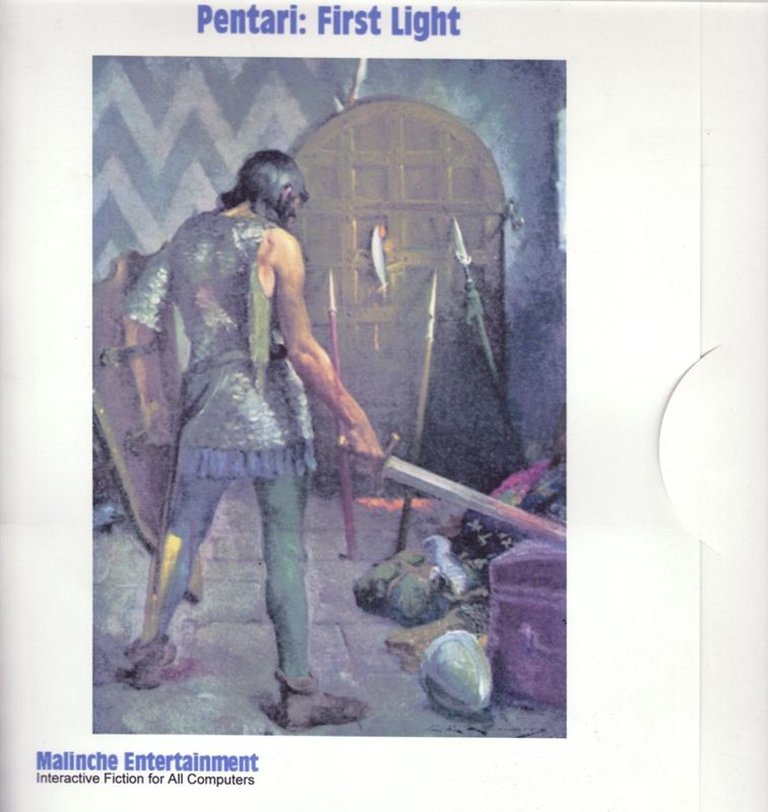
Description
In the fantasy realm of Pentari, chaos erupts as renegades infiltrate the Delphin Wizard’s Guild, seize the city, and plot to overthrow the Empire. As a military captain, you must explore diverse locations—from cities to caves inspired by real-world places—to free captured royalty, eliminate insurgents, and retrieve stolen magical Orbs. Utilize enchanted ‘Trumps’ for travel while evading enemies, and enjoy optional puzzles and a treasure hunt that enhance replayability in this interactive text adventure.
Pentari: First Light Guides & Walkthroughs
Pentari: First Light Reviews & Reception
retro-replay.com : With its deep lore, immersive environments, and endless replayability, this epic text adventure delivers a spellbinding journey for every strategic mind.
Pentari: First Light: Review
Introduction
In the early 2000s, as the gaming industry hurtled toward photorealistic graphics and sprawling open worlds, a quiet revolution unfolded in the realm of text-based adventures. Pentari: First Light (2003), developed by New Jersey-based Malinche Entertainment under the singular vision of Howard Sherman, stands as a testament to the enduring power of interactive fiction. This fantasy epic plunges players into a meticulously crafted world of political intrigue and arcane betrayal, where every command shapes the fate of a besieged kingdom. Though overshadowed by mainstream releases, Pentari: First Light offers a masterclass in narrative depth and mechanical elegance, proving that imagination remains the ultimate graphics engine. This review deconstructs its legacy through the lenses of development, storytelling, gameplay, and cultural impact, arguing that it is a misunderstood gem that redefined accessibility and replayability in interactive fiction.
Development History & Context
The Visionary Behind the Pixels
Malinche Entertainment, founded by Howard Sherman in Matawan, New Jersey, operated as a boutique studio driven by a singular creative force. Sherman, a former senior vice president at ISP RMI.net and founder of Excaliber Internet Corp., brought a unique blend of technical acumen and literary passion to game development. His background in telecommunications informed his pragmatic approach to game design, focusing on cross-platform compatibility and user experience—a forward-thinking vision in an era dominated by console exclusivity.
Technological Constraints and Innovations
Conceived in the wake of the dot-com bust, Pentari: First Light emerged as a product of both limitation and ingenuity. Sherman utilized Inform 6, a programming language designed for text adventures targeting the Z-machine virtual system. This choice ensured the game could run on minimal hardware, from Windows PCs to DOS, Linux, and even mobile devices like iPods and PDAs—a radical feat for 2003. The game’s parser was lauded for its responsiveness, interpreting natural language commands (e.g., “use Trump to teleport to the Royal Library”) with unprecedented nuance, bridging the gap between hardcore IF (Interactive Fiction) purists and casual adventurers. Sherman’s decision to incorporate tactile elements—physical military writs and metal keys—demonstrated a commitment to immersion beyond the digital screen.
The Gaming Landscape of 2003
Released amid the dominance of Grand Theft Auto: Vice City and The Legend of Zelda: The Wind Waker, Pentari: First Light occupied a niche space. The adventure genre was in decline, with studios like Sierra and LucasArts having shuttered their adventure divisions. Yet Sherman capitalized on a growing demand for “brain games” among PC enthusiasts and a nascent indie scene. His marketing strategy—targeting IF communities, fantasy readers, and even blind gamers via screen-reader compatibility—revealed a shrewd understanding of untapped demographics. Malinche’s later ports to Nintendo DS and iOS further cemented the game’s role as a pioneer in cross-platform accessibility.
Narrative & Thematic Deep Dive
A Kingdom in Fracture
The narrative unfolds in Pentari, a multicultural fantasy realm where elves, dwarves, and humans coexist under the benevolent rule of the Delphin Wizard’s Guild. This utopia shatters when traitorous sorcerers steal three Orbs—artifacts of immense power—and orchestrate a coup, imprisoning royalty and plunging the capital city into chaos. Players assume the role of a military captain tasked with restoring order, a choice that frames the story as a military thriller laced with political subterfuge. The Orbs’ theft serves as a potent metaphor for corrupted power, their magical essence now wielded for tyranny rather than prosperity.
Characterization and Dialogue
Sherman’s writing excels in its economy and atmosphere. Insurgents are not faceless villains but complex figures motivated by ideological rebellion, their dialogue revealing pent-up resentment against the Guild’s elitism. Key NPCs, like the imprisoned royalty and rogue wizards, deliver monologues layered with despair and defiance, enriching the world’s lore. The player’s silent protagonist—a blank slate—allows for immersive role-playing, yet military writs and briefings provide context, grounding the hero in the Empire’s hierarchy.
Thematic Resonance
Beneath its fantasy veneer, Pentari explores timeless themes:
– Trust Betrayal: The Guild’s infiltration mirrors real-world anxieties about institutional corruption.
– Power Dynamics: The Orbs symbolize the ethical ambiguity of technology; their theft parallels modern debates on AI and arms control.
– Reconciliation: The player’s journey—from soldier to master of magic—underscores growth through adversity.
The treasure hunt sub-plot, featuring ancient inscriptions and architectural puzzles, delves into Pentari’s prehistory, weaving themes of legacy and forgotten wisdom into the main narrative.
Gameplay Mechanics & Systems
Core Loop: Strategy and Exploration
Pentari’s gameplay revolves around a tripartite loop: investigation, resource management, and tactical execution. Players issue text commands to explore Delphin’s labyrinthine streets, castle dungeons, and subterranean caves—locations inspired by real-world sites like Edinburgh and Prague. The parser’s robustness allows for creative problem-solving; for instance, “examine the shattered gate” might reveal hidden clues, while “brew a potion using cave moss” could unlock alternative solutions.
The Trump System: A Masterstroke of Design
The game’s signature mechanic, the “Trumps,” are magical teleportation cards enabling rapid travel across Pentari. Yet this power comes with risk: overuse alerts insurgents, triggering ambushes or altering enemy patrols. The Trumps transform navigation into a strategic puzzle, forcing players to weigh convenience against consequence. This innovation redefined IF spatial design, predating similar mechanics in The Talos Principle (2014).
Puzzles and Replayability
The main quest—freeing royalty, reclaiming Orbs—is supplemented by an intricate treasure hunt. Multi-layered puzzles (e.g., deciphering runes, aligning Trump sequences) demand lateral thinking, with solutions varying across playthroughs. Variable puzzle placements and optional objectives ensure no two experiences are identical, a rarity in 2003’s linear-driven market. Inventory management is streamlined, with items like the military writ granting narrative context beyond utility.
UI and Accessibility
The interface champions clarity: a parchment-hued background and serif font evoke a medieval manuscript, while interactive elements (inventory, Trumps) are clearly delineated. Subtle animations—flickering torches, shifting shadows—enhance atmosphere without taxing hardware. For blind players, Inform 6’s compatibility with screen readers made Pentari a landmark in inclusive design.
World-Building, Art & Sound
A Tapestry of Real and Imagined
Pentari’s brilliance lies in its synthesis of real-world geography and fantasy. Delphin’s architecture mirrors medieval European cities, while its subterranean caves echo Cappadocia’s troglodyte dwellings. This grounding in tangible locales grounds the fantastical, making magic feel tangible. The lore, expanded through optional puzzles, reveals Pentari as a living ecosystem with ancient civilizations, magical traditions, and ecological tensions between surface and underworld dwellers.
Visual Design: Minimalism as Strength
Though text-based, Pentari leverages minimalist art to evoke atmosphere. Sketch-style illustrations capture key locales—from Delphin’s spired rooftops to torch-lit caverns—without intruding on the narrative. The UI’s restraint (no extraneous graphics) prioritizes immersion, with players mentally visualizing spaces through descriptive prose. This harks back to Infocom’s design philosophy, proving that restraint amplifies imagination.
Sound Design: The Silence of Suspense
Aurally, the game relies on suggestion. Text descriptions of distant clashing swords or dripping water create tension, while the absence of a score heightens moments of peril. The parser’s vocal clarity (in supported versions) ensures accessibility, turning text into an auditory experience.
Reception & Legacy
Contemporary Acclaim and Criticism
Upon release, Pentari: First Light polarized audiences. Just Adventure awarded it a perfect 100%, praising its “must-play” appeal to both IF veterans and fantasy enthusiasts. The reviewer lauded its parser and “spellbinding” narrative, noting its broad accessibility. However, player reviews on MobyGames averaged a dismal 2.0/5, with complaints about steep difficulty and perceived “inept” writing. Niche forums like IFDB echoed this divide, with one user calling it the “worst piece of writing I’ve seen with this distinction” while another defended its “rich lore.”
Enduring Influence
Despite mixed reception, Pentari left an indelible mark:
– Platform Pioneering: Its multiplatform porting strategy (DOS, Linux, Windows, iOS, DS) paved the way for mobile IF.
– Parser Design: The natural language parser influenced titles like 80 Days (2014), which prioritized player expression.
– Malinche’s Legacy: The studio’s subsequent games (Pentari: The Apprentice, The First Mile) cemented Sherman’s reputation as a niche innovator, though Malinche’s closure in 2015 silenced its unique voice.
Today, Pentari is cherished in IF communities as a cult classic, celebrated for its ambition and Sherman’s unwavering creative vision.
Conclusion
Pentari: First Light is a paradox: a game constrained by text yet liberated by imagination. In an era of blockbuster spectacle, it proved that interactive fiction could offer depth, strategy, and emotional resonance. Howard Sherman’s magnum opus, though marred by uneven reception, remains a benchmark for accessibility and replayability. Its Trump system, parser elegance, and world-building inspire modern IF designers, while its exploration of power and betrayal resonates in today’s politically charged world. For players willing to engage with its cerebral landscape, Pentari: First Light is not merely a relic but a revelation—a reminder that the greatest adventures begin not on a screen, but in the mind.
Final Verdict: A flawed but visionary masterpiece that redefined the boundaries of text-based gaming. Rating: ★★★★☆ (4/5)