
- Release Year: 2003
- Platforms: PlayStation 2, Windows
- Publisher: Oxygen Interactive
- Developer: Aqua Pacific Ltd.
- Genre: Sports
- Perspective: Behind view
- Game Mode: Co-op, Hotseat, Single-player
- Gameplay: Customizable settings (speed, Different strokes (normal shot, difficulty, games per set, lob, Power bar for serving, slice), tie breaks), topspin
- Setting: Tennis courts
- Average Score: 49/100
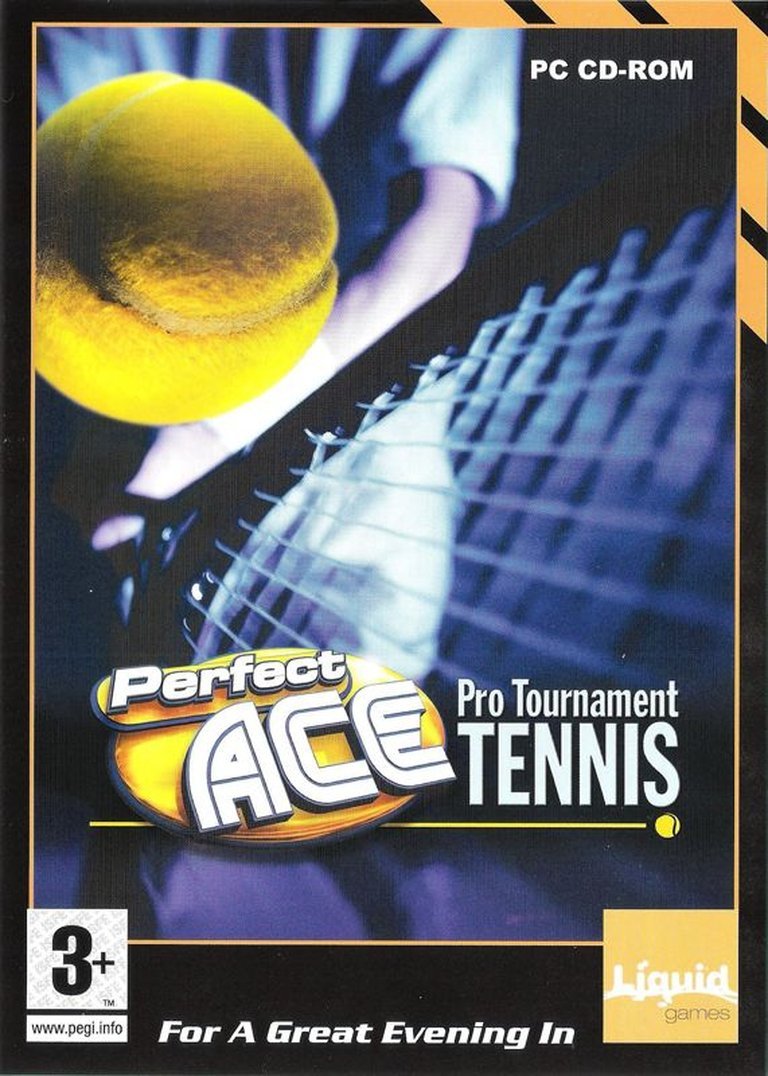
Description
Perfect Ace: Pro Tournament Tennis is a sports simulation game that offers three distinct modes: single matches, tournament, and world championship. Players can compete in singles or doubles matches across sixteen global courts, with customizable settings like game speed, difficulty, and tie breaks. The tournament mode features escalating difficulty, while the world championship challenges players to represent their country in a series of ten tournaments to claim the top ranking. The game employs a third-person perspective with realistic tennis mechanics, including serves, topspin, lobs, and slices, catering to both casual players and tennis enthusiasts.
Gameplay Videos
Perfect Ace: Pro Tournament Tennis Free Download
Perfect Ace: Pro Tournament Tennis Mods
Perfect Ace: Pro Tournament Tennis Reviews & Reception
ign.com (41/100): It’s not often that I believe a game should spontaneously combust. But, watching the painful demise of this title would be a far more enjoyable experience than actually playing it.
mobygames.com (50/100): Average score: 50% (based on 13 ratings)
gamepressure.com (58/100): Another tennis simulator created by the English team Aqua Pacyfic. The player is given the opportunity to play the role of one of the thirty-two available virtual players who are very faithful replicas of leading players.
Perfect Ace: Pro Tournament Tennis: A Forgotten Swing in the Tennis Simulator Evolution
Introduction
In the early 2000s, the sports gaming landscape was dominated by titans like Virtua Tennis and Top Spin, games that redefined what players expected from digital tennis. Amidst this competitive court, Perfect Ace: Pro Tournament Tennis (2003) emerged as an ambitious but flawed contender, developed by Aqua Pacific Ltd. and published by Oxygen Interactive. While it never ascended to the pantheon of tennis greats, its existence offers a fascinating case study in the challenges of balancing realism, accessibility, and technical limitations. This review dissects Perfect Ace in exhaustive detail, exploring its development, mechanics, reception, and legacy to determine whether it was a missed ace or a fault in the annals of sports gaming history.
Development History & Context
The Studio and Vision
Aqua Pacific Ltd., a UK-based developer, was no stranger to sports simulations, having previously worked on titles like International Golf Pro and Real World Golf. For Perfect Ace, the team aimed to create a tennis simulator that prioritized authenticity, leveraging motion capture technology and consultations with real-world tennis coaches—including David Felgate (coach to Jennifer Capriati) and Jason Goodall (coach to Tim Henman). The goal was to deliver a game that appealed to both hardcore tennis enthusiasts and casual players, a delicate balance that would ultimately prove elusive.
Technological Constraints
Released in 2003, Perfect Ace was built using the RenderWare engine, a popular middleware solution at the time. However, the game was hamstrung by technical limitations, particularly on the PC platform. The default resolution was locked at a paltry 640×480, a glaring oversight in an era where higher resolutions were becoming standard. This constraint, combined with underwhelming visual fidelity, would later draw significant criticism. The PlayStation 2 version, while more forgivable given the console’s hardware, suffered from similar graphical shortcomings.
The Gaming Landscape
The early 2000s were a golden age for tennis games. Sega’s Virtua Tennis (1999) had revolutionized the genre with its arcade-style accessibility and deep mechanics, while Top Spin (2003) raised the bar for realism and presentation. Perfect Ace entered this fray as a budget-friendly alternative, priced at around £15 (compared to Top Spin’s £20), but its lack of licensed players and polished presentation made it a tough sell. The game’s release on both Windows and PlayStation 2 was strategic, but it struggled to carve out a niche in a market already saturated with superior options.
Narrative & Thematic Deep Dive
The Illusion of a Tennis Epic
Perfect Ace eschews a traditional narrative in favor of a structured career mode, the “World Championship,” where players represent their country in a series of ten global tournaments. The goal is to accumulate points and climb the rankings, a premise that mirrors real-world tennis circuits like the ATP Tour. However, the game’s lack of licensed players—opt instead for fictional athletes with generic names like “Kevin” and “Steve”—undermines its immersive potential. Without the star power of a Federer or Williams, the stakes feel artificially lowered.
Themes of Competition and Perseverance
The game’s thematic core revolves around the solitary struggle of a tennis player, a lone figure battling not just opponents but also the mental and physical demands of the sport. The escalating difficulty in the tournament mode, where each round ramps up the AI’s aggression, reinforces this theme. Yet, the absence of a compelling progression system (e.g., unlockable gear, skill trees) leaves the experience feeling hollow. The “Player Editor” allows for customization, but it’s a shallow substitute for the depth found in contemporaries like Top Spin’s career mode.
Dialogue and Presentation
Perfect Ace’s presentation is minimalist to a fault. There are no commentary tracks, no dynamic crowd reactions, and no cinematic flourishes to elevate the drama of a match point. The UI is functional but uninspired, with menus that feel more like spreadsheets than gateways to athletic glory. The lack of audio-visual polish makes the game feel like a skeletal framework rather than a living, breathing tennis world.
Gameplay Mechanics & Systems
Core Gameplay Loop
At its heart, Perfect Ace is a tennis simulator that attempts to replicate the sport’s tactical depth. Matches are played from a third-person behind-the-player perspective, with a power bar governing serves and four primary shot types:
– Normal Shot: A balanced stroke.
– Topspin: Adds spin for aggressive play.
– Lob: A high, defensive shot.
– Slice: A low, skidding shot.
The controls are straightforward, but the execution is marred by imprecise timing mechanics and unpredictable AI behavior. Serving, in particular, feels inconsistent—the power bar’s sensitivity makes it difficult to land serves with precision, leading to frequent faults.
Customization and Modes
The game offers three primary modes:
1. Single Matches: Quick exhibitions against AI or human opponents.
2. Tournament: A five-round gauntlet with escalating difficulty.
3. World Championship: A ten-tournament global circuit.
Customization options include:
– Adjustable game speed.
– Set lengths (1–6 games per set).
– Tie-break toggles.
– Difficulty settings.
While these options provide flexibility, they don’t compensate for the game’s lack of depth. The doubles mode, though functional, suffers from clunky partner AI that often misreads shots or fails to cover the court effectively.
Innovations and Flaws
Perfect Ace’s most notable innovation is its motion-captured animations, which lend a degree of realism to player movements. However, the animations are let down by janky transitions and unresponsive controls. The AI, too, is a mixed bag—opponents oscillate between passive rallying and sudden, unnatural bursts of aggression, disrupting the flow of matches.
The game’s multiplayer mode (supporting up to four players) is its saving grace, offering chaotic, if unpolished, fun. Cooperative doubles matches can be entertaining, but the lack of online play (a feature Top Spin included) limits its longevity.
World-Building, Art & Sound
Visual Design: A Study in Mediocrity
Perfect Ace’s visuals are its most glaring weakness. The 16 courts, while varied in surface type (grass, clay, hard, carpet), are rendered with a lack of detail that makes them feel sterile. Player models are blocky and lack facial expressiveness, a far cry from the lifelike avatars in Virtua Tennis. The locked 640×480 resolution on PC is inexcusable, especially when competitors like Top Spin offered higher fidelity.
Sound Design: The Silent Treatment
The audio experience is equally underwhelming. The game features:
– Generic crowd noises that lack dynamism.
– Repetitive, tinny sound effects for ball strikes.
– No commentary, a critical omission for immersion.
The soundtrack, composed by Craig Weeks, is forgettable, consisting of generic upbeat tracks that fail to elevate the tension of a match.
Atmosphere: A Ghost Town
Perfect Ace’s world feels devoid of life. Courts lack ambient details—no swaying trees, no dynamic lighting, no weather effects. The absence of these elements makes the game feel like a clinical simulation rather than a vibrant sporting event.
Reception & Legacy
Critical Reception: A Mixed Bag
Perfect Ace received lukewarm to negative reviews, with an average critic score of 50% (MobyGames). Highlights from reviews include:
– GamersHell (73%): Praised its accessibility but criticized the lack of arcade-like action.
– ActionTrip (68%): Noted its addictive multiplayer but slammed the graphics and AI bugs.
– IGN (41%): Famously declared, “It’s not often that I believe a game should spontaneously combust.”
The PlayStation 2 version fared slightly worse, with Jeuxvideo.com (30%) calling it “anecdotal” and less engaging than Roland Garros 2003.
Commercial Performance
The game was a commercial non-entity, overshadowed by Virtua Tennis and Top Spin. Its budget pricing failed to attract a significant audience, and its lack of licensed players made it a hard sell to tennis fans.
Legacy: A Footnote in Tennis Gaming
Perfect Ace’s legacy is one of obscurity. It spawned a sequel, Perfect Ace 2: The Championships (2005), which fared no better. Today, it’s remembered (if at all) as a cautionary tale of how technical limitations and a lack of polish can doom even a well-intentioned sports simulator.
Conclusion: A Fault on Match Point
Perfect Ace: Pro Tournament Tennis is a game of missed opportunities. Its motion-captured animations and multiplayer modes hint at what could have been, but its technical flaws, lackluster presentation, and uninspired gameplay relegate it to the bench of sports gaming history. While it may offer fleeting fun in local multiplayer, it lacks the depth, polish, and star power to compete with the greats.
Final Verdict: 5.5/10 – A serviceable but forgettable swing at tennis simulation.
For tennis fans, Virtua Tennis and Top Spin remain the gold standards. Perfect Ace, meanwhile, serves as a reminder that in the world of sports games, authenticity alone isn’t enough—execution is everything.