
- Release Year: 2008
- Platforms: Windows
- Publisher: Legacy Interactive Inc.
- Developer: Ideas Live! Inc.
- Genre: Simulation
- Perspective: 1st-person
- Game Mode: Single-player
- Gameplay: Puzzle elements
- Average Score: 60/100
Description
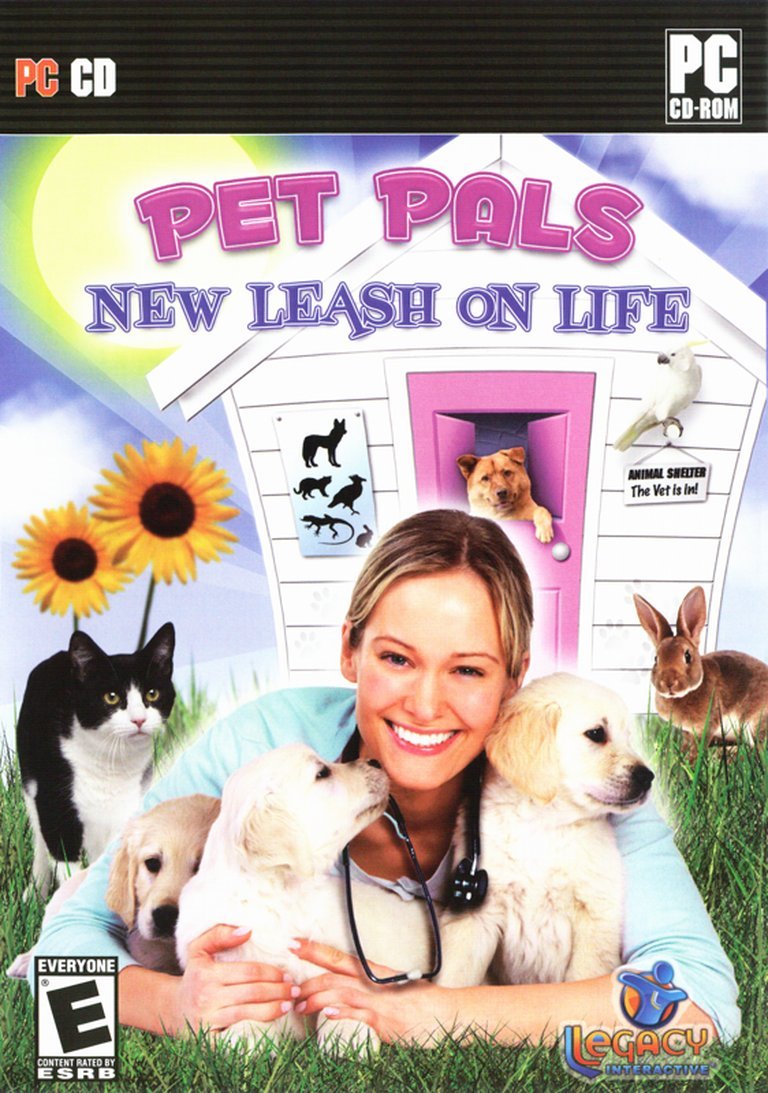
Pet Pals: New Leash on Life is a veterinary simulation game set at the Pet Pals Animal Shelter, where players act as a new vet diagnosing and treating over 30 cases of rescue animals using an array of tools and consultations with a vet tech, across three difficulty levels. After medical care, players enrich the animals through cleaning, feeding, and play to prepare them for adoption, while enjoying animal-themed minigames like trivia, word search, and jigsaw puzzles, plus educational resources on tools, breeds, careers, and adoption, with proceeds benefiting the Humane Society of the United States.
Gameplay Videos
Pet Pals: New Leash on Life Reviews & Reception
metacritic.com (60/100): While not particularly bad, it lacks qualities that appeal to anyone without major interest in the subject matter.
metron.com : The game is well put together with enough help to keep the player progressing without frustration.
honestgamers.com : Pet Pals: New Leash on Life isn’t all snuggles and kisses. Through 38 patient examinations, it illustrates realistic courses of medical treatment for animals in need.
Pet Pals: New Leash on Life: Review
Introduction
Imagine stepping into the bustling heart of an animal shelter, where the whimpers of a hit-by-car dog mix with the squawks of a feather-plucking macaw, and your stethoscope becomes your lifeline to second chances. Released in 2008, Pet Pals: New Leash on Life builds on the foundation of its predecessor, Pet Pals: Animal Doctor, to deliver a veterinary simulation that prioritizes realism over whimsy. As a sequel in Legacy Interactive’s educational lineup, it thrusts players into the role of a novice veterinarian at the Pet Pals Animal Shelter, tasked with diagnosing, treating, and rehabilitating over 30 authentic cases spanning cats, dogs, rabbits, chinchillas, iguanas, parrots, and more. This review argues that while New Leash on Life shines as an uncompromisingly detailed educational tool—drawing from real veterinarians’ expertise and donating sales to the Humane Society—it stumbles in broader engagement, particularly in its adoption mechanics, cementing its status as a niche gem rather than a mainstream classic.
Development History & Context
Developed by Ideas Live! Inc. and published by Legacy Interactive Inc., Pet Pals: New Leash on Life emerged during the late 2000s casual gaming boom on PC, a period dominated by accessible simulations like The Sims expansions and edutainment titles targeting families. Legacy Interactive, led by President & CEO Ariella Lehrer (PhD) and Executive Producer Craig Brannon (PhD), specialized in narrative-driven sims with real-world ties—credits overlap with titles like CSI: NY – The Game and Mean Girls: High School Showdown, showcasing a knack for blending education with interactivity. Producer Natascha Thomas oversaw a team of 71 credits, including programmers Brian Leader and Jake Grandchamp, artists like Tracy Iwata and Jeff Bigman, and voice talent from Somatone Interactive Audio (actors Melissa Hutchison, Tony Azzolino, Shannon Tilton).
The game’s vision was explicitly educational: cases were crafted by practicing veterinarians worldwide, incorporating over 45 realistic tools (from ophthalmoscopes to orogastric tubes) and emphasizing shelter workflows like enrichment and adoption. Technological constraints of 2008 PC gaming—mouse-only input, 3D models on CD-ROM/download—limited spectacle, focusing instead on first-person precision. Released October 22, 2008, amid a landscape of Wii motion-control pet sims (Purr Pals) and DS edutainment (Pet Pals: Animal Doctor), it carved a space in the “veterinary simulation” genre group on MobyGames. A 2010 Nintendo DS port by FRONTLINE Studios (publisher Destineer) adapted it for stylus play, but retained core fidelity. This era’s gaming prioritized kid-friendly ESRB Everyone titles, yet New Leash‘s unflinching realism (e.g., toe amputations, tumor extractions) pushed boundaries, aligning with Legacy’s nonprofit ethos—a portion of proceeds supported the Humane Society of the United States.
Narrative & Thematic Deep Dive
Pet Pals: New Leash on Life eschews bombastic plots for a procedural narrative rooted in shelter realism. Players embody a customizable new vet (branded as “you” for immersion), progressing from novice to head veterinarian via promotions earned through successful cases. The story unfolds across 30-38 cases (sources vary slightly), each inspired by real veterinary emergencies: a drooling rabbit, string-swallowing kitten, infected bull terrier, or paralyzed dog. Openings like the abandoned alley cat “Sunshine” hook emotionally, transitioning to clinic teamwork with vet techs, another veterinarian, and an “enrichment specialist”—a nod to behavioral therapy.
Dialogue is functional yet personable: query techs via multiple-choice questions for symptoms, receiving professional responses that build verisimilitude. Voice acting enhances this—techs offer encouragement, adoptive families leave glowing answering machine messages. Themes center on redemption and responsibility: animals gain a “new leash on life” through holistic care (medical + socialization), mirroring real shelter struggles. Subtle motifs include prioritization (emergencies interrupt), ethical dilemmas (four chances per case before the head vet intervenes), and post-adoption follow-ups, underscoring long-term welfare. Progression ties narrative to mechanics—higher promotions unlock tougher cases, reinforcing growth. Critically, it demystifies vet work without anthropomorphizing excessively, prioritizing education on breeds, careers, and adoption over melodrama. Weaknesses emerge in repetition: enrichment feels generic, and adoption lacks depth, undermining themes of behavioral matching.
Gameplay Mechanics & Systems
At its core, New Leash on Life is a meticulous puzzle-simulation loop: intake → diagnosis → treatment → enrichment → adoption. First-person perspective immerses players in a 3D clinic stocked with 44-45 tools, accessed via mouse drags and clicks. Basic exams (weigh, pulse, stethoscope, rectal thermometer—discreetly handled) build to advanced procedures (EKG, dental speculum, surgery). No hand-holding beyond tutorials (praised as series-best with yellow highlights); players match tools to symptoms via descriptions, earning points on a scoring system. Mistakes deduct points; egregious errors (e.g., scalpel on non-surgical patient) eject you instantly. Four attempts per case, with hints costing minor points, ensure accessibility across three difficulty levels.
Post-treatment, enrichment grooms pets for adoption: bathe, brush, pet, play (frisbee for dogs, yarn for cats). Visual cues like question marks (confusion) to lightbulbs (understanding) reward trust-building. Minigames—animal-themed trivia, word searches, jigsaws—fill downtime, alongside databases for tools/glossary/breeds/careers. Adoption falters here: instead of owner profiling, it’s a memory card-flip, squandering educational potential (e.g., matching a time-rich owner to feather-plucking Admiral the macaw).
UI is clean but dated: toolbars, zoomable 3D models, multiple-choice diagnoses/quizzes. Progression incentivizes via promotions, trophies, staff praise, and follow-up messages. Flaws include opaque advanced steps (post-game explanations only) and repetitive routines, but innovations like emergency prioritization and realistic multi-step meds (oral + IV antibiotics) elevate it beyond casual sims.
World-Building, Art & Sound
The Pet Pals Animal Shelter forms a compact yet atmospheric world: clinic exam rooms, enrichment zones, and downtime hubs evoke a functional rescue. First-person navigation fosters intimacy, with zoomable 3D animals (15+ breeds) rendered realistically—bulging iguana scales, chinchilla fur, parrot plumage. Visual direction prioritizes utility: clean lines, yellow tutorial highlights, vital monitors pulsing. Art credits (Jesus Uriarte directing, Axion Studios/Studio X additional) deliver serviceable 2008 PC graphics, relatable for household pets over exotics.
Sound design amplifies immersion: Brian Leader’s compositions blend soothing clinic ambiences with urgent emergency beeps. Voice overs—professional tech banter, animal mews/squawks—add warmth; adoptive calls provide closure. No soundtrack bombast, but purposeful: a thinking game’s calm underscore, punctuated by rewarding “lightbulb” dings. Collectively, these craft a de-mystifying atmosphere, making procedures feel tangible without graphic excess (e.g., no thermometer insertion visuals).
Reception & Legacy
Launch reception was muted: no MobyScore, zero player/critic reviews on MobyGames, sparse elsewhere. HonestGamers’ Benjamin Woodhouse awarded 3/5 (December 2008), lauding medical depth (38 cases, realistic tools) but critiquing shallow adoption/enrichment. Metron’s editor hailed tutorials and relatability (08/09), deeming it a “feast for would-be vets.” MyGamer scored 60, niche for animal lovers. Metacritic lacks aggregate; commercial data minimal (1 MobyGames collector, DS sales ~0.05m units per VGChartz). ESRB Everyone belied 8+ medical intensity, suiting parent-child play.
Legacy endures quietly: part of Pet Pals series amid Legacy’s sims (Zoo Vet, Farm Vet), influencing edutainment like Delivery Pals echoes. DS port expanded reach, but no major industry ripple—overshadowed by Nintendogs. Its real-vet cases and Humane Society tie endure as historical footnotes in veterinary sims, preserving procedures for aspiring pros amid rising pet ownership.
Conclusion
Pet Pals: New Leash on Life masterfully simulates shelter veterinary work—detailed tools, authentic cases, educational extras—outshining predecessors in tutorials and progression, while donating to charity. Yet, generic enrichment, puzzle-based adoption, and trial-and-error opacity limit replayability beyond niche audiences. In video game history, it occupies a vital edutainment alcove: not revolutionary like The Sims, but an enduring tool for animal welfare education. Verdict: 7/10—essential for vet hopefuls, skippable for casuals, forever a heartfelt leash on realism.