
- Release Year: 2007
- Platforms: Windows
- Publisher: PAN Vision AB, Viva Media, LLC
- Developer: BrainGame Publishing, GmbH
- Genre: Educational, Simulation
- Perspective: Third-person
- Game Mode: Single-player
- Gameplay: Business simulation, Managerial
- Setting: Africa
- Average Score: 60/100
Description
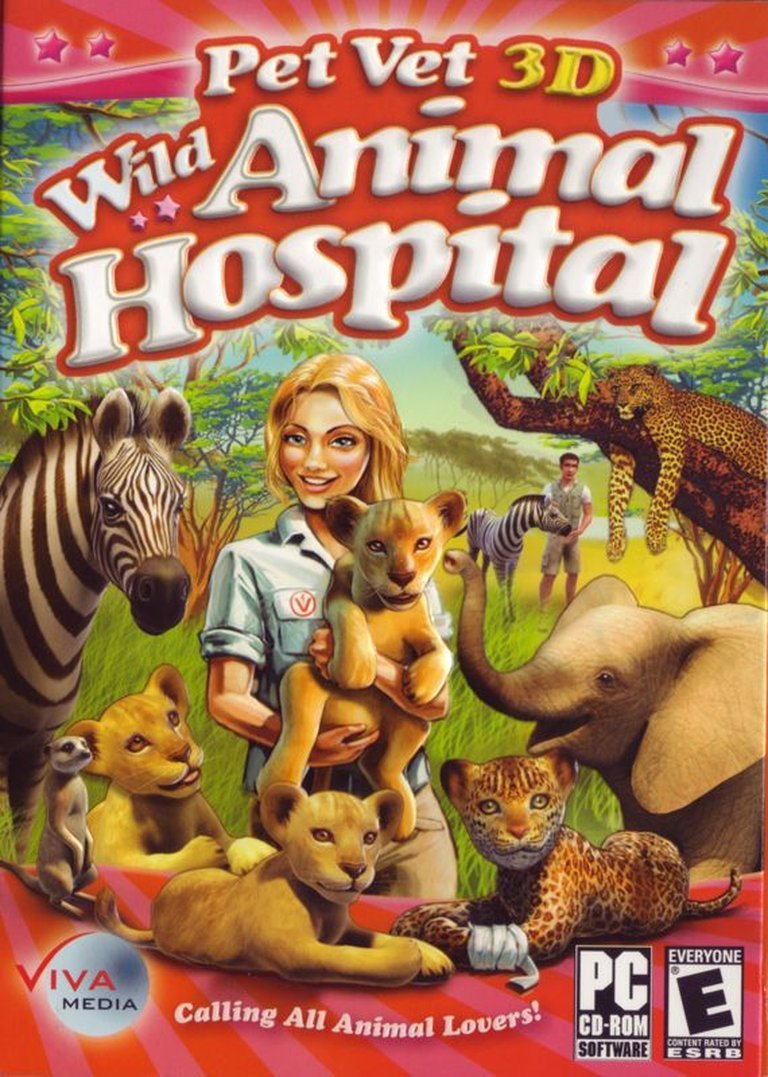
Pet Vet 3D: Wild Animal Hospital is a simulation game designed for children, allowing them to take on the role of a veterinarian in an African national park. Players manage an animal hospital, caring for various wild animals by feeding, handling, and playing with them. The game also teaches players about animal care, diagnosis, and treatment, as well as business management skills. As players progress, they can expand their hospital, hire helpers, and acquire more supplies and toys for the animals.
Gameplay Videos
Where to Buy Pet Vet 3D: Wild Animal Hospital
PC
Pet Vet 3D: Wild Animal Hospital Free Download
Pet Vet 3D: Wild Animal Hospital Cracks & Fixes
Pet Vet 3D: Wild Animal Hospital Guides & Walkthroughs
Pet Vet 3D: Wild Animal Hospital Reviews & Reception
mobygames.com (60/100): Average score: 60%
commonsensemedia.org : Kids heal sick African animals in easy vet sim.
gamechronicles.com : Pet Vet 3D Wild Animal Hospital is completely and entirely, physically, unplayable.
Pet Vet 3D: Wild Animal Hospital Cheats & Codes
PC Version
Based on key mappings found in the ‘scripts.npk’ file. Press the specified key to activate the cheat.
| Code | Effect |
|---|---|
| o | createCustomer |
| t | increaseReputation |
| r | decreaseReputation |
| n | newDay |
| p | moveCharacterRight |
| m | increaseMoney |
| e | toggleAvatarCollisions |
Pet Vet 3D: Wild Animal Hospital: A Fractured Legacy of Education and Technical Missteps
Introduction
In the mid-2000s, a wave of educational simulation games sought to blend entertainment with pedagogy, and Pet Vet 3D: Wild Animal Hospital (2007) emerged as a divisive entry in this genre. Developed by BrainGame Publishing, this African wildlife-themed veterinary simulator aimed to educate children about animal care and business management while offering a playful experience. Though praised for its educational intent and charm, the game’s legacy is marred by inconsistent execution, technical shortcomings, and polarizing reviews ranging from “excellent” (Game industry News) to “unplayable” (Game Chronicles). This review dissects its strengths as a children’s educational tool and its failures as a polished product, ultimately concluding that Pet Vet 3D is a nostalgic curiosity rather than a timeless classic.
Development History & Context
Studio Vision and Constraints
BrainGame Publishing, a German studio known for family-friendly titles, positioned Pet Vet 3D: Wild Animal Hospital as a sequel to Pet Vet 3D: Animal Hospital (2005). With a 55-person team, including scientific advisors like Dr. Felix Vogel and Dr. Thomas Sollich, the project emphasized authenticity in animal behavior and veterinary practices. However, the studio’s ambition clashed with the technological limitations of 2007. The game’s 3D models and textures—overseen by Marc Schmitt and Peer Draeger—were simplistic, even for its time, prioritizing accessibility over graphical fidelity.
The 2007 Gaming Landscape
Released amidst a surge of managerial sims like Zoo Tycoon 2 and RollerCoaster Tycoon 3, Wild Animal Hospital targeted a younger demographic. Its “point-and-click” interface and three difficulty levels (Easy, Average, Difficult) reflected a design philosophy focused on intuitive play for children aged 7–14. Yet, its business simulation mechanics lacked the depth of contemporaries, risking alienation from older players.
Narrative & Thematic Deep Dive
Plot and Didactic Focus
The game lacks a traditional narrative, instead tasking players with managing an animal hospital in an African national park. Thematic emphasis falls on responsibility—diagnosing over 100 animal illnesses, constructing habitats, and budgeting for expansions—and empathy, as players nurture creatures like elephant calves and zebra foals. Scientific reference books integrated into gameplay reinforce educational goals, teaching ecology, geography, and nutrition.
Characters and Dialogue
Characters are minimal: a customizable blond protagonist (criticized for her “Barbie-esque” appearance by Game Chronicles) and auxiliary staff like hired helpers. Dialogue is functional, with tutorial voice lines often glitching into repetitive loops—a flaw noted by multiple reviewers. The lack of narrative depth limits emotional engagement, reducing animals to therapeutic props rather than dynamic beings.
Gameplay Mechanics & Systems
Core Loop and Innovation
The gameplay revolves around four pillars:
1. Diagnosis: Identifying ailments via symptom matching.
2. Treatment: Administering medicine, feeding, and playing minigames.
3. Business Management: Expanding facilities, hiring staff, and decorating enclosures.
4. Education: Reading animal encyclopedias to unlock new species.
While the loop is conceptually sound, its execution falters. The PC Action review criticized the tedious waiting periods between animal arrivals, while Game Chronicles lambasted the “jerky” character movement and fatal crashes. The business management layer, though simplified for children, lacks strategic depth, reducing progression to a grind.
UI and Accessibility
The colorful icon-driven UI earned praise for clarity, but its “point-and-click” design felt outdated compared to contemporary sims. The tutorial, while helpful, was plagued by audio glitches that undermined its educational intent.
World-Building, Art & Sound
Visual and Environmental Design
Set against an African backdrop, the game’s environments are bright and cartoonish, with savanna-inspired landscapes and rudimentary 3D animal models. While the ability to zoom in on creatures added immersion, critics noted “jerky” animations and poor texture quality. Concept artist Sebastian Erb’s work leaned into a cheerful aesthetic, but technical limitations often undercut the artistry.
Sound Design
The soundtrack, composed by m.u.k.e. audio, is whimsical but repetitive, with Game Chronicles comparing its skipping loops to a “broken record.” Ambient sounds, like animal cries, are serviceable but lack depth, further diminishing the African setting’s authenticity.
Reception & Legacy
Critical Divide
Reviews were sharply polarized:
– Game industry News (GiN): 90% (“One of the best family titles on the market”).
– Christ Centered Gamer: 85% (“Fun but buggy”).
– Game Chronicles: 0% (“A monumental waste of time”).
Player scores averaged 3.3/5, reflecting nostalgia from younger audiences and frustration from parents encountering technical issues.
Influence and Iteration
The game spawned handheld versions (My Animal Centre in Africa for DS/GBA) and a sequel (Pet Vet 3D: Animal Hospital Down Under), but its legacy is muted. While it inspired later titles like Paws & Claws: Pet Vet, its impact was limited by its niche audience and reputation for instability.
Conclusion
Pet Vet 3D: Wild Animal Hospital is a flawed yet earnest attempt to merge education and entertainment. Its strengths—accessible gameplay, animal-care focus, and educational value—are undermined by technical incompetence and shallow systems. While it holds nostalgic appeal for ’00s kids, its place in gaming history is as a cautionary tale about the perils of prioritizing pedagogy over polish. For collectors and simulation completists, it’s a curious artifact; for most, it remains a forgettable footnote.
Final Verdict: A well-intentioned but uneven experiment—best left to retrospective analysis rather than active play.