
- Release Year: 2008
- Platforms: Windows
- Publisher: Akella
- Developer: Saturn Plus
- Genre: Adventure
- Perspective: 3rd-person
- Game Mode: Single-player
- Gameplay: Graphic adventure, Mini-games, Point and select, Puzzle elements
- Setting: City, Moscow
- Average Score: 38/100
Description
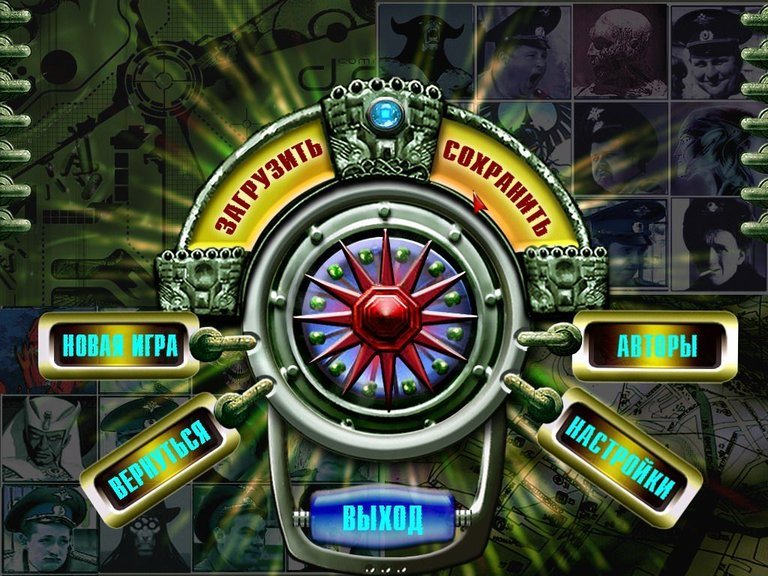
Petrovka 38 ½ is a 2D point-and-click adventure game set in Moscow, where the protagonist, a bartender named Sanya, gets entangled in paranormal investigations after thwarting supernatural burglaries at his restaurant. Recruited by a secret underground paranormal department linked to the Moscow police headquarters, Sanya must navigate static screens, solve puzzles, and complete mini-games—including Battleship and shooting galleries—to uncover the truth behind an ancient artifact. The game blends detective storytelling with classic adventure mechanics, featuring item collection, character interactions, and a mix of logic puzzles and arcade-style challenges.
Petrovka 38 ½ Reviews & Reception
mobygames.com (38/100): A two-dimensional point-and-click adventure game loosely utilizing the address of the Moscow militia (police) headquarters.
mobygames.com (38/100): Average score: 38%
Petrovka 38 ½: A Forgotten Relic of Russian Adventure Gaming
Introduction: The Enigma of Petrovka 38 ½
In the vast, often overlooked landscape of early 2000s adventure games, Petrovka 38 ½ (2008) stands as a curious artifact—a game that dared to blend Soviet-era detective lore with supernatural intrigue, only to fade into obscurity. Developed by Saturn Plus and published by Akella, this point-and-click adventure is a love letter to Moscow’s mythos, wrapping players in a tale of paranormal policing, ancient artifacts, and the trials of an unlikely hero. Yet, despite its ambitious premise, the game remains a footnote in gaming history, remembered by few and critically panned by the handful who encountered it.
This review seeks to unearth Petrovka 38 ½ from the depths of gaming obscurity, examining its development, narrative ambitions, mechanical quirks, and the cultural context that shaped its existence. Was it a misunderstood gem, or a flawed experiment doomed by its own limitations? Let’s dissect this Russian oddity piece by piece.
Development History & Context: The Birth of a Paranormal Detective Tale
The Studio Behind the Game: Saturn Plus
Petrovka 38 ½ was the brainchild of Saturn Plus, a Russian developer with a modest portfolio of adventure and strategy games. The studio’s previous works, such as Tupoj Dozor and Strashilki: Shestoe Chuvstvo, hinted at a penchant for blending humor, mystery, and Russian cultural references—traits that would later define Petrovka 38 ½.
The game’s development was led by Igor Sidorov (Project Leader, Animation, and Audio Editing), with Anastasia Kuvaldina handling the screenplay and dialogues. The team was small—just 14 people—a far cry from the sprawling studios behind Western adventure games of the era. This intimacy is reflected in the game’s quirky, handcrafted feel, though it also contributed to its rough edges.
The Cultural & Gaming Landscape of 2008
By 2008, the adventure game genre was in a state of flux. The golden age of LucasArts and Sierra had long passed, and Western developers were experimenting with narrative-driven experiences (The Walking Dead was still years away). In Russia, however, the genre clung to life, with studios like Akella (known for Sea Dogs and Age of Pirates) occasionally dipping into adventure territory.
Petrovka 38 ½ arrived at a time when Russian gaming was still finding its voice. While Western markets were dominated by Half-Life 2, Call of Duty 4, and Mass Effect, Russian developers often leaned into niche, culturally specific projects. The game’s setting—Moscow’s fabled Petrovka Street, home to the real-life police headquarters—was a deliberate nod to Soviet-era detective fiction, particularly the 1980 film Petrovka, 38 and the novels of Yulian Semyonov.
Technological Constraints & Design Choices
The game’s fixed-screen, 2D point-and-click design was a throwback to the 1990s, a deliberate stylistic choice that felt anachronistic even in 2008. The third-person perspective and static backgrounds were reminiscent of Broken Sword or Gabriel Knight, but without the polish of those classics.
Key technical features included:
– Cursor-based interaction (walk, see, action) that auto-selected based on hover.
– Mini-games like Battleship and a shooting gallery, breaking up the adventure formula.
– Tower of Hanoi puzzles, a nod to classic adventure game logic challenges.
The game’s low budget is evident in its simplistic animations and limited voice acting, but it also lent the project a charming, almost amateurish quality—a labor of love rather than a corporate product.
Narrative & Thematic Deep Dive: A Bartender’s Paranormal Initiation
Plot Summary: From Bartender to Paranormal Investigator
The protagonist, Sanya (Alexander), is an unassuming bartender who stumbles into a world of supernatural crime. After thwarting paranormal burglaries at his restaurant, he’s recruited by a secret underground division of the Moscow police—a paranormal investigations unit hidden beneath the real-life Petrovka 38 address.
The story unfolds as Sanya undergoes a series of trials, uncovering a conspiracy tied to an ancient artifact. Along the way, he interacts with eccentric characters, solves puzzles, and navigates a Moscow that feels equal parts mundane and mystical.
Themes: Soviet Nostalgia, Paranormal Bureaucracy, and the Everyman Hero
-
Soviet & Post-Soviet Identity
- The game leans heavily into Russian cultural touchstones, from the address Petrovka 38 (a symbol of Soviet law enforcement) to the detective tropes of classic Russian crime fiction.
- The paranormal department serves as a metaphor for the hidden, often absurd layers of Soviet bureaucracy—a secret world operating beneath the surface.
-
The Reluctant Hero
- Sanya is not a trained detective but an everyman thrust into extraordinary circumstances, a trope that resonates with Russian folklore (think The Master and Margarita’s ordinary citizens encountering the supernatural).
- His journey mirrors the “initiation” archetype, where an outsider must prove themselves to a secretive order.
-
Humor & Absurdity
- The game’s tone oscillates between serious detective work and slapstick comedy, a balance that doesn’t always land.
- The mini-games (Battleship, shooting gallery) feel tonally disjointed, as if the developers couldn’t decide whether they were making a mystery thriller or a whimsical adventure.
Characters & Dialogue: A Mixed Bag of Charm and Cringe
- Sanya is likable but underdeveloped—his motivations are unclear beyond “stumbling into adventure.”
- Supporting characters range from caricatured bureaucrats to mysterious agents, but few leave a lasting impression.
- Dialogue is where the game’s Russian humor shines (or falters, depending on taste). The writing is self-aware and occasionally witty, but the translation (for non-Russian players) may have diluted some of its charm.
The Ancient Artifact & Conspiracy: A Missed Opportunity
The game’s central mystery—an ancient artifact tied to paranormal crimes—is intriguing but underutilized. The plot unfolds in a linear, puzzle-driven manner, with little room for player agency. The lack of meaningful choices makes the narrative feel more like a guided tour than an immersive detective experience.
Gameplay Mechanics & Systems: A Throwback with Flaws
Core Gameplay Loop: Collect, Talk, Solve
Petrovka 38 ½ adheres to the classic adventure game formula:
1. Explore static screens (Moscow streets, police HQ, restaurants).
2. Collect items (often illogically placed).
3. Talk to NPCs to gather clues or trade items.
4. Solve puzzles (inventory-based, logic challenges, mini-games).
The cursor system (auto-selecting “walk,” “see,” or “action”) is functional but lacks the precision of modern adventure games. Players often pixel-hunt for interactive spots, a frustrating relic of the genre’s past.
Puzzle Design: From Brilliant to Baffling
- Inventory Puzzles: Mostly logical but occasionally obscure (e.g., combining random items in unintuitive ways).
- Mini-Games:
- Battleship: A bizarre inclusion that feels out of place in a detective story.
- Shooting Gallery: A simple arcade distraction.
- Tower of Hanoi: A classic puzzle that tests patience more than wit.
- Logic Challenges: Some puzzles require lateral thinking, while others devolve into trial-and-error frustration.
Combat & Progression: Nonexistent
Unlike many adventure games of the era, Petrovka 38 ½ lacks combat entirely. Progression is purely narrative-driven, with no skill trees, XP, or character growth. This makes the game accessible but also shallow—players are merely following a script rather than shaping their experience.
UI & Controls: Functional but Clunky
- The point-and-click interface is intuitive but visually dated.
- Inventory management is straightforward but lacks polish.
- No save system quirks—players can save anytime, a mercy given some of the game’s unforgiving puzzles.
Innovation vs. Flaws
✅ Innovative:
– Blending Russian detective lore with paranormal themes was a fresh take.
– Mini-games as puzzle breaks (though not all work).
❌ Flawed:
– Repetitive gameplay loop (collect, talk, solve, repeat).
– Some puzzles are illogical or poorly clued.
– Lack of player agency—the story unfolds the same way regardless of choices.
World-Building, Art & Sound: Moscow Through a Paranormal Lens
Setting & Atmosphere: A Moscow Steeped in Mystery
The game’s Moscow is a stylized, semi-realistic version of the city, blending everyday locations (bars, police stations) with hidden supernatural elements. The Petrovka 38 headquarters serves as a hub, with its underground paranormal division adding a layer of conspiracy and intrigue.
However, the static backgrounds and limited animation make the world feel flat. Unlike Broken Sword’s vibrant locales or Syberia’s immersive environments, Petrovka 38 ½’s Moscow lacks depth and dynamism.
Visual Style: A Mixed Bag of Charm and Crudeness
- Character designs are cartoonish but expressive, fitting the game’s humorous tone.
- Backgrounds are detailed but static, with minimal animation (e.g., flickering lights, moving NPCs).
- 3D elements (like the Tower of Hanoi puzzle) clash with the 2D art style, creating a visual inconsistency.
Sound Design & Music: Ambiance Over Excellence
- Oleg Sevostyanov’s soundtrack is serviceable—mood-setting but not memorable.
- Voice acting (in Russian) is decent, with Sanya’s delivery being a highlight.
- Sound effects are basic—footsteps, door creaks, and the like—adding minimal immersion.
How Art & Sound Contribute to the Experience
The game’s aesthetic choices reinforce its B-movie charm—it’s not a masterpiece, but it has personality. The Moscow setting gives it a unique identity, even if the execution is rough around the edges.
Reception & Legacy: A Game That Slipped Through the Cracks
Critical Reception: A 38% Warning Sign
The only recorded critic review (from Absolute Games) gave it a 38%, calling it:
“A quest that flies by in a couple of evenings… The waltz-like rhythm of gameplay (one—collecting, two—chatting, three—puzzle) doesn’t let you fall asleep. If only they had added something interesting, unusual, and beautiful: plot, characters, puzzles, graphics… In short, Saturn Plus jumped in place again.”
This harsh but fair assessment highlights the game’s main flaws:
– Repetitive structure.
– Lack of innovation.
– Underwhelming presentation.
Commercial Performance: A Niche Product
With only 3 players recorded on MobyGames, Petrovka 38 ½ was not a commercial success. Its Russian-language focus and lack of Western marketing ensured it remained obscure outside its home country.
Legacy: A Cult Curiosity
Despite its flaws, the game has a small but dedicated following among:
– Russian adventure game enthusiasts.
– Fans of Soviet-era detective fiction.
– Collectors of obscure 2000s PC games.
It didn’t influence later games in any meaningful way, but it stands as a time capsule of early 2000s Russian game development—a period when studios were experimenting with identity in a post-Soviet gaming landscape.
Conclusion: A Flawed but Fascinating Relic
Petrovka 38 ½ is not a great game, but it is an interesting one. It’s a product of its time and place—a Russian adventure game that tried to blend detective noir, paranormal intrigue, and humor, only to stumble over its own technical limitations and design choices.
Final Verdict: 5/10 – “A Curio for Adventure Game Historians”
✅ Worth Playing If:
– You’re a fan of obscure adventure games.
– You have an interest in Russian gaming history.
– You enjoy B-movie-style storytelling with supernatural twists.
❌ Avoid If:
– You expect polished gameplay or deep narrative.
– You dislike pixel-hunting and illogical puzzles.
– You prefer modern adventure games with voice acting and fluid animation.
Where It Stands in Gaming History
Petrovka 38 ½ is not a lost classic, but it’s not without merit. It’s a reminder of a time when adventure games were still being made with passion, even if the results were uneven. In the grand tapestry of gaming, it’s a small, oddly shaped thread—one that deserves recognition, if not reverence.
For those willing to dig through its rough edges, there’s a charming, if flawed, experience waiting. For everyone else, it remains what it always was: a footnote in the annals of adventure gaming.
Final Score: 5/10 – “A Quirky, Imperfect Gem for the Adventurous Gamer.”