
- Release Year: 2005
- Platforms: Windows
- Publisher: Mediascape Co. Ltd., Team Shanghai Alice
- Developer: Team Shanghai Alice
- Genre: Action, Bullet hell, Danmaku, Scrolling shoot ’em up
- Perspective: Top-down
- Game Mode: Co-op, Single-player
- Gameplay: Arcade, Bomb system, Bullet hell, Charge attack, Shooter, Vertical scrolling
- Average Score: 82/100
Description
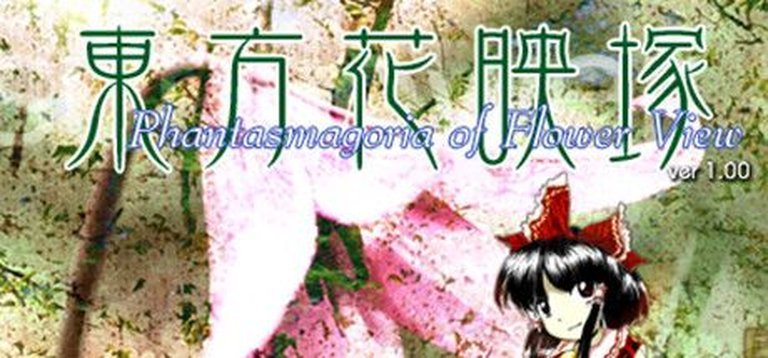
Phantasmagoria of Flower View is the ninth main entry in the Tōhō Project series, a vertically scrolling 2D bullet-hell shooter featuring split-screen competitive gameplay. Set in a vibrant anime-inspired world, players duel one-on-one across separate screens, controlling one of 14 mystical characters (5 initially unlocked) to unleash attacks, dodge enemy projectiles, and strategically deploy bombs or charged abilities. The objective is to outlast opponents by surviving their onslaught while flooding their screen with intricate bullet patterns, blending arcade action with versus-style tension. Its mechanics draw inspiration from earlier titles like Twinkle Star Sprites, offering both solo and multiplayer modes with a dynamic soundtrack and colorful danmaku visuals.
Gameplay Videos
Phantasmagoria of Flower View Free Download
Phantasmagoria of Flower View Patches & Updates
Phantasmagoria of Flower View Guides & Walkthroughs
Phantasmagoria of Flower View Reviews & Reception
steambase.io (98/100): A triumphant return to form for the series.
mobygames.com (80/100): A solid entry in the Touhou series with unique gameplay mechanics.
howlongtobeat.com (70/100): Genuinely an awesome game when you play with a friend with netplay!
Phantasmagoria of Flower View Cheats & Codes
PC Version
Enter the code in the results menu.
| Code | Effect |
|---|---|
| DDDSSSSQRR | Unlocks all content |
Phantasmagoria of Flower View: An Explosive Blossoming in Gensokyo’s Competitive Legacy
Introduction
In the hallowed gardens of the Touhou Project – a series renowned for redefining bullet hell aesthetics and cultivating one of gaming’s most fertile doujin ecosystems – Phantasmagoria of Flower View (2005) emerges as a prismatic anomaly. Conceived as a celebratory tenth-anniversary commemoration by lone developer ZUN (Jun’ya Ōta), this ninth mainline entry eschews traditional single-stage progression for electrifying split-screen duels that transform Gensokyo’s supernatural incident resolution into spectator sport. More than a mere frivolous detour, Flower View revitalizes the competitive spirit of 1997’s Phantasmagoria of Dim.Dream while injecting modern Touhou’s signature world-building into its petal-strewn battlefields. This review argues that beneath its deceptively casual “versus shmup” exterior lies one of the series’ most mechanically daring and thematically resonant experiments – a game that bloomed defiantly against technological constraints to fertilize Touhou’s multiplayer future.
Development History & Context
Studio Vision & Technological Constraints
Developed solely by ZUN under his Team Shanghai Alice doujin label, Flower View arrived amidst the series’ “Windows Generation” consolidation following Perfect Cherry Blossom (2003) and Imperishable Night (2004). Though initially unplanned for 2005, ZUN pivoted upon recognizing the anniversary’s significance, prioritizing “fan-service through friendly competition” (Touhou Wiki). The decision resurrected the versus format last seen in the PC-98 era, now retooled for Windows’ technical landscape.
Built using Visual Studio C++ with a target spec of 800MHz Pentium processors (Grokipedia), the game contended with mid-2000s hardware limitations. Netplay functionality – added via an October 2005 patch – proved notoriously unstable due to synchronization challenges, a compromise of ZUN’s solo-development approach. Alpha/Beta testing occurred via Reitaisai 2 (May 2005) and a web trial (June 2005), refining bullet patterns and spell-card balancing.
Gaming Landscape & Influences
Emerging alongside mainstream titans like God of War and Resident Evil 4, Flower View defiantly championed niche danmaku sensibilities. Its core inspiration was ADK’s Twinkle Star Sprites (1996 Neo Geo), reimagining its competitive projectile-spawning for Touhou’s screen-filling elegance. As ZUN noted:
“The best fan-service is letting players face each other… so tournaments can happen” (Wikipedia).
This philosophy responded to burgeoning Touhou fandom’s demand for communal experiences beyond score chasing – a gambit that cemented Flower View as a cornerstone of doujin esports.
Narrative & Thematic Deep Dive
Plot Architecture: Cycles & Neglect
Gensokyo’s tranquil spring erupts into chaos as out-of-season flowers blanket the land, energizing fairies and unnerving residents. Protagonists investigate – whether out of duty (Reimu Hakurei), curiosity (Marisa Kirisame), or amusement (Yuuka Kazami). Unlike apocalyptic prior incidents, the crisis roots in bureaucratic supernaturalism: Komachi Onozuka, ferrywoman of the Sanzu River, has neglected her grim duties, trapping souls within blossoms.
The revelation doubles as sociohistorical allegory. Every 60 years (aligning with 1945’s WWII turmoil), mortal world trauma floods Gensokyo with spirits (Touhou Wiki). Flowers symbolize cyclical neglect – both Komachi’s indolence and humanity’s recurring failures – while Eiki Shiki, Yamaxanadu (the judging Yama) embodies karmic reckoning. Her post-battle lectures dissect characters’ moral flaws (Reimu’s laziness, Marisa’s dishonesty), transforming danmaku duels into Confucian trials.
Characterization as Gameplay Ethos
Each fighter’s narrative role informs mechanical identity:
– Medicine Melancholy, a poison-doll youkai, weaponizes toxic clouds that cripple mobility (AI-Breaker tactic)
– Aya Shameimaru‘s wind manipulation enables hit-and-run tactics mirroring her journalistic opportunism
– Eiki’s judgment-themed spells (scales, swords) enforce rigid morality through unavoidable bullet “sentencings”
Endings blend playful humor and melancholy, dissecting how heroes forget Eiki’s lessons – a meta-commentary on gaming’s ephemeral impact. Yuuka’s route cheekily subverts protagonist bias, framing her flower-admiring neutrality as wisdom against Reimu’s knee-jerk accusations.
Gameplay Mechanics & Systems
Split-Screen Danmaku Ballet
The core loop transposes Touhou’s precision-dodging into dynamic 1v1 arenas where players control mirrored vertical fields. Destroying enemies or grazing bullets generates retaliatory patterns on the opponent’s side, creating perpetual action-reaction tension. Matches hinge on:
– Health Management: 10 half-dot segments replace traditional lives; depletion extends the opponent’s survival timer
– Spell Card Tiers: Charge attacks (Lv.1-4) escalate from bullet-clearing bursts (Lv.1) to screen-dominating summonings (Lv.4 Dragon)
– Strategic Replenishment: Defeating spirits grants power-up orbs; getting hit reduces bullet density
Scoring & Mastery
High-risk play rewards chain combos (destroying enemies consecutively) and spell cancellations. The intricate system incentivizes:
– Grazing: Close bullet brushes build meter faster
– Resource Denial: Withholding attacks stalls AI timers, preventing cheap losses
– Last Words: Secret ultra-spells (unlocked via no-miss runs) offer climax-worthy supermoves
Flawed Bloom: AI Quirks & Balance
WhileVersus Mode versus humans shines, Story Mode’s AI exhibits exploitable rigidity:
– Predictable streaming of high-velocity patterns (Aya’s projectiles)
– Susceptibility to status effects (Medicine’s poison stacking)
– Inconsistent difficulty spikes from recurring miniboss Lily White
These quirks necessitate “surviving until the game allows victory” (Backloggd), undermining solo play’s purity.
World-Building, Art & Sound
Aesthetic Synthesis: Florality as Identity
Every visual element reinforces the central floral motif:
– Backgrounds: Lush fields of sasanqua camellias, spider lilies, and sunflowers cycle beneath parallax clouds
– Bullet Patterns: Petal clusters, vine tendrils, pollen spreads, and thorn spirals diversify projectile identities
– Character Design: Outfits sprout botanical accents (Reisen’s hare-ear morning glories, Medicine’s lily-of-the-valley toxins)
ZUN’s minimalist spritework achieves expressive clarity – note Komachi’s playful slouch contrasting Eiki’s judicial rigidity – while attack animations burst with chromatic intensity. The PC-98 revival of Yuuka Kazami (absent since Mystic Square) bridges eras, her sunflower motifs now rendered in crisp Windows-era detail.
Acoustic Ecology
The soundtrack interweaves seasonal leitmotifs through ZUN’s trademark brass-heavy synth:
1. “Higan Retour ~ Riverside View” (Komachi’s theme): Slackening trumpet slides mirror her laziness
2. “Poison Body ~ Forsaken Doll” (Medicine): Staccato piano runs evoke brittle, toxic beauty
3. “Eastern Judgement in the Sixtieth Year” (Eiki): Choral swells amplify divine verdicts
Tracks like “Flowering Night” repurpose earlier themes (Sakuya’s Embodiment of Scarlet Devil motif) to tether competitive chaos to series continuity. Despite MIDI limitations, compositions achieved cross-media virality – fan arrangements proliferated at Comiket events, cementing Flower View’s auditory legacy.
Reception & Legacy
Contemporary Impact
Praised at Comiket 68 for revitalizing versus danmaku (4Gamer.net), initial doujin sales affirmed Touhou’s grassroots appeal. Critics noted asymmetric depth:
– Praise: “A dopracowaną grą… świetnym soundtrackiem” (“A polished game… great soundtrack” – Independent Zin)
– Critique: “Single-player nieco mniej satysfakcjonująca” (“Less satisfying single-player” – MobyGames)
Enduring Cultivation
The 2022 Steam release (featuring Remote Play Together support) garnered a 98% Very Positive rating (Steambase), introducing new audiences to its bespoke chaos. Competitively, netplay patches birthed dedicated Discord tournaments, while Eiki and Komachi remain Top 100 characters in THWiki popularity polls.
Mechanically, Flower View’s DNA persists in:
– Touhou 14.3: Danmaku Kagura’s rhythmic versus play
– Unconnected Marketeers (2021): Ability-swapping homage to Flower View’s eclectic roster
– Indie inheritors (Heaven’s Blade) replicating its screen-sharing tension
Conclusion
Phantasmagoria of Flower View remains a paradoxical masterpiece – a ‘minor’ entry that germinated major innovations. By grafting Touhou’s narrative richness onto Twinkle Star Sprites’ competitive scaffold, ZUN crafted a title where every duel feels intrinsically woven into Gensokyo’s ecology. While hobbled by AI limitations and a steep learning curve, its core thesis – that bullet hell thrives on human rivalry as much as solitary endurance – reshaped the series’ trajectory. Seventeen years later, as Steam players exchange petal barrages across continents, Flower View stands vindicated: a chaotic, joyous bloom in the gardens of gaming history.