
- Release Year: 2014
- Platforms: Android, Jaguar, Linux, Macintosh, Windows
- Publisher: OrionSoft
- Developer: OrionSoft
- Genre: Adventure
- Perspective: 1st-person
- Game Mode: Single-player
- Gameplay: Puzzle elements
Description
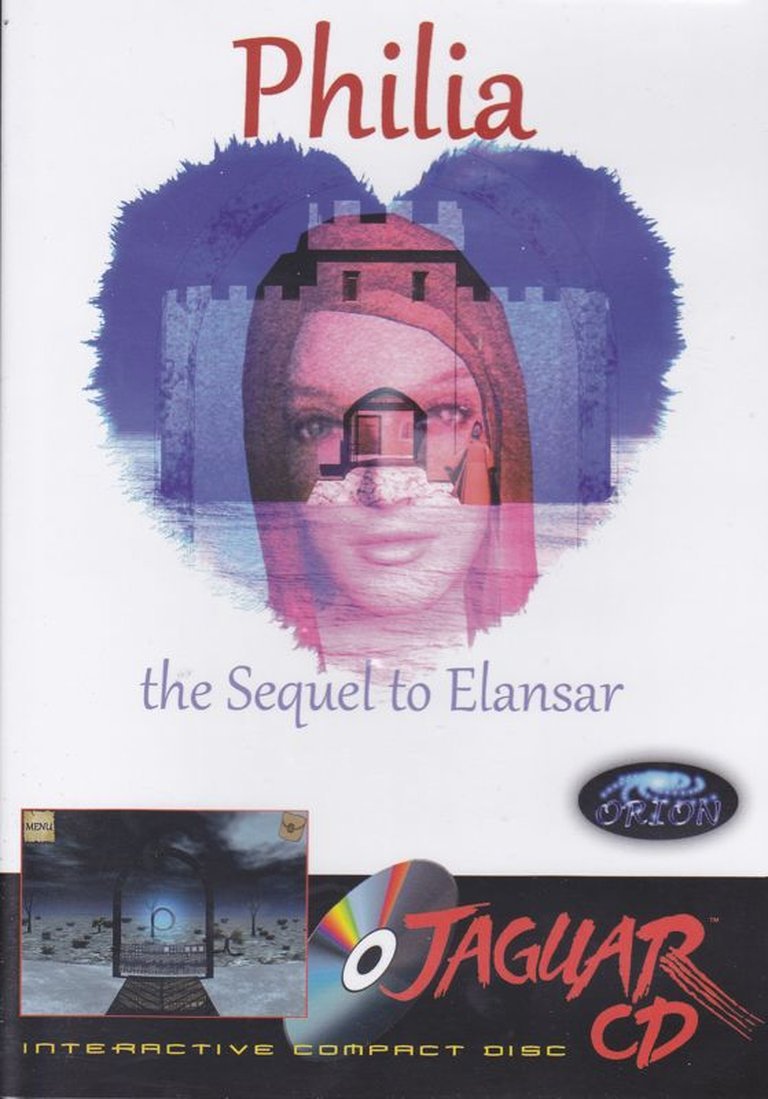
Philia: The Sequel to Elansar is a first-person point-and-click adventure game that serves as a follow-up to the puzzle exploration title Elansar. Players assume the role of Elina, a character tasked with navigating her subconscious to save her endangered husband across three distinct worlds. Drawing inspiration from the MYST series, the game challenges players with over 15 environmental puzzles while exploring atmospheric locations spanning ancient ruins to mystical landscapes. Originally developed for retro systems like the Atari Falcon and Jaguar CD, the game was later ported to modern platforms including Windows and Linux, featuring bilingual support in English and French.
Where to Buy Philia: The Sequel to Elansar
PC
Philia: The Sequel to Elansar Guides & Walkthroughs
Philia: The Sequel to Elansar — A Journey Through the Subconscious of Indie Ambition
Introduction
A decade after the release of Myst, the indie developer OrionSoft dared to resurrect the spirit of cerebral, environment-driven adventure games with 2014’s Philia: The Sequel to Elansar. Positioned as both a love letter to the Atari Jaguar’s cult library and a spiritual successor to their own Elansar, this passion project by Cédric and Audrey Bourse is a testament to the tenacity of niche retro development. Yet, beneath its myst-like veneer lies a complex narrative of creative ambition battling technological antiquity. This review argues that Philia is an earnest attempt to evolve classic adventure design, hampered by its technical constraints but compelling in its commitment to atmospheric storytelling.
Development History & Context
The OrionSoft Vision
Founded by Cédric Bourse, OrionSoft emerged as a torchbearer for legacy Atari systems in the 2010s, a period defined by indie auteurs reinvigorating dormant platforms. Philia began as an Atari Falcon 030 project in 2013 before expanding to the Jaguar CD, Dreamcast, and modern PCs—an audacious multi-platform feat for a studio essentially helmed by one developer. Bourse programmed the engine, designed the 3D environments, and co-wrote the script with Audrey Bourse, while outsourcing music to OpenGameArt contributor Alexandr Zhelanov. The game’s reliance on recycled assets (e.g., SketchUp’s “Grand Piano” and OpenGameArt’s “Cemetery Gate”) underscores indie pragmatism, but also reveals a tension between aspiration and resource limits.
Technological Constraints
Targeting the 1993-released Jaguar—a console notorious for its underpowered GPU and sparse software library—forced creative compromises. The Jaguar CD’s 4 MB RAM ceiling necessitated simplistic geometry and static pre-rendered backdrops, evoking Myst’s node-based exploration but lacking its FMV flourishes. Ports to PC, Linux, and Dreamcast in 2016 expanded accessibility but retained the Jaguar’s minimalist DNA, with players later noting compatibility headaches like DiscJuggler’s archaic burning requirements for physical copies.
The 2014 Landscape
Arriving amid the rise of indie darlings like Gone Home and The Vanishing of Ethan Carter, Philia stood out as an anachronism: a deliberate throwback to ’90s puzzle-box design rather than a narrative-first “walking simulator.” Its fragmented release—Jaguar first (2014), then Dreamcast (2015)—catered to retro collectors while struggling to find footing on Steam, where it launched alongside experimental titles like The Talos Principle.
Narrative & Thematic Deep Dive
Plot Structure
Philia casts players as Elina, protagonist of Elansar, now racing to save her husband from an unknown threat. The quest unfolds across three psychological realms within Elina’s subconscious, each themed around elemental archetypes (e.g., volcanic wastelands, glacial temples). Minimal dialogue—limited to journal fragments and environmental cues—pushes players to decipher backstory through symbolic puzzles, such as aligning constellations to unlock memories or manipulating hydraulic systems to metaphorically “unblock” trauma.
Characters as Psychological Constructs
Elina’s husband exists purely as a MacGuffin, his absence underscoring the game’s focus on interiority. Supporting figures—like the spectral “Guardian of the East Rocks”—serve as Jungian shadows reflecting Elina’s guilt over her Elansar choices. Audrey Bourse’s script leans into ambiguity: Is the husband’s peril real, or a manifestation of survivor’s guilt? The refusal to answer fuels philosophical ruminations on love as both salvation and obsession.
Themes of Submersion and Control
Puzzles often literalize emotional labor. In “Caves of Sorrow,” redirecting water through rusted pipes mirrors Elina’s attempt to channel grief; later, reassembling a shattered phonograph record becomes an act of reconstructing marital harmony. Yet, thematic coherence falters in the finale, where an abrupt shift to literal sci-fi (a spaceship puzzle) undermines the subconscious allegory.
Gameplay Mechanics & Systems
Core Loop and Puzzle Design
True to its Myst lineage, Philia is a first-person, point-and-click journey with inventory-free puzzles rooted in environmental observation. The “15+ puzzles” tout in marketing range from elegant (decoding musical notations to activate a piano-lock) to frustratingly opaque (a color-matching trial with no in-world logic). While some solutions reward lateral thinking—using a magnifying glass to burn a vine obstructing a path—others rely on moon-logic leaps, such as inputting arbitrary coordinates into a telescope.
Interface and Technical Execution
The original Jaguar controls, mapped to a gamepad or numpad, feel clunky compared to mouse-driven PC ports. Inventory management is nonexistent, streamlining interaction but limiting complexity. On Dreamcast, load times between nodes disrupt immersion, though the PC version’s 180 MB footprint ensures snappier transitions.
Replayability and Difficulty
With no branching paths or collectibles, Philia’s 4-6 hour runtime favors one-and-done playthroughs. However, its oblique puzzles—particularly a late-game circuit-board trial—encourage guide reliance, a flaw compounded by inconsistent hint systems. The lack of autosaves exacerbates frustration, especially when progression-blocking bugs arise (e.g., a notorious Jaguar CD crash during the final cutscene).
World-Building, Art & Sound
Visual Aesthetics
Philia’s pre-rendered backdrops evoke a liminal dreamscape: fog-drenched forests melt into cubist temples, while camera tilts in “Lake Land” create vertiginous unease. Yet, asset reuse is glaring—SketchUp’s “Female 02” model recurs as a statue, undermining bespoke artistry—and low-resolution textures blur details on modern displays. The Jaguar version’s 256-color palette extrudes charm via dithering, but PC ports lack remastered visuals, feeling dated even for 2014.
Atmosphere Through Sound
Zhelanov’s score is the game’s unsung hero. “Mystical Theme” layers dissonant chimes with subterranean drones, evoking Zdzisław Beksiński’s surrealist paintings, while “Caves of Sorrow” uses water droplets and distant whispers to amplify isolation. Sound design shines in puzzles, too: adjusting valve pressures until steam hisses harmoniously becomes ASMR catharsis.
Environmental Storytelling
Decaying architecture—collapsed bridges, overgrown altars—hints at a civilization that mirrored Elina’s fractured psyche. Subtle cues, like hieroglyphs depicting a couple torn between stars and abyss, deepen lore without exposition. Unfortunately, rushed zones (e.g., a recycled “Stronghold” asset from OpenGameArt) break immersion, reminding players of budgetary seams.
Reception & Legacy
Launch Reception
Critically, Philia faced silence. No mainstream outlets reviewed it, while niche retro magazines like Atari Gamer praised its “ambition” but lambasted “exasperating” puzzles. Steam user reviews (averaging Mixed) mirror this: “Atmospheric but unfair,” notes one player; another cites “Jaguar nostalgia clouds better judgment.” The itch.io release fared better, earning a 3.7/5 from collectors enamored by its physical Dreamcast edition.
Long-Term Influence
Though commercially obscure, Philia influenced later indie adventures. Its dream-logic puzzles resonate in Obduction (2016), while the focus on psychological spaces prefigures The Unfinished Swan (2012). For preservationists, it’s a milestone: one of only seven commercial Jaguar CD titles ever released, and a case study in fan-driven platform support (see Jaguar GD cart compatibility patches).
The OrionSoft Legacy
Cédric Bourse’s subsequent projects, like Escape 2042, leaned into hyper-stylized action, abandoning Philia’s contemplative tone. Yet, the game remains a cult marker—a relic of how indie devs bridged retro hardware’s limitations with avant-garde storytelling.
Conclusion
Philia: The Sequel to Elansar is an artifact of contradictions: a game straining against the Jaguar’s confines but defined by them; a narrative rich in subtext yet undermined by arcane design. For Myst acolytes and retro archivists, its moody introspection and Zhelanov’s soundscapes warrant a pilgrimage. Yet, as a holistic experience, it falters under the weight of its ambition—a poignant, uneven odyssey emblematic of solo development’s perils and triumphs. In the canon of post-Myst adventures, Philia is neither revolution nor relic, but a fascinating footnote: a subconscious unearthed, for better and worse.