
- Release Year: 2016
- Platforms: Macintosh, Windows
- Publisher: Hyper Hippo Productions Ltd.
- Developer: Hyper Hippo Productions Ltd.
- Genre: Puzzle
- Perspective: Top-down
- Game Mode: Single-player
- Gameplay: Word construction
- Average Score: 80/100
Description
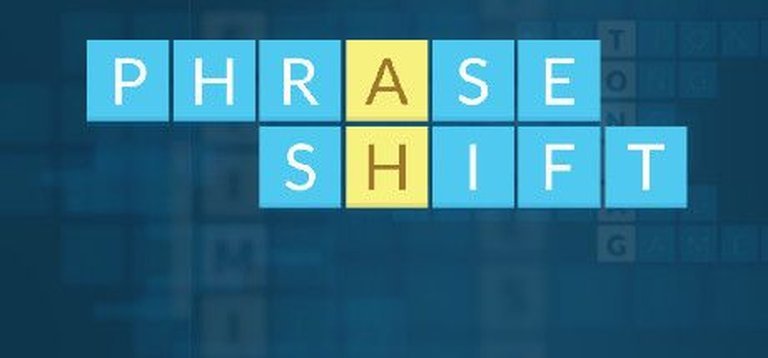
Phrase Shift is a puzzle game where players manipulate words within definitions to reveal hidden answers, starting with simple clues like ‘FOUR MINUS THREE’ and progressing to over 600 challenging riddles across various categories. Developed by Hyper Hippo Productions Ltd., it features top-down visuals and fixed-screen gameplay, requiring players to creatively rearrange words to solve linguistic puzzles that test both vocabulary and logical thinking.
Where to Buy Phrase Shift
Phrase Shift Guides & Walkthroughs
Phrase Shift Reviews & Reception
pixelpacas.com (80/100): I’ve enjoyed my time slowly working through the sections one by one.
Phrase Shift: Review
Introduction
In the ever-expanding universe of digital puzzle games, few titles manage to distill the essence of linguistic play into such an elegant and ingenious format as Phrase Shift. Released in late 2016 by Canadian developer Hyper Hippo Productions, this unassuming word puzzle game has quietly secured its place as a masterclass in minimalist design and intellectual satisfaction. At first glance, it appears deceptively simple—a vertical column of intersecting words and a clue—but its core mechanic of shifting horizontal words to reveal hidden answers creates a uniquely compelling loop of deduction and discovery. This review argues that Phrase Shift transcends its casual puzzle genre trappings through its brilliant execution of a novel mechanic, its meticulous structuring of difficulty, and its ability to transform the very fabric of language into an interactive playground. In an era saturated with derivative puzzle games, Phrase Shift stands as a testament to how a single, elegant idea can yield endless intellectual gratification.
Development History & Context
Phrase Shift emerged from the creative crucible of Hyper Hippo Productions, a Canadian studio known for its work on titles like AdVenture Capitalist and Elastrix. Founded in 2009, Hyper Hippo carved a niche in the casual and mobile gaming market, often focusing on accessible, mechanics-driven experiences. Phrase Shift represented a deliberate pivot toward a more cerebral audience, spearheaded by director Chris Hendricks. The game’s development occurred against the backdrop of 2016, a period when puzzle games on PC and mobile were thriving yet often derivative. The market was saturated with variations of match-3, Sudoku, and word searches, making Phrase Shift’s core concept feel refreshingly original.
Technologically, the game was built on Unity, a versatile engine that allowed for clean, scalable visuals across Windows and macOS. This choice enabled Hyper Hippo to implement the game’s signature “fixed/flip-screen” top-down perspective efficiently. The studio’s vision was clear: to create a puzzle game that relied not on reflexes or time pressure, but on pure linguistic intuition. As the official Steam description proudly proclaims, it was “a completely original word puzzle,” a claim bolstered by its unique mechanic of solving clues by repositioning words within them—a far cry from the passive consumption of traditional crosswords or word searches. This focus on lateral thinking over brute-force memorization aligned with a growing demand for “brain-training” games that offered genuine mental stimulation without overwhelming complexity.
Narrative & Thematic Deep Dive
While Phrase Shift lacks a conventional narrative or characters, its thematic depth emerges through the very act of puzzle-solving. Each puzzle is a self-contained micro-story, a linguistic riddle where the player becomes the detective. The clues—”FOUR MINUS THREE,” “A TYPE OF FRUIT THAT GROWS IN BUNCHES,” “SHAKESPEARE’S MOST FAMOUS TRAGEDY”—are not mere definitions but invitations into curated domains of knowledge. The game’s 600 puzzles span categories like Food, Science, Animals, and Movies, creating a mosaic of human understanding. This thematic breadth transforms the game into an intellectual voyage, touching on trivia, etymology, and cultural literacy.
The underlying theme is the malleability of language itself. By shifting words, players deconstruct and reconstruct phrases, witnessing how rearranging letters and syntax alters meaning. This mirrors the game’s title, “Phrase Shift,” which suggests that truth and answers are not static but contextual. The absence of a traditional narrative is compensated by the emergent story of the player’s growing competence—each solved puzzle a chapter in a personal journey of enlightenment. The game’s dialogue, limited to concise clues and celebratory text upon completion, emphasizes purity of thought over exposition. It is a silent tribute to the power of words, where the “narrative” is the player’s own intellectual triumph.
Gameplay Mechanics & Systems
Phrase Shift’s genius lies in its core mechanic: players are presented with a vertical column of intersecting letters and a horizontal row of words. The objective is to shift each horizontal word left or right until the letters aligning with the vertical column spell out a word that matches the clue. For instance, the clue “FOUR MINUS THREE” yields “ONE” when the words are repositioned correctly. This simple premise evolves into a multi-layered system of deduction.
- Puzzle Structure: Puzzles are grouped into 20-batch sets (e.g., “Food,” “Science”), with each set comprising 20 unique challenges. This structure provides a satisfying rhythm of increasing difficulty. Early puzzles use common words and straightforward clues, while later ones demand niche knowledge (e.g., “A COLORLESS, ODORLESS, AND TASTELESS GAS”), creating a natural progression from accessible to expert.
- Innovation: The mechanic is a hybrid of word searches and crosswords, but with a dynamic twist. Unlike traditional puzzles where answers are static, here the solution is latent within the puzzle itself, demanding active participation. This transforms passive solving into an act of creation.
- UI & Feedback: The interface is ruthlessly minimalist. Words can be dragged horizontally, with snap-to-grid precision ensuring clarity. Success triggers subtle animations and celebratory text, reinforcing achievement without fanfare.
- Flaws: The game’s reliance on English vocabulary can exclude non-native speakers, and some clues feel culturally narrow (e.g., over-reliance on American pop culture in the “Movies” category). Additionally, the absence of hints or a “skip” option may frustrate players on particularly obtuse puzzles.
Despite these minor quibbles, the systems are impeccably tuned, creating a loop where each solved puzzle unlocks the next, fueled by the dopamine rush of “aha!” moments.
World-Building, Art & Sound
Phrase Shift’s “world” is abstract—a grid of letters and words—yet its design fosters intense focus. The visual style, described as “fixed/flip-screen,” employs a clean, monochromatic palette with sharp, high-contrast typography. The top-down perspective ensures clarity, while subtle gridlines and letter-spacing guide the eye without clutter. Each puzzle occupies a self-contained space, evoking the feel of a physical puzzle board.
This austerity serves the gameplay: it minimizes distractions and immerses the player in the letters themselves. The art direction prioritizes functionality over flair, but the result is a timeless elegance. Sound design is equally restrained—ambient clicks for word shifts, soft chimes for completion—creating a meditative atmosphere. The absence of intrusive music or effects underscores the game’s intellectual purity, turning the player’s mind into the central “environment.” Together, these elements craft an intimate, contemplative space where language is both the medium and the landscape.
Reception & Legacy
Upon its November 2016 release, Phrase Shift garnered a warm reception, particularly on Steam. It currently holds an “Overwhelmingly Positive” user rating (87% of 49 reviews at launch, with later aggregators like Steambase scoring it 88/100). Players praised its originality and addictive quality, with one reviewer from Pixel Pacas calling it “a perfect game to come to after a long day at work.” Critics highlighted its clever mechanic and accessibility, though some noted its niche appeal. Kotaku and other outlets covered its unique premise, cementing its status as a standout indie puzzle title.
Commercially, the game found success as a budget title ($2.99 on Steam) and was bundled with Hyper Hippo’s Elastrix, expanding its reach. Its legacy is less about industry influence and more about its enduring cult following. It became a go-to recommendation for word puzzle enthusiasts, often compared favorably to classics like Boggle for its cerebral satisfaction. Over time, Phrase Shift has been preserved in gaming databases like MobyGames and LaunchBox, recognized for its contribution to the puzzle genre’s evolution. It remains a testament to how a simple, well-executed idea can resonate deeply with players seeking mental engagement.
Conclusion
Phrase Shift is a masterwork of minimalist design, a game that transforms the mechanics of language into a compelling, meditative experience. Hyper Hippo Productions crafted a title where elegance and innovation coexist, offering 600 meticulously designed puzzles that challenge and delight. While its reliance on English and cultural specificity may limit its universal appeal, these are minor blemishes on an otherwise flawless execution. The game’s legacy lies in its ability to distill the joy of discovery into pure, unadulterated form. It stands as a quiet giant in the puzzle genre—a reminder that the most profound experiences often come from the simplest ideas. For anyone seeking a mental workout that feels less like work and more like revelation, Phrase Shift is not just recommended; it is essential. It is, quite simply, a brilliant shift in how we play with words.