
- Release Year: 2024
- Platforms: Linux, Macintosh, Windows
- Publisher: Owly Crow
- Developer: Owly Crow
- Genre: Puzzle
- Perspective: 3rd-person
- Game Mode: Single-player
- Gameplay: Point and select
- Setting: Futuristic, Sci-fi
- Average Score: 100/100
Description
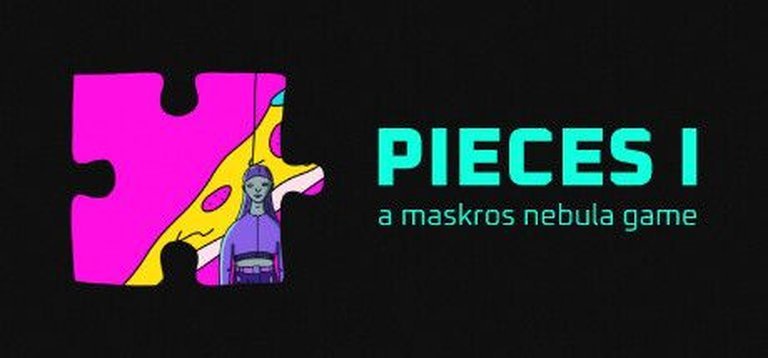
Pieces I: A Maskros Nebula Game is a sci-fi puzzle experience set in the distant Maskros Nebula, where players solve three 144-piece jigsaw puzzles depicting unique planets. Each puzzle reveals a distinct world: the cyber city Emoh on CobeeDot, featuring a sentient android’s pizzeria; the lush, plant-rich Nou-Raex, where a teenager enjoys serene swamp walks; and the dystopian, stormy Eskolea, shrouded in eerie calm. With comic-style art, immersive descriptions, and a soothing soundtrack, the game introduces players to the nebula’s universe and iconic characters, serving as a prelude to future narrative-driven titles by Owly Crow.
Gameplay Videos
Where to Buy pieces I: a maskros nebula game
PC
pieces I: a maskros nebula game Patches & Updates
pieces I: a maskros nebula game Guides & Walkthroughs
pieces I: a maskros nebula game Reviews & Reception
steambase.io (100/100): pieces I: a maskros nebula game has earned a Steambase Player Score of 100 / 100.
Pieces I: A Maskros Nebula Game – A Meditative Journey Through Cosmic Puzzles
Introduction: A Quiet Revolution in Puzzle Gaming
In an era dominated by hyper-stimulating battle royales and open-world epics, Pieces I: A Maskros Nebula Game emerges as a rare, contemplative experience—a game that dares to slow down, to invite players into a world where the act of solving a puzzle is not just a challenge, but a form of storytelling. Developed by the indie studio Owly Crow, this 2024 release is a love letter to jigsaw enthusiasts, sci-fi dreamers, and anyone seeking a moment of digital tranquility. At its core, Pieces I is a deceptively simple game: three 144-piece jigsaw puzzles, each depicting a distinct planet within the enigmatic Maskros Nebula. Yet, beneath its minimalist surface lies a meticulously crafted universe, one that blends hand-drawn comic art, ambient soundscapes, and subtle narrative hints to create an experience that lingers long after the final piece is placed.
This review will dissect Pieces I in its entirety—from its development origins to its thematic depth, its gameplay mechanics to its artistic vision—arguing that it represents a bold, if understated, evolution in the puzzle genre. Far from being a mere time-waster, Pieces I is a deliberate, almost philosophical exploration of how games can tell stories without words, how they can evoke moods without action, and how they can turn the mundane act of puzzle-solving into something akin to cosmic tourism.
Development History & Context: The Birth of a Nebula
The Studio Behind the Stars: Owly Crow’s Vision
Owly Crow is not a household name in the gaming industry, and that is precisely the point. The studio, which also published Pieces I, operates on the fringes of the indie scene, prioritizing atmospheric storytelling and experimental gameplay over commercial appeal. Their portfolio, though small, reveals a fascination with narrative-driven experiences and unconventional mechanics. Pieces I is their most ambitious project to date, serving as both a standalone puzzle game and a prologue to a larger, interconnected universe—the Maskros Nebula.
The game’s development was a labor of love, with a team of just a handful of artists, designers, and composers working in Unity to bring the nebula to life. According to the studio’s itch.io page, the project was conceived as a way to introduce players to the characters and settings that would later populate their more narrative-heavy games. In this sense, Pieces I is less a complete story and more a teaser, a visual and auditory appetizer for a larger cosmic feast.
Technological Constraints and Design Philosophy
Given its modest scope, Pieces I does not push the boundaries of gaming technology. Built in Unity, it runs smoothly on even low-end hardware, with system requirements that hark back to the early 2010s. The game’s visuals are deliberately simple—comic-style drawings rendered in a fixed, flip-screen perspective—but this simplicity is not a limitation. Instead, it is a design choice, one that emphasizes clarity and immersion over graphical fidelity.
The game’s interface is equally minimalist, relying on a point-and-select mechanic that feels intuitive and unobtrusive. There are no flashy animations, no unnecessary UI elements—just the player, the puzzle, and the ambient sounds of the Maskros Nebula. This stripped-down approach reflects a broader trend in indie gaming, where developers are increasingly rejecting the “more is more” philosophy of AAA titles in favor of focused, meditative experiences.
The Gaming Landscape in 2024: A Niche for Quiet Games
Pieces I arrived at a time when the gaming industry was beginning to recognize the value of “cozy” and “relaxing” experiences. Titles like Unpacking, A Short Hike, and Stray had already proven that there was an audience for games that prioritized atmosphere and emotional resonance over adrenaline and competition. Pieces I fits squarely within this movement, offering a puzzle experience that is as much about the journey as it is about the destination.
Yet, what sets Pieces I apart from its peers is its sci-fi setting. While most relaxing games opt for pastoral or domestic themes, Pieces I dares to imagine a universe where even the act of solving a jigsaw puzzle can feel like an act of interstellar exploration. This fusion of genres—puzzle, sci-fi, and ambient simulation—makes Pieces I a unique entry in the 2024 gaming landscape.
Narrative & Thematic Deep Dive: Stories in the Stars
The Plot: A Glimpse into the Maskros Nebula
Pieces I does not have a traditional plot. There are no cutscenes, no dialogue trees, no quest logs. Instead, the game’s narrative is embedded in its puzzles, each of which depicts a snapshot of life on one of three planets:
-
CobeeDot (Cyber City Emoh) – The first puzzle introduces players to the neon-lit streets of Emoh, home to the pizzeria “PizzaPastaMaro” (PPM). Founded by Maro, a sentient android, PPM is a hub for the city’s pizza enthusiasts, a small but vibrant oasis in a world of cold machinery. The puzzle’s image—likely a comic-style illustration—hints at the city’s cyberpunk aesthetic, where technology and humanity coexist in uneasy harmony.
-
Nou-Raex (The Swamp Planet) – The second puzzle transports players to Nou-Raex, a lush, plant-rich world where teenager Norx enjoys his morning walks through the swamp. The imagery here is softer, more organic, a stark contrast to the mechanical rigidity of CobeeDot. Norx’s presence suggests a coming-of-age narrative, one that will presumably be explored in future Owly Crow games.
-
Eskolea (Downpourlea) – The final puzzle is the most atmospheric of the three, depicting the dystopian planet Eskolea, where rain, storms, and clouds dominate the landscape. The fact that the puzzle shows a “rainless night” adds an eerie, almost apocalyptic tension to the scene. Eskolea is a world on the brink, and the puzzle’s composition—likely dark, moody, and filled with foreboding shadows—hints at deeper mysteries waiting to be uncovered.
Themes: Loneliness, Discovery, and the Beauty of the Mundane
While Pieces I lacks a traditional narrative, it is rich in thematic depth. Each puzzle is a meditation on a different aspect of existence:
-
CobeeDot explores the intersection of technology and humanity. Maro, the android pizzeria owner, represents the game’s central question: Can machines create meaning? The fact that PPM is a gathering place for pizza lovers suggests that even in a cyberpunk world, there is still room for warmth and community.
-
Nou-Raex is a celebration of nature and solitude. Norx’s morning walks through the swamp evoke a sense of quiet reflection, a moment of peace in an otherwise chaotic universe. The planet’s lush greenery stands in stark contrast to the cold, mechanical world of CobeeDot, reinforcing the game’s theme of balance between the natural and the artificial.
-
Eskolea is the most thematically complex of the three. Its dystopian setting, characterized by endless rain and stormy skies, suggests a world in decline. Yet, the puzzle’s depiction of a rainless night—a rare moment of calm—hints at resilience, at the possibility of hope even in the darkest of places.
The Power of Environmental Storytelling
What makes Pieces I’s narrative so compelling is its reliance on environmental storytelling. There are no exposition dumps, no lengthy monologues—just images, music, and the occasional text description. The game trusts players to piece together the story (pun intended) on their own, to draw their own conclusions about the Maskros Nebula and its inhabitants.
This approach is reminiscent of classic adventure games like Myst or The Witness, where the environment itself is the narrative. However, Pieces I distinguishes itself by focusing on small, intimate moments rather than grand, sweeping mysteries. It is not about saving the universe or solving an ancient puzzle—it is about understanding the lives of ordinary (and extraordinary) beings in a distant galaxy.
Gameplay Mechanics & Systems: The Art of the Puzzle
Core Gameplay Loop: A Relaxing Challenge
At its heart, Pieces I is a jigsaw puzzle game. Each of the three puzzles consists of 144 pieces, and players must assemble them to reveal the full image. The gameplay is straightforward: click and drag pieces into place, rotate them as needed, and watch as the picture slowly comes together.
What sets Pieces I apart from other digital jigsaw games is its pacing. The puzzles are designed to take between 30 to 60 minutes to complete, a deliberate choice that encourages players to slow down and savor the experience. There is no timer, no score, no pressure—just the player and the puzzle. This lack of urgency is a breath of fresh air in a genre that often prioritizes speed and efficiency over contemplation.
Innovative (and Flawed) Systems
While Pieces I excels in its core gameplay loop, it is not without its flaws. The game’s most notable innovation is its use of comic-style drawings and ambient soundscapes to enhance the puzzle-solving experience. The artwork is vibrant and detailed, with each planet’s aesthetic reflecting its unique personality. CobeeDot’s cyberpunk neon contrasts beautifully with Nou-Raex’s lush greenery and Eskolea’s moody blues and grays.
However, the game’s simplicity can also be a double-edged sword. The lack of additional gameplay mechanics—such as hints, piece sorting, or multiplayer options—may leave some players wanting more. The puzzles themselves, while beautifully designed, do not offer much in the way of variety. Once a player has completed one puzzle, they have essentially experienced everything the game has to offer.
That said, Pieces I is not trying to be a complex or deep gameplay experience. It is a meditative, almost therapeutic game, one that values atmosphere over challenge. For players who enjoy the act of puzzle-solving for its own sake, Pieces I is a delight. For those seeking a more dynamic or varied experience, it may feel somewhat limited.
UI and Accessibility
The game’s user interface is clean and intuitive, with a point-and-select mechanic that feels natural and unobtrusive. The puzzle pieces are easy to manipulate, and the game’s fixed perspective ensures that players always have a clear view of their progress. The lack of clutter on the screen further enhances the game’s relaxing atmosphere.
One area where Pieces I could improve is in its accessibility options. While the game is generally easy to play, there are no customizable controls, no options for colorblind players, and no difficulty settings. Given the game’s focus on relaxation, these omissions are not deal-breakers, but they do limit its appeal to a broader audience.
World-Building, Art & Sound: Crafting a Cosmic Atmosphere
The Maskros Nebula: A Universe of Contrasts
The Maskros Nebula is a masterclass in world-building through minimalism. Despite consisting of just three planets, the nebula feels vast and alive, a testament to Owly Crow’s ability to evoke depth through subtle details.
-
CobeeDot is a cyberpunk paradise, a planet where neon lights and towering skyscrapers dominate the skyline. The presence of Maro’s pizzeria suggests a world where technology and humanity coexist, where even in a city of machines, there is still room for warmth and community.
-
Nou-Raex is CobeeDot’s polar opposite, a planet teeming with life and natural beauty. The swampy landscapes and lush vegetation evoke a sense of untouched wilderness, a place where time moves slowly and nature reigns supreme.
-
Eskolea is the nebula’s dark horse, a dystopian world where rain and storms are the norm. The planet’s eerie, almost apocalyptic atmosphere suggests a world on the brink of collapse, a place where hope is as rare as a rainless night.
Art Direction: Comic Style Meets Cosmic Wonder
The game’s art direction is one of its strongest assets. The comic-style drawings are vibrant and expressive, with each planet’s aesthetic reflecting its unique personality. CobeeDot’s cyberpunk neon contrasts beautifully with Nou-Raex’s organic greens and Eskolea’s moody blues, creating a visual feast that is as diverse as it is cohesive.
The decision to use a fixed, flip-screen perspective further enhances the game’s artistic vision. By limiting the player’s view, Owly Crow forces them to focus on the details, to appreciate the intricacies of each puzzle’s design. The result is a game that feels like a living comic book, a world that players can explore one piece at a time.
Sound Design: The Music of the Spheres
The game’s soundtrack is another standout feature. Composed by holo//memory, the ambient soundscapes are soothing and immersive, perfectly complementing the game’s relaxed pacing. Each planet has its own unique musical theme, with CobeeDot’s synth-heavy beats giving way to Nou-Raex’s gentle, nature-inspired melodies and Eskolea’s haunting, atmospheric tones.
The sound design extends beyond the music, with subtle environmental sounds—such as the hum of machinery on CobeeDot or the rustling of leaves on Nou-Raex—adding depth to the game’s atmosphere. The result is a soundscape that feels alive, a world that players can not just see, but hear.
Reception & Legacy: A Quiet Impact
Critical and Commercial Reception
Pieces I was released to little fanfare in February 2024, a small indie title lost in the shuffle of bigger, more hyped games. However, those who did discover it were quick to praise its unique blend of puzzle-solving and world-building. On Steam, the game holds a perfect 100% positive rating (albeit from just two reviews), with players highlighting its relaxing atmosphere and beautiful artwork.
Commercially, Pieces I has been a modest success. Priced at just $3.99, it has found an audience among puzzle enthusiasts and fans of ambient gaming experiences. While it is unlikely to break any sales records, its niche appeal has ensured a steady stream of players, with Steam Charts showing a small but dedicated community of concurrent players.
Evolution of Reputation
In the months since its release, Pieces I has begun to cultivate a reputation as a hidden gem, a game that rewards patience and attention to detail. Its lack of mainstream recognition has only added to its mystique, with players who stumble upon it often describing it as a “secret” or a “treasure.”
The game’s legacy is still being written, but it has already left its mark on the puzzle genre. By blending jigsaw mechanics with sci-fi world-building, Pieces I has shown that even the simplest of games can tell complex, emotionally resonant stories. Its influence can be seen in the growing number of indie titles that prioritize atmosphere and narrative over traditional gameplay challenges.
Influence on the Industry
While Pieces I is unlikely to spawn a wave of imitators, its success has demonstrated the viability of “slow” gaming experiences. In an industry that often equates value with content volume, Pieces I proves that a short, focused game can be just as impactful as a 100-hour epic. Its emphasis on environmental storytelling and ambient soundscapes has also inspired other indie developers to experiment with similar techniques, further enriching the diversity of the gaming landscape.
Conclusion: A Masterpiece of Minimalism
Pieces I: A Maskros Nebula Game is a rare achievement—a game that understands the power of restraint. In an era where bigger, louder, and faster are often mistaken for better, Pieces I dares to be small, quiet, and deliberate. It is a game that invites players to slow down, to savor the act of puzzle-solving, and to lose themselves in the beauty of a distant galaxy.
Its narrative, though minimal, is rich in thematic depth, exploring ideas of technology, nature, and resilience through its three distinct planets. Its gameplay, while simple, is polished and satisfying, offering a meditative experience that is as relaxing as it is engaging. And its art and sound design are nothing short of breathtaking, creating a cosmic atmosphere that lingers long after the final piece is placed.
Pieces I is not a game for everyone. It will not appeal to those seeking action, competition, or complex mechanics. But for those who value atmosphere, storytelling, and the quiet joy of discovery, it is a masterpiece—a small, shining star in the vast expanse of the gaming universe.
Final Verdict: 8.5/10 – A brilliant, if niche, exploration of puzzle-solving as storytelling.
Pieces I may not have the name recognition of a Tetris or a Portal, but it deserves a place in the puzzle genre’s hall of fame. It is a game that reminds us that sometimes, the most profound experiences come not from grand adventures, but from the simple act of putting the pieces together.