
- Release Year: 1998
- Platforms: Windows 16-bit, Windows
- Publisher: Arxel Guild S.A., Infogrames Multimedia SA, Selectsoft Publishing, Wanadoo Edition
- Developer: Anne Carrière Multimedia, Arxel Tribe d.o.o.
- Genre: Adventure, Educational
- Perspective: 1st-person
- Game Mode: Single-player
- Gameplay: Point-and-click
- Setting: Medieval Europe, Middle East
- Average Score: 62/100
Description
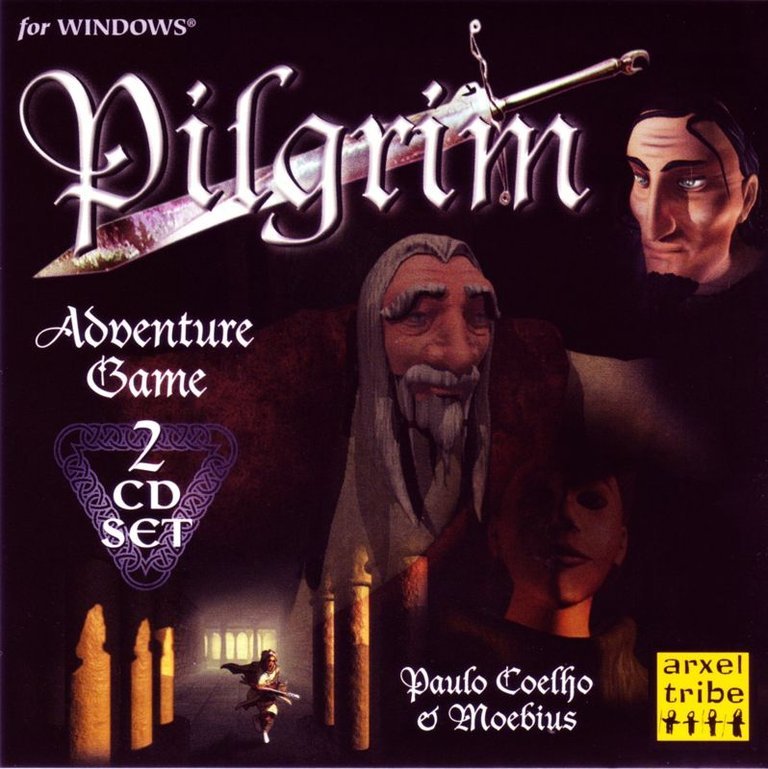
Pilgrim: Faith as a Weapon is a first-person point-and-click adventure set in Southern France in 1208, loosely based on Paulo Coelho’s novel ‘The Pilgrimage’. Players assume the role of Simon Lancroix, who embarks on a perilous quest to retrieve a mysterious manuscript for his dying father, encountering angels, demons, and diverse characters across medieval towns, gothic churches, and fantastical environments. The game features an unconventional interface with interactive inventory items, conversation-driven puzzles, environmental challenges, and an in-game encyclopedia documenting historical context. Moral choices and creative problem-solving shape Simon’s journey through varied landscapes including marketplaces, ruins, and supernatural realms.
Gameplay Videos
Pilgrim: Faith as a Weapon Free Download
Pilgrim: Faith as a Weapon Reviews & Reception
mobygames.com (64/100): Arxel Tribe’s first creation .. provocative and entertaining
mobygames.com (60/100): Arxel Tribe’s first creation .. provocative and entertaining
Pilgrim: Faith as a Weapon – A Meditative Journey Through Medieval Mysticism
Introduction
In the pantheon of late-’90s adventure games, Pilgrim: Faith as a Weapon stands as an enigmatic outlier—a fusion of historical drama, spiritual allegory, and flawed ambition. Released in 1998 by Slovenian-French studio Arxel Tribe, the game dared to adapt Paulo Coelho’s novel The Pilgrimage into an interactive experience that prioritized philosophical introspection over action. While its clunky interface and technical limitations drew criticism, Pilgrim remains a cult classic, celebrated for its haunting atmosphere and unapologetic intellectualism. This review delves into its creation, themes, and legacy, arguing that Pilgrim is a fascinating relic of a bygone era—a game that challenged players to think, not just click.
Development History & Context
The Birth of Arxel Tribe
Arxel Tribe began in 1990 as a Slovenian architectural visualization studio, crafting 3D models for buildings. By 1993, French entrepreneurs Stephen Carrière and Guillaume de Fondaumière (later of Heavy Rain fame) joined, steering the company toward multimedia. Their pivot to gaming was ambitious: Pilgrim marked their debut, a collaboration with Coelho and legendary comic artist Jean “Mœbius” Giraud.
A Vision of “Author Games”
Arxel Tribe sought to create “author games”—narrative-driven experiences blending literature, art, and interactivity. Coelho’s involvement ensured a focus on spiritual themes, while Mœbius’s concept art (though poorly translated into 3D) lent a surreal, mythic quality. The studio’s inexperience showed; Pilgrim’s budget was tight, and its engine, built for pre-rendered slideshows, struggled with the era’s technological constraints.
The 1998 Gaming Landscape
Released alongside genre giants like Grim Fandango and The Longest Journey, Pilgrim faced stiff competition. Its static, Myst-like navigation and educational tone clashed with the trend toward cinematic storytelling. Yet, its historical depth and moral puzzles carved a niche among patient players.
Narrative & Thematic Deep Dive
A Quest for Meaning
Set in 1208 France during the Albigensian Crusade, Pilgrim follows Simon de Lancroix, a young man tasked by his dying father to deliver a secret manuscript—possibly the lost Gospel of John—to the mystic Petrus. What begins as a straightforward fetch quest evolves into a metaphysical odyssey, pitting Simon against inquisitors, demons, and his own doubts.
Characters as Archetypes
The cast embodies Coelho’s philosophical ideals:
– Petrus: A mentor figure teaching Simon to embrace “The Tradition,” a gnostic path to enlightenment.
– Hades: A demonic knight representing fear and dogma, voiced with comically exaggerated menace.
– Diego d’Osma: A conflicted inquisitor, blurring lines between villain and ally.
Themes of Faith and Freedom
The game critiques institutional religion, framing the Cathar heresy as a search for personal truth. Simon’s journey mirrors Coelho’s own spiritual pilgrimage, emphasizing self-discovery over doctrine. Late-game puzzles literalize this—players answer questions about compassion and love, culminating in a chess match against Death itself.
Gameplay Mechanics & Systems
A Clunky yet Inventive Interface
Pilgrim uses a three-panel inventory:
– Bag: Carry items like keys and scrolls.
– People/Items: Discuss topics by clicking portraits (e.g., “manuscript” or “Petrus”).
While innovative, the system felt unintuitive; characters froze mid-animation, and pixel-hunting was frequent.
Puzzles as Moral Lessons
Puzzles blend traditional item-use challenges with ethical choices:
– Help a ghost reconcile with her unjust executioners.
– Decide whether to bribe a beggar or share food.
Yet, linear design often negates player agency—there’s only one “correct” path.
The Educational Edge
An in-game encyclopedia details medieval history, from Cathar beliefs to Gothic architecture. While dry, it contextualizes the setting, though its mandatory use in the final “exam” frustrated many.
World-Building, Art & Sound
Mœbius’s Unrealized Vision
Mœbius’s concept art envisioned a dreamlike Middle Ages, but the 3D models—plasticine humans with dead eyes—fell short. Environments fared better: shadowy churches and sun-baked villages evoke a tangible, if sterile, atmosphere.
A Symphony of Contradictions
The soundtrack juxtaposes classical pieces (Mahler’s Symphony No. 1, Albéniz’s Asturias) with original Gregorian chants. While haunting, looping tracks often clashed with voice acting—a mix of earnest deliveries and cringe-worthy accents.
Reception & Legacy
Mixed Reviews at Launch
Critics praised its ambition but panned its execution:
– Just Adventure hailed it as “graphic interactive fiction” (100/100).
– GameStar derided its “obsolete” tech (58/100).
Sales were modest, though Infogrames moved 40,000 copies in France alone.
Cult Status and Influence
Pilgrim spawned a loosely connected trilogy (The Legend of the Prophet and the Assassin, The Secrets of Alamut) and cemented Arxel Tribe’s reputation for “thinking man’s” adventures. Modern critics, like Hardcore Gaming 101, reappraise it as a flawed gem—a precursor to Outer Wilds’ contemplative ethos.
Conclusion
Pilgrim: Faith as a Weapon is a paradox: a game burdened by its era’s limitations yet elevated by its intellectual audacity. Its clunky interface and uneven voice acting deter casual players, but its philosophical depth and historical richness reward the persistent. More meditation than game, Pilgrim remains a testament to the late ’90s’ experimental spirit—a time when developers dared to ask players not just what to do, but why. For historians and adventure devotees, it’s a pilgrimage worth taking.
Final Verdict: A flawed masterpiece, best enjoyed by those willing to forgive its sins for the sake of its soul.