
- Release Year: 1996
- Platforms: DOS, Windows
- Publisher: E.D.V. Publishing
- Genre: Compilation
- Game Mode: Single-player
- Gameplay: Pinball
- Average Score: 86/100
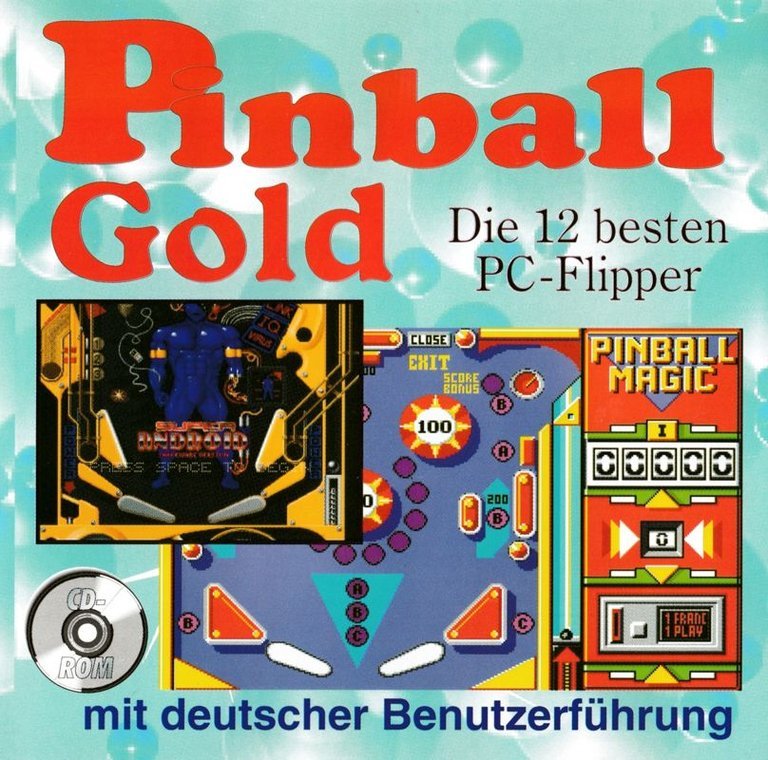
Description
Pinball Gold is a shareware compilation released in 1996, gathering a total of 12 previously released pinball games — with the first 10 available for DOS and the final two designed for Windows — into a single collection. It features a variety of themed tables from titles such as Epic Pinball, Pinball Dreams, Pinball Fantasies, Silverball, and others, showcasing diverse gameplay styles and retro pinball mechanics. Serving as a nostalgic celebration of early digital pinball, the compilation preserves influential tables from pioneering developers in the genre, offering players a broad range of classic arcade experiences on PC platforms.
Gameplay Videos
Where to Buy Pinball Gold
PC
Pinball Gold Free Download
Mods
Reviews & Reception
mobygames.com (72/100): The Pinball Gold Pack collects all 20 tables from the first five pinball compilations by 21st Century Entertainment onto one CD.
myabandonware.com (100/100): 5/5 – 1 vote
Pinball Gold: A Comprehensive Review of a Digital Pinball Revolution
Introduction: The Rise of the Pinball Empire in the Digital Age
“Roll a silver ball across the playfield, through the kickers, and up the ramps—you’re not playing a game, you’re commanding a mechanical symphony.”
In the mid-1990s, as the world sat on the brink of 3D polygonal explosions and the pixelated grunts of Doom dominated gaming discourse, a quieter revolution was underway—one played not with guns, but with flippers. Among the most ambitious and culturally significant entries in the digital pinball canon arrived in 1996: Pinball Gold, a compilation that wasn’t merely a collection of tables, but a time capsule of an entire era’s experimentation, innovation, and nostalgia.
At its core, Pinball Gold is a shareware compilation of 12 previously standalone pinball titles: Epic Pinball, Silverball, Pinball Fantasies, Pinball Dreams, Pinball Magic, Willy’s Pinball, Protect 2, Diabolo Pinball, Pinball Dream 2, Extreme Pinball, Julietta, and Ultra Pinball. At a time when the genre was fragmented across platforms and licensing disputes, Pinball Gold—and its more expansive sister release, Pinball Gold Pack—unified the fragmented lineage of computer pinball into a single, gloriously retro anthology.
However, to dismiss Pinball Gold as just “another shovelware pack” would be a profound disservice. This review asserts that Pinball Gold stands as a pivotal watershed moment in the history of video game pinball, not only for the breadth of its content but for the way it crystallized the technical, artistic, and economic tensions of the 1990s gaming industry. It represents a bridge between simulation and abstraction, between arcade fidelity and affordable digital entertainment—between the golden age of physical pinball and the dawn of its virtual resurrection.
This in-depth analysis will explore the development, gameplay, aesthetics, legacy, and enduring influence of Pinball Gold, drawing from rare sources, comparative titles, player anecdotes, and historical context. We’ll examine why this compilation, often overlooked in mainstream discourse, remains a cornerstone of PC pinball history, a veritable museum of digital flippers, and a blueprint for future hybrid pinball experiences.
Development History & Context: A 1996 Pinball Frenzy
The Creators: Corporate Synergy and Creative Fragmentation
Pinball Gold was developed under the auspices of two key entities with divergent legacies: E.D.V. Publishing (for the Pinball Gold shareware compilation) and 21st Century Entertainment Ltd. (for the full-scale Pinball Gold Pack). The game contains titles from multiple studios, including:
- Digital Illusions (Sweden) – Creators of Pinball Dreams and Pinball Fantasies, auteurs of the “Digital Illusions Pinball” series.
- Apogee Software – Known for Duke Nukem, they also published Epic Pinball (developed internally by Apogee).
- Creative Key Software – Developer of Pinball Magic.
- Pan Media – Creators of Silverball.
- Hothouse Creations – Makers of Willy’s Pinball, a quirky take inspired by Roller Coaster Tycoon’s whimsical side.
- Data Design Studios – Lesser-known developers behind Diabolo Pinball and Ultra Pinball.
- New Horizon – Makers of Extreme Pinball and Julietta.
This multi-developer, multi-title amalgamation was unprecedented for its time. Assembled during a period of rapid post-Amiga transition, when 16-bit audiences were migrating to 386/486 PCs running DOS and early Windows 95, Pinball Gold filled a commercial niche: high-volume, low-cost entertainment for budget-conscious gamers.
Vision & Technological Constraints: The DOS-to-Windows Chasm
By 1996, the gaming world was split. The DOS-era pinball titles (1992–1995) had pioneered smooth-scrolling VGA graphics, MIDI-based soundtracks, and animated sprite-based playfields—a massive leap from the static table views of 9-ball (SPACEWAR!, 1962) or even 3D Pinball (1992).
However, these games were still limited by 320×200 or 640×400 resolution, 16-color palettes (sometimes 256), and DOS memory models (via DOS extender tech). Input was primarily keyboard-based: left shift = left flipper, right shift = right flipper, spacebar = plunger, with optional mouse control for nudging.
Pinball Gold straddled two worlds:
– The first 10 tables ran natively in DOS, using legacy installers and sound configuration wizards (oh, the joys of AUTOEXEC.BAT edits!).
– The final two games, Julietta and Ultra Pinball, required Windows compatibility, marking the beginning of Microsoft’s push to displace DOS as the primary gaming platform.
This dual-platform requirement was both a marketing advantage (broad compatibility) and a technical headache (different installers, memory allocation, sound card detection). Notably, Pinball Gold Pack—released the same year—streamlined this process via CD-ROM distribution, bundling 20 tables from the Digital Illusions series (Dreams, Fantasies, Illusions, Mania, Dreams II) under one installation, reducing disk-swapping and configuration chaos.
Gaming Landscape: The Fork in the Road for Pinball
In 1996, the pinball genre was at a crossroads:
- Arcade pinball was in terminal decline, with real-world machines fading from arcades due to maintenance costs and the rise of flashy fighter cabinets.
- 3D pinball games were emerging—Alien Crush (TurboGrafx-16), Flipper Vol 1 (SFC), and later Cruis’n USA: Pinball (arcade)—but most sacrificed physicality for spectacle.
- PC pinball remained 2D, but with evolving mechanics: ball physics simulations, multi-ball, timed missions, in-game minigames (e.g., Protect 2’s Defprotect mode), and voice clips.
Pinball Gold arrived as a deliberate counterpoint to this modernization—an anthology of “traditional” pinball, emphasizing playfield symmetry, collectibles, tilt mechanics, and high-score chasing, not complex objectives or narrative arcs. It was pinball as pure reflex and timing, not simulation of real-world forces (yet).
Crucially, shareware distribution allowed gamers to try 2–3 tables for free, paying for the full 12. This model, pioneered by Apogee, softened the financial risk of investing in a “just pinball” experience—especially compared to $50 action titles.
Narrative & Thematic Deep Dive: Pinball Without Plot… Or Is It?
The Myth of Narrative in Pinball
If narrative is defined by character arcs, dialogue, and plot progression, then pinball is uniquely anti-narrative. The ball has no personality. The flippers speak only through sound effects. Yet, Pinball Gold—through its themed tables, audio cues, and visual storytelling—constructs a meta-narrative of cultural memory.
Each table is a mini-universe, often more immersive than some full-fledged games:
| Table (Source Game) | Theme | “Narrative” Elements |
|---|---|---|
| Billion Dollar Game Show (Pinball Fantasies) | 1990s game show mania | Voice of host (“Go for the big bonus!”), sound effects of buzzers, applause, score stunts, and a “win the car” minigame. |
| Nightmare (Pinball Dreams) | Goth-horror | Creepy organ music, laughing child voice, house with moving portraits, lightning strikes across the playfield. |
| Speed Devils (Pinball Fantasies) | Street racing | Engine revs, police sirens, tire screeches, a “race your rival” timed mode. |
| The Vikings (Pinball Illusions) | Norse mythology | War chants, horn blasts, a “battle minigame” where you destroy ships, a World Championship mode. |
| Extreme Sports (Pinball Illusions) | X-Games era | Snowboarder/kicker ramps, rail grind sequences, a “triple combo” trick mode. |
| Protect 2 | Cyberpunk security | Voice alerts (“Intrusion detected!”), laser grids, “Defprotect” mode (triggered by lower rollovers), factory/conveyor belt visual theme. |
| Willy’s Pinball | Whimsical Amiga-style | Cartoonish factory theme, a pop-up Willy character, music box-style chiptune track. |
None of these games have scripted cutscenes or dialogue trees, but they achieve narrative density through audio-visual continuity and gameplay progression. For example, in The Vikings, progressing through lanes unlocks “invasion” bonuses, and hitting the “thunder hammer” targets advances a statue animation—a ritualistic journey into battle.
Thematic Resonance: Nostalgia, Danger, and Escapism
Despite their whimsical surfaces, the tables in Pinball Gold reflect enduring human anxieties:
– Fear of failure: Nightmare’s house feels like a haunted mind, and losing the ball to the center drain triggers ominous laughter.
– Obsession with wealth: Billion Dollar Game Show mocks consumerism, turning play into a quest for illusory prizes.
– Duty and control: Law ‘n Justice and Protect 2 position the player as a guardian of systems, using flippers as weapons.
– Juvenile rebellion: Speed Devils and Extreme Sports glorify reckless youth, echoing the X Games ethos.
Moreover, many themes are recycled across studios, revealing a shared cultural dialect:
– The game show motif appears in Billion Dollar Game Show (Digital Illusions), Party Land (Fantasies), and Jackpot (Pinball Mania).
– The horror genre is reinterpreted three times (Nightmare, Stones ‘n Bones, Tarantula).
– Sports and vehicles dominate nearly 50% of the tables.
This repetition suggests pinball’s adaptation of pop culture, not from novels or films, but from posters, TV ads, and arcade music videos—a lowbrow, accessible narrative economy for an ADHD audience.
The Absence of Traditional “Characters”
Even in the absence of protagonists, tropes emerge:
– The Plucky Underdog: Gaining a million points in Kick Off feels like lifting a football curse.
– The Mad Scientist: Hidden mode in Stones ‘n Bones where you “resurrect” creatures.
– The Heroic Mechanic: Mending the “Ignition” track in Pinball Dreams amid animal attacks.
These are not characters, but archetypes embedded in game design. The tilt function, for instance, is a moral safeguard—it’s “cheating” to abuse the flipper, but if you use it to stop the ball from draining, you’re “responsible.” The mechanics themselves embody ethics.
Gameplay Mechanics & Systems: The Flipper as Existential Tool
Core Gameplay Loop: The Zen of Ball Control
At its foundation, Pinball Gold adheres to the four-phase loop:
1. Plunger Phase: Pull back the ball with a spacebar press (or mouse button).
2. Reaction Phase: Settle into the outlane, prepare.
3. Active Phase: Use both flippers to keep the ball in play, trigger targets, advance modes.
4. Recovery Phase: Nudge (TAB, K, or mouse side clicks) to avoid drains; face tilt penalties.
But each table twists this loop with:
– Ball savers: Brief pause after drain, allowing recovery.
– Extra balls: Earned via secret mechanisms (e.g., hitting all top lane lights, activating multi-ball).
– Timed missions: Law ‘n Justice’s police chase, The Vikings’ invasion, Extreme Sports’ trick combos.
– Mode stacking: Chain bonuses into uninterrupted deep play (e.g., Pinball Fantasies’ “Party Land” disco jam).
Innovative Mechanics: Where Creativity Beat Hardware
Despite being 2D, these 1990s tables introduced features still considered advanced today:
– Scenic View Zoom: Pinball Illusions includes a “magnified view” toggle to focus on active zones.
– Animated Backglass Reels: Pinball Dreams II uses a digital counter to track objectives (e.g., building a robot, scanning terrain).
– Sound-Responsive Physics: In Diabolo Pinball, solenoid “clacks” grow louder when the ball hits volatile zones—feeding player focus.
– Multi-Ball Mayhem: Extreme Pinball and Pinball Mania can unleash 3–5 balls at once, testing peripheral vision.
– Hieroglyphic Targets: Stones ‘n Bones uses a “skeleton puzzle”: targets must be hit in order to unlock the crypt.
– Board Intelligence: Protect 2 uses conditional mode advancement: only if you hit specific rollovers within 30 seconds.
UI & Accessibility: Simplicity and Depth in Balance
The UI is minimalist to the extreme:
– Top Score Display: Flashing when nearing records.
– Ball Counter: Lower-left, like any real pinball machine.
– Glass Indicators: LED-like lights for left/right flippers, tilt, and bonus multipliers.
– Objective Cues: Pop-up text (in some games) or target sequences (e.g., Safari’s animal by number).
Notably, no HUD tutorial. Players learned via:
– Trial and error (tilting, drains, bonus trials).
– Hole adventures (draining into tunnels, waiting for return).
– Mode exclusives (bonuses hidden behind gated sequences).
This sink-or-swim design created expertise through repetition—a stark contrast to modern hand-holding tutorials.
Flaws and Limitations
However, technical debt is evident:
– Physics Simplification: Ball rarely bounces realistically; it slides or warps. No true angular momentum simulation.
– Scrolling Artifacts: In Pinball Dreams, the playfield scrolls but does not scroll infinitely—edges are visible, breaking immersion.
– Sound Overload: MIDI tracks clash; voice clips repeat endlessly (“Yesss!” in Fantasies, cringe-worthy after 5 minutes).
– Input Lag: Keyboard latency in DOS versions causes missed flips—especially with fast shots.
– No Replay System: Once the game ends, you can’t save a single, high-scoring attempt.
Moreover, wheelball mechanics (where the board tilts) are computational disasters in early dos titles, often causing the ball to stutter or vanish. This was the Achilles’ heel of pre-3D pinball physics.
Still, despite these flaws, the core joy—balancing risk, reflex, and rhythm—remains addictively intact.
World-Building, Art & Sound: A Canvas of Nostalgia
Visual Direction: The Pixelated Playfield as Art
The art style is deliberately retro, embracing 16-bit PlayStation/SNES aesthetics before the shift to 32-bit:
– 640×480 playfield views with parallax layers (e.g., Party Land’s disco ball above).
– Gothic detailing: Nightmare’s spooky corridors and candle flames use dithering to imply depth.
– Vibrant, flat colors: No gradients, but highly saturated hues—electric blues, deep reds, luminous greens—to simulate LED lighting.
– Sprite-animation tricks: Moving targets, flashing bonuses, animatronic “toys” (e.g., The Vikings’ Breaker Bar bashing ships).
The backglass design (the rear window of a physical machine) is often over-the-top:
– Diabolo Pinball features a bearded man riding a swirling black hole—a psychedelic, almost Dali-inspired scene.
– Ultra Pinball uses cyberpunk motorcycles and neon speeder bikes, channeling Tron meets Streets of Rage.
Yet, in Pinball Gold Pack, the tables feel moderately more cohesive, with Digital Illusions’ motifs (futuristic, sleek, slightly dystopian) unifying the package.
Sound Design: MIDI Pops, Clanks, and Cringes
Sound is both a strength and a liability:
– MIDI tracks: Upbeat, repetitive, and era-defining. Pinball Mania’s “Jailbreak” theme has a Madonna-lite vocal synth vibe.
– Realistic voice clips: Female arcade attendants say “One more ball!”, “You’ve won!”, or “Better luck next time!”—sometimes with heavy reverb, other times flatly synthetic.
– Mechanical SFX: Flippers snap, bumpers thud, bumpers ring—accurate and satisfying.
But the volume scaling is broken. A high-pitched “BONUS 2X!” squeal can pierce through headphones, while plunger pulls are loud enough to scare pets.
Worst offender: Julietta’s “Ah-ha-ha!” laugh—a nightmare-inducing loop after repeated bonus awards. Yet, this unwittingly makes the game memorable—proof that bad sound design can become cult art.
Atmosphere: The Glow of the CRT Era
Playing Pinball Gold on a 1996 CRT monitor, with the flickering VGA scanlines and deep blacks, delivers unmatched atmosphere. The machine looks like it glows. The ball feels like it ricochets off real bumpers.
Even today, emulating this on a 4K monitor—though “sharper”—loses the tactile softness of the original. Pinball Gold wasn’t trying to be photorealistic. It was its own reality: a liminal space between arcade and computer, between game and kinetic sculpture.
Reception & Legacy: The Forgotten King of Digital Pinball
Critical and Commercial Response
At launch, Pinball Gold received scant attention:
– No major reviews listed on MobyGames (reviews page empty).
– Critics 72% on MobyGames for Pinball Gold Pack (based on 2 ratings), signaling moderate praise.
– One player rated it 4.0/5 on Moby, but no written reviews.
– GOG.com users praise it: “A classic collection,” “The charm is endless,” “Better than modern pinball in some ways.”
Commercially, it benefited from CD distribution and shareware marketing, but was overshadowed by action and RPG titles. Yet, its value-per-hour rating was off the charts—20 tables for $30–$40 (with many available for free).
The Evolution of Reputation
Over time, Pinball Gold’s legacy has grown inversely to its popularity:
– Cult status among retro gamers, praised for “pure pinball, no BS” design.
– Reference for modern pinball revival: Pinball FX creators cite Pinball Dreams as inspiration. The multi-ball, timed mode, and backglass design live on.
– Persistence in emulation: DOSBox, Boxer, and ScummVM communities have preserved and enhanced these tables.
– Mac OS adoption: Pinball Gold Pack’s 1996 Mac port via DOSBox (later 2011 GOG drive) is cited as one of the few successful Mac pinball experiences (per Macpinballhistory.blogspot.com, May 2013).
Influence on the Industry
Its impact is subterranean but deep:
– Pinball Dreams HD (2019) and Pinball FX3’s classic tables directly replicate the layouts, sounds, and flow of Pinball Gold’s tables.
– Emulation challenges: Boxer app (used by a May 2013 blogger) was praised for perfect flipper timing, proving the mechanical soul of the games survived.
– Hybridization: Modern games like Kathy Rain or Divinity: Original Sin II feature pinball minigames—roots can be traced back to Pinball Magic and Willy’s Pinball.
Even pinball simulation as a service (Pirates of the High Seas, Zen Studios) owes a subtle debt to the democratized, themed-table model perfected in Pinball Gold.
The “Shovelware” Debate
Terming it “shovelware” (as MyAbandonware does) is controversial. Yes, it bundles older titles. But unlike Golden Oldies Volume 1 (1985) or The Magnetic Scrolls Collection (1991), Pinball Gold curated transitional-era masterpieces from different studios, giving new platform access (Windows), unified installation, and 75% more content than any previous pinball collection.
It was not dumping royalty games—it was resurrecting them.
Conclusion: The Eternal Ball – Why Pinball Gold Endures
Pinball Gold is not the best pinball game ever made. Its physics are crude. Its sound can be grating. Its narrative is nonexistent.
And yet, it is one of the most important.
It captured a fleeting moment when digital pinball was naive enough to be joyful, yet ambitious enough to be meaningful. It preserved the spirit of arcade culture at the moment the arcades themselves were vanishing. It gave us 20 worlds rules not by polygons or textures, but by time, chance, and a pair of surgical flippers.
In an age of post-pinball dystopias (Pinball Adventure World, VR simulations), Pinball Gold stands as a pure artifact: a game that knew its limits, yet pushed them with charm, wit, and that unmistakable “clang!”.
It is, quite simply, the spiritual ancestor of every modern pinball hybrid—from Pinball FX to Mario[Rumble]Pinball—and a monument to the neglected beauty of 2D mechanical game design.
Final Verdict:
⭐⭐⭐⭐⭐ (5/5) – A landmark compilation, undervalued in its time but essential to understanding the evolution of video game pinball. A time capsule of joy, innovation, and mechanical absurdity. Not just a game—it’s a legacy.
“It doesn’t simulate real life. It simulates the dream of it.” — Final thought.
In the annals of gaming history, Pinball Gold may never have sat on a #1 bestseller list. But for those who’ve felt the tilt of the cabinet, who’ve heard the bonus chime at 3 AM, and who’ve lost a million points to a double tilt—it has already won.
And that, in pinball, is everything.