
- Release Year: 2013
- Platforms: Windows
- Publisher: UIG Entertainment GmbH
- Genre: Compilation
- Perspective: First-person
- Game Mode: Single-player
- Average Score: 56/100
Description
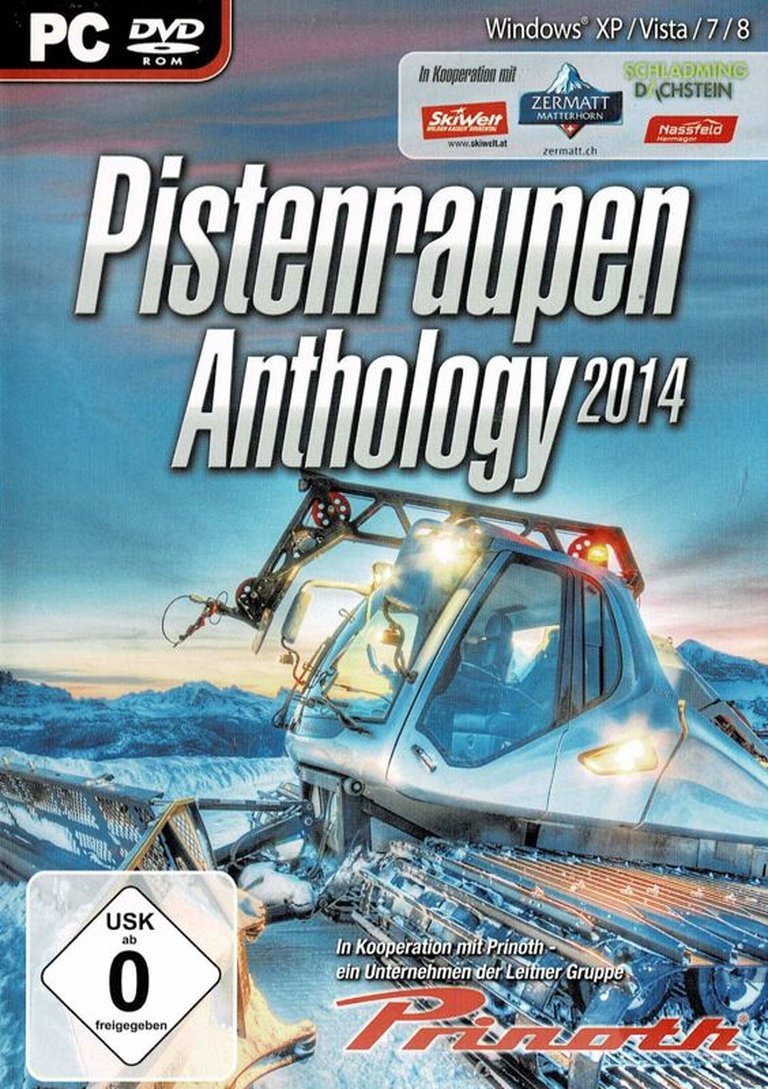
Pistenraupen Anthology 2014 is a compilation of winter simulation games set in snowy alpine environments, featuring realistic operations of snow grooming vehicles and ski resort management. Players take on the role of snowcat operators and ski world simulators, maintaining pristine ski slopes, transporting skiers, and ensuring smooth winter sports experiences across the included titles: Ski-World Simulator 2012, Snowcat Simulator, and Snowcat Simulator 2011.
Reviews & Reception
amazon.fr (56/100): Etwas umständliche Bedienung
Pistenraupen Anthology 2014: Review
Introduction
Imagine the crisp crunch of snow under massive treads, the hum of a diesel engine echoing through alpine valleys, and the quiet satisfaction of grooming a perfect slope for eager skiers—this is the unassuming allure of Pistenraupen Anthology 2014, a compilation that bundles three niche simulation titles into a single package of frosty, methodical fun. Released in 2013 by the German publisher UIG Entertainment, this anthology revives the early 2010s wave of “everyday job” simulators that turned mundane tasks into oddly compelling digital experiences. As a game historian, I’ve long been fascinated by how these titles, often dismissed as budget curiosities, reflect broader trends in European PC gaming, where simulation meets economic strategy in unexpected ways. Pistenraupen Anthology 2014—comprising Snowcat Simulator (2010), Snowcat Simulator 2011, and Ski-World Simulator 2012—may not have the blockbuster status of its contemporaries, but it carves out a legacy as a testament to the joys of virtual labor in a winter wonderland. My thesis: While technically unpolished and narratively sparse, this anthology excels as a relaxing, immersive dive into ski resort management, offering a unique blend of vehicular simulation and business tycoon elements that prefigures the modern surge in cozy sims, even if its clunky execution holds it back from greatness.
Development History & Context
UIG Entertainment GmbH, a Cologne-based publisher founded in the mid-2000s, specialized in localizing and distributing affordable simulation games for the European market, particularly Germany, where the genre has deep roots dating back to titles like The Settlers series. The studio behind these games—likely internal UIG teams or small Eastern European developers, as was common for budget sims—envisioned Pistenraupen Anthology 2014 as a value-packed retail release amid the shifting sands of the early 2010s PC gaming landscape. Released on December 6, 2013, for Windows via DVD-ROM, the anthology arrived at a time when digital distribution via Steam was exploding, but physical compilations like this one still thrived in brick-and-mortar stores, especially in non-English markets. Technological constraints were evident: built for Windows XP through 7 (with compatibility notes for Vista and later), these games relied on basic 3D engines akin to those in Farming Simulator precursors, prioritizing functional physics over high-fidelity graphics. Hardware of the era—mid-range GPUs like NVIDIA’s GeForce 8000 series—meant compromises in draw distance and particle effects, resulting in a grounded, if rudimentary, snowy world.
The gaming landscape in 2013 was dominated by AAA blockbusters like Grand Theft Auto V and indie darlings like Papers, Please, but niche sims filled a gap for players seeking low-stakes escapism. UIG’s vision tapped into Germany’s fascination with precision engineering and vocational simulations—think Bus Simulator or Truck Simulator—positioning Pistenraupen as an extension of the “Snowcat Simulator” series. The anthology’s creation was pragmatic: bundling Snowcat Simulator (2010, a debut focusing on piste grooming), its 2011 sequel (adding minor updates like improved AI for skiers), and Ski-World Simulator 2012 (expanding to full resort management) allowed UIG to capitalize on modest successes without heavy marketing. No major controversies marred development, but the era’s piracy issues and lack of localization beyond German likely limited its reach. In hindsight, this compilation embodies the democratization of sim gaming, where small studios democratized “procedural” experiences long before procedural generation became buzzworthy.
Narrative & Thematic Deep Dive
Simulation games like those in Pistenraupen Anthology 2014 eschew traditional narratives for procedural progression, but beneath the surface lies a subtle storytelling through systems and themes of stewardship, ambition, and harmony with nature. There’s no overwrought plot or voiced protagonists; instead, the “story” unfolds via mission briefs and economic cycles. In Snowcat Simulator and its 2011 iteration, you embody an anonymous operator tasked with maintaining alpine slopes—clearing fresh powder, repairing fences, and navigating treacherous terrain. The 2011 version introduces light progression: start as a novice groomer and advance to overseeing multiple vehicles, with “events” like avalanches or night shifts adding emergent drama.
Ski-World Simulator 2012 elevates this to a tycoon narrative, where you begin managing a modest ski area and expand through investments. The “plot” arc mirrors entrepreneurial ascent: crowds flock to the peaks, demanding flawless runs, while you prep pistes with your snowcat, maintain chairlifts, and clear access roads. Dialogue is minimal—text pop-ups in German (with no official English translation) deliver terse instructions like “Pisten praparieren” (prepare the slopes) or economic reports on visitor numbers. Characters are archetypes: faceless skiers as revenue generators, rival operators as subtle competition via market share mechanics.
Thematically, the anthology explores the romance of alpine labor, contrasting human ingenuity against nature’s indifference. Themes of sustainability emerge—over-grooming leads to erosion penalties, echoing real-world ski resort debates—while economic depth critiques unchecked expansion: invest wisely in lifts to boost tourism, but mismanage funds and face bankruptcy. Isolation is poignant; long drives through foggy mountains evoke solitude, underscoring themes of quiet perseverance. Subtly, it romanticizes blue-collar work in a digital age, where players find empowerment in tasks society overlooks. Flaws abound: the lack of deeper lore or character development makes it feel rote, but for sim enthusiasts, this restraint amplifies immersion, turning everyday routines into a meditative epic.
Core Plot Elements
- Inciting Incident: Boot up to a tutorial slope in disarray, symbolizing the chaos of untamed wilderness.
- Rising Action: Missions escalate from single-vehicle ops to multi-site management, with seasonal cycles (winter peaks, summer lulls) driving tension.
- Climax and Resolution: Achieve total ownership of the resort, but endless mode hints at perpetual upkeep, thematizing life’s unending cycles.
Character Analysis
No named characters, but vehicles personify agency—the snowcat as a reliable steed, lifts as veins of commerce. Skiers serve as NPCs, their behaviors (crowding popular runs) influencing strategy and subtly humanizing the machine-like world.
Gameplay Mechanics & Systems
At its core, Pistenraupen Anthology 2014 revolves around vehicular simulation fused with management sim loops, delivering a satisfying grind of preparation and optimization. The primary gameplay hook is driving the titular “Pistenraupe” (snowcat), a tracked vehicle with realistic physics: tilt-steering handles uneven terrain, while attachments like blades and tillers allow slope grooming. Core loop: Scout a piste via map or free-roam, activate tools to flatten snow, then verify with an inspection mode—flawed runs deduct visitor satisfaction, impacting earnings.
Combat is absent; “challenges” arise from environmental hazards—slippery ice causing skids, blizzards reducing visibility, or rockfalls demanding detours. Snowcat Simulator 2011 refines this with upgradeable cabs (better lights, faster engines) and co-op hints (though single-player only), while Ski-World Simulator 2012 layers tycoon elements: allocate budgets for snow-making machines, hire AI crews, and balance ROI on expansions. Character progression is vehicle-centric—earn XP to unlock models like the PistenBully 300—tied to a simple skill tree for efficiency bonuses.
UI is functional but dated: a top-down map for navigation, radial menus for tool swaps, and a dashboard for stats (fuel, piste quality). Innovative systems include dynamic weather affecting traction and a day-night cycle that gates tasks, adding realism. Flaws persist: controls feel cumbersome (as noted in Amazon reviews, “etwas umständlich”), with keyboard mappings clashing on turns, and no remappable keys. Economy sim shines in Ski-World: track metrics like bed occupancy or ticket sales, but micromanagement can overwhelm without tutorials. Multiplayer is absent, limiting replayability, yet the anthology’s variety—pure driving in Snowcat, holistic management in Ski-World—creates a robust 20-30 hour package. Bugs, like clipping through snowdrifts, mar the experience, but the tactile joy of “perfecting” a run remains addictive.
Key Systems Breakdown
- Vehicular Physics: Realistic momentum and adhesion models; innovative tilt-cam for immersion.
- Management Layer: Budget sliders for investments; flawed AI pathing leads to traffic jams on roads.
- Progression Loop: Mission-based (e.g., “Groom 5km by dawn”) unlocking free-play sandboxes.
- UI/UX Pain Points: Cluttered HUD; German-only interfaces hinder accessibility.
World-Building, Art & Sound
The anthology’s world is a stylized recreation of the Bavarian Alps, vast and vertically imposing, with procedurally generated slopes varying in pitch and obstacle density. Settings span daylit mornings to starry nights, fostering an atmosphere of serene isolation broken by the rumble of machinery. Visual direction leans realistic yet low-budget: low-poly models for pines and chalets, texture maps evoking fresh powder, but pop-in and aliasing betray 2010s tech limits. Art contributes to coziness—golden-hour lighting bathes groomed pistes in glow, symbolizing accomplishment—while dynamic snow deformation (treads leaving tracks) enhances interactivity.
Sound design amplifies immersion: the guttural roar of the snowcat’s engine dominates, layered with crunching treads and wind howls for ASMR-like ASMR appeal. Ambient tracks feature subtle folk strings evoking yodeling heritage, with no voice acting to distract. These elements synergize to create a therapeutic escape; the world’s scale—endless horizons—contrasts intimate tasks, making successes feel earned. Drawbacks include repetitive loops and lack of variety (no wildlife beyond birds), but overall, it crafts a believable, if austere, winter idyll that lingers like fresh snowfall.
Reception & Legacy
Upon launch, Pistenraupen Anthology 2014 flew under the radar, with no MobyGames critic reviews and scant coverage beyond German outlets. Commercially, it targeted budget buyers via retail (priced around €20), but sales were modest—Amazon listings show used copies at €3-5 today, suggesting niche appeal. User reception averages 2.8/5 on Amazon from three ratings, with complaints centering on “umständliche Bedienung” (cumbersome controls) and shallow depth, though one 5-star review praises its relaxing vibe. No Metacritic aggregate exists, but forum whispers on sites like MobyGames highlight it as a “guilty pleasure” for sim fans.
Its reputation has evolved into cult curiosity: post-2013, as Farming Simulator and SnowRunner popularized vehicle sims, Pistenraupen is retrospectively valued for pioneering resort management. Influence is subtle—inspiring Ski Region Simulator (2012) and broader “job sim” trends—but it underscores UIG’s role in sustaining the genre during AAA dominance. In industry terms, it exemplifies the “long tail” of PC gaming, where obscure titles preserve vocational fantasies, influencing indie devs in procedural worlds like Death Stranding‘s delivery mechanics.
Conclusion
Pistenraupen Anthology 2014 is a charmingly flawed time capsule of early 2010s simulation gaming, blending vehicular authenticity with economic strategy in a snowy embrace that rewards patience over polish. Its strengths—immersive driving, thematic depth in labor’s quiet dignity—outweigh clunky controls and sparse narrative, making it a solid pick for sim aficionados seeking offline zen. Historically, it occupies a humble yet vital niche, bridging budget European sims to modern cozy titles, proving that even obscure anthologies can groom paths for innovation. Verdict: 7/10—recommended for genre completists, a frosty footnote in video game history worth unearthing.