
- Release Year: 2024
- Platforms: PlayStation 5, Windows, Xbox Series
- Publisher: Frontier Developments plc
- Developer: Frontier Developments plc
- Genre: Simulation
- Perspective: Diagonal-down
- Game Mode: Online Co-op, Single-player
- Gameplay: Business simulation, City building, construction simulation, Managerial
- Setting: Amusement park
- Average Score: 77/100
Description
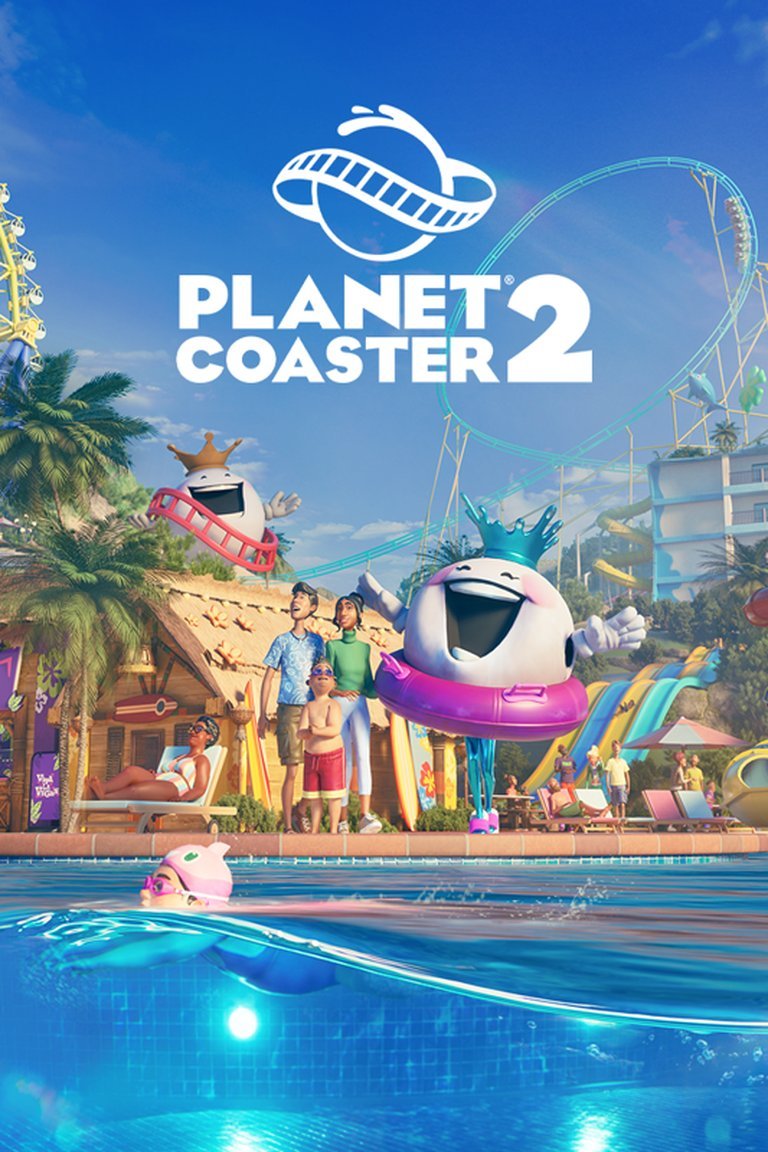
Planet Coaster 2 is a theme park simulation game where players design, build, and manage their own amusement parks with detailed creativity and strategic oversight. As a sequel to Planet Coaster, it expands on the original with new waterpark attractions, enhanced construction tools, and realistic guest behaviors, offering a deep and immersive experience in crafting thrilling rides and optimizing park operations.
Gameplay Videos
Where to Buy Planet Coaster 2
PC
Planet Coaster 2 Mods
Planet Coaster 2 Guides & Walkthroughs
Planet Coaster 2 Reviews & Reception
ign.com : Better at all of the things its predecessor was good at, with water attractions alone being enough reason to dive in.
metacritic.com (76/100): Planet Coaster 2 excels in amusement park management, presenting a superb combination of gameplay depth and accessibility.
pcgamer.com : Planet Coaster 2 may not be the deepest management sim you can buy, but its powerful creation tools and newly added water attractions make a sufficiently satisfying splash.
opencritic.com (78/100): Planet Coaster 2 is an ambitious sequel that expands sideways upon the foundation laid by its predecessor. The graphics are stunning, the water slide additions are fun, and the creative potential is immense, but it comes at a cost.
Planet Coaster 2: Review – A Splash of Genius Amidst Murky Waters
1. Introduction: The Legacy and The Promise
In the pantheon of theme park simulation games, Planet Coaster (2016) stands as a titan—a game that resurrected the creative spirit of the genre after the missteps of RollerCoaster Tycoon World. It was a pure, unadulterated love letter to builders, a sandbox of infinite detail where the only limit was the player’s imagination. Eight years later, Planet Coaster 2 arrives not to reinvent the wheel, but to add a crucial, watery new dimension to it. This sequel’s central thesis is clear: expand the canvas. The introduction of fully realized water parks—complete with pools, flumes, and new logistical needs—promises to make the Dream Park experience more diverse than ever. Yet, this expansion comes with a familiar, frustrating trade-off. While Planet Coaster 2 soars to new creative heights, it remains stubbornly, inexplicably earthbound in its management depth, and stumbles over a UI seemingly designed for console controllers first, PC mice second. The result is a game of profound, beautiful contradictions: a masterpiece of construction shackled by mediocre management, and a technical marvel occasionally sunk by its own ambition.
2. Development History & Context: A Strategic Refocus
The story of Planet Coaster 2 is intrinsically linked to the strategic shifts at its developer, Frontier Developments. Following the success of the original Planet Coaster and Planet Zoo, Frontier pivoted to diversify with the F1 Manager series and the real-time strategy game Warhammer: Age of Sigmar – Realms of Ruin. Both titles underperformed commercially, leading to layoffs in late 2023 and a corporate “organisational review.” The subsequent strategy was a return to roots: a renewed focus on the management simulation genre that had been the company’s bedrock of success.
This context is vital. Planet Coaster 2 was not just a sequel; it was a course correction. The development team, led by Game Director Richard Newbold and Senior Executive Producer Adam Woods, took the robust feedback from a dedicated Planet Coaster community—famously proactive in sharing creations via Steam Workshop—and focused on two pillars: deep, tangible player requests (water parks, improved building tools) and cross-platform social features formally integrated into the game. The title leaked in June 2024 via an Epic Games Store database, was officially announced on July 11, 2024, and after a tight development cycle, launched globally on November 6, 2024 for Windows PC (Steam/Epic), PlayStation 5, and Xbox Series X/S—a simultaneous, next-gen focused release strategy that marked a significant evolution from the staggered, PC-first launch of its predecessor.
3. Narrative & Thematic Deep Dive: Career Mode and the Quest for Thematic Unity
Unlike the narrative-lite original, Planet Coaster 2 introduces a structured Career Mode. Players assume the role of a new manager for the fictional conglomerate “Coaster Coast,” tasked with reviving or building parks across a global network. Progress is gated by a star system—completing objectives (e.g., “Hire three janitors,” “Build a coaster with a 45m drop”) unlocks new career chapters.
Thematically, the game makes a significant, if controversial, shift. Instead of the sprawling library of piecemeal scenery packs, the sequel ships with five core, integrated themes:
* Classic Planet Coaster: The familiar, vibrant default.
* Resort: A West Coast California surf aesthetic.
* Aquatic: Designed explicitly for water parks, with blues, nautical elements, and fluid shapes.
* Vikings: Featuring intricate wooden detailing and Nordic motifs, noted by Woods as working “sympathetically with water.”
* Mythology: With verticality inspired by gods in the clouds.
The narrative framing via cartoonish corporate advisors is widely panned as anodyne and witless—a far cry from the satirical bite of the Two Point series. However, the true “story” of Planet Coaster 2 is told through environmental storytelling and player creativity. The themes are not just skins; they are unified design languages. As revealed in developer deep dives, returning fan-favorite flat rides have been “pared back” in their base design specifically to act as canvases for these new themes. The ability to directly attach scalable scenery pieces to rides and coaster cars (including animated elements that sync with ride movement) transforms attractions from standalone assets into thematic props. A standard teacups ride can become a Viking longship or a mythological beast through direct decoration. This creates a powerful, coherent visual language across a park, allowing for a level of immersive theming previously only possible with exhaustive manual work or mods.
4. Gameplay Mechanics & Systems: The Creative Engine and the Management Clog
The gameplay of Planet Coaster 2 operates on two, often conflicting, levels: the sublime act of building and the mundane act of managing.
The Creative Core: Building Euphoria
This is where the sequel unequivocally triumphs. The piece-by-piece coaster editor is refined with new track elements like drop tracks, switch tracks, and turntables. The UI for banking, corkscrews, and loops is praised as intuitive, and the new “auto-finish” feature elegantly solves the old problem of perfectly connecting a track to the station.
The star addition, water parks, is handled with remarkable creativity. Pools are built using a flexible shape tool (geometry stamp or custom draw), requiring water pumps and filtration systems to maintain. The real joy is in flumes and water coasters. Constructed piece-by-piece like coasters but with simpler physics requirements (no propulsion calculations), they allow for bolder, more playful designs. The visual feedback—guests cannonballing into pools, raft flumes spinning—is lively and charming.
The new customization suite is revolutionary. The “Scenery Brush” and object scaling/mirroring/twinning tools let players paint details onto any surface. Ride blueprints (now including flat rides) allow quick placement of pre-themed attractions. The Event Sequencer adds scripted special effects (smoke, lasers, water jets) to rides, enabling cinematic presentations.
The Management Overlay: Necessary or Annoying?
Here lies the game’s contentious heart. Frontier attempted to deepen the simulation by adding layers of infrastructure management:
* Power Systems: All rides and facilities require a connected power grid, maintained by electricians.
* Water Logistics: Beyond pumps/filters, water slides and coasters with water elements (like the new Surf Coaster) require a water supply.
* Enhanced Staffing: New roles include Lifeguards (for pool safety), and maintenance for power/water systems.
* Guest Ecology: Sunburn in sunny/water parks necessitates suncream stalls and shade structures. Guests provide immediate feedback on ride intensity (fear/nausea/thrill).
* Economy: Pool pass sales monetize water access. “Fast Pass” style systems for rides return.
While these changes are logical expansions for water parks, critics and players largely find them friction without meaningful stakes. As IGN’s Leana Hafer notes, the management remains “mindlessly simple.” Profit is so easy to generate that these systems feel like busywork, not engaging challenges. The financial bottom line is rarely at risk, removing the tension that defines great tycoon games.
Worse, the User Interface (UI) is repeatedly excoriated. Pathing—the critical act of connecting rides—is still fiddly, with the lock-on mechanic failing to prevent guest-trapping geometry errors. The menu navigation, especially on PC with mouse/keyboard, is described by Rock Paper Shotgun as “fiddlesome busywork” and by PC Games (Germany) as standing “in contrast to the fun park building.” The management screens are buried behind multiple layers, contradicting Adam Woods’ claim of “layered complexity.”
Modes & Multiplayer
- Sandbox Mode: The unshackled creative canvas. The undisputed star, letting the building tools shine without constraint.
- Career Mode: Provides necessary structure and inspired challenges (e.g., building on clifftops with space constraints), but is hampered by poor tutorials and painful dialogue.
- Franchise Mode: The asynchronous multiplayer innovation. Players can share saves cross-platform, collaborating on different park zones within a shared franchise and competing on global leaderboards. This formalizes the community save-sharing of the first game and is widely praised as a smart, ” Frontier-developed” solution to true real-time multiplayer in a complex sim.
5. World-Building, Art & Sound: A Technical Showcase
Visually, Planet Coaster 2 is a generational leap. Powered by Frontier’s **Cobra