
- Release Year: 2024
- Platforms: Windows
- Publisher: Jofer’s Games
- Developer: Jofer’s Games
- Genre: Action
- Perspective: Side view
- Game Mode: Single-player
- Gameplay: Platform
- Average Score: 66/100
Description
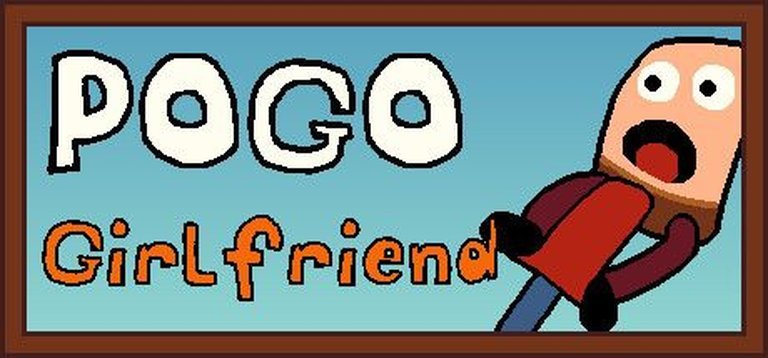
Pogo Girlfriend is a 2D side-scrolling platformer developed by Jofer’s Games, released in 2024 for Windows. The game features a nostalgic, retro-inspired visual style reminiscent of early 2000s Flash games, blending simple yet charming aesthetics with fast-paced action gameplay. Players take on the role of a character navigating through levels using a pogo stick, combining platforming mechanics with a quirky, lighthearted premise. The game supports single-player offline mode and online multiplayer, offering a mix of challenge and humor in a straightforward, direct-control interface.
Where to Buy Pogo Girlfriend
PC
Pogo Girlfriend Guides & Walkthroughs
Pogo Girlfriend Reviews & Reception
steambase.io (80/100): A triumphant return to form for the series.
metacritic.com (60/100): The visuals remind me of one of those old Flash games that would be posted on Newgrounds back in the late 1990’s and early 2000’s.
mobygames.com (60/100): The friendliest rage game!
Pogo Girlfriend: A Rage-Inducing Love Letter to the Flash Era
Introduction: The Friendliest Rage Game?
Pogo Girlfriend is a game that defies easy categorization. At first glance, it’s a crude, low-budget platformer with a premise so absurd it borders on surreal: your girlfriend is kidnapped mid-date, and your only means of rescue is a pogo stick. Yet beneath its intentionally janky exterior lies a game that is both a throwback to the chaotic, unpolished charm of early 2000s Flash games and a modern take on the “rage game” subgenre popularized by Getting Over It with Bennett Foddy. Released on March 15, 2024, by the one-person studio Jofer’s Games, Pogo Girlfriend is a game that embraces its flaws as part of its identity, offering a uniquely frustrating yet oddly compelling experience.
This review will dissect Pogo Girlfriend in exhaustive detail, exploring its development context, narrative quirks, gameplay mechanics, aesthetic choices, and its place in the broader landscape of indie games. Is it a brilliant satire of the “kidnapped girlfriend” trope, a nostalgic homage to a bygone era of gaming, or simply a messy experiment in player punishment? Let’s find out.
Development History & Context: The Rise of the Rage Game
The Studio Behind the Stick
Pogo Girlfriend is the brainchild of Jofer’s Games, a small indie studio that appears to be primarily the work of a single developer. The game was built using the Unity engine, a common choice for indie developers due to its accessibility and flexibility. Given the game’s modest scope and price point ($0.99 on Steam), it’s clear that Pogo Girlfriend was not intended to be a blockbuster but rather a passion project or a creative experiment.
The game’s development seems to have been relatively swift, with updates and bug fixes rolled out frequently in the weeks following its launch. The Steam community discussions reveal a developer who is actively engaged with the player base, tweaking mechanics, adjusting difficulty, and even adding features like Twitch integration to enhance the game’s appeal as a streaming spectacle.
The Gaming Landscape in 2024
Pogo Girlfriend arrived in a gaming ecosystem dominated by high-budget AAA titles and meticulously polished indie darlings. Yet it also emerged at a time when the “rage game” subgenre—games designed to frustrate and challenge players to the point of exasperation—had carved out a niche audience. Titles like Getting Over It with Bennett Foddy, Jump King, and Celeste (which balances difficulty with emotional depth) had proven that there was an appetite for games that tested players’ patience and perseverance.
However, Pogo Girlfriend distinguishes itself by leaning into its low-fi aesthetic and absurd premise. Unlike Getting Over It, which features a philosophical narrator and a deliberate, methodical climbing mechanic, Pogo Girlfriend is chaotic, fast-paced, and unapologetically silly. It’s a game that doesn’t take itself seriously, even as it demands precision and persistence from its players.
Technological Constraints and Design Choices
The game’s visual style is deliberately reminiscent of early 2000s Flash games, a choice that feels both nostalgic and intentionally amateurish. The developer’s decision to embrace this aesthetic rather than strive for modern graphical fidelity is a bold one, as it immediately signals to players what kind of experience they’re in for: something rough around the edges but potentially charming in its imperfections.
The use of Unity also allows for features like online multiplayer and leaderboards, which are somewhat unusual for a game of this scale. The inclusion of these elements suggests that Pogo Girlfriend was designed with community engagement in mind, encouraging players to compete for high scores and share their struggles (and triumphs) with others.
Narrative & Thematic Deep Dive: The Kidnapped Girlfriend Trope, Revisited
Plot Summary: A Classic Setup with a Twist
The premise of Pogo Girlfriend is deceptively simple: you’re on a date with your girlfriend when she suddenly vanishes. A mysterious figure in a Power Rangers costume appears, declaring himself your rival, and moments later, a rocket ship blasts off into the sky, presumably carrying your girlfriend to parts unknown. Your mission? Chase after the rocket on your pogo stick, navigating a series of increasingly absurd obstacles to rescue her.
On the surface, this setup is a playful riff on the classic “damsel in distress” trope, a staple of early video games like Super Mario Bros. and Donkey Kong. However, Pogo Girlfriend subverts expectations by making the protagonist’s method of rescue—pogoing—so ridiculous that it borders on surrealism. There’s no grand narrative depth here, but the game’s self-aware absurdity makes it feel fresh rather than derivative.
Characters: Minimalist and Memorable
The game’s cast is intentionally sparse and underdeveloped, which fits its minimalist design philosophy. The protagonist is a faceless pogo enthusiast, the girlfriend is a silent MacGuffin, and the rival is a bizarre, masked figure who exists primarily to taunt the player. The lack of dialogue or character development is part of the game’s charm; it’s not trying to tell a deep story but rather to create a silly, over-the-top scenario that justifies its gameplay.
Themes: Persistence, Frustration, and Nostalgia
At its core, Pogo Girlfriend is a game about perseverance. The gameplay is designed to be punishing, with even the slightest miscalculation resulting in the protagonist exploding into a fountain of gore (a delightfully over-the-top touch). Yet the game also offers checkpoints that can be relocated, a mechanic that softens the blow of its difficulty while still maintaining a high skill ceiling.
The game’s aesthetic and tone also tap into a deep well of nostalgia for the early days of online gaming. The visuals, as noted by Hooked Gamers’ Samuel Corey, evoke the crudely animated Flash games that populated sites like Newgrounds in the late 1990s and early 2000s. For players who grew up with these games, Pogo Girlfriend offers a comforting, if chaotic, trip down memory lane.
Gameplay Mechanics & Systems: The Art of the Pogo
Core Gameplay Loop: Bounce or Die
Pogo Girlfriend is, at its heart, a precision platformer. The player controls a character who is perpetually mounted on a pogo stick, which means movement is entirely dependent on bouncing. The controls are simple: players can angle the pogo stick left or right to move horizontally and perform mid-air flips to gain additional height and speed. However, mastering these mechanics is anything but simple.
The game’s difficulty stems from the fact that even the smallest mistake—bumping into an obstacle, misjudging a landing, or hitting a ceiling—results in instant death. The protagonist explodes in a gruesome yet comedic fashion, forcing the player to restart from the last checkpoint. This punishing mechanic is clearly inspired by Getting Over It, but Pogo Girlfriend distinguishes itself by offering a faster, more chaotic experience.
Checkpoints and Customization
One of the game’s most innovative features is its checkpoint system. Players can relocate checkpoints to any spot they choose, which allows for strategic planning and can be particularly useful in speedruns. This mechanic adds a layer of player agency that is rare in rage games, where progress is often tied to fixed save points.
The game also includes a variety of pogo stick upgrades and skins, which can be found hidden throughout the levels. These upgrades don’t fundamentally change the gameplay but offer cosmetic variety and a sense of progression.
Multiplayer and Leaderboards
Pogo Girlfriend includes online multiplayer, allowing players to race against friends or compete for high scores on global leaderboards. This feature is somewhat unusual for a game of this scale and suggests that the developer envisioned Pogo Girlfriend as a competitive experience as much as a single-player challenge.
The inclusion of Twitch integration—where streamers can be killed by their chat’s subscriptions—further emphasizes the game’s design as a spectacle. It’s a game that thrives on shared frustration and triumph, making it ideal for streaming and community engagement.
Flaws and Frustrations
While Pogo Girlfriend’s difficulty is intentional, some of its design choices can feel overly punishing. The lack of a save feature means that progress is lost when the game is closed, a decision that has drawn criticism from players. Additionally, the game’s physics can sometimes feel inconsistent, leading to deaths that feel unfair rather than challenging.
The game’s brevity is another potential drawback. With a runtime of just a few hours, Pogo Girlfriend is a short experience that relies on replayability and competition to justify its existence. For players who aren’t invested in leaderboards or speedrunning, the game may feel slight.
World-Building, Art & Sound: A Crude but Charming Aesthetic
Visual Design: Deliberately Ugly
Pogo Girlfriend’s art style is intentionally crude, evoking the low-fi charm of early Flash games. Characters are poorly proportioned, animations are stiff, and the environments are simplistic. Yet this aesthetic is part of the game’s appeal. As Samuel Corey notes in his review for Hooked Gamers, the game’s visuals are “ugly and amateurish” but also nostalgic and charming for those who grew up with similar games.
The game’s world is a surreal, dreamlike landscape filled with oversized obstacles, bizarre characters, and a general sense of absurdity. The lack of visual polish is offset by the game’s sheer creativity, with each level introducing new challenges and set pieces that keep the experience fresh.
Sound Design: Minimalist and Effective
The game’s sound design is similarly minimalist, with a focus on functional rather than atmospheric audio. The pogo stick’s bouncing sound, the explosions upon death, and the occasional voice lines from the rival character are all designed to be clear and immediate, reinforcing the game’s fast-paced, high-stakes gameplay.
The lack of a memorable soundtrack is notable but fits the game’s overall aesthetic. Pogo Girlfriend isn’t trying to be an audiovisual masterpiece; it’s a game that prioritizes gameplay and humor over polish.
Reception & Legacy: A Niche Hit with a Cult Following
Critical Reception: Mixed but Positive
Pogo Girlfriend has received a mixed but generally positive reception from critics. Hooked Gamers awarded the game a 6/10, praising its engaging gameplay and nostalgic art style while criticizing its lack of save features and repetitive frustration. The game’s Steam reviews are similarly divided, with a Player Score of 80/100 based on 35 reviews, indicating a largely positive but not overwhelmingly enthusiastic response.
The game’s reception highlights its niche appeal. It’s not a game for everyone, but for those who enjoy punishing platformers and absurd humor, it offers a unique and memorable experience.
Commercial Performance and Community Engagement
Given its low price point and indie status, Pogo Girlfriend is unlikely to have been a major commercial success. However, its active Steam community and frequent updates suggest that it has cultivated a dedicated fanbase. The developer’s engagement with players—adding features, fixing bugs, and even memorializing the first players to complete the game—has helped to foster a sense of community around the title.
Influence and Legacy
Pogo Girlfriend is unlikely to have a significant impact on the broader gaming industry, but it stands as a testament to the creativity and passion of indie developers. Its blend of nostalgia, absurdity, and punishing gameplay makes it a standout title in the rage game subgenre, and its unique mechanics—particularly the relocatable checkpoints—could inspire future games to experiment with similar ideas.
Conclusion: A Flawed but Fascinating Experiment
Pogo Girlfriend is a game that defies easy judgment. It’s intentionally janky, punishingly difficult, and unapologetically silly. Yet it’s also a game that embraces its flaws as part of its identity, offering a uniquely chaotic and nostalgic experience for players who are willing to engage with it on its own terms.
For fans of rage games, Pogo Girlfriend is a must-play, offering a fresh take on the genre with its fast-paced pogo mechanics and relocatable checkpoints. For those who grew up with Flash games, it’s a delightful trip down memory lane, warts and all. However, for players who prefer polished, forgiving experiences, Pogo Girlfriend will likely feel like an exercise in frustration.
Ultimately, Pogo Girlfriend is a game that knows exactly what it is: a silly, difficult, and occasionally infuriating love letter to a bygone era of gaming. It’s not a masterpiece, but it’s a fascinating experiment that deserves recognition for its creativity and boldness. If you’re looking for a game that will test your patience and make you laugh in equal measure, Pogo Girlfriend is well worth the $0.99 asking price.
Final Verdict: 7/10 – A chaotic, nostalgic, and occasionally brilliant mess.