
- Release Year: 2008
- Platforms: Windows
- Publisher: MumboJumbo, LLC
- Developer: WildTangent, Inc.
- Genre: Compilation
- Game Mode: Hotseat, Online PVP
- Setting: Arctic, North Pole
Description
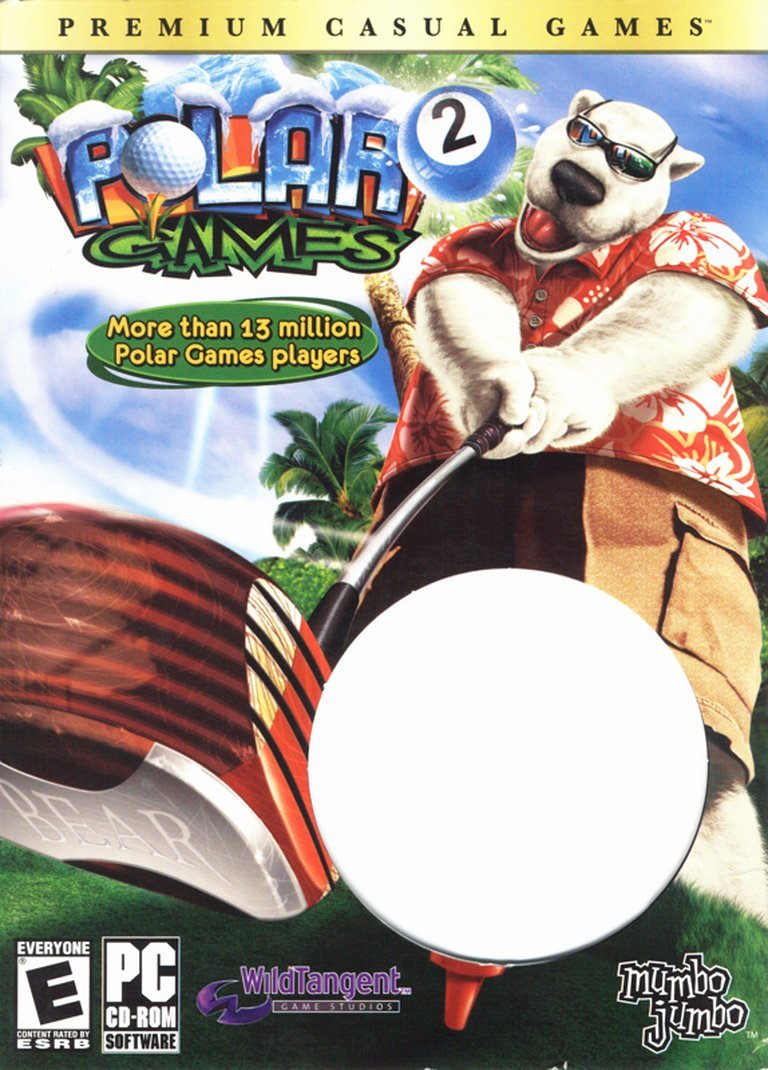
Polar Games 2 is a compilation of two Arctic-themed casual games, Polar Golfer: Pineapple Cup and Polar Pool, set in the frosty landscapes of the North Pole. Released in 2008 for Windows, this family-friendly collection offers lighthearted sports challenges with a wintry twist, supporting both single-player and multiplayer modes (local and online). Developed by WildTangent and published by MumboJumbo, the game combines simple, accessible gameplay with a charming polar setting, making it ideal for casual gamers.
Polar Games 2 Free Download
Polar Games 2: A Frozen Relic of Casual Gaming’s Golden Age
Introduction
In the annals of video game history, few titles embody the whimsical, unpretentious spirit of early 2000s casual gaming quite like Polar Games 2. Released in 2008 by WildTangent and published by MumboJumbo, this compilation of Polar Golfer: Pineapple Cup and Polar Pool is a time capsule of an era when games were designed for quick, accessible fun rather than narrative depth or graphical fidelity. While it may lack the polish or ambition of modern titles, Polar Games 2 offers a charming, if flawed, glimpse into the past—a past where polar bears played billiards and golfers teed off amid erupting volcanoes.
This review will dissect Polar Games 2 in exhaustive detail, exploring its development history, gameplay mechanics, artistic design, and legacy. By the end, we’ll determine whether this frosty relic deserves a place in the pantheon of gaming history or if it’s better left to thaw in obscurity.
Development History & Context
The Studio and the Vision
Polar Games 2 was developed by WildTangent, a studio known for its casual and browser-based games, and published by MumboJumbo, a company that specialized in family-friendly titles. The game is part of the Polar series, which began with Polar Bowler in 2003 and continued with Polar Golfer and Polar Games (2006). The series is characterized by its Arctic/North Pole setting, featuring anthropomorphic animals engaging in sports like bowling, golf, and billiards.
The vision behind Polar Games 2 was simple: to create a lighthearted, accessible compilation that could be enjoyed by players of all ages. The game was designed for short play sessions, with mechanics that were easy to pick up but offered enough depth to keep players engaged. This aligns with the broader trend of casual gaming in the mid-2000s, where titles like Bejeweled and Peggle dominated the market.
Technological Constraints and the Gaming Landscape
Released in 2008, Polar Games 2 was developed during a transitional period in gaming. The industry was shifting from the dominance of arcade-style games to more narrative-driven experiences, with titles like Gears of War and Mass Effect setting new standards for storytelling and graphics. However, the casual gaming market was still thriving, thanks in part to the rise of digital distribution platforms like Steam and the proliferation of browser-based games.
Polar Games 2 was designed to run on modest hardware, with simple 2D graphics and straightforward controls. The game’s reliance on keyboard and mouse inputs made it accessible to a wide audience, and its hot-seat multiplayer mode allowed for local competition without the need for online connectivity. This was a time before the ubiquity of online multiplayer, and Polar Games 2 catered to the social aspect of gaming by encouraging players to gather around a single PC.
The Dark Side of Casual Gaming
While Polar Games 2 may seem like a harmless, family-friendly title, it is not without its controversies. WildTangent was known for bundling its games with adware and spyware, a common practice in the mid-2000s that often left players frustrated and wary of downloading casual games. This “kovarstvo” (cunning deceit, as described by Russian critics) tarnished the reputation of otherwise innocent titles like Polar Games 2, which were often distributed through shady channels.
The game’s commercial release on CD-ROM was an attempt to distance itself from these practices, but the damage was already done. Polar Games 2 became a victim of its own era, a time when the line between legitimate software and malware was often blurred.
Narrative & Thematic Deep Dive
The Absence of Narrative
Polar Games 2 is not a game that concerns itself with storytelling. There is no plot, no character development, and no dialogue beyond the occasional onomatopoeic sound bite (“Fore! Strike!”). The game is purely about the mechanics of golf and billiards, with the Arctic setting serving as little more than a backdrop.
This lack of narrative is not necessarily a flaw. Polar Games 2 is a product of its time, when games were often judged by their gameplay rather than their storytelling. Titles like Pong and Space Invaders thrived without narratives, and Polar Games 2 follows in that tradition. The game’s appeal lies in its simplicity and accessibility, not in its ability to tell a compelling story.
Thematic Exploration
While Polar Games 2 may lack a traditional narrative, it is not without themes. The game’s Arctic setting evokes a sense of escapism, transforming the harsh realities of winter into a playful, whimsical world. The anthropomorphic animals—polar bears playing billiards, penguins golfing—add to this sense of absurdity, creating a world that is both familiar and fantastical.
The game also touches on themes of community and competition. The hot-seat multiplayer mode encourages social interaction, with players taking turns to compete for high scores. This fosters a sense of camaraderie and rivalry, even if the game itself is devoid of any deeper meaning.
Characters and Dialogue
The characters in Polar Games 2 are archetypal mascots, designed to be cute and appealing rather than complex or relatable. The polar bear in Polar Pool and the penguin in Polar Golfer are little more than avatars for the player, with no backstory or personality beyond their visual design.
Dialogue is virtually non-existent, with the game relying on sound effects and visual cues to convey information. This minimalist approach to communication is in keeping with the game’s casual, accessible design, but it also means that Polar Games 2 lacks the emotional depth of more narrative-driven titles.
Gameplay Mechanics & Systems
Core Gameplay Loops
Polar Games 2 is a compilation of two distinct games: Polar Golfer: Pineapple Cup and Polar Pool. Each game has its own unique mechanics, but both share a common goal: to provide quick, accessible fun.
-
Polar Golfer: Pineapple Cup: This game is a side-scrolling golf simulator with a tropical twist. Players tee off across procedurally generated holes, navigating hazards like erupting volcanoes and ocean waves. The game features a variety of clubs and power-ups, allowing players to customize their shots and improve their scores.
-
Polar Pool: This game is a billiards simulator with a polar theme. Players control a polar bear who slides across an icy billiards table, aiming to sink balls into pockets. The game features multiple modes, including 8-ball, 9-ball, and Power Pool, as well as unlockable characters and tables.
Combat and Character Progression
Polar Games 2 is not a combat-heavy game, but it does feature elements of competition and progression. In Polar Golfer, players must navigate hazards and use power-ups to improve their scores, while in Polar Pool, they must strategically sink balls to win matches.
Character progression is minimal, with players unlocking new characters and tables as they progress through the game. This is a far cry from the deep progression systems of modern RPGs, but it is in keeping with the game’s casual, accessible design.
UI and Innovative Systems
The UI in Polar Games 2 is clean and intuitive, with bold fonts and clear score trackers. The game’s menus are easy to navigate, and the controls are straightforward, making it accessible to players of all ages.
One of the game’s most innovative features is its hot-seat multiplayer mode, which allows up to four players to compete in turn-based matches. This fosters a sense of social interaction and competition, even if the game itself is devoid of any deeper meaning.
Flaws and Strengths
Polar Games 2 is not without its flaws. The game’s physics can be janky, with shots sometimes clipping through obstacles or behaving unpredictably. The lack of tutorials can also make the game difficult for newcomers to pick up, and the repetitive nature of the gameplay can lead to fatigue after extended play sessions.
However, the game’s strengths lie in its accessibility and charm. The simple controls and intuitive UI make it easy to pick up and play, while the whimsical setting and lighthearted tone make it a joy to experience. The hot-seat multiplayer mode is also a standout feature, encouraging social interaction and competition.
World-Building, Art & Sound
Setting and Atmosphere
Polar Games 2 is set in a vibrant, fantastical Arctic world, complete with glittering icebergs, aurora skies, and candy-cane pines. The game’s 2D hand-drawn sprites are colorful and expressive, with a Saturday-morning cartoon sheen that adds to the game’s whimsical tone.
The atmosphere is one of breezy cheer, evoking a sense of holiday warmth amid the chill. This contributes to the game’s cozy, family-friendly appeal, making it a perfect title for casual play sessions.
Visual Direction
The visual direction in Polar Games 2 is bold and playful, with bright primaries (icy blues, snowball whites) contrasting against kooky animations (spinning pins, splashing hazards). The low-res charm of the game’s graphics is in keeping with the era, and the scalable design ensures that the game looks good on both CRT and LCD monitors.
Sound Design
The sound design in Polar Games 2 is twangy and chiptune-heavy, with bouncy sound effects (thwacks, clatters, cheers) that amplify the game’s whimsical tone. There is no voice acting, but the music swells for strikes and birdies, underscoring the player’s triumphs without the need for narrative push.
Reception & Legacy
Critical and Commercial Reception
Polar Games 2 was not a critical darling. The game received a dismal 20% critic score on MobyGames, with reviewers slamming its lack of depth and the presence of adware in its distribution. One player review on the site gave the game a 1/5, and there is no Metacritic aggregate score.
Commercially, the game was a niche CD-ROM release, overshadowed by the likes of Gears of War and Guitar Hero. It failed to make a significant impact on the market, and its reputation has only grown more obscure with time.
Evolution and Influence
Despite its lackluster reception, Polar Games 2 has had a minor influence on the gaming industry. The game’s hot-seat multiplayer mode and physics-based gameplay have been echoed in later casual titles, and its Arctic setting has inspired a number of indie games.
However, the game’s legacy is largely one of obscurity. It is a relic of a bygone era, a time when casual gaming was still finding its footing and the line between legitimate software and malware was often blurred.
Conclusion
Polar Games 2 is a frozen relic of casual gaming’s golden age, a time when games were designed for quick, accessible fun rather than narrative depth or graphical fidelity. While it may lack the polish or ambition of modern titles, it offers a charming, if flawed, glimpse into the past.
The game’s strengths lie in its accessibility and charm, with simple controls, intuitive UI, and a whimsical setting that makes it a joy to experience. However, its flaws—janky physics, repetitive gameplay, and a lack of tutorials—make it a difficult title to recommend to modern audiences.
Final Verdict: 3/10 – Polar Games 2 is a historical artifact for genre scholars, a skippable curiosity for modern gamers. It bookmarks the casual gaming boom’s highs and lows, delivering joyful escapism undercut by technical sleaze. Play if craving unpretentious strikes; otherwise, let it thaw in obscurity.