
- Release Year: 2012
- Platforms: Windows
- Publisher: Excalibur Publishing Limited, rondomedia Marketing & Vertriebs GmbH
- Developer: CyberPhobX Software Development Ltd
- Genre: Simulation
- Perspective: Diagonal-down
- Game Mode: Single-player
- Gameplay: Business simulation, Managerial
- Setting: Law enforcement, Urban
- Average Score: 62/100
Description
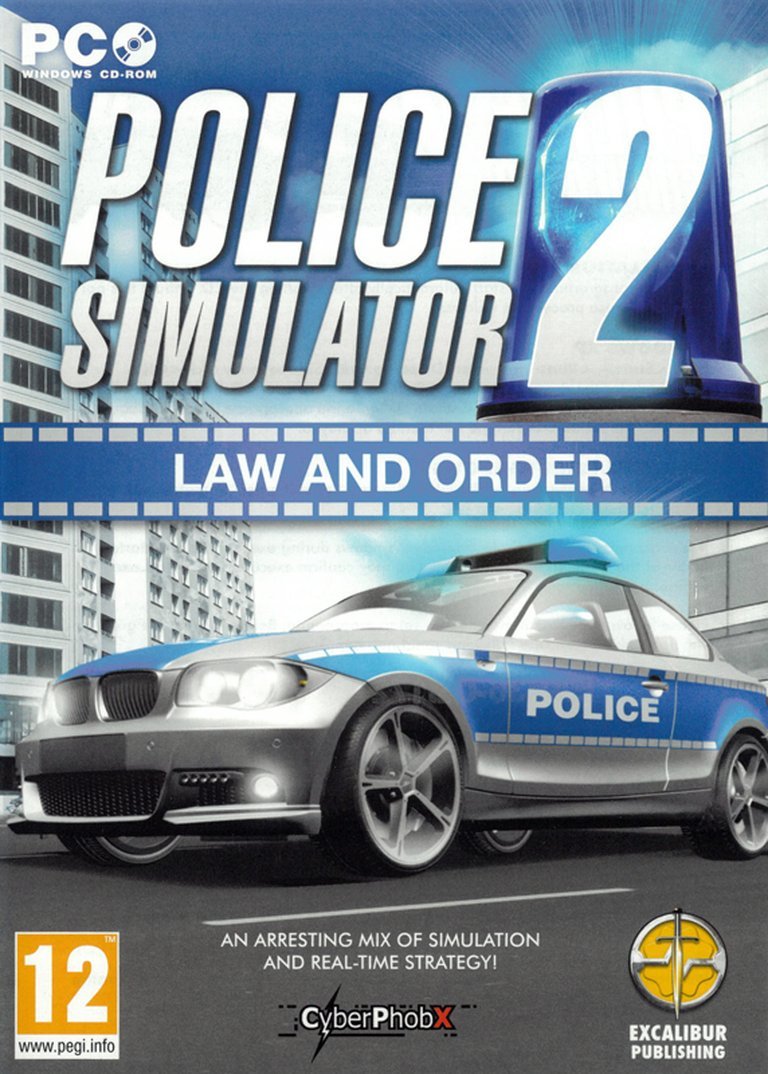
Police Simulator 2: Law and Order is a managerial simulation where players assume the role of police chief in a bustling big city, planning missions, creating assignments and rosters, and deploying teams to observe traffic, arrest criminals, and solve various crimes using modern facilities like a forensics lab and a selection of police vehicles.
Police Simulator 2: Law and Order Cracks & Fixes
Police Simulator 2: Law and Order Patches & Updates
Police Simulator 2: Law and Order Guides & Walkthroughs
Police Simulator 2: Law and Order Reviews & Reception
gamercast.net : Police Simulator 2 has evolved greatly, not only have the menus become far more user friendly, but there is a range of new features to aid you in your policing.
Police Simulator 2: Law and Order: Review
Introduction
In the pantheon of niche simulation games, few titles capture the bureaucratic drudgery of law enforcement quite like Police Simulator 2: Law and Order, a 2012 Windows release that thrusts players into the high-stakes (yet oddly sedentary) role of police chief. As the successor to the modestly received Police Simulator (2010), it promised a deeper dive into managerial police work amid rising urban crime, blending real-time strategy elements with economic simulation. Yet, beneath its isometric cityscapes and siren wails lies a game that tantalizes with ambition but stumbles on execution. This review argues that Police Simulator 2 represents a valiant, if imperfect, evolution in budget-tier sims—offering satisfying highs in resource juggling and team orchestration, but undermined by tedious pacing, technical hiccups, and a lack of narrative spark—cementing its place as a cult curiosity rather than a genre-defining triumph.
Development History & Context
Developed by the small Hungarian outfit CyberPhobX Software Development Ltd—a team of just three core members, Péter Horváth, Csaba Horváth, and Adám Ambrus—Police Simulator 2 emerged from a modest studio with roots in Eastern European game dev, leveraging tools like the Asphyre Framework by Yuriy Kotsarenko for its 2.5D isometric engine. Audio was handled by the enigmatic “BB,” while publishers Excalibur Publishing Limited (UK) and rondomedia Marketing & Vertriebs GmbH (Germany) handled distribution, targeting the European budget market. Released on March 23, 2012, via CD-ROM for around £25 SRP (now fetching $10 used on eBay), it arrived in an era dominated by AAA blockbusters like Mass Effect 3 and Diablo III, but thriving in the mid-tier sim niche alongside titles like German Truck Simulator.
The 2012 gaming landscape was shaped by post-2008 recession economics, favoring low-cost, accessible sims for casual players. CyberPhobX’s vision built directly on the 2010 original, addressing fan gripes with streamlined menus, shift scheduling, and an expanding jurisdiction across nine police stations. Technological constraints were evident: running on Pentium IV-era hardware (2.4 GHz CPU, 2GB RAM, GeForce 9800 GTX), it prioritized functionality over flash, shifting from top-down 2D to isometric “free camera” views for better spatial awareness. Yet, this budget ethos—exemplified by a lean 10-person credit list overlapping with casual fare like Fishdom 2—meant compromises, like no multiplayer or free mode, reflecting a scrappy response to a saturated strategy-sim market hungry for police-themed management but wary of “billigspiele” (cheap games).
Narrative & Thematic Deep Dive
Police Simulator 2 eschews traditional storytelling for a procedural narrative driven by emergent crime waves and player decisions, positioning you as an unnamed police chief safeguarding a nameless “big city” from robberies, stabbings, smuggling, homicides, and even diplomat assassinations. There’s no voiced dialogue or character arcs—your “cast” comprises faceless officer types: Patrolmen for beats and ID checks, auto-deployed Detectives and CSI for investigations. Missions serve as loose plot beats, tutorializing unlocks like SWAT teams, riot control, or helicopter pursuits, framing a rising-threat arc from petty traffic violations to terrorism.
Thematically, it delves into the unglamorous underbelly of law enforcement: bureaucratic realism versus Hollywood action. Public support hinges on crime stats and budget balance, echoing real-world debates on surveillance (cameras for suspect IDs), speed traps (revenue generators), and resource allocation amid fiscal austerity. Themes of power and accountability shine through elected-official mechanics—mismanage funds, and face cutbacks; excel, and expand influence. Yet, this depth is shallow; crimes feel randomized, lacking personal stakes or moral ambiguity (e.g., no civil rights trade-offs). The German critic at 4Players.de lambasted it as “CSI for the poor,” highlighting a tone-deaf blend of procedural tedium and superficial gravity. Subtle motifs—like 90s cop soundtrack swells during chases—evoke nostalgia for COPS-style justice, but without characters, it remains a thematic sketch: efficient management as heroism in a crime-plagued sprawl.
Gameplay Mechanics & Systems
At its core, Police Simulator 2 is a managerial loop of planning, deployment, and optimization. As chief, you hire/train three officer classes (Patrolmen gain XP slowly via patrols; Detectives/CSI auto-handle forensics), roster shifts across nine expandable stations (some with garages/helipads), and assign teams to hotspots. Budgeting is king: fund fuel/repairs, salaries, upgrades (CSI labs for faster solves), and toys like speed cameras (fine revenue) or choppers (perp pursuits). Time progresses in two speeds, with missions gating progression—e.g., “foil a bank robbery” unlocks SWAT—while stats track coverage, arrests, and public approval.
Innovations include auto-CSI deployment (easing micromanagement), crime-density filters, customizable sirens, and isometric free-cam for tactical oversight. Progression ties to ranks via solved cases, expanding your map from a “sleepy town” to full metropolis. Flaws abound: pathfinding woes see cops detour absurdly (running road lengths to cross streets), vehicles glitch into jams, and zoomed-out views lag on large jurisdictions. UI, though improved (iconic menus sans nagging advisers), remains “clunky and unübersichtlich” per critics, with tutorial-forced restarts frustrating flow. No combat—just observation/arrests—emphasizes strategy over action, alienating chasers (try Police Force instead). Pacing drags: waiting 48 in-game hours tests patience, redeemed by emergent thrills like heli-tracked fugitives amid traffic. Overall, a solid business sim loop, scoring 40% critically for lacking challenge, but engaging for optimization obsessives.
| Core Systems | Strengths | Weaknesses |
|---|---|---|
| Deployment & Rosters | Shift scheduling; auto-specialists | Poor pathfinding; slow XP |
| Budgeting | Dynamic funding (fines/upkeep) | Tedious balancing; no safety nets |
| Missions/Progression | Tutorial unlocks (SWAT, helis) | Repetitive; no freeplay |
| UI/Controls | Simplified icons; filters | Clunky navigation; perf issues |
World-Building, Art & Sound
The game’s world is a generic European-inspired metropolis—blocky isometric streets, alleyways, and districts scaling from quiet suburbs to dense urban cores. Nine stations dot the map, each with unique perks (e.g., helipads for aerial dominance), fostering territorial expansion. Atmosphere builds via dynamic crime heatmaps: red zones pulse with robberies, traffic snarls visually cue interventions. Visuals, a step up from the original’s top-down, use humble 2.5D models—serviceable on 2012 hardware but “billig” (cheap-looking), with aliasing and pop-in at zoom. Free camera aids immersion, letting you swoop over chases, but performance craters on full maps.
Sound design elevates the mundane: a flamboyant 90s cop soundtrack shifts from upbeat synths to intense pulses during emergencies, paired with customizable siren wails (a delightful touch). Ambient traffic hums, pedestrian chatter, and radio dispatches craft procedural realism, underscoring isolation as a desk-bound overlord. These elements coalesce into a lived-in sim city, where visual simplicity amplifies strategic focus, though lacking the polish of contemporaries like Cities in Motion.
Reception & Legacy
Launched to muted fanfare, Police Simulator 2 garnered a dismal 40% from 4Players.de (March 9, 2012), decrying “öden Missionen” (boring missions), trivial arrests, absent free mode/multiplayer, and frustration-induced quits. Player averages hover at 2/5 (MobyGames), with zero in-depth reviews, signaling niche appeal. Commercially invisible (VGChartz logs 0 sales), it faded amid budget sim glut, used copies now bargain-bin fodder.
Its legacy is subtle: a footnote in law-enforcement sims, influencing procedural management in later entries like Police Simulator: Patrol Duty (2019, first-person shift) or Police Sim 2022 (mobile). CyberPhobX’s tweaks—rostering, autos—paved micro-improvements, but flaws (pathing, pace) echoed in sequels like Police Force 2 (2014). In industry terms, it exemplifies 2010s Eastern Euro budget dev: ambitious underdogs feeding genre persistence, sans mainstream impact. Cult status endures among sim historians for unfiltered cop-bureaucracy.
Conclusion
Police Simulator 2: Law and Order ambitiously expands its predecessor’s blueprint into a more open, feature-rich management sim, excelling in budget-strategy depth and emergent policing thrills like chopper hunts. Yet, persistent issues—glacial pace, AI blunders, clunky UI—cap it as a flawed gem, best for patient tycoon fans craving non-action cop sims. In video game history, it occupies a quirky niche: a testament to indie grit in a blockbuster era, warranting emulation for sim completists but skipping for modern seekers. Verdict: 5.5/10—serviceable sequel, historical curiosity, but no badge of honor.