
- Release Year: 2024
- Platforms: Windows
- Publisher: Composition GS
- Developer: Composition GS
- Genre: Simulation
- Perspective: Diagonal-down
- Game Mode: Single-player
- Gameplay: Business simulation, City building, construction simulation, Managerial simulation
- Setting: Classical antiquity, Classical Greece
- Average Score: 72/100
Description
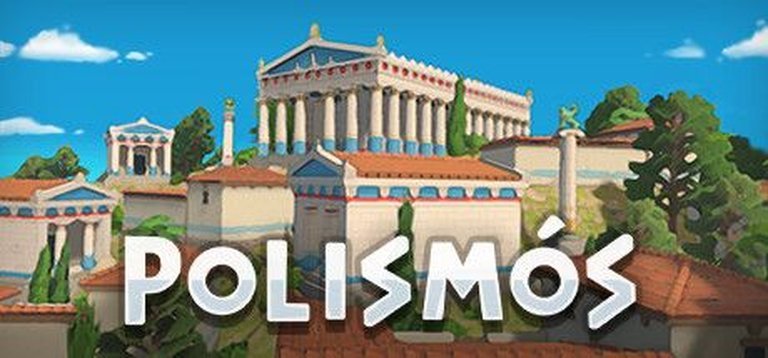
Polismos is a historical city-building simulation game set in ancient Greece, where players take on the role of a leader tasked with transforming a fledgling city-state into a thriving metropolis. The game challenges players to balance internal governance, resource management, and diplomacy while attending to the needs of their citizens to prevent unrest. With over 150 historical city maps to choose from, including iconic locations like Athens and Sparta, players must navigate complex economic systems, trade valuable resources, and enact wise policies to ensure prosperity. External relations with neighboring cities offer both opportunities for commerce and potential threats, adding depth to the strategic gameplay. The game features a diagonal-down perspective with a free camera, real-time pacing, and a mix of managerial and city-building mechanics, all set against the backdrop of classical antiquity.
Where to Buy Polismos
PC
Polismos Mods
Polismos Guides & Walkthroughs
Polismos Reviews & Reception
store.steampowered.com (72/100): Mostly Positive
steamcommunity.com : Love the game so much, can’t wait for the full release. I was a big Zeus + Poseidon fan and this feels far more like it than any others I’ve played.
steambase.io (72/100): Polismos has earned a Steambase Player Score of 72 / 100.
Polismos: A Modern Homage to Classical City-Building
Introduction: The Spirit of Zeus Reborn
Few genres in gaming are as enduring—or as nostalgic—as the historical city-builder. For veterans of Zeus: Master of Olympus and Pharaoh, the release of Polismos in December 2024 felt like a long-awaited homecoming. Developed by the one-person studio Composition GS, this indie title dares to revive the spirit of Impressions Games’ classics while carving its own niche in the modern strategy landscape. But does it succeed in capturing the magic of its predecessors, or does it falter under the weight of its ambitions?
Polismos is a real-time city-building simulation set in Classical Greece, where players must balance economic growth, diplomatic relations, and the ever-present threat of unrest. With 150+ historical maps, a deep resource management system, and a diplomacy-driven approach to expansion, it promises a fresh take on the genre. Yet, as with any labor of love, its execution is a mix of brilliance and growing pains.
This review will dissect Polismos from every angle—its development history, narrative and thematic depth, gameplay mechanics, art and sound design, reception, and legacy. By the end, we’ll determine whether it stands as a worthy successor to the greats or merely a noble experiment in revival.
Development History & Context: A One-Person Odyssey
The Studio Behind the Polis
Polismos is the brainchild of Composition GS, a solo developer whose passion for ancient history and city-builders is evident in every pixel. Unlike AAA studios with vast resources, Composition GS operates as a one-person team, handling everything from coding to design to community engagement. This indie approach gives the game a personal touch but also introduces limitations in scope and polish.
The developer has been transparently active on Steam forums, engaging with players, addressing feedback, and teasing future updates—a refreshing contrast to the often-opaque communication of larger studios. This direct line to the community has shaped Polismos’s post-launch trajectory, with major updates planned for early 2025 based on player suggestions.
Technological Constraints & Design Philosophy
Built in Unity, Polismos leverages modern tools to recreate the isometric, diagonal-down perspective reminiscent of Zeus and Caesar. However, unlike its predecessors, it opts for a real-time simulation rather than a paused planning phase, forcing players to think on their feet.
The game’s system requirements are modest:
– Minimum: i5-2400, 8GB RAM, GTX 760
– Recommended: i5-7600, 16GB RAM, GTX 1660
This ensures accessibility, though some players have reported UI scaling issues and minor performance hiccups.
The Gaming Landscape at Launch
Polismos entered a crowded but hungry market. While city-builders like Cities: Skylines and Frostpunk dominate modern discussions, historical city-builders have been scarce since the decline of Impressions Games. Recent attempts like The Settlers and Anno 1800 have leaned into different mechanics, leaving a gap for a true spiritual successor to Zeus.
Polismos fills that niche but faces stiff competition from:
– Dwarf Fortress (for depth)
– Banished (for survival-city building)
– Foundation (for medieval aesthetics)
Its $19.99 price point and Steam Deck compatibility make it an attractive option for strategy enthusiasts, but its lack of a campaign mode and limited tutorialization may deter casual players.
Narrative & Thematic Deep Dive: The Soul of a Greek City-State
Plot & Setting: A Sandbox of Antiquity
Polismos eschews a traditional linear campaign in favor of a sandbox experience where players choose from 150+ historical city maps, each with unique geographical and economic challenges. Whether you’re ruling Athens, Sparta, or a tiny island settlement, your decisions shape the city’s fate.
The game’s narrative emerges organically through:
– Diplomatic interactions (alliances, tributaries, wars)
– Economic struggles (famines, trade embargoes)
– Internal politics (family loyalty, unrest)
There’s no voice acting or scripted storytelling, but the emergent gameplay creates its own drama. A poorly managed grain shortage can lead to riots; a well-timed trade deal can secure your city’s future.
Themes: Power, Survival, and the Burden of Leadership
At its core, Polismos explores:
1. The Fragility of Civilization – One bad harvest can collapse your economy.
2. The Cost of Expansion – Do you conquer neighbors or trade peacefully?
3. The Illusion of Control – Even the best-laid plans can unravel.
The game doesn’t romanticize ancient Greece; it presents it as a harsh, competitive world where survival depends on wise governance.
Characters & Dialogue: The Silent Citizens
Unlike Zeus, which featured gods and heroes, Polismos focuses on abstracted families and workers. There are no named characters, but the needs of your populace (food, housing, luxury goods) drive the experience.
The UI conveys information efficiently, though some players have criticized the lack of personality in the city’s inhabitants. A future update introducing named advisors or historical figures could add much-needed depth.
Gameplay Mechanics & Systems: The Engine of the Polis
Core Gameplay Loop: Build, Trade, Survive
Polismos revolves around three pillars:
1. Resource Management – Balancing 11 consumption goods (grain, wine, olive oil, etc.).
2. Diplomacy & War – Negotiating with neighboring cities or crushing them.
3. Urban Planning – Optimizing housing, markets, and production chains.
Economy & Trade: The Lifeblood of Your City
The trade system is both brilliant and frustrating:
– Imports/Exports are handled through Prytaneions and Trade Depots.
– Supply chains require careful placement (e.g., wineries near vineyards).
– Trade routes are abstracted—no caravans or ships are visible, which some players find immersion-breaking.
A common complaint is that late-game trade becomes unwieldy, with players struggling to meet the demands of 15+ families.
Combat & Diplomacy: A Simplified Approach
Unlike Zeus, which had direct military control, Polismos abstracts warfare:
– Military strength is determined by barracks and training grounds.
– Battles are automated—no real-time tactics.
– Diplomacy is key—bribing or allying with neighbors is often smarter than conquest.
This streamlined approach has divided players:
– Praise: Less micromanagement, more focus on city-building.
– Criticism: Feels too hands-off for strategy purists.
UI & Quality of Life: A Work in Progress
The UI is functional but clunky:
– No pause button (a major oversight for a real-time game).
– Small text and poor scaling on higher resolutions.
– Trade mechanics lack clarity (as seen in developer responses on Steam).
The developer has acknowledged these issues and promised UI improvements in future updates.
World-Building, Art & Sound: The Aesthetic of Antiquity
Visual Design: A Love Letter to the Past
Polismos nails the aesthetic of Classical Greece:
– Isometric, hand-drawn buildings evoke Zeus and Pharaoh.
– Detailed city layouts with agoras, temples, and harbors.
– Day/night cycles and seasonal changes add immersion.
However, animations are minimal—ships don’t sail, traders don’t move—and some players wish for more visual feedback.
Sound Design: The Ambience of a Living City
The soundtrack is understated but effective, blending lyre music and ambient marketplace noises. There’s no voice acting, but the sound of construction, trade, and unrest helps sell the illusion of a living city.
Reception & Legacy: A Promising but Flawed Revival
Critical & Commercial Reception
- Steam Reviews: 72% Positive (43 reviews as of early 2025).
- Player Feedback: Praised for depth and historical authenticity, criticized for UI issues and late-game balance.
- Sales: Modest but steady, with peak concurrent players at 22 (per Steambase).
Influence & Future Potential
Polismos has already inspired discussions about reviving the historical city-builder genre. If Composition GS continues refining the game, it could become a cult classic—but it needs:
– A campaign mode (for narrative depth).
– Better tutorials (to onboard new players).
– More visual polish (animations, unit movement).
Conclusion: A Noble Experiment with Room to Grow
Final Verdict: 7.5/10 – “A Promising Foundation”
Polismos is not a perfect game, but it’s a passionate, well-researched homage to the city-builders of yesteryear. Its deep economy, historical setting, and emergent storytelling make it a must-play for fans of Zeus and Pharaoh, but its clunky UI, abstracted combat, and lack of polish hold it back from greatness.
If you love historical city-builders, buy it—but temper your expectations. With continued updates, Polismos could evolve into something truly special. For now, it’s a diamond in the rough, waiting for its final polish.
Recommendation:
✅ For: Fans of Zeus, Pharaoh, and deep economic sims.
❌ Avoid If: You prefer modern city-builders with hand-holding or real-time combat.
Final Thought:
“Polismos proves that the spirit of Impressions Games lives on—it just needs a little more time to mature.”*
Would you like a follow-up review after the January 2025 update? Let me know in the comments! 🏛️