
- Release Year: 2013
- Platforms: PlayStation 3, Windows
- Publisher: Kalypso Media Digital Ltd., Kalypso Media GmbH
- Genre: Compilation
- Average Score: 85/100
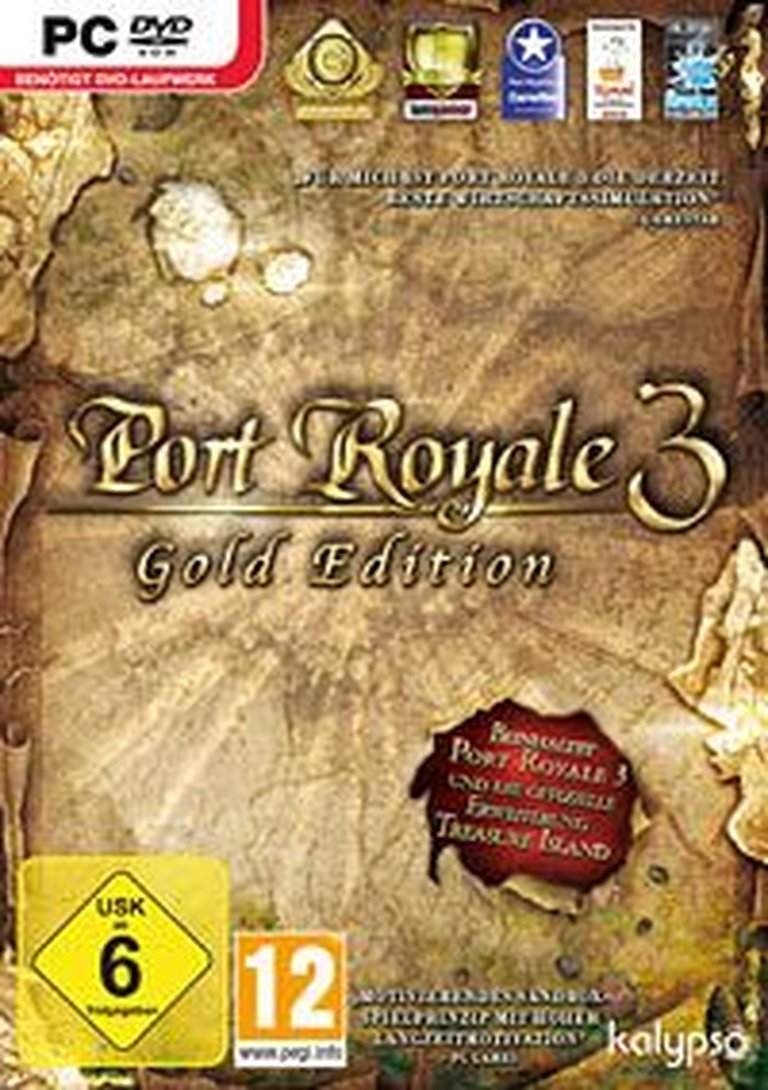
Description
Port Royale 3: Gold Edition is a compilation of the business simulation game set in the 16th and 17th century Caribbean, including the base game Port Royale 3: Pirates & Merchants and DLCs Dawn of Pirates, Harbour Master, and New Adventures. Players embody a young Spanish explorer shipwrecked in Port Royale, who can pursue the Viceroy’s daughter via the economic ‘Path of the Trader,’ developing colonies and trading goods, or the combative ‘Path of the Adventurer,’ engaging in piracy, real-time naval battles, and town management in an open-ended world.
Gameplay Videos
Where to Buy Port Royale 3: Gold Edition
PC
Port Royale 3: Gold Edition Cracks & Fixes
Port Royale 3: Gold Edition Guides & Walkthroughs
Port Royale 3: Gold Edition Reviews & Reception
gamesreviews.com (70/100): If it clicks, Port Royale probably won’t leave your PlayStation 3.
gamespot.com (100/100): by far the best reward-for-grinding strategy sandbox ever made.
Port Royale 3: Gold Edition: Review
Introduction
In the swashbuckling seas of the 17th-century Caribbean, where empires clash and fortunes are forged in gunpowder and gold, Port Royale 3: Gold Edition beckons players to captain their destiny amid colonial intrigue. As the definitive compilation of the 2012 base game Port Royale 3: Pirates & Merchants—bundling expansions like Dawn of Pirates, Harbour Master, and New Adventures—this Gold Edition arrived in 2013 as a comprehensive package for strategy enthusiasts craving economic empire-building laced with naval warfare. Building on the legacy of Ascaron’s earlier entries (Port Royale in 2002 and Port Royale 2 in 2004), it marked Gaming Minds Studios’ inaugural stab at the series, transforming a niche trade simulator into a sprawling sandbox of commerce, conquest, and piracy. My thesis: While Port Royale 3: Gold Edition delivers unmatched depth in simulating Caribbean colonial life, its deliberate pacing, menu-heavy interface, and uneven polish cement it as a cult classic for dedicated sim fans rather than a mainstream triumph.
Development History & Context
Gaming Minds Studios emerged from the ashes of Ascaron Entertainment’s 2009 bankruptcy, founded by publisher Kalypso Media to carry forward beloved simulation franchises like Port Royale and Patrician. This German developer, specializing in economic and management sims, unveiled Port Royale 3 at Gamescom 2011 in Cologne, positioning it as a bold evolution amid a gaming landscape dominated by fast-paced action titles like Assassin’s Creed and emerging open-world epics. The base game launched on PC in May 2012, followed by console ports on Xbox 360 and PlayStation 3 in October 2012, with the Gold Edition consolidating all DLC into a single 2013 release for Windows and PS3 (priced around $20-30, now bargain-bin at $9.99 on GOG).
Technological constraints of the era shaped its design: early 2010s hardware prioritized scalability across PC and consoles, leading to a top-down strategic map for overland trade (criticized for dated visuals) juxtaposed with detailed 3D town views and real-time ship battles. Kalypso’s vision emphasized “fluid diplomacy” and player agency in a multiplayer-enabled sandbox—up to four players online—diverging from predecessors’ single-ship focus. This reflected the post-Sid Meier’s Pirates! (2004) hunger for deeper economic layers in pirate sims, amid a sim genre resurgence (Anno series, Tropico). Yet, console ports faced scrutiny for adapting mouse-driven menus to controllers, a challenge Kalypso met admirably but not flawlessly, as noted in reviews praising DualShock navigation despite the genre’s PC roots.
Narrative & Thematic Deep Dive
Port Royale 3: Gold Edition weaves a lightweight yet thematically rich narrative around a customizable young Spanish commoner shipwrecked in Port Royale, thrusting players into the heart of New World rivalries among Spain, England, France, and the Netherlands. The core campaign splits into two archetypal paths—”Path of the Trader” and “Path of the Adventurer”—framing a romantic pursuit of Elena, the Viceroy’s daughter, as a vehicle for economic or martial ascent.
In the Trader arc, the protagonist aids Elena’s humble hometown of Cayman, long neglected by colonial powers. Themes of bootstrapped capitalism shine: players grind trade routes, erect businesses (e.g., rum distilleries from sugar), and curry favor to secure building permits, transforming a backwater into a metropolis. A rival suitor’s flashy gifts underscore the narrative’s critique of superficial wealth versus sustainable growth, mirroring real 17th-century mercantilism where towns like Port Royale boomed on plantation economies. Dialogue is sparse but flavorful, delivered via cutscenes with period-appropriate accents, emphasizing perseverance amid fickle politics—alliances shift yearly, echoing historical treaties like the Peace of Ryswick (1697).
The Adventurer path pivots to swashbuckling romance-thriller: Elena’s abduction by French-hired pirates sparks total war. Players issue Letters of Marque to legitimize buccaneering, battling infamous sea wolves from fortified lairs. Themes of ambition, betrayal, and moral ambiguity dominate—piracy yields quick gold but invites universal enmity, contrasting the Trader’s steady ascent. Expansions amplify this: Dawn of Pirates adds pirate strongholds and revenge quests; New Adventures introduces scenario challenges; Harbour Master focuses on port optimization. Characters like the Viceroy and Elena are archetypal (damsel, mentor), with dialogue competent but unmemorable—serviceable framing for sandbox freedom. Underlying motifs probe colonialism’s duality: prosperity through exploitation, where razing towns or automating fleets dehumanizes the era’s brutal trade winds.
Gameplay Mechanics & Systems
At its core, Port Royale 3: Gold Edition masterfully interlaces business simulation with real-time tactics, creating addictive loops of accumulation and expansion. Players start small—trading staples like corn, sugar, and tobacco between 50+ Caribbean ports—escalating to convoy automation, town ownership, and fleet command. Core progression ties to net worth: early limits (few fleets, permits) unlock via levels, enabling unlimited scaling.
Trade & Economy: Monitor fluctuating goods demand (e.g., wood in shipyards, bricks for growth), set routes for passive income, and invest in raw materials. Towns evolve visually—humble wharfs to bustling metropolises—a rewarding loop critiqued for micromanagement overload. UI shines on PC (intuitive radial menus) and impressively adapts to controllers, with analogue navigation easing town screens despite menu density.
Combat: Real-time naval battles innovate over predecessors: command up to three ships (player-swappable), positioning broadsides, chain shots for sails, or grapples for boarding. Escorts automate competently, but foes scale brutally—Ships of the Line dwarf Pinnaces. It’s tactical chess on waves, not arcade frenzy, suiting sim purists but alienating action seekers (as per GameSpot’s “smooth but not fun” verdict).
Progression & Innovation: Diplomacy fluctuates with actions—befriend nations for perks, raid for Letters of Marque. Missions (supply runs, escorts) boost relations; free play/scenarios add replayability, with online rankings. DLCs extend: Harbour Master refines port management; others add pirate campaigns. Flaws persist—slow early hours, repetitive grinds, pathfinding glitches—but automation and multiplayer (LAN/Internet, 4-player) mitigate for veterans.
| Mechanic | Strengths | Weaknesses |
|---|---|---|
| Trade Routes | Highly automatable; deep supply/demand sim | Tedious manual tweaks |
| Naval Combat | Fleet flexibility; ship-switching | Menu-driven, lacks spectacle |
| Town Building | Visual progression; economic ripple effects | Time sinks for optimization |
| Diplomacy | Dynamic alliances/wars | Fickle AI predictability |
World-Building, Art & Sound
The 17th-century Caribbean pulses with authenticity: 60 historical ports from Havana to Bridgetown, factional strongholds, and pirate havens evoke the Age of Sail. Fluid politics—Spain’s dominance crumbling under Anglo-Dutch assaults—mirrors events like the Anglo-Spanish War, with fickle wars forcing adaptive strategies. Atmosphere thrives in 3D harbors (vibrant markets, swaying palms) and cutscenes, but the hex-map world feels archaic, a “mixed bag” per Midlife Gamer.
Visuals dazzle in motion—detailed ships, cannon smoke, town sprawl—but stutter on consoles and clash stylistically (gorgeous locals vs. bland overhead). Sound design impresses modestly: lapping waves, creaking rigging, and a “magical” orchestral score (per user reviews) immerse during long hauls, bolstered by era-appropriate chants and broadsides. These elements coalesce into a lived-in sandbox, where economic ripples (booming rum trade floods markets) heighten verisimilitude, though sparse voicework limits emotional pull.
Reception & Legacy
Launch reception was middling: Metacritic scores hovered at 54/100 (PC), 56/100 (Xbox 360), with PS3 lacking aggregates due to sparse coverage. Critics lambasted its “incredibly slow pace” (Midlife Gamer, 6/10) and lack of joy despite depth (GameSpot, 5/10), calling combat “menu-driven” and visuals inconsistent. Yet, niche praise emerged—GamesReviews awarded 7/10 for “hundreds of hours” potential, controller prowess, and political depth, dubbing it a “niche release” rivaling Sid Meier’s Pirates! in scale if not accessibility. No MobyScore or player reviews surfaced for Gold Edition, but user anecdotes (e.g., GameSpot’s 10/10 grinder testimonial) hail it as a “sandbox ever made.”
Commercially modest, it fueled sequels (Port Royale 4, 2020) and bundles (Doppelpack with Patrizier IV), influencing trade sims like Anno 1800 with its diplomacy-economy fusion. Legacy endures as Gaming Minds’ breakout, preserving Port Royale‘s cult status amid modern pirate revivals (Sea of Thieves), though eclipsed by flashier titles. Its Gold Edition endures on GOG/PSN, a historian’s gem for colonial sim dissection.
Conclusion
Port Royale 3: Gold Edition stands as a monumental, if flawed, tribute to 17th-century buccaneering economics—its labyrinthine systems rewarding patient architects of empire with godlike satisfaction, yet repelling with glacial onboarding and tactical austerity. Exhaustive in scope, from convoy tinkering to factional intrigue, it carves a niche amid strategy pantheon, outshining predecessors in multiplayer and conquest while stumbling on pacing and spectacle. For sim aficionados, it’s essential: 7.5/10, a definitive place in video game history as the unpolished heart of Caribbean capitalism. Casual sailors, beware— this Gold demands devotion to yield its treasures.