
- Release Year: 2012
- Platforms: PlayStation 3, Windows, Xbox 360
- Publisher: Kalypso Media Digital Ltd., Kalypso Media GmbH
- Developer: Gaming Minds Studios GmbH
- Genre: Simulation, Strategy, Tactics
- Perspective: Diagonal-down
- Game Mode: Online PVP, Single-player
- Gameplay: Business simulation, City building, Diplomacy, Managerial, Sea combat, Trade routes
- Setting: Age of Discovery, Caribbean, Enlightenment, North America, Sea pirates, South America
- Average Score: 75/100
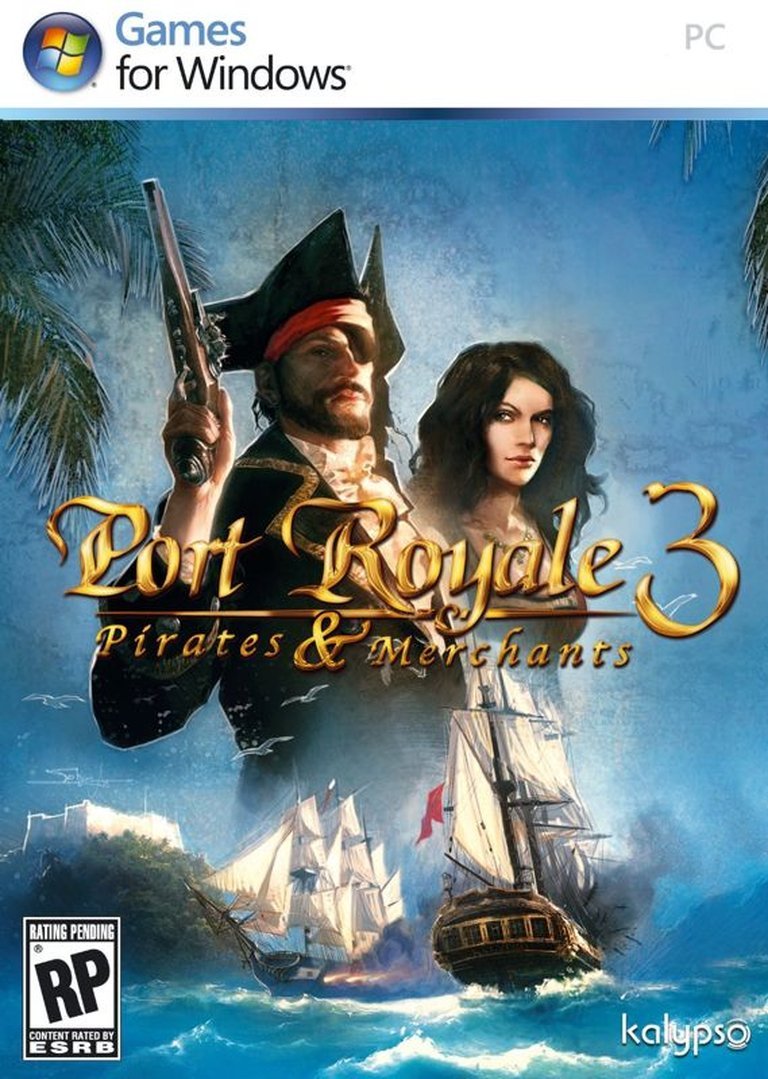
Description
Port Royale 3: Pirates & Merchants is a business simulation game set in the 17th-century Caribbean, where players take on the role of an independent captain navigating the political and economic landscape of the New World. The game offers two distinct career paths: Adventurer, which emphasizes combat and conquest, and Trader, which focuses on establishing trade routes and city building. Players can engage in fluid diplomacy, forming alliances or rivalries with major European powers and pirate factions, while also enjoying a multiplayer mode for up to four players.
Gameplay Videos
Where to Buy Port Royale 3: Pirates & Merchants
PC
Port Royale 3: Pirates & Merchants Guides & Walkthroughs
Port Royale 3: Pirates & Merchants Reviews & Reception
metacritic.com (86/100): Port Royale 3 is currently one of the best trading simulations on the market.
mail.hookedgamers.com (81/100): Sea combat is spot on, Caribbean setting is a nice change from Northern Europe.
consolemonster.com : The Trader campaign really failed to engage me as a player and I can’t pinpoint why.
Port Royale 3: Pirates & Merchants Cheats & Codes
PC
Use PLITCH software to activate cheats.
| Code | Effect |
|---|---|
| Gold +50.000 | Adds 50,000 gold |
| Gold for trading (50.000.000) | Adds 50,000,000 gold for trading |
| Unlimited resources for sale | Unlimited resources available for sale |
| Cargo bay limit 2.500 | Sets cargo bay limit to 2,500 |
| Empty cargo bay | Empties the cargo bay |
| Full cargo bay | Fills the cargo bay |
| Full Reputation Spain (100%) | Sets reputation with Spain to 100% |
| Full Reputation England (100%) | Sets reputation with England to 100% |
| Full Reputation France (100%) | Sets reputation with France to 100% |
| Full Reputation Netherlands (100%) | Sets reputation with Netherlands to 100% |
| 5.000 weapons | Adds 5,000 weapons |
| 5.000 ammo | Adds 5,000 ammo |
| Ship-Godmode | Makes the ship invulnerable |
| 250 barrel | Adds 250 barrels |
| 5.000 seamen | Adds 5,000 seamen |
Port Royale 3: Pirates & Merchants – A Comprehensive Retrospective
Introduction: The Legacy of a Caribbean Dream
Port Royale 3: Pirates & Merchants (2012) is a game that dares to blend the thrill of high-seas adventure with the meticulous intricacies of economic simulation. Developed by Gaming Minds Studios and published by Kalypso Media, it is the third installment in the Port Royale series, a spiritual successor to Ascaron Entertainment’s beloved Patrician and Port Royale games. Set in the 17th-century Caribbean, the game invites players to carve out their destiny as either a cunning merchant or a fearsome pirate, all while navigating the treacherous waters of colonial politics, trade monopolies, and naval warfare.
At its core, Port Royale 3 is a love letter to the golden age of piracy and mercantilism, offering a sandbox where ambition and strategy dictate success. Yet, it is also a game caught between two worlds: the depth of its simulation mechanics and the accessibility demanded by modern audiences. This review will dissect the game’s development, narrative, gameplay, and legacy, exploring how it stands as both a triumph and a cautionary tale in the annals of business simulation games.
Development History & Context: Rising from the Ashes
The Fall of Ascaron and the Birth of Gaming Minds Studios
The Port Royale series traces its roots to Ascaron Entertainment, a German studio renowned for its economic simulation games. After Ascaron’s bankruptcy in 2009, Kalypso Media acquired the rights to the Port Royale and Patrician franchises, establishing Gaming Minds Studios to continue their legacy. This transition was pivotal—Port Royale 3 was not just a sequel but a rebirth, tasked with modernizing a beloved formula while retaining the essence of its predecessors.
Technological Constraints and Design Philosophy
Released in 2012, Port Royale 3 faced the challenge of balancing depth with accessibility. The game was built using middleware like Granny 3D for graphics and RakNet for multiplayer functionality, reflecting the technological standards of the era. However, the development team, led by Creative Director Daniel Dumont and Technical Director Kay Struve, prioritized gameplay over graphical fidelity. The result was a game that, while visually serviceable, often felt mechanically ambitious but technically uneven.
The Gaming Landscape of 2012
The early 2010s were a transitional period for strategy and simulation games. Titles like Sid Meier’s Civilization V (2010) and Tropico 4 (2011) dominated the genre, emphasizing streamlined mechanics and broad appeal. Port Royale 3 arrived in this landscape as a niche product—a hybrid of business simulation and real-time strategy that catered to a specific audience. Its multiplatform release (PC, Xbox 360, PlayStation 3) further complicated its design, as console adaptations of complex PC simulations were (and remain) notoriously difficult to execute well.
Narrative & Thematic Deep Dive: A Tale of Two Paths
The Dual Campaigns: Trader vs. Adventurer
Port Royale 3 structures its single-player experience around two distinct campaigns, each offering a unique lens through which to view the Caribbean’s tumultuous 17th century:
-
Path of the Trader
- Plot: The player assumes the role of a young Spanish commoner shipwrecked in Port Royale. To win the heart of Elena, the Viceroy’s daughter, the protagonist must transform the impoverished town of Cayman into a thriving economic hub. The narrative is one of perseverance and economic ingenuity, pitting the player against a rival suitor who relies on superficial charm rather than substantive contributions.
- Themes: The Trader’s path explores themes of colonial exploitation, economic imperialism, and the power of infrastructure. It is a story about how wealth and influence are built not through brute force but through shrewd negotiation, supply chain mastery, and political maneuvering.
-
Path of the Adventurer
- Plot: Elena is kidnapped by pirates hired by a scheming French nobleman, forcing the player into a life of piracy and naval warfare. The campaign is a swashbuckling tale of rescue and revenge, with the player battling French forces and infamous pirates to save their beloved.
- Themes: This path delves into the romanticized myth of piracy, the moral ambiguity of privateering, and the brutal realities of colonial warfare. It contrasts the idealized freedom of the pirate’s life with the harsh consequences of violence and betrayal.
Characters and Dialogue: A Missed Opportunity
While the premise is compelling, Port Royale 3’s narrative execution is uneven. Characters like Elena and the Viceroy are archetypal, lacking the depth to make their personal stakes truly resonant. Dialogue is functional but rarely memorable, serving more as a vehicle for exposition than genuine storytelling. The game’s strength lies not in its scripted moments but in the emergent narratives players create through their actions—whether through cutthroat trade monopolies or daring naval raids.
Underlying Themes: Capitalism and Colonialism
At its heart, Port Royale 3 is a meditation on the birth of global capitalism and the exploitative nature of colonialism. The Caribbean of the 17th century was a battleground for European powers, where wealth was extracted through trade, slavery, and conquest. The game’s mechanics reflect this reality:
– Trade Routes as Power: Controlling the flow of goods (tobacco, sugar, lumber) is akin to controlling the lifeblood of empires.
– Piracy as Resistance (or Exploitation): Players can choose to be either a sanctioned privateer (a tool of empire) or a rogue pirate (a disruptor of the status quo).
– Diplomacy as a Double-Edged Sword: Alliances shift like the tides, mirroring the fickle nature of colonial politics.
Gameplay Mechanics & Systems: The Devil in the Details
Core Gameplay Loops: Trade, Conquest, and Diplomacy
Port Royale 3 is structured around three primary gameplay pillars:
-
Economic Simulation
- Trade Mechanics: Players buy and sell goods across a network of Caribbean ports, with prices fluctuating based on supply and demand. The game’s economy is dynamic, responding to player actions (e.g., flooding a market with tobacco will crash prices).
- Production Chains: Advanced goods require raw materials from distant ports, encouraging players to establish complex trade networks.
- Reputation System: Successful trades and completed contracts improve standing with towns and nations, unlocking new opportunities.
-
Naval Combat and Piracy
- Ship Customization: Players can outfit vessels ranging from nimble Pinnaces to hulking Ships of the Line, each with unique strengths and weaknesses.
- Real-Time Battles: Combat is tactical but simplistic, with players controlling up to three ships in a fleet. The lack of depth in naval warfare is a common criticism, as battles often devolve into broadside exchanges with little strategic nuance.
- Privateering vs. Piracy: A Letter of Marque allows players to attack enemy nations without being labeled a pirate, adding a layer of political strategy to combat.
-
City Building and Conquest
- Urban Development: Players can purchase building permits to construct warehouses, factories, and residences, transforming towns into economic powerhouses.
- Military Conquest: Towns can be captured through siege warfare, though this mechanic is underdeveloped compared to the economic systems.
Progression and Automation
As players accumulate wealth, they unlock the ability to automate trade routes and fleet management. This feature is a double-edged sword:
– Pros: Reduces micromanagement, allowing players to focus on high-level strategy.
– Cons: Can trivialize the game’s challenge, making late-stage gameplay feel like a passive income simulator.
User Interface: A Flawed Masterpiece
The UI is one of Port Royale 3’s most polarizing elements. While it conveys a wealth of information, its design is often cluttered and unintuitive, particularly on console. Key issues include:
– Overwhelming Menus: Managing multiple fleets and trade routes requires navigating dense, text-heavy interfaces.
– Poor Feedback: The game frequently fails to clearly communicate why certain actions succeed or fail (e.g., sudden price crashes or diplomatic shifts).
– Console Limitations: The Xbox 360 and PS3 versions suffer from cumbersome controls, making precise fleet management a chore.
Multiplayer: A Noble Experiment
The game’s multiplayer mode, supporting up to four players, is an ambitious but flawed addition. While the idea of competing for Caribbean dominance is appealing, technical issues (crashes, desyncs) and a lack of depth in combat mechanics limit its longevity. The multiplayer community was small even at launch, and today it is virtually nonexistent.
World-Building, Art & Sound: The Caribbean as a Character
Setting and Atmosphere
Port Royale 3’s greatest strength is its evocative depiction of the 17th-century Caribbean. The game’s world is a vibrant tapestry of colonial outposts, pirate havens, and bustling trade hubs, each with distinct architectural styles and cultural influences. The sense of place is palpable, from the Spanish forts of Havana to the Dutch trading posts of Curaçao.
Visual Design: A Mixed Bag
- Strengths:
- Ship Models: The game’s vessels are meticulously detailed, from the creaking wooden hulls of merchant ships to the imposing cannons of warships.
- Port Designs: Each town feels unique, reflecting the architectural aesthetics of its controlling nation.
- Weaknesses:
- Overworld Map: The trade map is functional but visually uninspiring, resembling a static board game rather than a living sea.
- Character Models: NPCs and advisors are stiffly animated, with facial expressions that fail to convey emotion.
Sound Design and Music
The audio design is a standout feature, immersing players in the sights and sounds of the Caribbean:
– Ambient Sounds: The creaking of ships, the crash of waves, and the distant thunder of cannons create a rich auditory backdrop.
– Music: Composed by Rocketaudio, the soundtrack blends orchestral arrangements with period-appropriate instruments, evoking both the grandeur of colonial empires and the lawless freedom of piracy.
Reception & Legacy: A Divided Verdict
Critical Reception: Praise and Backlash
Port Royale 3 received mixed reviews, with critics praising its depth and ambition while lamenting its technical flaws and uneven execution. Aggregate scores reflect this divide:
– Metacritic: 54/100 (PC), 56/100 (Xbox 360)
– MobyGames: 6.2/10 (based on 22 critic reviews)
Positive Highlights:
– German Publications (GameStar, 4Players): Lauded the game’s economic depth and sandbox freedom, with GameStar calling it “the best economic simulation currently available.”
– Hooked Gamers: Praised the naval combat and Caribbean setting, noting its appeal to fans of the genre.
Negative Criticisms:
– GameSpot (5/10): Criticized the grind of trading and the lack of fun in combat, describing it as “a slow, boring slog.”
– Jeuxvideo.com (4.5/10): Decried the game’s bugs, unintuitive interface, and repetitive gameplay loops.
– Console Adaptations: Reviewers like Console Monster highlighted the clunky controls and outdated visuals on Xbox 360 and PS3.
Commercial Performance and Player Reception
The game found a niche audience among fans of economic simulations, but its mainstream appeal was limited. Player reviews on Steam are “Mostly Positive” (73%), with many praising its depth while acknowledging its flaws. Common player criticisms include:
– Slow Early-Game Progression: The initial hours require tedious manual trading, which can deter casual players.
– Shallow Combat: Naval battles lack the tactical depth of games like Sid Meier’s Pirates! or Assassin’s Creed IV: Black Flag.
– Technical Issues: Bugs and crashes were prevalent at launch, though patches mitigated some of these problems.
Influence and Legacy
Despite its flaws, Port Royale 3 left a lasting impact on the genre:
– Paved the Way for Port Royale 4 (2020): The sequel refined many of the third installment’s mechanics, offering a more polished experience while retaining the series’ core identity.
– Inspired Indie Developers: Games like Uncharted Tides: Port Royal (2019) drew inspiration from Port Royale 3’s blend of trade and combat.
– Proved the Viability of Niche Simulations: Its modest success demonstrated that there remains an audience for complex economic games, even in an era dominated by action and open-world titles.
Conclusion: A Flawed Gem in the Rough
Port Royale 3: Pirates & Merchants is a game of contradictions. It is at once a brilliant economic simulation and a clunky, uneven experience. Its narrative is ambitious but underdeveloped, its combat visually impressive but mechanically shallow, and its interface information-rich but user-unfriendly. Yet, for all its flaws, it remains a compelling sandbox—a game that rewards patience, strategy, and a willingness to engage with its systems.
Final Verdict: 7/10 – A Niche Masterpiece
For Whom It Shines:
– Fans of economic simulations (Patrician, Rise of Venice) will find much to love in its deep trade mechanics.
– Players who enjoy emergent storytelling and sandbox freedom will appreciate the ability to carve their own path.
– History buffs will relish the authentic Caribbean setting and the game’s exploration of colonial economics.
For Whom It Falters:
– Those seeking fast-paced action or narrative depth will be disappointed.
– Console players may struggle with the cumbersome controls and technical limitations.
– Casual gamers may find the early-game grind and steep learning curve off-putting.
Place in Video Game History
Port Royale 3 stands as a transitional title—a bridge between the golden age of Ascaron’s simulations and the modern era of streamlined strategy games. It is not a perfect game, but it is an important one, a testament to the enduring appeal of complex, systems-driven gameplay. While it may not have achieved the widespread acclaim of its predecessors, it remains a cult classic, beloved by those who dare to navigate its treacherous waters.
Final Thought:
In the end, Port Royale 3 is like the Caribbean itself: beautiful, dangerous, and full of hidden depths. For the right player, it is a journey worth taking—just be prepared for storms along the way.