
- Release Year: 2016
- Platforms: Android, iPad, iPhone, Nintendo Switch, PlayStation 4, Windows, Xbox One
- Publisher: 505 Games S.R.L., Guangzhou Duoyi Network Co., Ltd., Spike Chunsoft Co., Ltd.
- Developer: keen games GmbH & Co. KG
- Genre: Action, RPG
- Perspective: 1st-person
- Game Mode: Co-op, Online Co-op, Single-player
- Gameplay: Action combat, Block-based construction, Boss battles, Building, Crafting, Exploration, Farming, Open World, Quests, Resource Management, RPG elements, Sandbox
- Setting: Fantasy
- Average Score: 75/100
Description
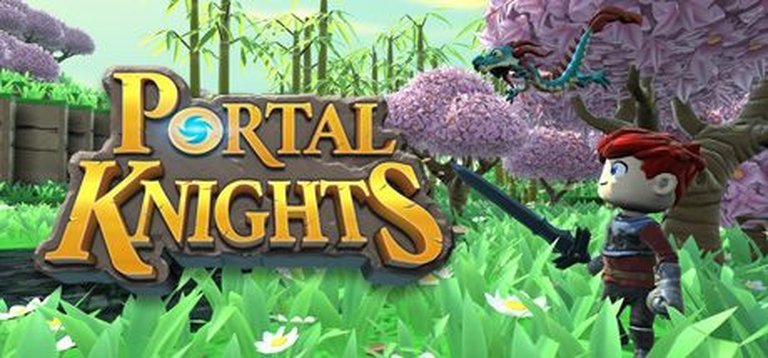
Portal Knights is a single-player and multiplayer action sandbox game with RPG elements, set in a fragmented fantasy world shattered by the Fracture. Players explore procedurally generated islands, rebuild ancient portals, and battle hostile creatures while crafting, building, and customizing their heroes in a blend of combat, exploration, and survival.
Gameplay Videos
Where to Buy Portal Knights
PC
Portal Knights Free Download
Portal Knights Cracks & Fixes
Portal Knights Patches & Updates
Portal Knights Mods
Portal Knights Guides & Walkthroughs
Portal Knights Reviews & Reception
fanboydestroy.com (90/100): Portal Knights is a ‘Minecraft Like’ that goes far beyond mere clone and adds many personal elements: a colorful and playful graphics, an immediate combat system.
trustedreviews.com : Portal Knights is a game that capitalises brilliantly on both its RPG and sandbox elements, elevating the merits of both.
imdb.com (60/100): Portal Knights is a similar mix of gathering resources, crafting weapons & tools and building dwellings.
Portal Knights: Review
Introduction
In the vast, ever-expanding universe of voxel-based sandbox games, few titles dared to bridge the gap between the emergent creativity of Minecraft and the structured progression of action-RPGs. Enter Portal Knights, a 2016 odyssey from German studio Keen Games that promised to shatter the boundaries of genre conventions. Released into Steam Early Access in February 2016 and officially launched in May 2017, the game tasked players with restoring a fractured fantasy world torn asunder by a cataclysmic event known as “The Fracture.” As customizable Portal Knights, players would traverse procedurally generated islands, rebuild ancient portals, and battle encroaching darkness—all while crafting, building, and leveling up. This review argues that Portal Knights succeeds masterfully as a streamlined, combat-driven alternative to Minecraft, offering accessible RPG mechanics and vibrant multiplayer camaraderie. Yet, its ambitions are ultimately hampered by a skeletal narrative, repetitive loops, and systemic flaws that prevent it from transcending its foundational inspirations. It stands as a compelling, if imperfect, synthesis of sandbox freedom and RPG structure—a valiant knight that, for all its polish, never quite dons the crown of legend.
Development History & Context
Portal Knights emerged from the fertile ground of Germany’s indie scene, developed by Keen Games (fresh off the action-RPG Sacred 3) and published by 505 Games. The vision, led by Creative Director Antony Christoulakis, was ambitious: to fuse the sandbox exploration of Minecraft with the tactical combat and character progression of JRPGs like The Legend of Zelda series. “The art style of the game was inspired by JRPG games such as the Legend of Zelda series,” noted the studio, aiming for a balance between blocky familiarity and visual polish. Technologically, the game leveraged procedural generation to create its 47+ islands, each a self-contained biome with unique resources and threats. This approach allowed for near-infinite replayability but also introduced constraints—early builds struggled with performance optimization and inventory bloat, necessitating a year-long Early Access phase (Feb 2016–May 2017) for refinement.
The gaming landscape in 2016 was dominated by Minecraft’s cultural hegemony, with titles like Terraria carving out niches in the voxel space. Portal Knights entered this arena as a deliberate counterpoint: a game with clear goals, structured progression, and deeper RPG mechanics. Its cross-platform ambition—eventually spanning Windows, PlayStation 4, Xbox One, Nintendo Switch, iOS, and Android—reflected a desire for accessibility, though this ambition sometimes led to compromises. As one critic noted, “The game was developed with console ports in mind from the outset, which resulted in simplified controls and UI at the expense of PC players.” The studio’s commitment was underscored by a dedicated post-launch support, with 17+ DLC packs expanding classes (Rogue, Druid), biomes, and cosmetics, cementing Portal Knights as a living, evolving product.
Narrative & Thematic Deep Dive
At its core, Portal Knights presents a deceptively simple premise: a world shattered by “The Fracture” must be reclaimed. Players awaken as one of the eponymous Portal Knights, tasked with journeying across floating islands, restoring ancient portals, and defeating the Hollow King—an ancient entity responsible for the cataclysm and its monstrous minions. Yet, this framework masks a narrative that is more functional than fleshed out. The plot unfolds through fragmented lore entries, environmental storytelling (e.g., melted helmets, crumbling journals), and perfunctory NPC dialogue. “The story of Portal Knights seems simple at first glance, yet there are many references and tidbits of story scattered about; describing characters, places and events,” admits the official wiki, highlighting its role as a loose backdrop for gameplay rather than a driving force.
Characters are archetypal and underdeveloped. The player’s customizable hero is a blank slate, while NPCs—limited to a handful per island—exist primarily as quest dispensers. Their dialogue is repetitive (“Go slay 10 creatures!”) and their motivations rarely explored. The Hollow King and his forces serve as a generic “big evil,” with hints of a larger conspiracy (e.g., an unnamed puppet master) teased only in the game’s epilogue. Thematically, the game explores restoration and heroism, but these concepts are undermined by shallow execution. The fractured world itself becomes the most compelling character—a “Crapsaccharine World” where vibrant biomes mask a grim reality. “The stark edges of the broken terrain and endless sky below the main islands constantly reminds the player that this is a shattered world,” one reviewer observed, yet this atmosphere is rarely leveraged for emotional depth. Ultimately, Portal Knights prioritizes gameplay over narrative, resulting in a world rich in potential but starved of substance.
Gameplay Mechanics & Systems
Portal Knights’ gameplay revolves around three interconnected loops: exploration, combat, and creation. Each island, accessible via reconstructed portals, offers a procedurally generated playground teeming with resources, enemies, and quests. Players begin by choosing one of three base classes—Warrior (melee tank), Mage (ranged spellcaster), or Ranger (archer/rogue hybrid)—each with distinct skill trees. Progression is RPG-driven: defeating enemies and completing quests rewards experience, which unlocks stat points (Strength, Dexterity, Intelligence) and class-specific abilities. A fourth point is auto-allocated, streamlining builds but reducing flexibility. Combat is a highlight, blending Zelda-inspired lock-on mechanics with telegraphed enemy patterns. “Attacking is a brain-free act: simply hold down the right trigger… for an endless stream of fireballs or sword slashes,” noted Trusted Reviews, but dodging and timing parries add strategic depth. Boss battles—encountered every 8–10 islands—serve as milestones, testing preparation and rewarding rare loot.
Crafting and building are equally central. Over 100 recipes allow players to transform mined ore, harvested flora, and slain monsters into tools, weapons, armor, and decorative blocks. The system is more robust than Minecraft’s, with tiers of gear required to progress, yet it suffers from opacity. “The game can’t quite match Minecraft’s unique style… nor Dragon Quest Builders’ story,” lamented Polygon, as recipes are often hidden behind menus and unclear resource requirements. Building, while creative, is constrained by the game’s portal-based structure; players can’t freely expand islands, limiting grand architectural ambitions. Multiplayer—supporting up to four players—mitigates these flaws, turning resource gathering into cooperative camaraderie. “Sharing the fun of exploring the worlds and discovering new things together is undoubtedly one of the game’s largest selling points,” praised Nintendo Life.
Yet, the loops reveal systemic flaws. Grinding for materials (e.g., 10 Titanium ores per bar) becomes tedious, and procedural generation often leads to resource deserts or frustrating darkness in moon biomes. “The mayonnaise doesn’t quite take,” concluded Jeuxvideo.com, as RPG mechanics clash with sandbox freedom. UI clunkiness further hampers flow, with nested menus and vague item descriptions slowing progression. Despite these issues, the core loop—explore, craft, fight—remains satisfying, especially with friends.
World-Building, Art & Sound
Portal Knights’ world is a masterclass in voxel artistry. Each island is a biome-themed microcosm: lush forests, arid deserts, and icy tundras rendered in vibrant, JRPG-inspired colors. The fractured setting—landmasses floating in an endless void—creates a sense of wonder and peril. “The visual effects… make for a nice laid-back adventure,” noted FanboyDestroy, though later biomes like the ash-covered “Lost Desert” introduce a grim, Lovecraftian contrast. Environmental storytelling flourishes; abandoned campsites, petrified trees, and eerie ruins hint at The Fracture’s devastation, reinforcing the game’s themes of decay and rebirth.
Character and enemy designs are charming if generic. Warriors clad in plate armor, mages wielding glowing staves, and pixel-perfect goblins maintain a consistent, cartoonish aesthetic. Armor tiers escalate from rustic leather to ornate golden sets, satisfying an “Elaborate Equals Effective” trope. Sound design complements the visuals, with Blake Robinson’s score shifting from adventurous melodies to tense battle themes. “The soundtrack is relaxing and appropriate to every moment of the game,” wrote a Metacritic user, though voice acting is limited to grunts and functional quips. Environmental audio—from rustling leaves to monster roars—immersive, but long load times between islands disrupt rhythm. Overall, Portal Knights’ art and sound create a cohesive, inviting world where the beauty of discovery tempers the brutality of combat.
Reception & Legacy
Upon its 2017 launch, Portal Knights received a “mixed or average” reception (Metacritic: 71–77 across platforms). Critics lauded its accessibility and multiplayer potential but lamented its narrative and repetition. “Portal Knights takes inspiration from a variety of games, blending the crafting and building… with loose RPG elements to make it a sandbox game with a goal,” summarized God is a Geek. Hardcore Gamer awarded it 4/5, calling it a “solid gateway game,” while GameStar criticized its “soulless grinding.” Player reviews were similarly divided; some praised its charm and co-op appeal, others its shallow endgame.
Over time, Portal Knights carved a niche as a “popcorn” multiplayer experience. As Nintendo-Online.de noted, “The multiplayer mode is what will make you start the game again.” Its legacy lies in its genre synthesis: it proved voxel games could support robust RPG mechanics without sacrificing accessibility. The game’s influence is evident in titles like Journey to the Savage Planet (developed by Keen Games alumni), though none replicated its specific blend. Its enduring appeal is fueled by consistent updates and DLC, turning it into a “living sandbox” for casual players. Yet, it never reached Minecraft’s cultural heights, remembered as a competent but derivative entry—a valiant knight whose domain, while vast, remained overshadowed by giants.
Conclusion
Portal Knights is a game of dual identities: a voxel sandbox yearning for RPG depth, and an action-RPG constrained by blocky limitations. It succeeds as a streamlined, combat-centric alternative to Minecraft, offering satisfying progression and vibrant multiplayer camaraderie. Its greatest strengths—accessible combat, procedural exploration, and creative building—create an engaging loop that shines brightest in cooperative play. However, these strengths are undermined by a skeletal narrative, repetitive mechanics, and systemic flaws like resource grinding and UI clutter. As a historical artifact, Portal Knights stands as a significant step in the evolution of voxel games, demonstrating the viability of genre fusion. Yet, it ultimately falls short of its inspirations, lacking Minecraft’s emergent creativity or Zelda’s narrative weight.
For players seeking a lighthearted adventure with friends, Portal Knights remains a worthy contender—a charming, if flawed, knight in a fractured realm. For historians, it represents a pivotal moment where sandbox ambition met RPG structure, leaving an indelible, if imperfect, mark on gaming’s ever-shifting landscape. In the end, Portal Knights is less a king and more a loyal squire: dutiful, capable, and endlessly adaptable, but forever in the shadow of its legendary predecessors.