
- Release Year: 2024
- Platforms: Windows
- Publisher: Retroburn
- Developer: Retroburn
- Genre: Driving, Racing
- Perspective: Behind view
- Gameplay: Arcade
- Setting: Futuristic, Sci-fi
Description
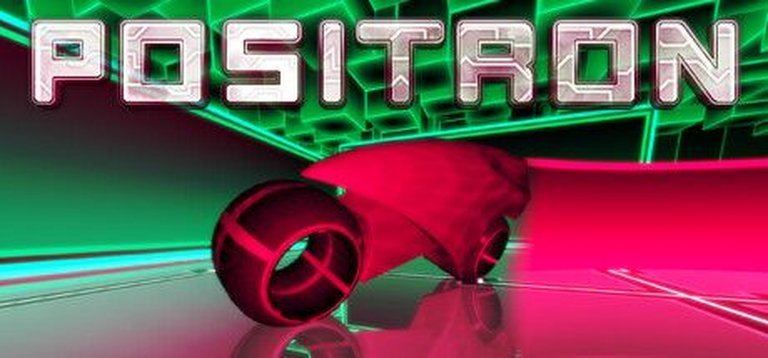
Positron is a sci-fi arcade racing game where players pilot light cycles in high-speed races from a behind-view perspective, inspired by Tron’s iconic digital arenas. Developed by Retroburn as a spare-time project, it features direct control mechanics and motorcycle-like vehicles, set in futuristic grids, and launched on Steam Early Access in November 2024.
Where to Buy Positron
PC
Positron Free Download
Positron: Review
Introduction
In the sprawling, ever-accelerating landscape of the video game industry, where a single day can see dozens of releases vying for attention, most titles occupy a fleeting moment in the cultural consciousness before fading into the vast archives of digital storefronts. Retroburn’s Positron, released into Steam Early Access on November 21, 2024, is a game that exists almost precisely in this liminal space. It is a title whispered about in niche corners—a “Tron fangame,” a “light cycle” racer with a motorcycle perspective—yet one that remains stubbornly, almost defiantly, undocumented. It has no critic reviews, no player reviews, no substantive press coverage, and only the barest metadata on aggregator sites. This review, therefore, is an exercise in archaeological reconstruction. It must piece together a portrait from studio comments, genre conventions, and the turbulent context of its release year. The thesis is this: Positron is not a game to be judged on its own merits, for those merits are currently inaccessible. Instead, it stands as a poignant artifact of the 2024 indie development ecosystem—a testament to spare-time passion, the enduring allure of a single iconic aesthetic, and the profound obscurity that can swallow even a released title in the modern digital deluge.
Development History & Context
The story of Positron is not one of grand announcements, crowdfunding campaigns, or years of dedicated press tours. Its history is written in the stark, honest prose of a Steam community discussion. Developer Retroburn, likely a solo or micro-studio operation, addressed a long-simmering thread titled “Finally we might get the game this year” in June 2024. Their update was characteristically unvarnished: “We’re bringing the game to Steam Early Access, this coming Thursday. November 21st! Positron is very much a spare time project, and we’ve only worked on it on-and-off when motivation strikes. This past year we’ve been working on it a few hours each weekend, and we’re finally happy with the general state of the game.”
This declaration places Positron within a specific and challenging context. 2024 was a year marked by unprecedented scale in the industry, but primarily in terms of contraction. As detailed in the year-in-review, nearly 15,000 jobs were cut across major publishers like Microsoft, EA, and Sony. Studios closed— Arkane Austin, Tango Gameworks—and iconic brands were sold off or shuttered. Against this backdrop of corporate retrenchment and risk-aversion, the image of a developer laboring on a passion project “a few hours each weekend” is both antithetical and resilient. There was no blue-sky innovation budget for Positron; its existence is a pure act of personal creative necessity. The “motivation strikes” comment is telling, hinting at the fragile, emotional lifecycle of such projects, vulnerable to the same burnout and disenchantment plaguing the professionals being laid off around them.
Technologically, the constraints are not those of hardware limitations but of human capital and time. The game’s listed attributes—”Racing / Driving,” “Behind view,” “Arcade,” “Direct control,” “Motorcycle,” “Sci-fi / futuristic,” and its tagging as a “Tron fangame” and “light cycle” title—suggest a focused design philosophy. It is not attempting to simulate motorcycle dynamics or build a sprawling open world. It is chasing a specific, visceral fantasy: the high-speed, grid-based combat of Tron‘s light cycles, translated into a third-person motorcycle racer. The choice of “Direct control” over a more complex simulation model is a pragmatic one, aligning with the “Arcade” genre and the likely scope of a spare-time project. The “Tron” aesthetic is a powerful, instantly recognizable shorthand that bypasses the need for extensive original world-building, allowing the developer to focus all limited resources on the core gameplay loop of movement and combat.
Narrative & Thematic Deep Dive
Based solely on the available metadata—genre, setting, and fangame status—the narrative and thematic layers of Positron must be inferred as fundamentally derivative and intentionally minimalist. As a “Tron fangame,” it exists in a specific subculture of fan creation that seeks to inhabit and extend the visual and conceptual vocabulary of the 1982 film and its sequels.
The core theme is the “digital gladiator.” The player is presumably a program or a user avatar within a neon-drenched, geometrically pure computer mainframe. The narrative, if one exists beyond the implicit, is likely expressed through environmental storytelling: the stark grids, the pulsating glowing lines, the minimalist UI. There will be no complex character arcs, no dialogue trees with deep choices. The “story” is the race; the conflict is absolute and immediate. You exist to outmaneuver and eliminate your opponents, leaving a deadly, permanent trail in your wake. The thematic depth, therefore, lies in the purity of this existential contest—a digital re-enactment of basic survival logic. The motorcycle, a vehicle of freedom and rebellion in other contexts, is here a tool of deterministic entrapment, its path becoming the very cage for its foes.
Any semblance of a plot would be an afterthought or a framing device, perhaps unlocked through progression, explaining why you are in this grid. But given the “light cycle” genre’s origins, such exposition is anathema to its appeal. The genius of Tron‘s light cycle arena was its stripped-bare, game-theory purity. Positron, as a fangame, is almost certainly devoted to preserving that purity. Its narrative, therefore, is not told but enacted in every second of high-speed evasion and aggressive walling. It is a game about the aesthetics of fatal geometry.
Gameplay Mechanics & Systems
Deconstructing the mechanics requires a leap from the provided tags to the established conventions of the genre. The “Arcade” and “Direct control” tags are the most informative. They promise a control scheme stripped of simulation: no leaning, no complex physics-based weight transfer. Acceleration, braking, and turning will be immediate and responsive, prioritizing player agency and reaction over realistic handling. The “Behind view” perspective in a motorcycle racer typically offers a clearer view of the immediate trail and opponents than a cockpit view, a pragmatic choice for competitive play in a constrained arena.
The core loop is the light cycle duel. Players pilot motorcycles that leave a solid, impassable trail. Contact with a trail or the arena boundary results in instant destruction. Victory is achieved by forcing an opponent to crash into your trail, often through a combination of feints, tight turns, and psychological pressure. The “Sci-fi / futuristic” setting manifests not just in visuals but likely in subtle mechanics: perhaps a “boost” that temporarily generates a longer, faster trail; a “jump” or “hop” mechanic to briefly skip over trails; or weapon-like power-ups that alter trail properties (e.g., a temporary fading trail, a trail that can be remotely detonated).
The lack of any listed RPG elements (“Character progression”) or complex systems (“UI” details are non-existent) suggests a pure, session-based arcade experience. Players likely select a cycle (which may have minor stat variations in speed, acceleration, or turn radius) and are dropped into a match. There is no campaign, no leveling, no skill trees. The progression is purely skill-based and meta: mastering the tracks, refining techniques, and competing for the best time or elimination count.
Potential flaws, inherent to this design scope and development context, are numerous and predictable. The AI for opponents, if present, could be rudimentary—either abusively perfect or laughably weak. The online multiplayer component, a necessity for any modern fangame seeking a community, is a massive technical hurdle for a spare-time developer. Lag, netcode issues, and a tiny player base could doom the experience. The variety of tracks, if any, might be limited. The overall “game feel”—the weight of the bike, the satisfaction of the crash, the particle effects—might lack the polish of a AAA title. But these are not necessarily criticisms; they are the expected trade-offs of a passion project operating outside the commercial mainstream.
World-Building, Art & Sound
Here, the metadata provides the strongest clues. “Sci-fi / futuristic” and the “Tron fangame” label point directly to a specific visual lexicon: deep, inky blacks contrasted with electric neons (cyan, magenta, amber). The geometry will be defined by clean lines, glowing grids, and massive, monolithic structures that feel less like architecture and more like rendered concepts. The motorcycle designs will be sleek, impractical, and glowing, extensions of the grid itself. The art direction’s entire purpose is to evoke the iconic Tron aesthetic—a world that feels simultaneously ancient (in its geometric simplicity) and breathtakingly advanced.
The “Behind view” perspective means the player’s avatar is a constantly visible part of this world. The bike model and rider (likely a featureless program or a stylized user) will be rendered in high contrast against the trails. The trails themselves are the primary visual and gameplay element. Their glow, their persistence, their interaction with the track lighting will define the visual feedback loop.
Sound design, by necessity and genre convention, will be synth-driven. Expect pulsing, arpeggiated electronic basslines, sharp “pew” or “zap” sounds for boosts or collisions, and a deep, sub-bass rumble for the motorcycles. The sound of a trail being laid down might be a satisfying hiss or hum. The signature moment—an opponent’s crash—will be accompanied by a dissonant chord, a digital scream, or a catastrophic glass-shattering sound effect. The audio will be less about realism and more about providing rhythmic cues and visceral feedback, syncing with the hypnotic, grid-based movement.
Reception & Legacy
The factual record on reception is a blank slate. MobyGames lists “n/a” for its score. The reviews page has zero critic reviews and zero player reviews as of this writing. The Steam page has a handful of sparse discussion threads, the most substantive being the developer’s own announcement. One user, “DiscoJer,” noted, “I remember hearing about the game back when I covered news for the Vita,” hinting at a protracted, possibly vaporware-adjacent development history. Another expressed frustration at the slow pace in late 2024. The developer’s final word was a hopeful pointer toward GaMaYo, a small indie showcase in Wakefield, UK, suggesting Positron‘s primary intended audience is the niche enthusiast crowd that attends such events.
Its commercial reception is, therefore, by definition, negligible. It is a $14.99 Early Access title with no visibility metrics, no marketing spend, and no review aggregation. It exists in the long tail of Steam, discoverable only by those specifically searching for “Tron” or “light cycle” games.
Its legacy is a question mark, but one with a profound shape. In 2024, a year of industry consolidation and the shuttering of beloved studios, the very act of Retroburn releasing Positron is a statement. It is a refusal to let a specific idea—the light cycle duel—die. Its legacy is not one of influence on major studios (none will play it and change their design docs), but of preservation within a cult genre. It joins the ranks of other fan-made Tron and K-space games that have existed for decades on forums and modding sites. Its release on Steam, however, gives it a permanence and accessibility those predecessors lacked.
The true legacy may be as a data point for historians of the “micro-indie” era. It represents the absolute lower threshold for a “released” game in the modern ecosystem: a single developer, weekend hours, Early Access as a publication platform, and a focus so narrow it is almost a museum piece of a specific 1980s fantasy. In an industry obsessed with scale, live services, and player retention metrics, Positron is a deliberate artifact of anti-scale. It asks for nothing from the player but a few minutes of focused, arcade perfection, and in return, it offers a perfectly distilled piece of nostalgia. Whether anyone beyond the developer and a handful of devotees will ever play it is almost beside the point. Its existence is the act itself.
Conclusion
Positron is an enigma. To review it as a conventional product—to assess its narrative coherence, its gameplay innovation, its technical polish—is to miss the point entirely. Those conventional metrics do not apply. The available evidence points to a game that is rigorously, intentionally conventional within its chosen niche. It is a Tron light cycle racer. It is arcade. It is about motorcycles and grids and neon.
The review must end, therefore, not with a verdict on its quality, but on its significance. Positron is significant as a symptom and a survivor. It is a symptom of an industry that has become so large and fraught that individual creative acts can be completely lost within its machinery, even upon release. It is a survivor of the very spirit that built the industry—the late-night coding session, the pursuit of a personal vision, the joy of seeing a specific idea come to life on screen.
Its place in video game history is not on a pedestal alongside the year’s acclaimed titles like Astro Bot or Balatro. It belongs in a different archive: the collection of earnest, obscure, and fiercely dedicated fan projects that form the subterranean bedrock of game culture. It is a love letter to Tron written in C# or Godot, published on a whim to Steam, and then left to be found by whoever still cares to look. For that reason, it is more interesting and more honest than a thousand polished, focus-grouped experiences. It is a pure signal of passion in a year defined by noise and loss. To play it would be to witness a private moment made public. The fact that this review must largely speculate about its content is the final, defining characteristic of Positron: it is a game that has, for now, successfully escaped the world’s attention, guarding its simple, glowing grid just as zealously as its players guard their trails.