
- Release Year: 2014
- Platforms: Linux, Windows
- Publisher: Blamedrop
- Developer: Blamedrop
- Genre: Light beam puzzle, Puzzle
- Perspective: Diagonal-down
- Game Mode: Single-player
- Average Score: 85/100
Description
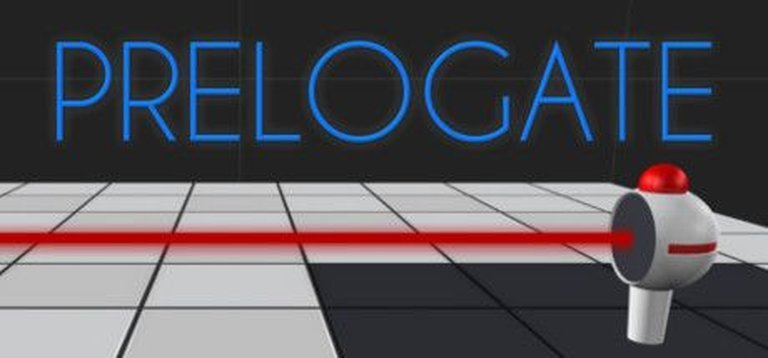
Prelogate is a minimalist puzzle game released in 2014 by Blamedrop, where players solve intricate challenges by redirecting, mixing, and manipulating laser beams using logic gates in a fixed, flip-screen environment. The game combines light beam mechanics with gate-based logic puzzles across diagonal-down perspective levels, offering a cerebral experience built on the Unity engine.
Where to Buy Prelogate
PC
Prelogate Free Download
PC
Prelogate Guides & Walkthroughs
Prelogate Reviews & Reception
the-backlog.net (80/100): If you are into hard puzzle titles that WILL make your head hurt, check out Prelogate.
Prelogate: Review
Introduction
In the ever-expanding landscape of indie puzzle games, few titles have achieved the cult status of Prelogate. Released in 2014 by solo developer blamedrop, this deceptively minimalist logic puzzle challenges players to manipulate laser beams through a web of mirrors, splitters, and logic gates. While its pixelated aesthetic and $3.99 price tag might suggest a casual experience, Prelogate quickly reveals itself as a formidable intellectual gauntlet—a true descendant of the “brain-burning” puzzle lineage pioneered by games like SpaceChem and TIS-100. Yet what begins as a simple experiment in beam-reflection evolves into a profound exploration of computational logic, where the elegance of its core conceit collides with the brutal complexity of emergent systems. This review delves into the genesis, design, and enduring legacy of a game that, for a dedicated subset of players, remains one of the purest testaments to the beauty of problem-solving.
Development History & Context
The Blamedrop Vision and Unity Constraints
Developed entirely by blamedrop (a pseudonym suggesting a self-deprecating yet determined creator), Prelogate was born from a passion for abstract logic puzzles. The project chronicled its evolution on ModDB, revealing a journey from a “barely working prototype” to a polished commercial release. Built in Unity, the engine allowed for rapid iteration but imposed artistic limitations. Early screenshots show crude Blender models and placeholder UI, reflecting the developer’s admitted “crappy” modeling skills. The visual pivot came with the adoption of “round, clean devices”—spheres embedded with abstract symbols representing logic gates (AND, OR, XOR)—creating a cohesive, minimalist aesthetic that contrasted sharply with the game’s cerebral complexity. This design choice exemplified the developer’s philosophy: let the mechanics, not the art, drive the experience.
Release Ecosystem: Desura to Steam
Prelogate entered a crowded indie scene in 2014, a year saturated with puzzle darlings (PuzzleScript was gaining traction, while Braid‘s influence still loomed large). It debuted on Desura in July 2014 with a 10-level demo, followed by a Steam Greenlight campaign that garnered community support. The Steam release on December 10, 2014, included a launch discount and cross-platform availability (Linux support arrived alongside Windows). This multi-platform strategy aligned with the growing Linux gaming movement but highlighted the challenges of competing with AAA titles during the holiday season. Blamedrop’s relentless post-release support—adding features like undo/redo, colorblind modes, and leaderboards—demonstrated remarkable responsiveness to player feedback, turning a niche product into a polished niche gem.
Narrative & Thematic Deep Dive
The Test Subject Framing Device
Prelogate’s narrative is a sparse, self-aware framing device. Players assume the role of a “test subject” navigating a sterile, facility-like environment, solving puzzles to reactivate a malfunctioning system. This setup knowingly nods to puzzle classics (Portal, The Talos Principle), even lampshading its influences with a cheeky “SPAAAAACE” reference in early tutorials. However, the narrative intentionally recedes into the background, serving merely as justification for the escalating logical challenges. The dialogue is minimal—cryptic level titles and on-screen instructions—allowing the puzzles themselves to become the primary storytellers.
Themes of Emergence and Abstraction
Beneath its surface, Prelogate explores profound themes of emergence and abstraction. Each laser beam represents a data stream; each logic gate, a computational operation. By forcing players to construct complex circuits from simple components, the game becomes a meditation on how complex systems arise from fundamental rules. Levels like “Infinity” (requiring an “open/closed” logic loop) or “Ghostbuster” (avoiding beam crossings) subtly question the nature of causality and feedback. The lack of overt narrative forces players to impose meaning on their solutions, making each completed puzzle a personal act of creation. This abstraction extends to the game’s ending—a cryptic sequence that, despite its weirdness, underscores the theme of the system itself as the protagonist.
Gameplay Mechanics & Systems
Core Loop: Beam Logic as Language
Prelogate’s gameplay revolves around a single, elegant loop: place devices, redirect beams, solve logic. Players start with mirrors and splitters, learning to guide monochromatic lasers to targets. Chapter 4 introduces color mixing (e.g., red + blue = purple), demanding multi-beam coordination. The true zenith arrives in Chapters 5–10, where players must construct logic gates (AND, OR, XOR, IF) using beam splitters, filters, and delays. For instance, an XOR gate might require a precisely timed beam collision to toggle an output. This system is brilliant but unforgiving: a miscalculation propagates through the circuit, often requiring complete redesign.
Innovations and Systemic Flaws
- Brilliant Mechanics: The “clean solution” achievement (minimal devices) encourages optimization, while leaderboards foster competitive problem-solving. The 64-level progression masterfully scaffolds complexity, from basic reflection to multi-stage logic circuits.
- Contentious Design: Logic gates (especially XOR) suffered from opaque descriptions in early versions, leading to player confusion. The diagonal-down perspective occasionally obscured beam paths, and the lack of a 2D view mode (added post-launch) frustrated some. Colorblind players were initially underserved, though a patch (hotkey
B) added critical contrast enhancements. - UI Quirks: Early commands required text input (“continue” to advance), and device rotation was unintuitive. These were patched, but initial impressions suffered for it.
World-Building, Art & Sound
A Minimalist Sci-Fi Laboratory
Prelogate’s world is a sterile, abstract space—a grid-based “laboratory” bathed in monochrome. The fixed/flip-screen environment creates a sense of isolation, while the diagonal-down perspective adds subtle depth without overwhelming the puzzle. The 10 chapters introduce distinct visual motifs: Chapter 2’s “diffusers” emit star-like beams, while Chapter 7’s “pentagon” levels challenge spatial reasoning. This visual consistency avoids distraction, keeping focus on the mechanics.
Sound Design and Ambiance
The soundscape is a masterclass in understated immersion. Lasers emit soft, resonant hums that change pitch with color (e.g., a high-pitched red, a deep blue), creating an auditory language for beam states. Logic gates emit subtle clicks or chimes when activated, providing tactile feedback. The “calming and elegant” music—ambient, synth-driven melodies—serves as a counterpoint to the cerebral intensity, preventing frustration from overwhelming the player.
Reception & Legacy
Launch and Evolution
Prelogate’s launch reception was polarized. On Steam, it achieved a “Very Positive” 92% rating (75 reviews), but MobyGames recorded a middling 3.0/5 (likely due to limited coverage). Players praised its depth and challenge but lamented its steep learning curve. The Backlog awarded it 4/5, calling it “one of the most challenging puzzle games I’ve played,” while noting its “weird” ending. Critical reviews were sparse, but indie outlets highlighted its niche appeal.
Post-Release Refinement and Legacy
Blamedrop’s post-launch patches transformed Prelogate into a more accessible experience: tutorials for logic gates (e.g., Chapter 4’s XOR primer), colorblind mode, and quality-of-life features (undo/redo) addressed initial criticisms. The game’s legacy lies in its purity as a logic puzzle. It influenced titles like Algo Bot (beam-based programming) and Combiner (device-mixing puzzles), cementing its place in the “hardcore puzzle” subgenre. Its archival on platforms like the Internet Archive ensures its survival as a historical artifact of 2010s indie development.
Conclusion
Prelogate is a testament to the power of constraint and the beauty of emergent complexity. As a product of its time—a solo-developed Unity game released during the indie boom—it embodies both the era’s potential and its pitfalls. Its minimalist aesthetic and punishing difficulty may alienate casual players, but for those who persevere, it offers unparalleled satisfaction. The game’s legacy is not in commercial dominance but in its cult status: a quiet, cerebral masterpiece that demands intellectual rigor and rewards it with profound elegance. In the pantheon of puzzle games, Prelogate stands as a brilliant, flawed, and unforgettable achievement—a digital logic puzzle that feels less like a game and more like a dialogue with the language of computation itself. Verdict: An essential, if demanding, chapter in puzzle game history.