
- Release Year: 2005
- Platforms: Game Boy Advance, PlayStation 2, Windows
- Publisher: Funbox Media Ltd., ZOO Digital Publishing Ltd.
- Developer: Tuna Technologies Ltd., ZOO Digital Publishing Ltd.
- Genre: Sports
- Game Mode: Single-player
- Gameplay: Business simulation, Club management, Football (European), Managerial, Soccer, Tactics
- Average Score: 67/100
Description
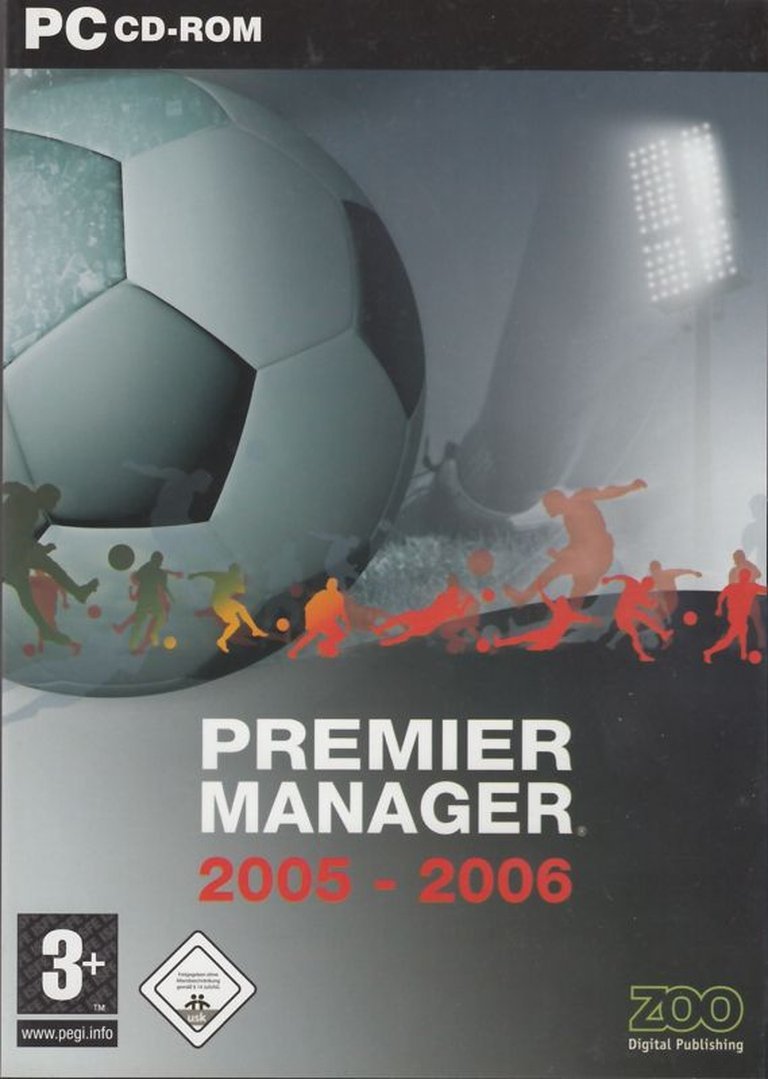
Premier Manager 2005-2006 is a football management simulation game where players take control of a team from the top two divisions of England, Italy, Spain, Germany, or France. As the manager, responsibilities include recruiting and selling players and staff, upgrading club facilities like stadiums and medical centers, and selecting from seven tactical strategies to optimize team performance. Players can advance time incrementally or skip directly to key events such as transfer negotiations, injuries, or match days, offering a streamlined approach to club management.
Gameplay Videos
Where to Buy Premier Manager 2005-2006
PC
Premier Manager 2005-2006 Free Download
PlayStation 2
Premier Manager 2005-2006 Guides & Walkthroughs
Premier Manager 2005-2006 Reviews & Reception
gamepressure.com (75/100): A superior logic system gives a faster logical and graphical update, giving you get a more realistic football management experience.
mobygames.com (60/100): The manager is in charge of hiring and selling players and staff; improving club property, such as the stadium, club shop and medical facilities; and of course, finding the perfect tactic (among seven available) for the players.
Premier Manager 2005-2006 Cheats & Codes
Premier Manager (Amiga)
Enter codes by dialing the phone.
| Code | Effect |
|---|---|
| 753423 | Super goalie |
| 781560 | All attributes 99 and $20 million |
| 250967 | Set all tackling to 99 |
| 000123 | Set all passing to 99 |
| 220769 | Set all shooting to 99 |
Premier Manager 2 (Amiga)
Enter codes by dialing the phone.
| Code | Effect |
|---|---|
| 781560 | Fruit machine game |
| 896610 | Always win at fruit machine game |
| 1 | None |
| 089869 | Sound effects from club secretary |
Premier Manager (General)
Enter codes using the telephone screen.
| Code | Effect |
|---|---|
| 781560 | All players 99 for every rating and £20 million to spend (changes player names and manager name to ‘R.O.F. Cheat Mode 1’) |
| 753423 | Super goalkeeper |
| 250967 | All tackling set to 99 |
| 000123 | All passing set to 99 |
| 220769 | All shooting set to 99 |
Premier Manager 2005-2006: The Pinnacle of a Persistent Underdog
Introduction
In the crowded stadium of football management sims, where giants like Championship Manager and Football Manager dominated the league tables, Premier Manager 2005-2006 arrived as a scrappy mid-table contender. Developed by ZOO Digital Publishing, this entry in the long-running series represented both an iterative refinement and a stark encapsulation of the limitations plaguing budget-friendly football sims of the mid-2000s. Our thesis? While mechanically competent and feature-rich on paper, Premier Manager 2005-2006 struggled to transcend its formulaic DNA, offering nostalgic comfort for series loyalists but failing to compete with the tactical depth and dynamism of its rivals.
Development History & Context
Studio Vision Under Constraints
Premier Manager 2005-2006 emerged from ZOO Digital Publishing, a UK-based studio with roots stretching back to the franchise’s 1992 inception under Gremlin Interactive. By 2005, ZOO had inherited the series from Infogrames, operating within tight budgetary constraints typical of annualized sports titles. The game reused the RenderWare engine (a staple of PlayStation 2-era middleware) and FMOD audio tools, reflecting an economical reliance on licensed tech rather than bespoke innovation.
The 2005 Football Sim Landscape
This era saw Sports Interactive’s Football Manager series decimate competitors with its hyper-detailed数据库 and tactical granularity. Premier Manager 2005-2006 arrived amidst this upheaval, targeting casual players with streamlined systems—a strategy evidenced by its multi-platform release (Windows, PS2, Game Boy Advance). The team, led by producer Phil Bradley and lead programmer Paul Hoggart, prioritized accessibility, stripping back the labyrinthine menus of rival titles in favor of an approachable “home screen” dashboard. Yet, as NGC Magazine noted, this pared-back ethos risked alienating hardcore tacticians.
Narrative & Thematic Deep Dive
The Absent Plot and Emergent Drama
Football management sims thrive on emergent storytelling, and Premier Manager 2005-2006 delivered this through its “club saga” framework. Players navigated not just matches but boardroom pressures, financial crises, and locker-room politics. While lacking scripted narratives, the game’s reactive systems—like press conferences and contract standoffs—generated organic drama. A striker’s slump in form could cascade into fan unrest; a shrewd loan signing might salvage a relegation battle. These moments, however, felt surface-level compared to rival titles, with limited dialogue trees or player personalities diluting emotional stakes.
Themes of Control vs. Chaos
At its thematic core, the game grappled with the illusion of control. Players commanded 14 divisions across England, Scotland, France, Spain, Germany, and Italy—a sprawling scope suggesting godlike oversight. Yet the AI’s occasional “wayward” match outcomes (per NGC Magazine) underscored the genre’s eternal tension: data-driven strategy versus football’s inherent unpredictability. This duality reflected the mid-2000s gaming zeitgeist, where simulations increasingly flirted with realism but often stumbled on algorithmic limitations.
Gameplay Mechanics & Systems
Core Loop: Spreadsheet Jockey Meets Touchline General
The gameplay loop revolved around three pillars: club management, tactical tinkering, and matchday execution. Players juggled:
– Financial stewardship: Upgrading stadiums, medical facilities, and youth academies.
– Transfer market chess: Scouting from a pool of 10,000 players across playable/non-playable leagues.
– Tactical flexibility: Seven preset formations (e.g., 4-4-2, 3-5-2) modifiable via sliders for passing style, pressing intensity, and defensive line height.
Innovations and Flaws
- Ball Cam: A novel 2D match engine feature zooming onto possession battles, offering clearer tactical feedback than the static overhead view.
- Streamlined UI: Context-sensitive “home screen” filtering news, tasks, and stats reduced menu fatigue.
- AI Quirks: Despite improvements, reviewers cited erratic results—a winger inexplicably abandoning attacks, defenders clustering chaotically—breaking immersion.
- Training/Scouting: Paper-thin compared to Football Manager; player development felt passive, with limited youth academy impact.
The Sim-Cade Paradox
ZOO’s “sim-cade” approach—simplified contract talks, one-click training regimes—lowered the barrier to entry but alienated purists. The game’s seven-tactic system lacked the nuance of Championship Manager’s bespoke playmaking, reducing matches to dice rolls governed by vague “form” metrics.
World-Building, Art & Sound
Aesthetic Anchors in Pragmatism
Premier Manager 2005-2006’s presentation leaned into functional minimalism. Menus mimicked early-2000s sports news graphics—bold fonts, league tables rendered as TV overlays—while match visuals used rudimentary 2D sprites. The art direction prioritized clarity over flair: green pitch grids, player icons as colored dots, and static crowd animations mirrored the series’ spreadsheet soul.
Sound Design: Crowd Noise as Comfort Food
The FMOD-powered audio supplied generic chants and referee whistles, bolstering atmosphere without innovation. Post-match replays introduced tense percussion stings, but dialogue-free press conferences felt sterile—a stark contrast to LMA Manager 2006’s vocalized media interactions.
Reception & Legacy
Launch Reactions
Critics met the game with muted praise. NGC Magazine’s 60% review (Game Boy Advance version) acknowledged its “satisfactory” depth but bemoaned “unrealistic” results. Player scores averaged 3.3/5, reflecting appreciation for its pick-up-and-play accessibility but frustration at its predictability.
The Long Shadow of Obsolescence
Historically, Premier Manager 2005-2006 epitomized the series’ slow decline. While earlier 1990s entries rivaled Championship Manager, by 2005, ZOO’s refusal to embrace 3D match engines or complex AI routines left it outdated. The series would limp on until Premier Manager 2012 before Urbanscan Limited’s reboot failed to revive its fortunes.
Industry Impact
Indirectly, the game’s flaws catalyzed innovations elsewhere. Its “Ball Cam” experiment presaged Football Manager’s modern 3D engine, while its UI streamlining influenced FIFA Manager’s dashboard designs. Nonetheless, Premier Manager 2005-2006 remains a footnote—a testament to how even competent sequels can falter against genre evolution.
Conclusion
Premier Manager 2005-2006 is neither a disaster nor a classic. It’s the video game equivalent of a mid-table Championship side: unspectacular but honest, delivering functional management thrills without redefining the playbook. For series devotees, it’s a comforting time capsule of mid-2000s football nostalgia; for historians, a case study in how iterative sequels struggle against innovators. In the pantheon of football sims, it’s a 7/10 workhorse—reliable in flashes, forgettable in totality, and eternally overshadowed by titans.