
- Release Year: 2015
- Platforms: Nintendo Switch, PlayStation 4, Windows, Xbox One, Xbox Series
- Publisher: Big Way LLC, IndieMax
- Developer: IndieMax
- Genre: Action
- Perspective: Side view
- Average Score: 40/100
Description
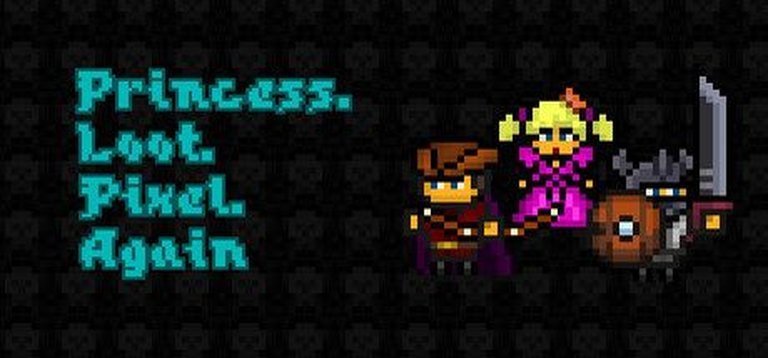
Princess.Loot.Pixel.Again is a dynamic platformer with rogue-lite elements set in the procedurally generated Dark Tower, where players control a hero attempting to rescue the kidnapped King from the Evil Mage to win the Princess’s hand. After each permadeath, the castle layout resets, emphasizing skill-based progression through mastering combos, equipment upgrades, and enemy behaviors rather than character leveling, all wrapped in a pixel-art retro aesthetic.
Gameplay Videos
Princess.Loot.Pixel.Again Reviews & Reception
metacritic.com (40/100): We can’t muster the energy. There’s no sparkle in its miserable combat.
thexboxhub.com (40/100): It needs something to make it stand out, and it has absolutely nothing in its cupboard.
steamcommunity.com : Talented compilation of known ideas, too nicely done and addictive enough to be ignored.
Princess.Loot.Pixel.Again: A Forgotten Gem or Flawed Experiment in Skill-Based Roguelites?
Introduction: The Allure and Agony of the ‘Again’
In the vast, crowded canon of indie games from the 2010s, certain titles achieve cult status through sheer ambition, while others vanish without a trace, existing only as digital ghosts on forgotten storefronts. Princess.Loot.Pixel.Again (hereafter PLPA) occupies a curious space between these two fates. Released in 2015 by the Russian indie studio IndieMax (often credited to individual developer EfimovMax), this game is a passionate, if deeply flawed, love letter to the precision platformer and the emergent boom of the “rogue-lite.” Its title promises repetition—Again—and its core design philosophy explicitly rejects the era’s obsession with character progression and “farming,” instead demanding pure, unadulterated player skill. Yet, as we shall dissect, this very insistence becomes its greatest strength and its most significant weakness. PLPA is a game that believes, almost dogmatically, that mastery is its own reward, a proposition that proves both exhilarating and exhausting. This review will argue that Princess.Loot.Pixel.Again is a fascinating but compromised case study in minimalist game design, where a brilliant, skill-centric coreloop is shackled to repetitive environments and inconsistent combat, leaving it as a compelling “what if” rather than a classic.
Development History & Context: A Solo Dev in the Rogue-lite Tsunami
PLPA emerged from the democratized game development scene powered by engines like GameMaker Studio. Its creator, working under the IndieMax banner, was part of a global wave of developers leveraging accessible tools to build games inspired by classics. The year 2015 was peak-time for the rogue-lite renaissance, following the monumental success of The Binding of Isaac (2011) and Spelunky (2008/2012), with titles like Enter the Gungeon (2017) and Dead Cells (2018) on the horizon. PLPA entered this landscape with a clear, almost defiant, differentiator: a rejection of meta-progression.
The developer’s vision, as gleaned from official descriptions and storefront blurbs, was to create a game where success was a direct function of the player’s growing competence. The procedurally generated Dark Tower was a test chamber, and the “rogue-lite” elements—permadeath and randomization—were not excuses for grindy unlocks but mechanisms to ensure each run was a fresh, skill-based puzzle. This was a deliberate counterpoint to games that rewarded time investment over mechanical improvement. Technologically, the use of GameMaker allowed for rapid iteration and pixel-art fidelity, but also likely imposed constraints on the complexity of enemy AI, room variety, and fluid animation—issues that would become glaring in the final product.
Narrative & Thematic Deep Dive: A Skeleton of a Story
PLPA’s narrative is presented with a charming, self-aware brevity that matches its minimalist aesthetic. The plot is delivered in a single, somewhat unclear cutscene (as noted in TheXboxHub review) and the official descriptions. A “young man” (the player character) seeks the King’s daughter’s hand. The King, disdainful of this commoner, orders his execution. At that moment, an “Evil Mage” (or, in some descriptions, a “bloodthirsty Dragon”—a notable inconsistency hinting at development flux) bursts in, kidnaps the King, and presumably takes the Princess. The protagonist, now with a clear motive and a princess to rescue, storms the Dark Tower.
This is standard fantasy boilerplate, but the game’s thematic core lies in its repetition. The several endings, which depend on “how many times you complete it and the paths you choose,” suggest a meta-narrative about persistent effort and multiple outcomes based on accumulated knowledge. The developer’s stated love for “self-irony” and “allusions to other games” implies the story exists primarily as a tongue-in-cheek scaffold for the gameplay, a knowing wink to the player that they are engaging in a well-worn fantasy trope. The Princess is more of a McGuffin than a character, and the King’s rescue the ultimate, simplistic goal. The theme, therefore, is not about love or tyranny, but about the iterative process of mastery. Each “again” in the title is a narrative beat—the hero learns, adapts, and tries again, not because of a new upgrade, but because he is upgraded.
Gameplay Mechanics & Systems: The Precarious Pillar of Skill
This is the game’s central, most divisive pillar. PLPA is a 2D side-scrolling platformer with a combo system, set within a procedurally generated, multi-floor dungeon (the Dark Tower). The core loop is:
1. Character Selection: Choose from 12 (or 7, per some sources) distinct classes (Warrior, Mage, Archer, Rogue, Berserk, etc.), each with unique base stats, starting gear, and a signature special ability (e.g., the Warrior’s mana-costly boomerang). This is a standout feature, genuinely altering playstyle and strategy from run to run.
2. Dungeon Delve: Navigate “floors” composed of randomly arranged screen-sized “rooms.” Rooms contain enemies, traps (spikes), loot (coins, health, mana), shops, black markets, locked doors (requiring keys), and explosive walls (requiring bombs). The exit to the next room is often hidden or guarded.
3. Combat & Movement: Engage in real-time hack-and-slash/ranged combat with a basic attack and a class-specific special skill. A combo meter can be built, rewarding aggressive, consecutive hits. Jumping and platforming precision are constant requirements.
4. Permadeath & Reset: Upon death, all progress is lost. The tower’s layout, item locations, enemy placements, and even boss order are completely regenerated. There is no permanent character progression. No new health, no permanent ability unlocks, no currency accumulation between runs.
5. Knowledge as Progression: The only “progression” is the player’s own skill and memorization. Learning enemy attack patterns, room layouts, artifact effects, and secret interactions (like plunging a sword into lava to create a firesword) is the sole path to success.
Innovations: The sheer commitment to skill-based progression is its boldest innovation. The class system is robust for a small-scale game. The idea of environmental interactions (lava-forged weapons) adds a delightful sense of discovery.
Critical Flaws: The TheXboxHub review devastatingly identifies the fatal wound: combat feel and enemy design. Melee attacks are described as “limp” with “dodgy hitboxes,” forcing risky proximity. Ranged attacks are limited by mana or ammo. Many enemies are passive or follow simplistic, unintelligent patterns (“bat-like” fliers), failing to pose a genuine tactical threat. This transforms the “challenge” from a dynamic duel into a tedious chore of attrition. Furthermore, the procedural generation, while random, often repeats room templates, leading to a profound sense of déjà vu. The boss variety is uneven, from trivial to “punishing,” with little scaling to player improvement across runs. The lack of any meta-progression means that after 2-3 hours, the player has seen the vast majority of content permutations, and subsequent runs feel like grim, unrewarding repetition rather than a fresh challenge. The promised “fun” and “no farming” become a hollow promise when the alternative is repetitive, unsatisfying combat in identical-looking rooms.
World-Building, Art & Sound: Pixel-Perfect Atmosphere, Audio Powerhouse
Here, PLPA achieves unqualified success in at least one dimension.
Visuals & Atmosphere: The game employs a clean, vibrant, and consistently appealing pixel-art style. The “Dark Tower” is realized through a variety of well-drawn, if not wildly imaginative, fantasy-themed tilesets (stone halls, lava chambers, forested areas). The animations are smooth, and the visual feedback on hits and special moves is clear. The fixed/flip-screen perspective creates a focused, almost arcade-like tension, as you cannot see what’s in the next room until you enter. The atmosphere is one of retro authenticity, capitalizing on the nostalgia for 8/16-bit platformers without being needously ugly or obtuse.
Sound Design & Music: This is the game’s undisputed crown jewel, and the sole point of universal praise across all sources. The soundtrack is described as “dubstep-meets-metal,” “bangers,” and a key reason players might persist. It is energetic, modern, and perfectly complements the frantic, combo-driven gameplay. The sound effects for attacks, jumps, and enemy noises are crisp and satisfying, providing crucial audio feedback that somewhat compensates for the visual hitbox issues. In a game where gameplay is often criticized, the audio is the consistent element that elevates every moment, creating a genuine “flow state” during successful runs.
Reception & Legacy: The Sound of One Hand Clapping
At launch, PLPA was a negligible commercial and critical entity. It exists in the database of MobyGames with only a handful of collectors. Its Steam release (April 2016) and later console ports (2021) via publishers IndieMax and Big Way LLC suggest a slow, quiet life. The Steam user score is “Mostly Positive” (76/100 based on ~242 votes), indicating a small, forgiving audience that values its core idea and aesthetics.
The single critic review from TheXboxHub (2021) is a brutal 2/5, serving as the primary dissection of its failings: “There’s no sparkle in its miserable combat, no reward or unlock to tempt us back in.” This review has become the de facto critical take, highlighting the gulf between the developer’s intent and the player’s experience.
Its legacy is therefore paradoxical. It is not an influential title. It did not spawn clones or shift industry trends. Instead, it stands as a curated artifact of a specific indie design philosophy: the “pure skill” roguelite. In an era where even the hardest games (like Celeste or Hollow Knight) integrate subtle meta-progression to soften the blow of failure, PLPA’s refusal to do so feels archaic and punitive. It is a lesson in what happens when a brilliant core concept—”skill over gear”—is not supported by a sufficiently deep, varied, or fun mechanical sandbox. It is remembered, if at all, by a tiny niche of players who connect with its particular brand of masochistic purity and who tolerate its flaws for the sake of its classes and soundtrack.
Conclusion: A Flawed Testament to a Fading Ideal
Princess.Loot.Pixel.Again is a game of stark contrasts. It possesses a supremely clever and principled design philosophy that is intoxicating on paper: a rogue-lite where you, the player, level up. Its class diversity is impressive for its scale, and its pixel-art presentation is consistently attractive. Its soundtrack is an outright triumph. Yet, these strengths are systematically undermined by a combat system lacking impact and precision, and a procedural generation scheme too shallow to sustain interest past the initial discovery phase.
In the history of video games, PLPA will not be a milestone. It will not be taught in courses or cited by major developers. Instead, it will be a footnote—a fascinating example of a “skill-based” roguelite that proved how difficult it is to build a satisfying game loop without the psychological comfort of incremental progress. It is a game that asks a lot of its players—patience, repetition, fine motor control—and gives very little back in tangible reward, save for the faint, hollow pride of “getting good” in a world that ultimately feels underdeveloped and repetitive.
Its final, ironic verdict is that it embodies its own title: you will play it again, out of a stubborn desire to conquer its cheap-feeling bosses and maze-like towers, but you will do so with a growing sense of emptiness, wondering if the “skill” you’re honing is truly being tested, or simply being worn down by a lack of content and polish. Princess.Loot.Pixel.Again is not a lost classic; it is a poignant, playable monument to a good idea that couldn’t quite carry the weight of its own purist convictions.